Bio-based Polyethylene Market Size & Growth Forecast 2027–2036, By Segments (Material, Type, End-use), Regional Demand Trends (North America, Asia Pacific, Europe), Key Country Insights (U.S., Japan, South Korea, Germany, France, Italy), and Competitive Landscape
Market Size and Growth Outlook
Bio-based Polyethylene Market size was assessed at USD 1.7 billion in 2026 and is poised to grow at a 18.34% CAGR between 2027 and 2036, crossing USD 9.16 billion by 2036. The industry revenue for 2027 is calculated at USD 1.96 billion.
Get more details on this report
Request Free Sample ReportBio-based Polyethylene Market Intelligence Snapshot
Regional Market Dynamics
- Asia Pacific leads the market through its extensive manufacturing base, strong polymer processing capacity, established supply chains, and high-volume demand from packaging and consumer goods industries.
- Europe is expected to grow at a 21.39% CAGR as sustainability priorities, circular economy initiatives, and stronger adoption of bio-based resins increase demand across packaging and manufacturing applications.
Segment Momentum
- Flexible materials lead with a 61.22% share due to widespread use in packaging films, wraps, and pouches, where lightweight performance and adaptability support consistent high-volume demand.
- Linear low-density bio-based polyethylene (LLDPE) is growing fastest as demand rises for flexible, high-toughness film applications requiring stretchability and performance efficiency in advanced packaging solutions.
Market Expansion Drivers
- Rising sustainability initiatives increasing adoption of renewable polyethylene across packaging applications.
- Government funding for low-carbon plastics accelerating bio-based polymer innovation and commercialization.
- Expanding food-grade flexible packaging demand strengthening bio-based HDPE production investments.
Leading Market Participants
- Top companies in the bio-based polyethylene market include Braskem S.A. (Brazil), Dow Inc. (United States), LyondellBasell Industries N.V. (Netherlands), Borealis AG (Austria), INEOS Group Holdings S.A. (United Kingdom), FKuR Kunststoff GmbH (Germany), Avery Dennison Corporation (United States), Trioworld Group (Sweden), Iwatani Corporation (Japan), SABIC (Saudi Arabia).
Global Market Forecast Snapshot
Market Outlook
- 2026 Market Size: USD 1.7 billion
- 2027 Estimated Market Size: USD 1.96 billion.
- Projected Market Size: USD 9.16 billion by 2036
- Growth Forecast: 18.34% CAGR (2027-2036)
Regional and Segment Outlook
- Leading Regional Market: Asia Pacific
- High-Growth Regional Hub: Europe
- Core Revenue Segment: Flexible (Material) | High-density Bio-based Polyethylene (HDPE) (Type) | Food & Beverages (End-use)
- Emerging Opportunity Segment: Rigid (Material) | Linear Low-density bio-Based Polyethylene (LLDPE) (Type) | Agriculture & Industry (End-use)
Market Growth Drivers and Industry Trends
Rising sustainability initiatives increasing adoption of renewable polyethylene across packaging applications
Growing emphasis on circularity, renewable feedstocks, and lower-impact materials is creating favorable conditions for the bio-based polyethylene market, particularly across packaging applications. Brand owners and packaging converters are increasingly evaluating renewable alternatives that can provide the functional characteristics of conventional polyethylene while supporting broader sustainability objectives. Bio-based polyethylene can be incorporated into applications such as films, containers, and other packaging formats without requiring fundamental changes to many existing processing approaches, improving its practicality for manufacturers. As packaging stakeholders place greater importance on renewable material sourcing and environmental performance, demand for polyethylene derived from bio-based feedstocks is gaining traction across consumer and industrial packaging uses.
Government funding for low-carbon plastics accelerating bio-based polymer innovation and commercialization
Public funding and policy support for low-carbon material development are helping reduce barriers to innovation and commercialization, which will propel the bio-based polyethylene market growth. Government-backed initiatives can support research into renewable feedstocks, polymer processing, production efficiency, and technologies that improve the environmental profile of plastic manufacturing. Financial assistance also enables producers and technology developers to move promising material concepts from laboratory development toward commercial-scale production, while policy incentives can encourage investment in new manufacturing capabilities. Greater institutional support for low-carbon plastics is therefore strengthening the development pipeline for bio-based polyethylene and improving the commercial viability of renewable polymer technologies.
Expanding food-grade flexible packaging demand strengthening bio-based HDPE production investments
The growing requirement for food-grade flexible packaging is encouraging manufacturers to explore renewable polymer options with appropriate performance and safety characteristics, supporting the bio-based polyethylene market. Food packaging applications require materials that can provide durability, processability, barrier performance, and compatibility with established converting operations, creating opportunities for bio-based polyethylene grades designed for these requirements. Rising demand for flexible packaging is also encouraging producers to expand capabilities for bio-based HDPE and related polyethylene materials that can serve packaging applications while supporting renewable sourcing objectives. Increased investment in production capacity and material development is being reinforced by packaging manufacturers seeking alternatives that align with evolving sustainability expectations.
| Growth Driver | Impact on CAGR | Regulatory Influence | Geographic Relevance | Adoption Rate | Impact Timeline |
|---|---|---|---|---|---|
| Rising sustainability initiatives increasing adoption of renewable polyethylene across packaging applications | 2.00% | High | North America, Europe, Asia Pacific | High | Near Term |
| Government funding for low-carbon plastics accelerating bio-based polymer innovation and commercialization | 1.80% | High | North America | Medium | Mid Term |
| Expanding food-grade flexible packaging demand strengthening bio-based HDPE production investments | 1.60% | Moderate | Asia Pacific, Europe | Emerging | Mid Term |
Unlock insights tailored to your business with our bespoke market research solutions.
Click to get your customized report now.
Regional Demand Dynamics
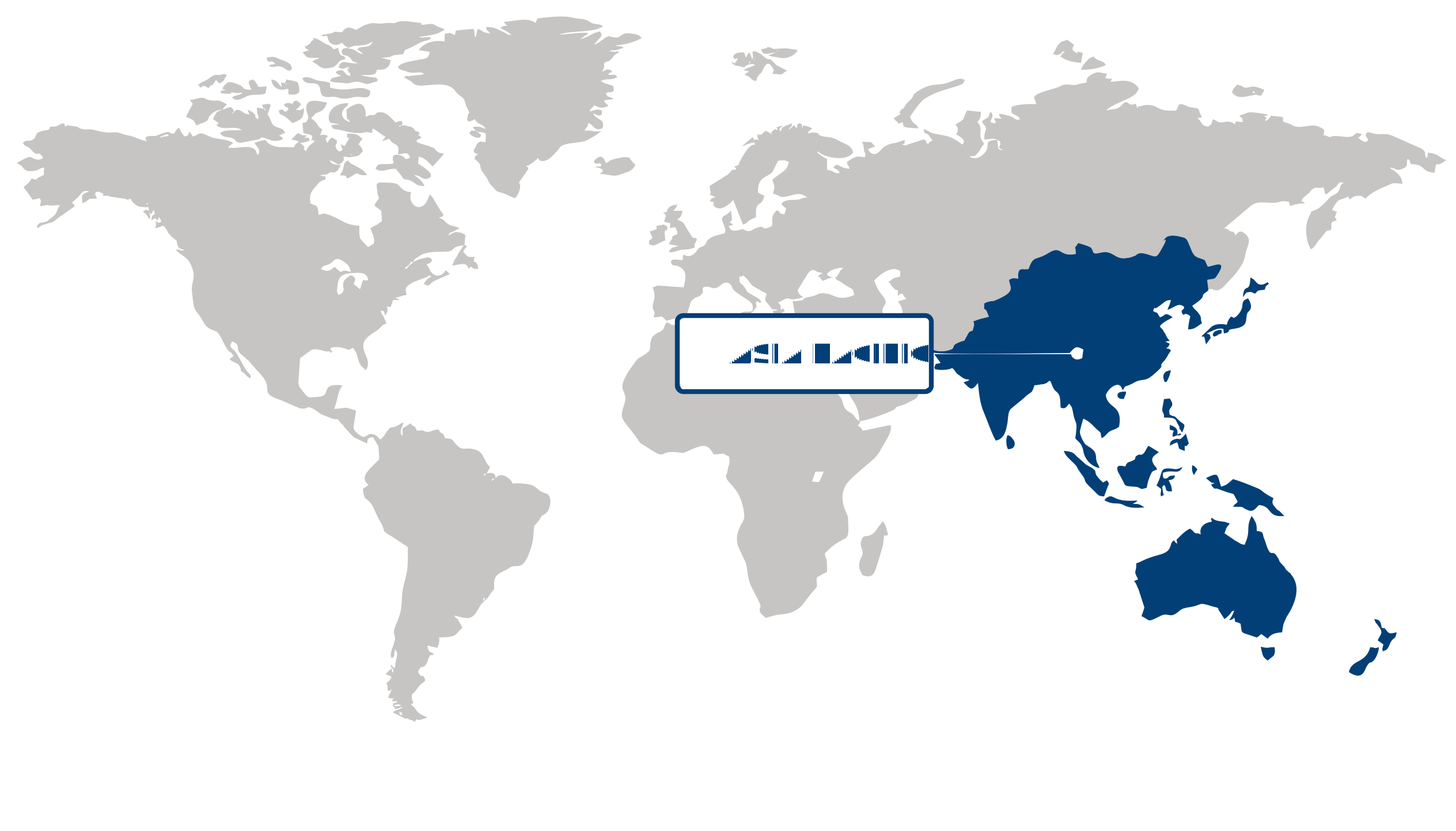
Asia Pacific (Largest Region)
The bio-based polyethylene market in Asia Pacific held the largest regional position in 2026, supported by expanding plastics consumption, increasing interest in renewable feedstocks, and growing efforts to reduce dependence on fossil-based raw materials. The region's extensive packaging, consumer goods, automotive, and industrial manufacturing base provides broad applications for bio-based polyethylene, while established agricultural and chemical industries can support the development of renewable feedstock supply chains. Rising environmental awareness and sustainability initiatives are encouraging manufacturers to evaluate lower-impact material alternatives without requiring major changes to existing polyethylene processing infrastructure. Increasing investment in circular and bio-based materials is further strengthening the region's role in the market.
Europe (Fastest-Growing Region)
Europe is the fastest-growing region, driven by strong sustainability priorities, environmental regulations, and increasing demand for materials with improved renewable content. Manufacturers and brand owners are placing greater emphasis on reducing fossil-resource dependence and improving the environmental profile of plastic packaging and consumer products. The region's established recycling infrastructure and broader transition toward a circular materials economy also encourage complementary adoption of bio-based polymers. Growing consumer preference for environmentally responsible products is reinforcing demand across packaging and other applications, while continued innovation in renewable feedstocks and polymer processing is supporting wider commercial use.
| Parameter | North America | Asia Pacific | Europe | Latin America | MEA |
|---|---|---|---|---|---|
| Innovation Hub i Scale Nascent Developing Advanced | |||||
| Cost-Sensitive Region i Scale Low Medium High | |||||
| Regulatory Environment i Scale Restrictive Neutral Supportive | |||||
| Demand Drivers i Scale Weak Moderate Strong | |||||
| Development Stage i Scale Emerging Developing Developed | |||||
| Adoption Rate i Scale Low Medium High | |||||
| New Entrants / Startups i Scale Sparse Moderate Dense | |||||
| Macro Indicators i Scale Weak Stable Strong |
Key Country Insights
Germany 🇩🇪
Sustainable Manufacturing MaterialsGermany is integrating bio-based polyethylene into industrial and consumer applications where sustainability targets influence material selection. Manufacturers are evaluating renewable polymers that align with existing processing technologies and product specifications.
France 🇫🇷
Eco-Packaging TransitionFrance is promoting bio-based polyethylene as packaging companies respond to sustainability expectations and evolving material preferences. Businesses are evaluating renewable polymers that support recyclability initiatives while maintaining packaging functionality.
Italy 🇮🇹
Consumer Goods ApplicationsItaly is incorporating bio-based polyethylene into packaging, household products, and consumer goods where renewable materials enhance product portfolios. Companies are emphasizing compatibility with existing manufacturing infrastructure to support practical adoption.
Japan 🇯🇵
Low-Carbon Packaging DevelopmentJapan is expanding the use of bio-based polyethylene in packaging and consumer goods as companies pursue lower-carbon material alternatives. Businesses are balancing renewable content with durability and compatibility across established production lines.
South Korea 🇰🇷
Green Materials CommercializationSouth Korea is encouraging bio-based polyethylene adoption through innovation in sustainable packaging and specialty plastic products. Material producers are strengthening partnerships with downstream manufacturers to broaden commercial applications.
United States 🇺🇸
Renewable Polymer InnovationThe U.S. is advancing bio-based polyethylene through investments in renewable feedstocks and sustainable packaging materials. Brand owners are collaborating with material suppliers to reduce fossil-based plastic use while maintaining product performance.
Segment Leadership and Growth Trends
Bio-based Polyethylene Market Share (%), by Material, 2026
Go beyond the chart, access full insights & data tables
Request Free Sample ReportMaterial Segment Analysis: Flexible (Largest Segment) vs Rigid (Fastest-Growing Segment)
The flexible material segment accounted for a 61.22% share in 2026 within the bio-based polyethylene market, reflecting its extensive use in films, bags, pouches, and wraps across consumer and industrial packaging. Bio-based polyethylene allows manufacturers to reduce reliance on fossil-based feedstocks while retaining familiar processing characteristics and performance, supporting adoption in high-volume packaging applications. Growing demand for sustainable packaging solutions continues to reinforce the segment's leadership.
Rigid material is the fastest-growing segment as consumer goods, healthcare, and industrial packaging increasingly incorporate bio-based plastics into bottles, containers, caps, and durable molded products. Improvements in processing performance and the broader availability of renewable feedstocks are encouraging substitution in applications that require greater structural strength. Rising sustainability commitments from brand owners are also supporting expansion in rigid packaging formats.
Type Segment Analysis: High-density Bio-based Polyethylene (HDPE) (Largest Segment) vs Linear Low-density bio-Based Polyethylene (LLDPE) (Fastest-Growing Segment)
High-density bio-based polyethylene held the largest share of 46.85% in 2026, driven by its strength, chemical resistance, and versatility across bottles, containers, pipes, and industrial products. Its compatibility with established manufacturing infrastructure enables easier adoption without significant process changes, making it attractive for companies pursuing renewable material strategies. Strong demand from packaging and infrastructure applications continues to support this segment.
Linear low-density bio-based polyethylene is emerging as the fastest-growing type because of its excellent flexibility, toughness, and puncture resistance in film applications. Increasing demand for stretch films, agricultural films, and flexible packaging made from renewable materials is encouraging wider adoption. Continued innovation in bio-based resin formulations is further expanding opportunities for this segment.
| Segment | Sub-Segment | Largest Segment | Fastest Growing |
|---|---|---|---|
| Material | Rigid, Flexible | Flexible | Rigid |
| Type | Low-density Bio-based Polyethylene (LDPE), High-density Bio-based Polyethylene (HDPE), Linear Low-density bio-Based Polyethylene (LLDPE) | High-density Bio-based Polyethylene (HDPE) | Linear Low-density bio-Based Polyethylene (LLDPE) |
| End-use | Agriculture & Industry, Food & Beverages, Cosmetics & Household Care, Personal Care, Textiles, Pharmaceuticals, Others | Food & Beverages | Agriculture & Industry |
Competitive Landscape and Market Positioning
Leading companies in the bio-based polyethylene market:
1. Braskem S.A. (Brazil)
2. Dow Inc. (United States)
3. LyondellBasell Industries N.V. (Netherlands)
4. Borealis AG (Austria)
5. INEOS Group Holdings S.A. (United Kingdom)
6. FKuR Kunststoff GmbH (Germany)
7. Avery Dennison Corporation (United States)
8. Trioworld Group (Sweden)
9. Iwatani Corporation (Japan)
10. SABIC (Saudi Arabia)
Increasing demand for renewable materials is encouraging innovation across the bio-based polyethylene market. Ongoing research into feedstock optimization and production efficiency is supporting the development of sustainable polymer solutions that reduce carbon emissions while maintaining performance comparable to conventional polyethylene.
| Company | Market Share | Company Revenue | Revenue CAGR (%) | Product Portfolio | Geographic Presence | Innovation / R&D Focus | Strategic Developments |
|---|---|---|---|---|---|---|---|
| Braskem S.A. (Brazil) | |||||||
| Dow Inc. (United States) | |||||||
| LyondellBasell Industries N.V. (Netherlands) | |||||||
| Borealis AG (Austria) | |||||||
| INEOS Group Holdings S.A. (United Kingdom) | |||||||
| FKuR Kunststoff GmbH (Germany) | |||||||
| Avery Dennison Corporation (United States) | |||||||
| Trioworld Group (Sweden) | |||||||
| Iwatani Corporation (Japan) | |||||||
| SABIC (Saudi Arabia). |
Industry Development/News
| Company Name | Date | Key Development |
|---|---|---|
| BB Engineering | Mar-26 | The company joined the bioPEtex research initiative in Germany to investigate the use of bio-based polyethylene in chemical fiber production. This research aims to overcome historical barriers to utilizing polyethylene in textiles, potentially expanding the addressable end-use market for renewable, bio-based plastic materials. |
| Elm-plastic GmbH | Nov-25 | Elm-plastic launched a medical-grade bioplastic pipette for healthcare and pharmaceutical applications. The product utilizes 95% bio-based polyethylene, demonstrating the feasibility of replacing conventional fossil-based plastics with sustainable alternatives in highly regulated medical packaging and dosing, while meeting stringent industry performance and safety standards. |
| Braskem | May-25 | Braskem reported that its green ethylene production has reached an annual capacity of 275,000 tons, operating 37% above its original project baseline. This significant capacity increase strengthens the global supply chain for bio-based polyethylene and supports the company’s strategic goal to scale production of renewable feedstock-derived polymers. |
| Lignin Industries AB | Jun-24 | The company initiated the mass commercialization of its Renol technology, a bio-based plastic material derived from forest-residue lignin. This development provides a drop-in renewable alternative for plastic manufacturers, enabling a reduction in fossil-based material reliance without requiring significant modifications to existing injection molding and extrusion equipment. |
| Repsol | Feb-24 | Repsol expanded its portfolio of ultra-clean polyethylene, incorporating high-density, metallocene low-density, and copolymer grades designed for circular, recyclable flexible packaging. This product line extension aligns with evolving global sustainability requirements, enhancing the company’s competitive positioning in the market for high-performance, environmentally conscious polymer solutions. |
| Neste / Prime Polymer | Nov-23 | Neste partnered with Prime Polymer to introduce a renewable polypropylene packaging solution for consumer goods, utilizing a mass-balance approach to verify bio-content. This collaboration demonstrates a successful supply chain integration between renewable feedstock providers and resin manufacturers to facilitate the shift toward sustainable packaging in the food sector. |
| Braskem / SCG Chemicals | Aug-23 | Braskem and SCG Chemicals formed a joint venture, Braskem Siam Company Limited, to produce bio-based polyethylene in Thailand. By leveraging Braskem’s proprietary dehydration technology and SCG’s regional manufacturing footprint, this partnership aims to capture the growing demand for sustainable plastic solutions within the Asian market. |
Customize Your Report
Explore examples of how this report can be tailored to different research needs, including custom segments, additional topics or chapters, and related reports. Click a section of the wheel or its numbered marker to explore the available options.
Bio-based Polyethylene Market — Custom Segments
| Segment | Sub-Segment |
|---|---|
| Feedstock Source | Sugarcane-Based Feedstock, Corn-Based Feedstock, Cellulosic Feedstock, Other Renewable Biomass Feedstocks |
| Processing Technology | Fermentation-Based Ethanol Production, Bio-Ethanol Dehydration, Ethylene Polymerization, Integrated Bio-Polyethylene Production |
| Buyer Type | Packaging Manufacturers, Consumer Goods Manufacturers, Automotive & Industrial Manufacturers, Retail & Brand Owners |
Bio-based Polyethylene Market — Custom TOC
| Custom Chapter | Custom Details |
|---|---|
| Feedstock Sustainability & Sourcing Assessment |
|
| End-use Adoption Roadmap |
|
| Carbon Footprint & Circularity Benchmarking |
|
Need a different cut of the data?
Request Custom ResearchHow big is the bio-based polyethylene market?
What is the anticipated CAGR of the bio-based polyethylene industry?
How are sustainability initiatives shaping adoption in the bio-based polyethylene market?
How is government funding influencing commercialization and investment in bio-based polyethylene production?
Why do flexible materials dominate the bio-based polyethylene market?
Which type of bio-based polyethylene is growing fastest in the market?
Why is Asia Pacific the largest market for bio-based polyethylene?
What is driving Europe's rapid growth in the bio-based polyethylene market?
Who are the major participants shaping the bio-based polyethylene landscape?
Our Clients
"The report helped us understand emerging consumer trends in our product category. It clarified where to focus innovation for the next product launch."
LyondellBasell
"The regional forecast section was incredibly useful. We were able to identify two new potential partners in Europe thanks to the vendor mapping you included."
SABIC
"We appreciated how actionable the recommendations were. It guided us to improve supply chain resilience."
Olin Corporation
Our Research Team & Methodology
Every Fundamental Business Insights report is built by a dedicated vertical research team, validated through a structured primary-and-secondary methodology, and reviewed for accuracy before it reaches you.
Research Team Overview
Prepared by the Chemicals & Materials Research Team
Delivery
Published
Demand
Available
Support
Trust & Compliance
Research Domains
10 coverage areasResearch Intelligence
| Source | Reference |
|---|---|
| American Chemistry Council (ACC) | www.americanchemistry.com |
| European Chemical Industry Council (Cefic) | cefic.org |
| International Council of Chemical Associations (ICCA) | icca-chem.org |
| European Chemicals Agency (ECHA) | echa.europa.eu |
| U.S. Environmental Protection Agency (EPA) | www.epa.gov |
| ASTM International | www.astm.org |
| International Organization for Standardization (ISO) | www.iso.org |
| National Institute of Standards and Technology (NIST) | www.nist.gov |
| Plastics Industry Association (PLASTICS) | www.plasticsindustry.org |
| European Biplastics | www.european-bioplastics.org |
| The Adhesive and Sealant Council (ASC) | www.ascouncil.org |
| National Association of Corrosion Engineers (AMPP) | www.ampp.org |
| Society of Plastics Engineers (SPE) | www.4spe.org |
| International Fertilizer Association (IFA) | www.fertilizer.org |
| CropLife International | croplife.org |
| Packaging Europe | packagingeurope.com |
| Flexible Packaging Association (FPA) | www.flexpack.org |
| Battery Council International (BCI) | batterycouncil.org |
| International Copper Association (ICA) | internationalcopper.org |
| World Steel Association | worldsteel.org |
Research Workflow & Quality Assurance
Data Collection
Verified information gathered through primary and secondary research.
Data Triangulation
Cross-validation using multiple independent data sources.
Forecast Modelling
Market estimates developed using historical trends and analytical models.
Analyst Validation
Findings reviewed by domain experts for accuracy and consistency.
Editorial & Quality Review
Final editorial, quality, and compliance checks before publication.
Final Publication
Released after successful completion of the internal review process.
Report Coverage
📊 Market Assessment
- Market Size & Forecast
- Market Segmentation
- Regional Analysis
- Growth Drivers & Challenges
- Market Dynamics
🏢 Competitive Intelligence
- Competitive Landscape
- Company Profiles
- Competitive Benchmarking
- Mergers & Acquisitions
- Market Share Analysis or Key Company Strategies
🔍 Strategic Analysis
- Value Chain Analysis
- Porter's Five Forces
- PESTLE Analysis
- Pricing Trends
- Supply-Demand Analysis
🚀 Future Outlook
- Technology Landscape
- Regulatory Landscape
- Investment & Funding Landscape
- Emerging Opportunities
- Future Market Outlook
Have a question about this report or need a custom scope?
Request Customization