Ball Clay Market Size & Growth Forecast 2027–2036, By Segments (Application, Form), Regional Demand Trends (North America, Asia Pacific, Europe), Key Country Insights (U.S., Japan, South Korea, Germany, France, Italy), and Competitive Landscape
Jump to Content
Market Size and Growth Outlook
Ball Clay Market size was more than USD 471.75 Million in 2026 and is set to grow at 3.67% CAGR between 2027 and 2036, attaining USD 676.46 Million by 2036. The industry revenue for 2027 is assessed at USD 486.19 Million.
Get more details on this report
Request Free Sample ReportBall Clay Market Intelligence Snapshot
Regional Market Dynamics
- Asia Pacific held 43.88% in 2026, supported by strong ceramics, sanitaryware, tile, tableware, and construction materials manufacturing activity.
- Regional growth is supported by expanding ceramic production, infrastructure investment, and demand for high-quality clay that enhances plasticity in ceramic formulations.
Segment Momentum
- The ceramic segment accounted for 72.29% of the market in 2026, driven by ball clay's excellent plasticity, binding properties, and ability to improve the strength and finish of ceramic products.
- Powdered ball clay is the fastest-growing form because it offers easy handling, consistent particle size, efficient blending, and compatibility with automated manufacturing systems, improving production efficiency and product quality.
Market Expansion Drivers
- Rising ceramics industry demand driving consumption of industrial clay materials
- Agricultural sector growth increasing use of clay-based soil conditioning products
- Industrial manufacturing expansion boosting demand for high-plasticity mineral inputs
Leading Market Participants
- Major companies in the ball clay market include Imerys Ceramics (France), Sibelco (Belgium), Quarzwerke Group (Germany), LKAB Minerals (Sweden), Ashapura Group (India), Burgess Pigment Company (USA), EICL Limited (India), I-Minerals Inc. (Canada), Old Hickory Clay Company (USA), WBB Minerals (United Kingdom)
Global Market Forecast Snapshot
Market Outlook
- 2026 Market Size: USD 471.75 Million
- 2027 Estimated Market Size: USD 486.19 Million
- Projected Market Size: USD 676.46 Million by 2036
- Growth Forecast: 3.67% CAGR (2027-2036)
Regional and Segment Outlook
- Leading Regional Market: Asia Pacific
- High-Growth Regional Hub: Asia Pacific
- Core Revenue Segment: Ceramic (Application) | Powder (Form)
- Emerging Opportunity Segment: Ceramic (Application) | Powder (Form)
Market Growth Drivers and Industry Trends
Rising ceramics industry demand driving consumption of industrial clay materials
Expanding production of ceramic products across residential, commercial, and industrial applications is strengthening the need for high-quality raw materials with reliable forming characteristics. The ball clay market growth is driven by its essential role in improving plasticity, workability, and surface finish in ceramic manufacturing processes. Producers of tiles, sanitary ware, tableware, and technical ceramics continue to rely on ball clay to achieve consistent product quality, dimensional stability, and enhanced processing performance throughout shaping and firing operations.
Agricultural sector growth increasing use of clay-based soil conditioning products
The increasing focus on improving soil quality and supporting sustainable agricultural productivity is encouraging wider adoption of mineral-based soil enhancement materials. This development will boost the ball clay market demand as clay-based products are utilized to improve soil structure, enhance moisture retention, and support better nutrient management under varying cultivation conditions. Agricultural producers are exploring natural mineral solutions that contribute to healthier growing environments while complementing broader soil conservation and land management practices.
Industrial manufacturing expansion boosting demand for high-plasticity mineral inputs
Growth across multiple manufacturing industries is increasing the requirement for mineral materials that provide dependable processing characteristics and consistent product performance. The ball clay market benefits from expanding industrial activity because its high plasticity, binding properties, and formulation versatility make it a valuable input for a range of manufacturing applications beyond traditional ceramics. Industries requiring precision molding, uniform material behavior, and stable production processes continue to incorporate ball clay into formulations that support quality control and efficient manufacturing operations.
| Growth Driver | Impact on CAGR | Regulatory Influence | Geographic Relevance | Adoption Rate | Impact Timeline |
|---|---|---|---|---|---|
| Rising ceramics industry demand driving consumption of industrial clay materials | 2% | Low | Asia Pacific, Europe | High | Mid Term |
| Agricultural sector growth increasing use of clay-based soil conditioning products | 1.5% | Moderate | Asia Pacific, Latin America | Medium | Mid Term |
| Industrial manufacturing expansion boosting demand for high-plasticity mineral inputs | 1.4% | Low | Europe, North America | Medium | Long Term |
Explore Growth Opportunities
Request Free Sample ReportRegional Demand Dynamics
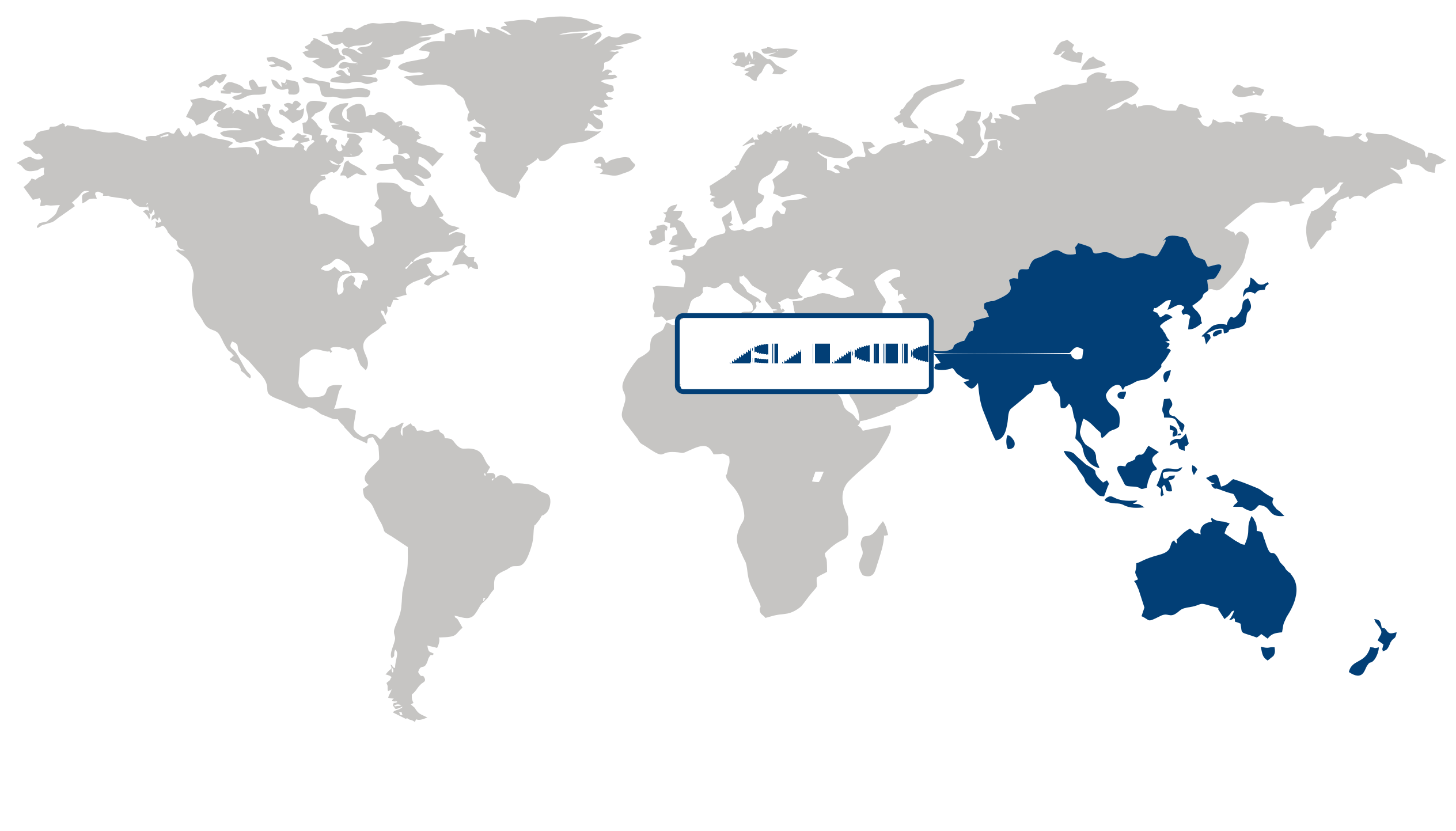
Asia Pacific (Largest & Fastest-Growing Region)
The ball clay market in Asia Pacific held the largest share of 43.88% in 2026 while also representing the fastest-growing regional market, supported by the region's extensive ceramics, sanitaryware, and construction materials industries. Strong manufacturing activity and continued demand for high-quality clay as a plasticity-enhancing material in ceramic formulations are reinforcing regional consumption. The expansion of tile and tableware production, particularly across major asian manufacturing economies, is further supporting market development, while investments in construction and industrial infrastructure continue to create favorable demand conditions for ball clay.
| Parameter | North America | Asia Pacific | Europe | Latin America | MEA |
|---|---|---|---|---|---|
| Innovation HubiScaleNascentDeveloping Advanced | |||||
| Cost-Sensitive RegioniScaleLowMedium High | |||||
| Regulatory EnvironmentiScaleRestrictiveNeutral Supportive | |||||
| Demand DriversiScaleWeakModerate Strong | |||||
| Development StageiScaleEmergingDeveloping Developed | |||||
| Adoption RateiScaleLowMedium High | |||||
| New Entrants / StartupsiScaleSparseModerate Dense | |||||
| Macro IndicatorsiScaleWeakStable Strong |
Key Country Insights
United States 🇺🇸
Advanced Ceramics DemandThe U.S. ball clay market is supported by demand from sanitaryware, ceramic tiles, and specialty industrial ceramics. Producers in the U.S. emphasize consistent mineral quality, reliable domestic supply, and processing efficiency to meet diverse manufacturing requirements.
Germany 🇩🇪
Technical Ceramics SupplyGermany utilizes ball clay in high-quality ceramic products for construction and industrial applications. Manufacturers in Germany prioritize refined raw materials, precise material specifications, and sustainable extraction practices to support premium ceramic production.
Japan 🇯🇵
Precision Ceramic MaterialsJapan relies on ball clay for advanced ceramic manufacturing requiring uniform particle characteristics and dependable quality. Companies in Japan focus on optimizing raw material performance for technical ceramics, tableware, and specialty industrial products.
South Korea 🇰🇷
Tile Manufacturing SupportSouth Korea's ball clay market is closely linked with ceramic tile and sanitaryware manufacturing. Producers and processors in South Korea focus on stable raw material sourcing and formulation consistency to improve production efficiency and finished product quality.
France 🇫🇷
Sustainable Mineral ProcessingFrance supports ball clay demand through ceramic manufacturing and construction material applications. Companies in France increasingly prioritize responsible mineral processing, quality assurance, and efficient resource utilization across ceramic value chains.
Italy 🇮🇹
Ceramic Production BaseItaly's established ceramic industry sustains steady demand for high-quality ball clay used in tiles and sanitaryware. Manufacturers in Italy emphasize raw material consistency and optimized clay blends to enhance product aesthetics and manufacturing performance.
Ball Clay Market Share (%), by Application, 2026
Go beyond the chart, access full insights & data tables
Request Free Sample ReportApplication Segment Analysis: Ceramic (Largest & Fastest-Growing Segment)
The ceramic application segment dominated the ball clay market and accounted for a 72.29% share in 2026, while also emerging as the fastest-growing application. Ball clay is extensively used in ceramic manufacturing because of its excellent plasticity, binding characteristics, and ability to improve the strength and finish of ceramic products. Strong demand from the production of tiles, sanitary ware, tableware, and industrial ceramics continues to support the segment’s expansion. Increasing investments in construction and infrastructure, along with growing demand for high-quality ceramic products, further reinforce the importance of ceramic applications. Continued product innovation and the need for improved manufacturing efficiency are also expected to sustain the segment’s leadership.
Form Segment Analysis: Powder (Largest & Fastest-Growing Segment)
Within the ball clay market, the powder form segment accounted for the largest share of 43.04% in 2026 and also represented the fastest-growing segment. Powdered ball clay is widely preferred because it offers ease of handling, consistent particle size, and efficient blending with other raw materials during manufacturing. These characteristics improve production efficiency and ensure uniform quality across ceramic and industrial applications. Rising demand for precision in material processing, combined with the increasing adoption of automated manufacturing systems, continues to strengthen the preference for powdered ball clay. Its compatibility with modern production techniques and broad application across end-use industries further supports sustained market growth.
| Segment | Sub-Segment | Largest Segment | Fastest Growing |
|---|---|---|---|
| Application | Ceramic, Non-Ceramic | Ceramic | Ceramic |
| Form | Stone, Powder, Shredded, Others | Powder | Powder |
Unlock insights tailored to your business with our bespoke market research solutions.
Click to get your customized report now.
Competitive Landscape and Market Positioning
Top players in the ball clay market:
- Imerys Ceramics (France)
- Sibelco (Belgium)
- Quarzwerke Group (Germany)
- LKAB Minerals (Sweden)
- Ashapura Group (India)
- Burgess Pigment Company (USA)
- EICL Limited (India)
- I-Minerals, Inc. (Canada)
- Old Hickory Clay Company (USA)
- WBB Minerals (United Kingdom)
Shifting customer requirements across ceramics, sanitaryware, and specialty industrial applications are encouraging ball clay suppliers to compete on consistency, mineral quality, and application-specific processing expertise rather than raw material availability alone. Producers are investing in improved beneficiation techniques and tighter quality control to deliver uniform physical characteristics that reduce manufacturing variability for downstream users. At the same time, competition is becoming increasingly regional, with suppliers strengthening logistics efficiency and dependable delivery to support manufacturers seeking stable input supplies. Environmental stewardship and responsible resource management are also emerging as important differentiators, particularly where customers prioritize sustainable sourcing alongside reliable product performance.
| Company | Market Share | Company Revenue | Revenue CAGR (%) | Product Portfolio | Geographic Presence | Innovation / R&D Focus | Strategic Developments |
|---|---|---|---|---|---|---|---|
| Imerys Ceramics (France) | |||||||
| Sibelco (Belgium) | |||||||
| Quarzwerke Group (Germany) | |||||||
| LKAB Minerals (Sweden) | |||||||
| Ashapura Group (India) | |||||||
| Burgess Pigment Company (USA) | |||||||
| EICL Limited (India) | |||||||
| I-Minerals Inc. (Canada) | |||||||
| Old Hickory Clay Company (USA) | |||||||
| WBB Minerals (United Kingdom) |
Industry Development/News
| Company Name | Date | Key Development |
|---|---|---|
| Zitherixon | Aug-25 | Zitherixon proposed a strategic quarry expansion near Kingsteignton to increase future ball clay extraction operations and raw material capacity. The initiative is progressing through local operational and community reviews due to environmental considerations regarding logistical requirements, dust, and localized noise impacts. |
| Sibelco | Apr-24 | Sibelco acquired a local ball clay producer in Brazil to strengthen its regional supply chain and expand its South American market share. The acquisition enhances the company's capacity to serve the growing ceramics and refractories sectors across the region, positioning it to capture increasing localized demand. |
| Imerys Ceramics | Feb-24 | Imerys Ceramics announced an expansion of its production operations in India to address rising regional demand for industrial minerals. By increasing its manufacturing capacity, the company aims to secure its supply chain capabilities for key downstream ceramic industries, specifically targeting the high-growth sanitary ware and tiles segments. |
| Old Hickory Clay Company | Feb-23 | Old Hickory Clay Company invested in advanced processing technology to improve the quality, consistency, and structural performance of its ball clay portfolio. This capital deployment directly targets stringent quality standards within the North American ceramics and construction industries, strengthening the company's competitive positioning. |
Customize Your Report
Explore examples of how this report can be tailored to different research needs, including custom segments, additional topics or chapters, and related reports. Click a section of the wheel or its numbered marker to explore the available options.
Ball Clay Market — Custom Segments
| Segment | Sub-Segment |
|---|---|
| Buyer Type | Direct Industrial Buyers, Distributors & Wholesalers |
| Processing Method | Raw Ball Clay, Beneficiated Ball Clay, Blended & Processed Ball Clay |
| Distribution Channel | Direct Sales, Distributors & Dealers, Online & Specialty Channels |
Ball Clay Market — Custom TOC
| Custom Chapter | Chapter Details |
|---|---|
| Clay Sourcing & Supply Security Assessment |
|
| Premium Grade Demand Opportunities |
|
| Alternative Material Substitution Risks |
|
Need a different cut of the data?
Request Custom ResearchFrequently Asked Questions
What is the current revenue of the ball clay market?
How is the ball clay industry size expected to evolve during the forecast period?
How is ceramics industry expansion driving growth in the ball clay market?
Why is industrial manufacturing increasing demand for ball clay?
Why is the ceramic segment the largest application in the ball clay market?
Why is the powder form segment growing the fastest?
Why does Asia Pacific lead the ball clay market?
What is driving ball clay market growth across Asia Pacific?
Which companies are driving growth in the ball clay landscape?
Our Clients
"The report helped us understand emerging consumer trends in our product category. It clarified where to focus innovation for the next product launch."
LyondellBasell
"The regional forecast section was incredibly useful. We were able to identify two new potential partners in Europe thanks to the vendor mapping you included."
SABIC
"We appreciated how actionable the recommendations were. It guided us to improve supply chain resilience."
Olin Corporation
Our Research Team & Methodology
Every Fundamental Business Insights report is built by a dedicated vertical research team, validated through a structured primary-and-secondary methodology, and reviewed for accuracy before it reaches you.
This report was prepared by the Chemicals & Materials Research Team at Fundamental Business Insights, a dedicated research group specializing in the global chemicals, advanced materials, and industrial manufacturing sectors. Our analysts continuously monitor raw material supply chains, feedstock pricing, production technologies, regulatory developments, sustainability initiatives, environmental compliance, trade dynamics, and evolving end-use applications to deliver timely and reliable market intelligence. The research is developed using a structured methodology that combines primary discussions with manufacturers, raw material suppliers, distributors, and industry experts, along with company annual reports, regulatory publications, government trade statistics, industry associations, technical literature, patent databases, and other authoritative secondary sources. Market estimates are validated through multiple research techniques, including top-down and bottom-up analysis, before undergoing an internal quality review to ensure accuracy, consistency, and methodological integrity prior to publication.
Delivery
Published
Available
Support
- Market Size & Forecast
- Market Segmentation
- Regional Analysis
- Growth Drivers & Challenges
- Market Dynamics
- Competitive Landscape
- Company Profiles
- Competitive Benchmarking
- Mergers & Acquisitions
- Market Share Analysis or Key Company Strategies
- Value Chain Analysis
- Porter's Five Forces
- PESTLE Analysis
- Pricing Trends
- Supply-Demand Analysis
- Technology Landscape
- Regulatory Landscape
- Investment & Funding Landscape
- Emerging Opportunities
- Future Market Outlook