Automotive Interior Leather Market Size & Growth Forecast 2027–2036, By Segments (Material, Vehicle Type, Car Class, Applications), Regional Demand Trends (North America, Asia Pacific, Europe), Key Country Insights (U.S., Japan, South Korea, Germany, France, Italy), and Competitive Landscape
Market Size and Growth Outlook
Automotive Interior Leather Market size was worth USD 47.6 billion in 2026 and is expected to grow at a 7.03% CAGR between 2027 and 2036, exceeding USD 93.9 billion by 2036. The industry revenue for 2027 is estimated at USD 50.42 billion.
Get more details on this report
Request Free Sample ReportAutomotive Interior Leather Market Intelligence Snapshot
Regional Market Dynamics
- Asia Pacific accounted for a 44.84% share in 2026, supported by its large vehicle production base, established supply chains, and strong demand for refined interior materials.
- The region is projected to grow at a 7.35% CAGR as rising vehicle production and increasing consumer preference for premium cabin finishes expand leather adoption across more vehicle models.
Segment Momentum
- Genuine leather held a 62.69% share in 2026 because automakers continue to use it for premium cabin finishes that enhance comfort, appearance, and perceived vehicle value.
- Light Commercial Vehicle is the fastest-growing vehicle segment as manufacturers increasingly upgrade cabin interiors with durable and refined leather materials for extended daily use.
Market Expansion Drivers
- Rising premium vehicle demand in emerging economies boosting leather upholstery integration.
- EV transition driving sustainable, lightweight, low-emission leather material innovation.
- Shared mobility growth increasing vehicle interior refurbishment and lifecycle extension demand.
Leading Market Participants
- Key companies in the automotive interior leather market include Lear Corporation (United States), Eagle Ottawa LLC (United States), BADER GmbH & Co. KG (Germany), BOXMARK Leather GmbH & Co KG (Austria), GST AutoLeather, Inc. (United States), Wollsdorf Leder Schmidt & Co Ges.m.b.H. (Austria), Seiren Co., Ltd. (Japan), Katzkin Leather, Inc. (United States), Scottish Leather Group Limited (United Kingdom), Kuraray Co., Ltd. (Japan).
Global Market Forecast Snapshot
Market Outlook
- 2026 Market Size: USD 47.6 billion
- 2027 Estimated Market Size: USD 50.42 billion.
- Projected Market Size: USD 93.9 billion by 2036
- Growth Forecast: 7.03% CAGR (2027-2036)
Regional and Segment Outlook
- Leading Regional Market: Asia Pacific
- High-Growth Regional Hub: Asia Pacific
- Core Revenue Segment: Genuine (Material) | Passenger Car (Vehicle Type) | Luxury Car (Car Class) | Seats & Center Stack (Applications)
- Emerging Opportunity Segment: Synthetic (Material) | Light Commercial Vehicle (Vehicle Type) | Luxury Car (Car Class) | Carpets (Applications)
Market Growth Drivers and Industry Trends
Rising premium vehicle demand in emerging economies boosting leather upholstery integration
Increasing demand for premium vehicles in emerging economies will drive the automotive interior leather market as consumers place greater emphasis on cabin comfort, aesthetics, tactile quality, and perceived vehicle value. Leather upholstery is widely associated with upscale interiors and can enhance the visual and functional appeal of seats, door panels, steering components, and other cabin surfaces. As disposable incomes and consumer expectations evolve in developing automotive markets, vehicle manufacturers are expanding premium interior features across a broader range of models. This trend is encouraging greater integration of leather and leather-like materials into vehicle interiors, particularly where automakers seek to differentiate higher-end variants through refined cabin finishes and enhanced comfort features.
EV transition driving sustainable, lightweight, low-emission leather material innovation
The transition toward electric vehicles is accelerating innovation in the automotive interior leather market as manufacturers seek interior materials that align with vehicle efficiency, sustainability, and environmental performance objectives. Electric vehicles place greater attention on overall vehicle weight, material sourcing, cabin sustainability, and emissions associated with manufacturing processes, encouraging suppliers to develop lighter and lower-emission leather solutions. Material innovation is also focusing on processing methods and surface treatments that can maintain durability, flexibility, and premium appearance while addressing environmental considerations. These developments are creating opportunities for advanced leather materials and more sustainable production approaches across electric vehicle interiors.
Shared mobility growth increasing vehicle interior refurbishment and lifecycle extension demand
Expansion of shared mobility services will support the automotive interior leather market by increasing the importance of durable and maintainable vehicle interiors that can withstand frequent passenger use. Ride-sharing, fleet-based transportation, and other shared mobility models typically expose vehicle cabins to higher utilization than privately owned vehicles, accelerating wear across seats, door surfaces, and other frequently touched areas. As operators seek to maintain vehicle appearance and comfort while controlling replacement costs, refurbishment and reconditioning of interior leather components become important elements of fleet management. Repair, resurfacing, replacement, and restoration activities can extend the usable life of vehicle interiors and support recurring demand for leather materials and related interior solutions.
| Growth Driver | Impact on CAGR | Regulatory Influence | Geographic Relevance | Adoption Rate | Impact Timeline |
|---|---|---|---|---|---|
| Growing automotive production and interior customization | 2.50% | Short term (≤ 2 yrs) | Europe, Asia Pacific (spillover: North America) | Medium | Fast |
| Rising demand for premium leather interiors | 2.00% | Medium term (2–5 yrs) | North America, Europe (spillover: Asia Pacific) | Medium | Moderate |
| Development of eco-friendly and sustainable leather | 2.00% | Long term (5+ yrs) | Europe, North America (spillover: Asia Pacific) | High | Slow |
| Rising premium vehicle demand in emerging economies boosting leather upholstery integration | 2.30% | Low | Asia Pacific, Latin America | High | Near Term |
| EV transition driving sustainable, lightweight, low-emission leather material innovation | 2.00% | High | North America, Europe | Emerging | Mid Term |
| Shared mobility growth increasing vehicle interior refurbishment and lifecycle extension demand | 1.40% | Low | Global | Medium | Mid Term |
Unlock insights tailored to your business with our bespoke market research solutions.
Click to get your customized report now.
Regional Demand Dynamics
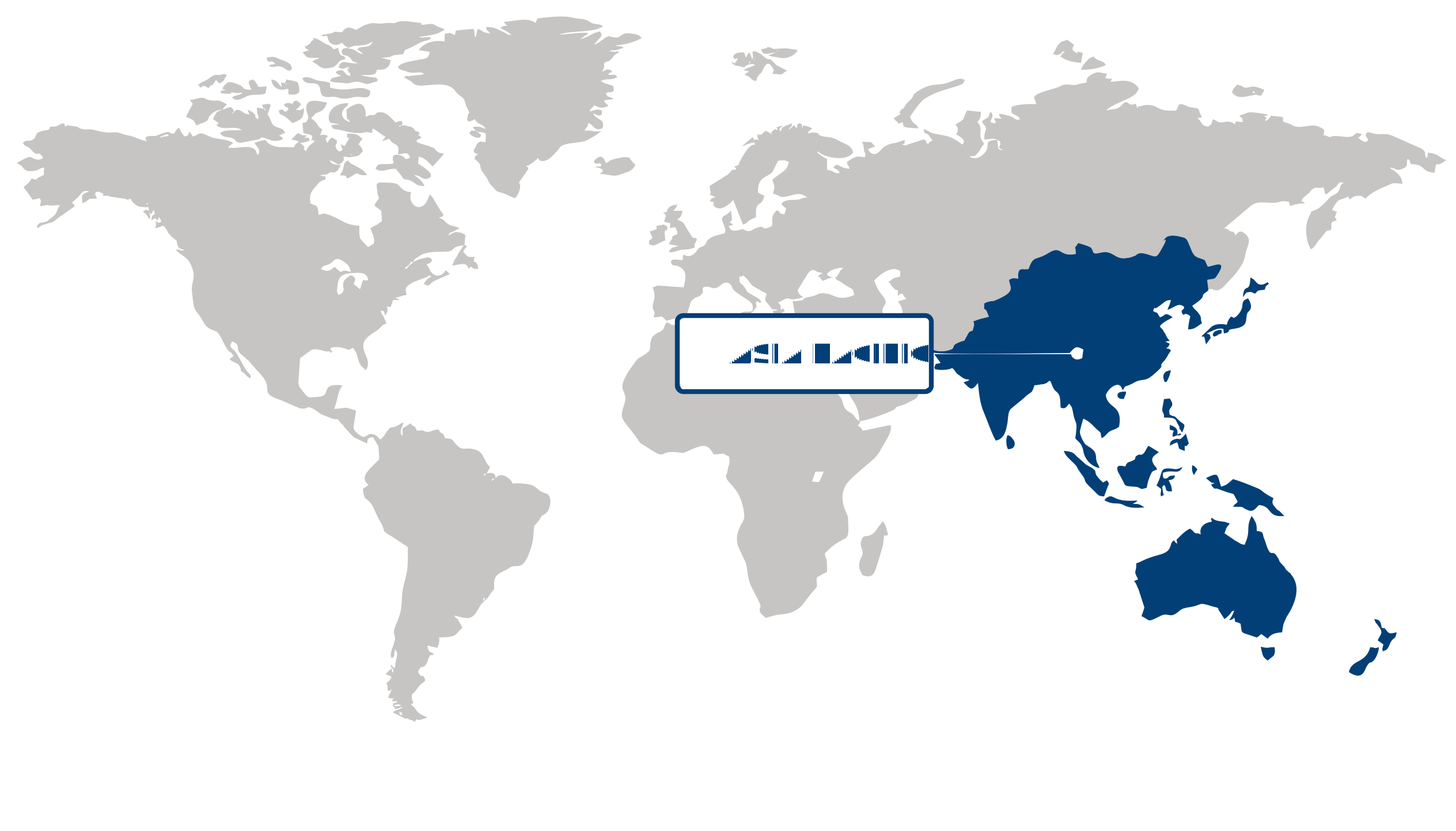
Asia Pacific (Largest & Fastest-Growing Region)
Asia Pacific dominated the automotive interior leather market in 2026, accounting for a 44.84% share, while also representing the fastest-growing regional market due to its extensive automotive manufacturing base and expanding vehicle demand. Leather and leather-like materials remain important for automotive interiors because they provide durability, comfort, premium appearance, and design flexibility across seating and interior applications. The region's strong vehicle production ecosystem supports a broad supplier network and facilitates the development of specialized interior materials. Rising consumer preference for comfortable and visually appealing vehicle cabins is also encouraging manufacturers to offer higher-quality interior finishes. At the same time, growing attention to sustainable materials is stimulating interest in alternative and engineered leather solutions, expanding opportunities for innovation within automotive interiors. Increasing vehicle electrification is further encouraging interior redesign, creating demand for materials that combine aesthetics, functionality, and evolving sustainability requirements.
| Parameter | North America | Asia Pacific | Europe | Latin America | MEA |
|---|---|---|---|---|---|
| Innovation Hub i Scale Nascent Developing Advanced | |||||
| Cost-Sensitive Region i Scale Low Medium High | |||||
| Regulatory Environment i Scale Restrictive Neutral Supportive | |||||
| Demand Drivers i Scale Weak Moderate Strong | |||||
| Development Stage i Scale Emerging Developing Developed | |||||
| Adoption Rate i Scale Low Medium High | |||||
| New Entrants / Startups i Scale Sparse Moderate Dense | |||||
| Macro Indicators i Scale Weak Stable Strong |
Key Country Insights
Germany 🇩🇪
Precision Interior CraftsmanshipGermany prioritizes high-quality automotive interior leather with a strong focus on craftsmanship, lightweight material integration, and premium vehicle interiors. German manufacturers work closely with leather processors to balance luxury finishes with stricter sustainability and production standards.
France 🇫🇷
Sustainable Luxury MaterialsFrance encourages the use of responsibly sourced automotive interior leather that aligns with luxury vehicle design and environmental objectives. French suppliers are expanding low-impact tanning methods while supporting premium automotive brands with customized interior solutions.
Italy 🇮🇹
Artisan Leather ExpertiseItaly leverages its established leather craftsmanship to supply premium automotive interiors with distinctive textures, finishes, and customization options. Italian manufacturers continue investing in advanced processing techniques that preserve quality while meeting evolving sustainability expectations.
Japan 🇯🇵
Comfort-Focused FinishesJapan emphasizes refined automotive interior leather that enhances passenger comfort, tactile quality, and long-term durability. Japanese vehicle manufacturers continue integrating advanced finishing technologies that support premium interiors while reducing maintenance requirements and material waste.
South Korea 🇰🇷
Innovation-Driven UpholsterySouth Korea advances automotive interior leather through innovative surface treatments, premium design integration, and environmentally conscious processing methods. Domestic automakers increasingly seek suppliers capable of delivering lightweight and aesthetically distinctive interior materials.
United States 🇺🇸
Premium Cabin MaterialsThe U.S. automotive interior leather market emphasizes premium cabin personalization, durable upholstery, and sustainable leather alternatives for passenger vehicles and luxury SUVs. Automakers in the U.S. increasingly collaborate with material suppliers to improve comfort, stain resistance, and environmental compliance.
Segment Leadership and Growth Trends
Automotive Interior Leather Market Share (%), by Material, 2026
Go beyond the chart, access full insights & data tables
Request Free Sample ReportMaterial Segment Analysis: Genuine (Largest Segment) vs Synthetic (Fastest-Growing Segment)
Genuine leather represented the largest material segment of the automotive interior leather market with a 62.69% share in 2026, supported by its premium appearance, tactile quality, durability, and association with upscale vehicle interiors. Automakers and consumers continue to value genuine leather for seating, door panels, dashboards, and other interior applications where comfort and perceived vehicle quality are important. Demand for refined cabin environments and premium interior finishes continues to reinforce the established position of genuine leather in automotive applications.
Synthetic leather is the fastest-growing material segment as automotive manufacturers increasingly seek alternatives that offer design flexibility, consistent quality, and greater control over material characteristics. Synthetic materials can support a broad range of textures, colors, and finishes while helping manufacturers address evolving preferences around material efficiency and interior customization. The expansion of electric and premium vehicle interiors, together with increasing attention to innovative and adaptable interior materials, is supporting wider adoption of synthetic leather.
Vehicle Type Segment Analysis: Passenger Car (Largest Segment) vs Light Commercial Vehicle (Fastest-Growing Segment)
The passenger car segment held the largest share of the automotive interior leather market at 62.76% in 2026, driven by the extensive use of leather and leather-like materials across seating, trim, door interiors, and other cabin surfaces. Consumer expectations for comfort, aesthetics, and premium interior experiences have encouraged manufacturers to incorporate sophisticated upholstery and finishing materials into passenger vehicles. Increasing differentiation through interior design and the growing importance of cabin quality continue to sustain demand within this vehicle category.
Light commercial vehicles are emerging as the fastest-growing vehicle type segment, supported by rising attention to driver comfort, cabin durability, and improved interior quality in commercial transportation. Operators increasingly value interiors that can withstand intensive use while providing practical comfort for drivers who spend substantial time on the road. Expanding commercial mobility, delivery activities, and fleet modernization are encouraging greater adoption of durable and visually appealing interior leather solutions in light commercial vehicles.
| Segment | Sub-Segment | Largest Segment | Fastest Growing |
|---|---|---|---|
| Material | Genuine, Synthetic | Genuine | Synthetic |
| Vehicle Type | Passenger Car, Light Commercial Vehicle, Heavy Commercial Vehicle | Passenger Car | Light Commercial Vehicle |
| Car Class | Economy Car, Mid-Segment Car, Luxury Car | Luxury Car | Luxury Car |
| Applications | Seats & Center Stack, Carpets, Headliners, Upholstery, Seat Belt, Door Panels, Others | Seats & Center Stack | Carpets |
Competitive Landscape and Market Positioning
Key companies in the automotive interior leather market:
1. Lear Corporation (United States)
2. Eagle Ottawa LLC (United States)
3. BADER GmbH & Co. KG (Germany)
4. BOXMARK Leather GmbH & Co KG (Austria)
5. GST AutoLeather Inc. (United States)
6. Wollsdorf Leder Schmidt & Co Ges.m.b.H. (Austria)
7. Seiren Co. Ltd. (Japan)
8. Katzkin Leather Inc. (United States)
9. Scottish Leather Group Limited (United Kingdom)
10. Kuraray Co. Ltd. (Japan)
The automotive interior leather market is evolving with strong emphasis on premiumization, comfort, and sustainable material innovation. Advanced processing techniques are improving durability and aesthetic quality. Continuous material development is enabling eco-friendly alternatives, while design innovation is enhancing customization and vehicle interior appeal.
| Company | Market Share | Company Revenue | Revenue CAGR (%) | Product Portfolio | Geographic Presence | Innovation / R&D Focus | Strategic Developments |
|---|---|---|---|---|---|---|---|
| Lear Corporation (United States) | |||||||
| Eagle Ottawa LLC (United States) | |||||||
| BADER GmbH & Co. KG (Germany) | |||||||
| BOXMARK Leather GmbH & Co KG (Austria) | |||||||
| GST AutoLeather Inc. (United States) | |||||||
| Wollsdorf Leder Schmidt & Co Ges.m.b.H. (Austria) | |||||||
| Seiren Co. Ltd. (Japan) | |||||||
| Katzkin Leather Inc. (United States) | |||||||
| Scottish Leather Group Limited (United Kingdom) | |||||||
| Kuraray Co. Ltd. (Japan). |
Industry Development/News
| Company Name | Date | Key Development |
|---|---|---|
| Faurecia | May-25 | Faurecia announced investments in sustainable automotive interior material technologies to meet increasing OEM demand for environmentally compliant cabin components. The initiative focuses on advancing alternative material solutions and improving sustainability performance across interior systems, reinforcing Faurecia’s strategic positioning in next-generation automotive interior leather and trim supply chains. |
| Jaguar Land Rover and Maserati | Jan-25 | Jaguar Land Rover and Maserati joined the Leather Working Group to strengthen sustainability and responsible sourcing practices in automotive interior materials. The initiative supports enhanced environmental compliance and supply chain transparency in leather procurement, reinforcing alignment with industry sustainability standards and influencing material sourcing strategies across premium automotive interior leather supply chains. |
| Dow | Mar-24 | Dow introduced a polyolefin elastomer-based artificial leather solution designed for automotive applications, supporting the shift toward animal-free interior materials. Commercialized through its partner HIUV Materials Technology in China, the material is validated for electric vehicle seating applications, reflecting growing adoption of synthetic alternatives in automotive interior leather markets. |
| Volvo Cars | Mar-24 | Volvo Cars expanded its adoption of leather-free interiors across new electric vehicle models, strengthening its sustainability strategy and reducing reliance on traditional automotive leather materials. This shift contributes to rising demand for synthetic and alternative interior materials, reshaping supplier requirements and accelerating transition dynamics within automotive interior leather markets. |
| Sage Automotive Interiors | Jan-24 | Sage Automotive Interiors launched lightweight synthetic leather materials designed specifically for electric vehicle interiors, targeting OEM efficiency and sustainability objectives. The materials focus on weight reduction and functional performance, supporting evolving design requirements in EV cabin systems and strengthening Sage’s position in next-generation automotive interior material innovation. |
Customize Your Report
Explore examples of how this report can be tailored to different research needs, including custom segments, additional topics or chapters, and related reports. Click a section of the wheel or its numbered marker to explore the available options.
Automotive Interior Leather Market — Custom Segments
| Segment | Sub-Segment |
|---|---|
| Sales Channel | OEM, Aftermarket |
| Vehicle Propulsion | Internal Combustion Engine, Hybrid Electric, Battery Electric |
| Leather Finish | Smooth, Embossed, Perforated, Nubuck/Suede |
Automotive Interior Leather Market — Custom TOC
| Custom Chapter | Custom Details |
|---|---|
| OEM Material Sourcing Strategy |
|
| Sustainable Leather Alternatives Assessment |
|
| Circularity & Recycling Opportunity Analysis |
|
Need a different cut of the data?
Request Custom ResearchWhat is the current size of the automotive interior leather market?
How much is the automotive interior leather industry expected to grow by 2036?
How is rising demand for premium vehicle interiors in emerging economies shaping OEM leather integration strategies?
Why is synthetic leather gaining faster traction than genuine leather in automotive interior applications?
Why does Genuine leather dominate the automotive interior leather market?
Which vehicle type is growing the fastest in the automotive interior leather market?
Why is Asia Pacific the leading region in the automotive interior leather market?
What is driving automotive interior leather market growth in Asia Pacific?
Who are the leading players in the automotive interior leather landscape?
Our Clients
"The team surpassed our expectations with the report depth. The actionable insights provided proved crucial in navigating market challenges."
Tata Motors
"We found the report to be very informative. The expertise and attention to market nuances significantly influenced our business direction."
DENSO Corporation
"The consumer survey findings were quite good. We now have a clearer picture of the customer churning and retention strategy."
HL Mando
Our Research Team & Methodology
Every Fundamental Business Insights report is built by a dedicated vertical research team, validated through a structured primary-and-secondary methodology, and reviewed for accuracy before it reaches you.
Research Team Overview
Prepared by the Automotive & Transportation Research Team
Delivery
Published
Demand
Available
Support
Trust & Compliance
Research Domains
10 coverage areasResearch Intelligence
| Source | Reference |
|---|---|
| International Organization of Motor Vehicle Manufacturers (OICA) | www.oica.net |
| SAE International | www.sae.org |
| International Energy Agency (IEA) | www.iea.org |
| International Transport Forum (ITF) | www.itf-oecd.org |
| International Road Federation (IRF) | www.irf.global |
| International Organization for Standardization (ISO) | www.iso.org |
| United Nations Economic Commission for Europe (UNECE) | unece.org |
| National Highway Traffic Safety Administration (NHTSA) | www.nhtsa.gov |
| U.S. Department of Transportation (USDOT) | www.transportation.gov |
| European Automobile Manufacturers' Association (ACEA) | www.acea.auto |
| Society of Indian Automobile Manufacturers (SIAM) | www.siam.in |
| International Air Transport Association (IATA) | www.iata.org |
| International Civil Aviation Organization (ICAO) | www.icao.int |
| International Maritime Organization (IMO) | www.imo.org |
| International Union of Railways (UIC) | uic.org |
| American Public Transportation Association (APTA) | www.apta.com |
| International Federation of Robotics (IFR) | ifr.org |
| CharIN | www.charin.global |
| World Shipping Council | www.worldshipping.org |
| International Federation of Freight Forwarders Associations (FIATA) | fiata.org |
Research Workflow & Quality Assurance
Data Collection
Verified information gathered through primary and secondary research.
Data Triangulation
Cross-validation using multiple independent data sources.
Forecast Modelling
Market estimates developed using historical trends and analytical models.
Analyst Validation
Findings reviewed by domain experts for accuracy and consistency.
Editorial & Quality Review
Final editorial, quality, and compliance checks before publication.
Final Publication
Released after successful completion of the internal review process.
Report Coverage
📊 Market Assessment
- Market Size & Forecast
- Market Segmentation
- Regional Analysis
- Growth Drivers & Challenges
- Market Dynamics
🏢 Competitive Intelligence
- Competitive Landscape
- Company Profiles
- Competitive Benchmarking
- Mergers & Acquisitions
- Market Share Analysis or Key Company Strategies
🔍 Strategic Analysis
- Value Chain Analysis
- Porter's Five Forces
- PESTLE Analysis
- Pricing Trends
- Supply-Demand Analysis
🚀 Future Outlook
- Technology Landscape
- Regulatory Landscape
- Investment & Funding Landscape
- Emerging Opportunities
- Future Market Outlook
Have a question about this report or need a custom scope?
Request Customization