Automatic Molding Machine Market Size & Forecasts 2026-2035, By Segments (Material, End Use), Growth Opportunities, Innovation Landscape, Regulatory Shifts, Strategic Regional Insights (U.S., Japan, China, South Korea, UK, Germany, France), and Competitive Dynamics (Schuler, Kobe Steel, Siempelkamp, DISA, Fagor Arrasate)
Market Size and Growth Outlook
Automatic Molding Machine Market size is estimated to increase from USD 18.1 billion in 2025 to USD 29.48 billion by 2035, supported by a CAGR exceeding 5% during 2026-2035. In 2026, revenues are forecast to reach USD 18.88 billion.
Get more details on this report
Request Free Sample ReportAutomatic Molding Machine Market Intelligence Snapshot
Regional Market Dynamics
Segment Momentum
Market Expansion Drivers
Leading Market Participants
Global Market Forecast Snapshot
Market Outlook
Regional and Segment Outlook
Market Growth Drivers and Industry Trends
The surge in demand for automated molding processes marks a pivotal shift in the automatic molding machine market, driven by manufacturers’ imperative to enhance efficiency and reduce operational costs. The U.S. Department of Commerce has highlighted how automation improves production throughput while minimizing human error, a critical factor amid labor shortages and rising wages. This trend fuels opportunities for market incumbents to deepen integration of robotics and control technologies, while new entrants can capitalize by offering flexible, cost-effective solutions tailored to small and medium enterprises. As manufacturers increasingly prioritize lean production and digital workflows, automatic molding machines that deliver consistent, high-volume output will become essential, reinforcing the market’s growth trajectory with sustained industrial digitization.
Growth of High-Precision Molding for Electronics and Automotive Sectors
High-precision molding requirements in electronics and automotive manufacturing have intensified the adoption of sophisticated automatic molding machines, essential to meet stringent quality and miniaturization standards. Companies like Bosch and Samsung have publicly emphasized precision molding’s role in producing complex components such as microconnectors and lightweight vehicle parts, underscoring this driver. Enhanced precision enables manufacturers to achieve higher performance, energy efficiency, and regulatory compliance, opening strategic avenues for providers to innovate with advanced sensor integration and adaptive control systems. Given these sectors’ critical emphasis on product reliability and durability, the automatic molding machine market is positioned to benefit from ongoing innovation cycles and escalating demand for precision-engineered outputs.
Long-Term Adoption of Smart Molding Automation Systems
The evolving integration of smart automation technologies, including AI and IoT, is transforming the automatic molding machine market by enabling predictive maintenance, real-time process optimization, and enhanced traceability. Industry leaders such as Mitsubishi Electric have launched smart molding solutions that harness data analytics to reduce downtime and improve product consistency, aligning with manufacturers’ broader digital transformation agendas. This long-term adoption trend incentivizes both entrenched companies and startups to invest in interconnected platforms and cloud-based services, creating differentiated offerings in a competitive landscape. As sustainability and operational transparency gain importance, the market will increasingly favor automatic molding machines equipped with intelligent capabilities that support adaptive manufacturing and regulatory compliance.
Industry Restraints:
High Capital Intensity and Operational Costs
The automatic molding machine market is significantly constrained by the high capital investment required for advanced machinery, software integration, and maintenance. Such steep upfront costs, noted in Siemens’ 2023 capital expenditure disclosures, limit adoption primarily to large manufacturers with substantial financial resources, impeding small-to-medium enterprises (SMEs) from scaling automation. Additionally, operational inefficiencies arise when older equipment requires retrofitting rather than full replacement, which prolongs ROI periods, as highlighted in the International Plastics Machinery Association’s (IPMA) technical review. Market entrants face a formidable barrier in securing financing and justifying expenditures amidst competitive pricing pressures. This financial hurdle slows technological diffusion and capacity expansion. Moving forward, incremental cost reductions through modular designs and leasing models, such as those piloted by Arburg, may alleviate this restraint, but capital intensity will remain a key limiting factor in the near term.
Skilled Workforce Shortage and Training Deficits
A shortage of highly trained personnel capable of operating and maintaining sophisticated automatic molding machines significantly restricts the market’s growth trajectory. The U.S. Manufacturing Institute’s 2023 workforce study identifies a critical skills gap in advanced manufacturing technologies, limiting the ability of facilities to optimize new automation investments. This gap drives operational inefficiencies and heightens downtime risks, challenging both legacy players and new market entrants struggling to recruit or train talent rapidly enough. The shortage is exacerbated by rapid technological evolution and insufficient industry-academia collaboration, as reported by the European Commission’s latest industrial competitiveness briefing. Consequently, companies are compelled to invest disproportionately in workforce development, diverting resources from innovation or expansion. Unless industry-wide initiatives to upscale skills and vocational training accelerate, this constraint will persistently constrain market scalability and operational excellence prospects.
| Growth Driver | Impact on CAGR | Regulatory Influence | Geographic Relevance | Adoption Rate | Impact Timeline |
|---|---|---|---|---|---|
| Increasing demand for automated molding processes in manufacturing | 1.30% | Short term (≤ 2 yrs) | Asia Pacific, Europe (spillover: North America) | Low | Moderate |
| Growth of high-precision molding for electronics and automotive sectors | 1.10% | Medium term (2–5 yrs) | North America, Asia Pacific (spillover: Europe) | Medium | Moderate |
| Long-term adoption of smart molding automation systems | 0.80% | Long term (5+ yrs) | Europe (spillover: MEA) | Low | Slow |
Unlock insights tailored to your business with our bespoke market research solutions.
Click to get your customized report now.
Regional Demand Dynamics
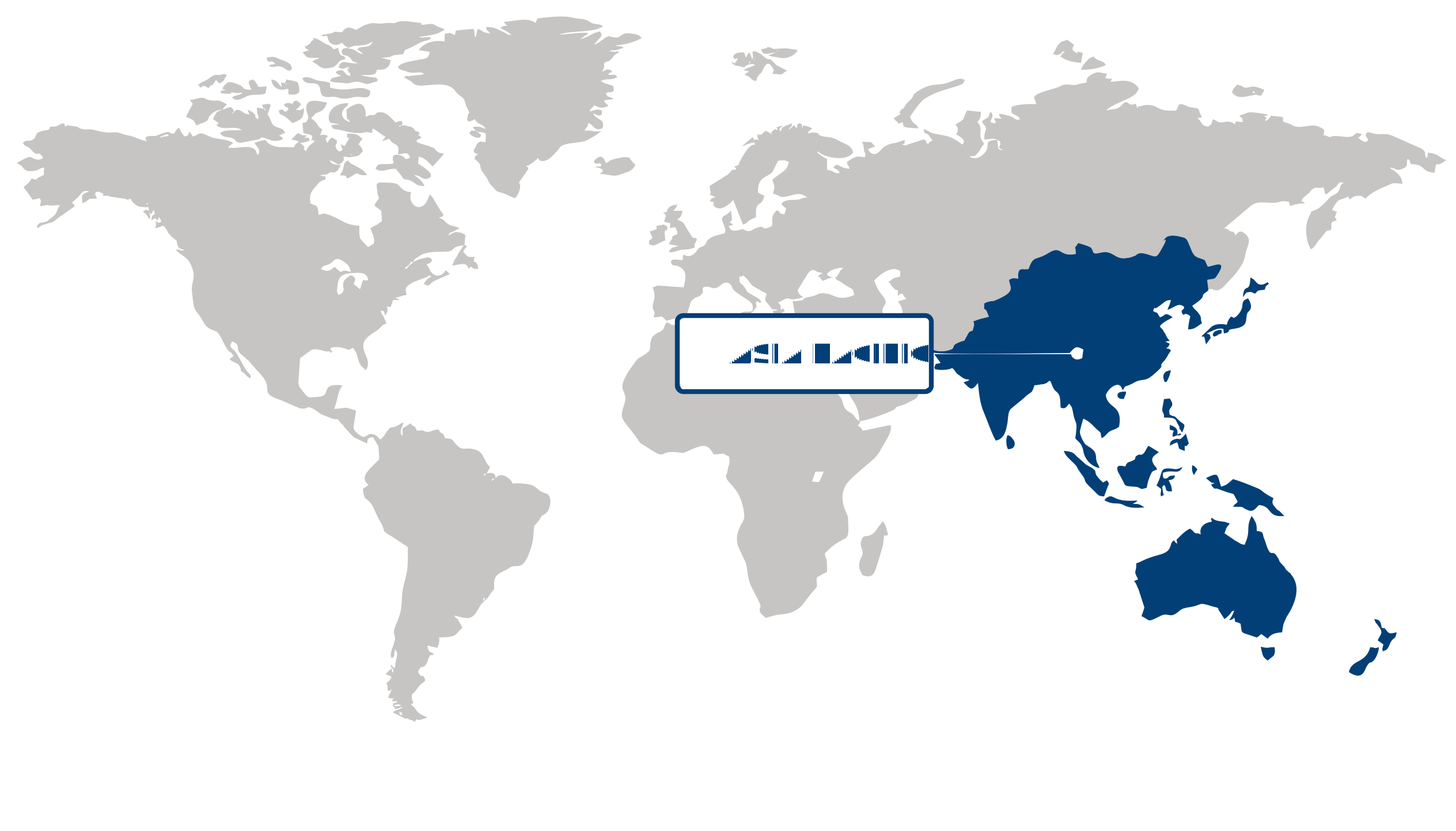
Asia Pacific dominated the automatic molding machine market in 2025, representing approximately 45% of the global share and exhibiting the fastest growth at a 7.5% CAGR. This region leads primarily due to its surge in semiconductor manufacturing facilities and high packaging output, driven by rising electronics demand and industrial automation. For instance, Taiwan Semiconductor Manufacturing Company (TSMC) has expanded multiple fabrication plants across APAC, enhancing precision molding requirements. Additionally, government initiatives like South Korea’s Smart Factory initiative have accelerated digital adoption, optimizing molding processes and supply chains. These dynamics, paired with a skilled workforce and competitive manufacturing costs, position Asia Pacific as a prime area for innovation and operational efficiency in automatic molding technologies, ensuring sustained investor interest and growth opportunities.
Japan is positioned as a pivotal hub in Asia Pacific’s automatic molding machine market, leveraging advanced automation standards and a focus on high-precision components for automotive and electronics sectors. Companies such as Fanuc Corporation have pioneered robotics integration in molding lines, strengthening Japan’s role in quality-driven and technologically advanced manufacturing. Regulatory emphasis on energy-efficient machinery also aligns with Japan’s sustainability agenda, further enhancing market adoption. This leadership in innovation and regulatory compliance reinforces Japan’s strategic importance within the regional market structure and aids in setting benchmarks for molding excellence across APAC.
China anchors the Asia Pacific automatic molding machine market through its expansive manufacturing ecosystem and aggressive capacity expansion in semiconductors and consumer packaging. Government-backed programs like “Made in China 2025” drive automation and modernization in molding techniques, supported by firms such as Haitai Machinery, which are upgrading to intelligent and high-throughput machines. The vast domestic market demand coupled with numerous export-oriented facilities creates robust momentum. China’s scale and progressive policies ensure it remains indispensable for regional market growth, enabling Asia Pacific to maintain its dominance and benefit from continued industrial scaling and technological investments.
North America Market Analysis:
North America emerged as the fastest-growing region in the automatic molding machine market, registering a robust CAGR of 7.5%. This vigorous expansion is primarily driven by technological advancements focused on automation and precision efficiency, notably boosting demand among automotive and electronics manufacturers who seek to reduce production downtime and enhance output quality. According to a recent report by the U.S. Department of Energy, increased investments in manufacturing innovation and Industry 4.0 initiatives have enabled North American firms to adopt more sophisticated molding technologies, aligning with stricter regulatory requirements and sustainability goals. Additionally, the region benefits from a supportive policy ecosystem and a skilled workforce adept at integrating digital solutions into manufacturing processes, positioning it as a hub for cutting-edge molding machinery development. Rising customer preference for customized, high-precision components further solidifies North America’s appeal as a dynamic market primed for continued growth.
The U.S. serves as the cornerstone of North America’s automatic molding machine market, driving much of the regional momentum through its advanced industrial base and innovation capabilities. The country’s strong automotive and consumer electronics sectors are rapidly adopting automated molding systems to meet increasing quality and efficiency demands. Policies from organizations like the National Institute of Standards and Technology (NIST), promoting smart manufacturing and digital transformation, foster accelerated adoption of these technologies. Additionally, leading players such as Milacron Holdings Corporation have expanded U.S. production facilities, reflecting a strategic focus on enhancing supply chain resilience amid global disruptions. The country’s emphasis on reducing environmental impact through energy-efficient molding solutions further differentiates its market, underscoring a broader regional emphasis on sustainable growth. This trajectory indicates that U.S. industry trends will continue to shape North America’s leadership in the automatic molding machine market.
Europe Market Trends:
Europe maintained notable presence in the automatic molding machine market, driven by its advanced manufacturing base and increasing adoption of automation technologies across multiple sectors. The region benefits from a confluence of factors including stringent environmental regulations, which incentivize production efficiency and waste reduction, and a strong emphasis on digital transformation within industry 4.0 frameworks. According to the European Association of the Automotive Suppliers (CLEPA), manufacturers are rapidly integrating smart molding solutions to meet evolving quality standards and reduce lead times. Furthermore, Europe's robust logistics infrastructure and skilled workforce underpin steady demand growth, despite economic headwinds. These combined dynamics position Europe as a vital hub for innovation and sustainable production in the automatic molding machine market, offering investors and strategists considerable opportunities to leverage technology-driven operational enhancements.
Germany plays a pivotal role in Europe’s automatic molding machine market, characterized by its leadership in precision engineering and strong industrial automation culture. The German government’s support for Industry 4.0 initiatives, as outlined by the Federal Ministry for Economic Affairs and Climate Action, has accelerated the deployment of smart molding machinery that integrates real-time monitoring and predictive maintenance. German manufacturers such as Arburg and KraussMaffei have publicly emphasized innovation in energy-efficient molding systems, showcasing the country's commitment to reducing carbon footprints while maintaining high productivity. This environment fosters competitive differentiation and positions Germany as a strategic cornerstone for regional growth, particularly in automotive and consumer goods segments.
France holds a significant position within the automatic molding machine market in Europe, propelled by growing demand in aerospace and healthcare industries that prioritize precision and compliance with strict safety standards. The French Agency for Ecological Transition (ADEME) supports manufacturers adopting environmentally friendly processes, encouraging a shift toward automated molding equipment with lower emissions and enhanced recyclability. Companies like Groupe Gorgé have announced investments in intelligent molding technologies that align with France's sustainability goals and regulatory frameworks. This trend emphasizes France’s role in spearheading eco-conscious innovation, reinforcing Europe’s overall market resilience and augmenting regional opportunities for automation-driven efficiency improvements.
| Parameter | North America | Asia Pacific | Europe | Latin America | MEA |
|---|---|---|---|---|---|
| Innovation Hub i Scale Nascent Developing Advanced | |||||
| Cost-Sensitive Region i Scale Low Medium High | |||||
| Regulatory Environment i Scale Restrictive Neutral Supportive | |||||
| Demand Drivers i Scale Weak Moderate Strong | |||||
| Development Stage i Scale Emerging Developing Developed | |||||
| Adoption Rate i Scale Low Medium High | |||||
| New Entrants / Startups i Scale Sparse Moderate Dense | |||||
| Macro Indicators i Scale Weak Stable Strong |
Segment Leadership and Growth Trends
Automatic Molding Machine Market Share (%), by Material, 2026
Go beyond the chart, access full insights & data tables
Request Free Sample ReportPlastics represented the largest share in the automatic molding machine market in 2025, driven primarily by robust demand for plastic molded components in consumer and automotive sectors. This segment’s leadership reflects a broader shift toward lightweight, cost-effective, and versatile materials, responding to evolving customer preferences for durable yet affordable products. Regulatory emphasis on recyclability and sustainability, highlighted by initiatives from the U.S. Environmental Protection Agency, is accelerating innovations in plastic formulations and molding processes. Major manufacturers like BASF and SABIC are investing in advanced automatic molding technologies to boost efficiency and reduce waste, enhancing competitive positioning. For both established players and new entrants, this segment offers strategic advantages through scalable production and adaptability to diverse applications. With ongoing advancements in material science and sustainability-driven policies, the plastics segment is expected to maintain its dominant role in the automatic molding machine market for the foreseeable future.
Analysis by End Use
The automotive segment held the largest share in the automatic molding machine market in 2025, propelled by increased automotive production and the growing adoption of molded plastic parts for lightweight vehicle design. This segment’s prominence is reinforced by heightened industry focus on fuel efficiency and emission reduction targets, as underscored by standards from the European Automobile Manufacturers Association (ACEA). Consumer demand for smarter, safer, and cost-effective vehicles further fuels preference for automated molding solutions in automotive component production. Supply chain enhancements and digital transformation efforts, such as Industry 4.0 integration by leading OEMs like Toyota and Volkswagen, ensure precision and scalability in manufacturing operations. For producers, this segment provides long-term opportunities to innovate and capture value in an evolving automotive landscape. Given sustained regulatory pressure and technological evolution, the automotive segment is poised to retain its critical position within the automatic molding machine market.
| Segment | Sub-Segment | Largest Segment | Fastest Growing |
|---|---|---|---|
| Material | Plastics, Metals, Others | ||
| End Use | Automotive, Consumer Goods, Packaging, Electronics, Others |
Competitive Landscape and Market Positioning
The competitive environment is shaped by ongoing collaborative efforts and technology-driven enhancements among these leaders. Investments in R&D are driving incremental improvements in automation capabilities, energy efficiency, and system integration. Several players have broadened their portfolios through partnerships, enhancing their ability to offer turnkey molding solutions. Firms like Schuler and Kojbe Steel have expanded through alliances that improve their reach into emerging markets and specialized applications. The introduction of intelligent molding systems by Siempelkamp and DISA echoes a market-wide focus on digitalization and customization. This dynamic interplay of innovation and strategic expansion positions these companies to respond effectively to evolving end-user demands and competitive pressures.
Strategic / Actionable Recommendations for Regional Players
North American players could benefit from intensifying collaborations with technology firms specializing in artificial intelligence and IoT, enabling the integration of advanced predictive maintenance and process optimization into their molding solutions. Targeting sectors such as automotive electrification and lightweight materials may also yield competitive advantages.
In the Asia Pacific, leveraging extensive manufacturing ecosystems through joint development projects may accelerate innovation cycles and local customization. Emphasizing flexible automation to accommodate diverse industrial applications can strengthen market reach and resilience amid shifting demand patterns.
European companies might consider deepening cooperation within industrial clusters to foster knowledge sharing and rapid prototyping capabilities. Prioritizing sustainable manufacturing technologies and energy-efficient equipment aligns with regional regulatory trends and appeals to environmentally conscious clientele.
| Company | Market Share | Company Revenue | Revenue CAGR (%) | Product Portfolio | Geographic Presence | Innovation / R&D Focus | Strategic Developments |
|---|---|---|---|---|---|---|---|
| No companies available. | |||||||
Industry Development/News
| Company Name | Date | Key Development |
|---|
Customize Your Report
Explore examples of how this report can be tailored to different research needs, including custom segments, additional topics or chapters, and related reports. Click a section of the wheel or its numbered marker to explore the available options.
Automatic Molding Machine Market — Custom Segments
| Segment | Sub-Segment |
|---|---|
| No segment data available. | |
Automatic Molding Machine Market — Custom TOC
| Custom Chapter | Custom Details | ||
|---|---|---|---|
| No custom TOC data available. | |||
Need a different cut of the data?
Request Custom ResearchWhat is the expected industry size of automatic molding machine by 2035?
Which region holds the largest share of the automatic molding machine market?
In which region is the automatic molding machine sector expanding at the quickest pace?
Where is the plastics segment seeing the strongest adoption within the automatic molding machine industry?
When did automotive sub-segment emerge as the largest sub-segment in the end use segment of automatic molding machine sector?
Which organizations are considered leaders in the automatic molding machine landscape?
Our Clients
"The team at Fundamental Business Insights & Consulting demonstrated a commitment to excellence, not only in the quality of the report but also in their client-centric approach."
FANUC
"The level of detail in the market segmentation provided were particularly noteworthy. The detailed country-level insights were also very helpful."
B&R Industrial Automation GmbH
"The consultant took the time to understand our specific business objectives, ensuring that the reports were tailored to address our unique challenges and opportunities."
KUKA SE & Co. KGaA
Our Research Team & Methodology
Every Fundamental Business Insights report is built by a dedicated vertical research team, validated through a structured primary-and-secondary methodology, and reviewed for accuracy before it reaches you.
Research Team Overview
Prepared by the Industrial Automation & Equipment Research Team
Delivery
Published
Demand
Available
Support
Trust & Compliance
Research Domains
10 coverage areasResearch Intelligence
| Source | Reference |
|---|---|
| International Society of Automation (ISA) | www.isa.org |
| International Organization for Standardization (ISO) | www.iso.org |
| National Institute of Standards and Technology (NIST) | www.nist.gov |
| IEEE | www.ieee.org |
| VDMA (German Mechanical Engineering Industry Association) | www.vdma.org |
| Association for Advancing Automation (A3) | www.automate.org |
| International Federation of Robotics (IFR) | ifr.org |
| ASME (American Society of Mechanical Engineers) | www.asme.org |
| ASHRAE | www.ashrae.org |
| American Society of Heating, Refrigerating and Air-Conditioning Engineers (ASHRAE) | www.ashrae.org |
| Material Handling Industry (MHI) | www.mhi.org |
| OSHA (Occupational Safety and Health Administration) | www.osha.gov |
| National Fire Protection Association (NFPA) | www.nfpa.org |
| ASTM International | www.astm.org |
| International Electrotechnical Commission (IEC) | www.iec.ch |
| Open Process Automation Forum (The Open Group) | www.opengroup.org/open-process-automation-forum |
| AGMA (American Gear Manufacturers Association) | www.agma.org |
| Association of Equipment Manufacturers (AEM) | www.aem.org |
| Food and Agriculture Organization (FAO) | www.fao.org |
| International Labour Organization (ILO) | www.ilo.org |
Research Workflow & Quality Assurance
Data Collection
Verified information gathered through primary and secondary research.
Data Triangulation
Cross-validation using multiple independent data sources.
Forecast Modelling
Market estimates developed using historical trends and analytical models.
Analyst Validation
Findings reviewed by domain experts for accuracy and consistency.
Editorial & Quality Review
Final editorial, quality, and compliance checks before publication.
Final Publication
Released after successful completion of the internal review process.
Report Coverage
📊 Market Assessment
- Market Size & Forecast
- Market Segmentation
- Regional Analysis
- Growth Drivers & Challenges
- Market Dynamics
🏢 Competitive Intelligence
- Competitive Landscape
- Company Profiles
- Competitive Benchmarking
- Mergers & Acquisitions
- Market Share Analysis or Key Company Strategies
🔍 Strategic Analysis
- Value Chain Analysis
- Porter's Five Forces
- PESTLE Analysis
- Pricing Trends
- Supply-Demand Analysis
🚀 Future Outlook
- Technology Landscape
- Regulatory Landscape
- Investment & Funding Landscape
- Emerging Opportunities
- Future Market Outlook
Have a question about this report or need a custom scope?
Request Customization