Aseptic Paper Packaging Market Size & Forecasts 2026-2035, By Segments (Paper Type, Packaging Type, End-Use, Thickness), Growth Opportunities, Innovation Landscape, Regulatory Shifts, Strategic Regional Insights (U.S., Japan, China, South Korea, UK, Germany, France), and Competitive Dynamics (Tetra Pak, SIG Combibloc, Elopak, WestRock, Evergreen Packaging)
Market Size and Growth Outlook
Aseptic Paper Packaging Market size is anticipated to rise from USD 1.08 billion in 2025 to USD 1.76 billion by 2035, reflecting a CAGR surpassing 5% over the forecast horizon of 2026-2035. The estimated revenue for 2026 is USD 1.13 billion.
Get more details on this report
Request Free Sample ReportAseptic Paper Packaging Market Intelligence Snapshot
Regional Market Dynamics
Segment Momentum
Market Expansion Drivers
Leading Market Participants
Global Market Forecast Snapshot
Market Outlook
Regional and Segment Outlook
Market Growth Drivers and Industry Trends
The aseptic paper packaging market is significantly propelled by consumers’ increasing preference for products with longer shelf lives and enhanced safety features. This demand aligns with broader trends in convenience and freshness, as consumers seek packaging that preserves nutritional quality without preservatives. For instance, Tetra Pak’s ongoing innovations in aseptic technology underscore how extended shelf-life solutions enable manufacturers to reduce food waste and improve distribution efficiency globally. This trend opens strategic avenues for incumbents to differentiate through proprietary aseptic barriers and for new entrants to innovate in materials science. As packaged food consumption rises and supply chains become more complex, the market will increasingly prioritize safety-compliant, shelf-stable packaging solutions.
Regulatory Push for Food Safety
Stringent food safety regulations enacted by bodies like the U.S. Food and Drug Administration (FDA) and the European Food Safety Authority (EFSA) are shaping the aseptic paper packaging market by enforcing rigorous standards on packaging integrity and contaminant prevention. Regulatory frameworks demand aseptic packaging solutions that prevent microbial growth and maintain sterility. For example, the FDA’s updated guidelines on aseptic processing have prompted global manufacturers such as SIG Combibloc to enhance quality controls and invest in compliant technologies. This regulatory environment encourages incumbent leaders to invest in certification processes and compliance-driven innovation while offering new players clear entry criteria based on adherence to safety benchmarks. The continued regulatory focus assures sustained emphasis on sterile, high-integrity packaging systems.
Eco-Friendly Paper Packaging Innovations
Sustainability imperatives drive the aseptic paper packaging market as corporations and governments respond to increased environmental scrutiny. The move toward bio-based, recyclable, and renewable materials is driven by policies like the European Green Deal and corporate commitments from brands such as Nestlé, which announced a target to make 100% of its packaging recyclable or reusable by 2025. Innovations such as biodegradable coatings and reduced plastic layers are gaining traction, aligning with consumer demands for lower environmental impact. This creates competitive opportunity for experienced players who can leverage existing knowledge of eco-materials and for startups focusing on novel biodegradable composites. The market dynamic suggests a growing prioritization of circular economy principles embedded within aseptic packaging designs.
Industry Restraints:
High Capital Investment and Technological Complexity
The aseptic paper packaging market faces significant barriers due to the substantial capital investment and advanced technological expertise required to develop and maintain aseptic filling lines. The integration of multilayer paperboard with aseptic technology demands precision engineering, increasing operational costs and complexity. Tetra Pak’s 2023 sustainability report underscores that initial machinery setup and ongoing maintenance remain cost-prohibitive for many small and medium-sized enterprises, limiting market penetration. For incumbents, this necessitates considerable capital allocation and technical proficiency, while new entrants face steep entry barriers. Consequently, companies must prioritize strategic partnerships or incremental investments to mitigate risk. This restraint will likely persist as the underlying technologies continue evolving, requiring ongoing innovation and capital, thereby tempering rapid market expansion.
Regulatory and Sustainability Compliance Challenges
Stringent regulatory standards and evolving sustainability requirements considerably constrain the aseptic paper packaging sector. Compliance with food safety regulations—such as those enforced by the U.S. Food and Drug Administration (FDA) and the European Food Safety Authority (EFSA)—requires continuous validation and documentation of aseptic processes, raising operational overhead. Additionally, the Forest Stewardship Council (FSC) certification demands sustainable sourcing, pressuring manufacturers to balance eco-friendly material procurement against cost efficiency. As highlighted in Mondi Group’s 2023 sustainability update, fulfilling these criteria often delays product rollout and restricts flexible supply chains. Both legacy players and newcomers must invest in compliance infrastructure, impacting agility and profitability. These regulatory and sustainability imperatives will intensify, compelling market players to embed compliance into core strategies to maintain competitive positioning.
| Growth Driver | Impact on CAGR | Regulatory Influence | Geographic Relevance | Adoption Rate | Impact Timeline |
|---|---|---|---|---|---|
| Rising demand for safe, extended shelf-life packaging | 2.00% | Short term (≤ 2 yrs) | North America, Europe | Medium | Fast |
| Regulatory push for food safety | 1.50% | Medium term (2–5 yrs) | Europe, North America | High | Moderate |
| Eco-friendly paper packaging innovations | 1.50% | Long term (5+ yrs) | Asia Pacific, Europe | Medium | Slow |
Unlock insights tailored to your business with our bespoke market research solutions.
Click to get your customized report now.
Regional Demand Dynamics
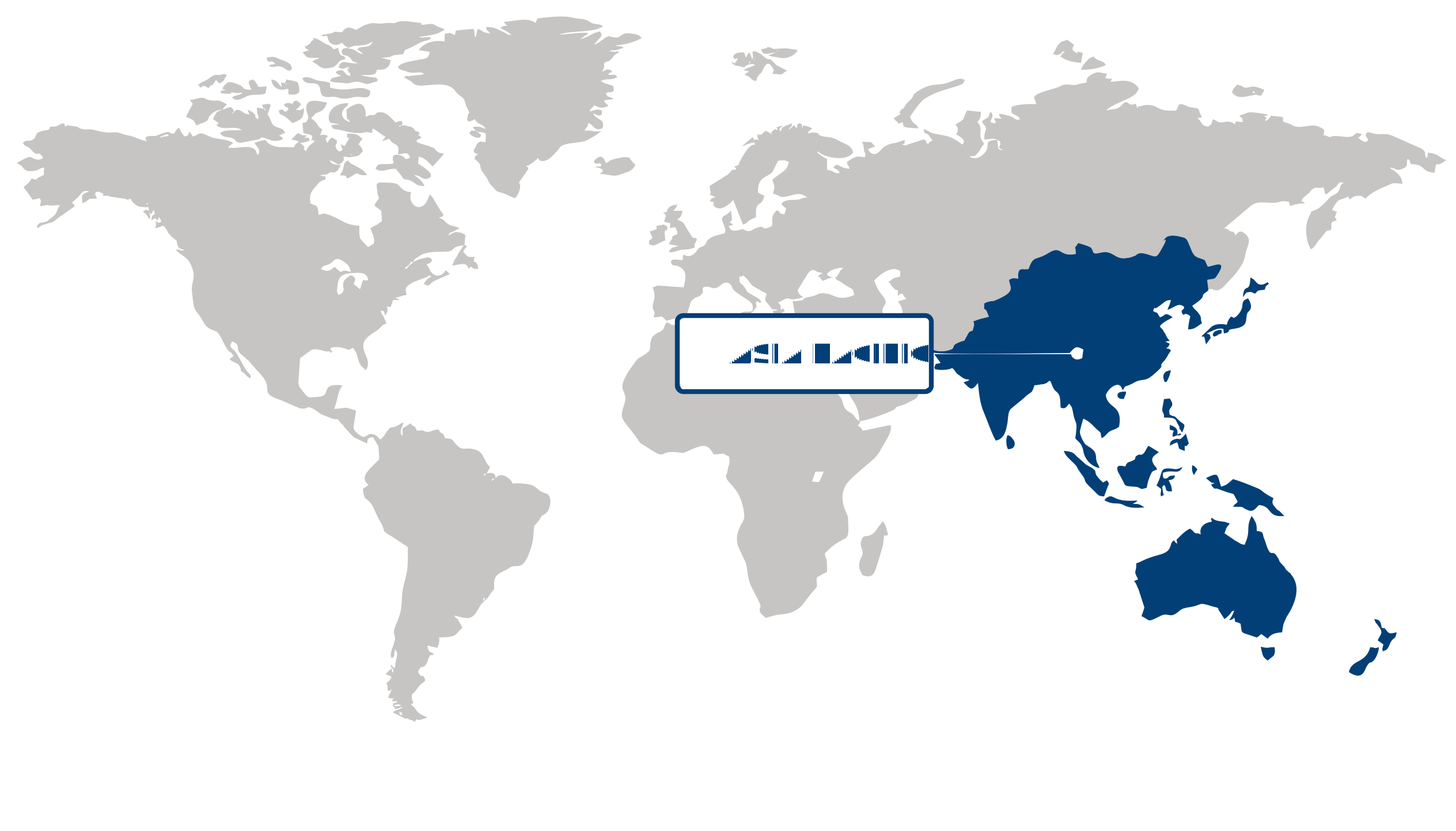
Asia Pacific dominated the aseptic paper packaging market in 2025, capturing over 38.4% of the global share and exhibiting the fastest growth with a 7.5% CAGR. This strong leadership stems primarily from the massive demand for shelf-stable dairy and beverage products in developing economies such as India and Southeast Asia. Rising urbanization and increasing consumer preference for convenient, long-lasting food items have driven this surge, complemented by regional governments promoting sustainable packaging solutions in line with environmental policies. For instance, the Asia Pacific Regional Packaging Association highlights accelerated investment in eco-friendly materials and technological advancements in aseptic processing by major players like Tetra Pak in the region. These dynamics position Asia Pacific as a strategic hub offering substantial expansion opportunities in the aseptic paper packaging market, fueled by evolving consumption patterns and sustainability commitments.
Japan serves as a pivotal hub in Asia Pacific’s aseptic paper packaging market, driven by stringent regulatory standards and high consumer awareness around food safety and environmental impact. Leading companies such as Mitsubishi Paper Mills have invested heavily in innovative aseptic packaging that enhances shelf life while reducing waste, responding to Japan’s shift towards eco-conscious consumption. The government’s policies incentivizing reduced plastic use and promoting recycling further stimulate market growth. Japan’s mature market dynamics and focus on high-quality packaging solutions complement regional expansion, providing valuable expertise and technological advancements that benefit broader Asia Pacific opportunities.
China anchors the Asia Pacific aseptic paper packaging market with expansive demand fueled by rapid urbanization and a booming middle class increasingly favoring shelf-stable dairy and beverages. Chinese manufacturers like Nine Dragons Paper have expanded capacity and embraced digital supply chain innovations to meet escalating consumer demand and regulatory frameworks promoting food safety and sustainability. The country's proactive environmental regulations encourage adoption of renewable, aseptic packaging alternatives, reducing reliance on conventional plastics. China’s scale and investment in technology reinforce Asia Pacific’s market leadership, underscoring its critical role in unlocking growth prospects across developing and developed markets in the region.
North America Market Analysis:
North America held a substantial share in the aseptic paper packaging market, driven by heightened consumer awareness around sustainability and health-conscious product choices. The region’s evolving regulatory environment, with agencies like the U.S. Food and Drug Administration (FDA) and Environment Protection Agency (EPA) emphasizing biodegradable and contaminant-free packaging, further bolsters demand for aseptic paper solutions. Leading food and beverage companies such as Tetra Pak and Evergreen Packaging have expanded sustainable packaging lines here, responding to shifting spending patterns favoring eco-friendly products. North America’s advanced supply chains and growing investments in renewable materials reinforce its competitive edge. With increasing digital adoption streamlining packaging innovation and consumer engagement, the region remains pivotal for investors seeking long-term growth in aseptic paper packaging.
The U.S. plays a crucial role within North America’s aseptic paper packaging market, propelled by high consumer demand for organic and fresh food products packaged safely without preservatives. The country’s stringent food safety standards, overseen by the FDA, compel manufacturers to adopt aseptic technology, ensuring extended shelf life while preserving nutritional quality. Companies such as Amcor and WestRock have introduced cutting-edge aseptic packaging that aligns with American consumers' preferences for convenience and sustainability, reinforced by growing regulatory push for reduced plastic usage. This dynamic cements the U.S. as a strategic hub fueling regional growth, highlighting opportunities for innovative packaging solutions that meet evolving regulatory and consumer expectations.
Europe Market Trends:
Europe maintained a notable presence in the aseptic paper packaging market, driven by a confluence of stringent environmental regulations, shifting consumer preferences toward sustainable products, and advancements in packaging technology. The European Union's rigorous standards on single-use plastics and waste reduction have accelerated the adoption of paper-based aseptic solutions, as emphasized in recent publications from the European Environment Agency. Furthermore, rising consumer awareness of eco-friendly packaging, particularly in beverages and dairy sectors, fosters consistent demand, backed by investments from leading corporations like SIG Combibloc and Elopak. The region's robust logistics infrastructure and commitment to circular economy principles further streamline supply chains, enhancing market responsiveness. These conditions collectively position Europe as a fertile ground for innovative aseptic paper packaging solutions, promising sustained opportunities for stakeholders committed to green packaging initiatives.
Germany plays a pivotal role in Europe's aseptic paper packaging market, propelled by its substantial industrial base and pro-environment policy framework. German regulatory bodies, such as the Federal Environment Agency, have enforced ambitious mandates on sustainable packaging materials, encouraging companies to accelerate their transition to paper-based aseptic alternatives. This regulatory push, combined with strong consumer demand for organic and minimally processed foods, supports substantial growth for aseptic paper packaging providers. Notably, companies like Tetra Pak and SIG Combibloc have expanded R&D facilities in Germany, underpinning innovation in barrier technologies that extend product shelf life without preservatives. Germany’s leadership in this domain enhances Europe’s overall competitive stance, making it a critical hub for scaling sustainable packaging solutions.
In France, the aseptic paper packaging market reflects moderate growth fueled by evolving consumer habits and national policies emphasizing climate responsibility. The French government’s plans under the Anti-Waste Law incentivize packaging innovation, prompting beverage producers and dairy manufacturers to adopt aseptic paper formats endorsed by industry associations such as France Pack. Additionally, French consumers demonstrate increasing preference for locally sourced, preservative-free products, driving demand for aseptic paper packaging's extended freshness capabilities. Multinational firms like DS Smith have publicly announced partnerships with French food producers to optimize package recyclability. France's escalating involvement in sustainable packaging thus reinforces Europe's market trajectory, underscoring the region’s cohesive shift towards environmentally aligned aseptic paper packaging solutions.
| Parameter | North America | Asia Pacific | Europe | Latin America | MEA |
|---|---|---|---|---|---|
| Innovation Hub i Scale Nascent Developing Advanced | |||||
| Cost-Sensitive Region i Scale Low Medium High | |||||
| Regulatory Environment i Scale Restrictive Neutral Supportive | |||||
| Demand Drivers i Scale Weak Moderate Strong | |||||
| Development Stage i Scale Emerging Developing Developed | |||||
| Adoption Rate i Scale Low Medium High | |||||
| New Entrants / Startups i Scale Sparse Moderate Dense | |||||
| Macro Indicators i Scale Weak Stable Strong |
Segment Leadership and Growth Trends
Aseptic Paper Packaging Market Share (%), by Paper Type, 2026
Go beyond the chart, access full insights & data tables
Request Free Sample ReportBleached paperboard held the largest share in the aseptic paper packaging market in 2025, driven primarily by its superior strength and exceptional printability, which are critical for beverage cartons. This segment benefits from rising consumer demand for visually appealing and durable packaging that preserves product integrity during long shelf life periods. Industry players like Tetra Pak emphasize bleached paperboard's compatibility with advanced printing technologies and sustainability efforts, aligning with stricter environmental regulations promoting recyclable materials. The enhanced structural properties aid supply chain efficiency by reducing damage during transport, which appeals to both manufacturers and retailers. For established companies and emerging entrants, this segment offers opportunities to innovate in design and to leverage growing demand for premium packaging aesthetics. Given ongoing investments in sustainable packaging materials and print innovation, bleached paperboard is poised to maintain its leading role in aseptic paper packaging in the foreseeable future.
Analysis by Packaging Type
Flat top carton represented the largest share of the aseptic paper packaging market in 2025, fueled by its convenience and cost-effectiveness in dairy and beverage packaging. This segment caters to evolving consumer preferences favoring easy-to-open and resealable options, facilitating on-the-go usage and reducing product waste. Packaging leaders like SIG Combibloc highlight flat top cartons as a versatile solution that balances functionality with production efficiency, aligning with retailers’ focus on optimizing shelf space and minimizing costs. Moreover, the flat top design supports automated filling lines, enhancing supply chain throughput and scalability. The segment’s prominence presents strategic advantages for both incumbents and emerging firms aiming to capture diverse markets with modular, sustainable packaging formats. As digital printing and lightweight materials continue to advance, flat top cartons are expected to sustain their relevance by meeting evolving market demands efficiently.
Analysis by End-Use
The beverages segment dominated the aseptic paper packaging market in 2025, supported by the rising consumption of shelf-stable beverages and the growing demand for aseptic packaging that ensures freshness without refrigeration. Consumer trends toward healthy, ready-to-drink products and an increasing preference for on-the-go lifestyles underpin this segment’s leadership. Global beverage companies such as Nestlé and Danone emphasize aseptic packaging’s role in extending shelf life while reducing environmental footprint, consistent with tightening food safety regulations from agencies like the FDA and EFSA. The capacity to protect product quality during distribution and storage enhances supply chain resilience, especially in emerging markets. This segment offers robust opportunities for innovation in barrier technologies and sustainable sourcing, appealing to both multinational corporations and agile startups. With continuous shifts toward convenience and sustainability, the beverage segment is expected to remain a key driver in the aseptic paper packaging market.
| Segment | Sub-Segment | Largest Segment | Fastest Growing |
|---|---|---|---|
| Paper Type | Bleached Paperboard, Coated Unbleached Bleached Paperboard | ||
| Packaging Type | Flat Top Carton, Gable Top Carton | ||
| End-Use | Dairy Products, Beverages | ||
| Thickness | Less than 240um, 240 to 260um, 260 to 280um, Above 280um |
Competitive Landscape and Market Positioning
The competitive environment in the aseptic paper packaging market is characterized by dynamic collaborations and technological advancements spearheaded by these key players. Tetra Pak and SIG Combibloc continue to enhance their portfolios through the introduction of next-generation aseptic cartons, integrating renewable fibers and smart packaging features. Strategic partnerships between WestRock and Evergreen Packaging facilitate scalability and penetration into niche segments such as premium beverages and dairy. Concurrently, Huhtamaki and Stora Enso bolster their innovation pipelines by investing in barrier coating technologies and biodegradable composites. Amcor and Nippon Paper Industries’ agility in adapting production lines to emerging formats strengthens their foothold across multiple regional markets. These collective moves not only intensify competition but also raise the industry standard for sustainability and product differentiation.
Strategic / Actionable Recommendations for Regional Players
In North America, regional participants could advance their market positioning by pursuing alliances with technology providers specializing in biodegradable barrier films, enhancing sustainability credentials aligned with consumer expectations. Collaborations with established beverage and food companies can facilitate tailored solutions targeting premium and organic product segments, where demand for aseptic paper packaging is rising.
Within the Asia Pacific region, embracing innovations in digital printing and smart packaging could unlock significant value by catering to rapidly urbanizing populations and evolving retail environments. Focusing on partnerships that streamline supply chains while integrating eco-friendly materials will be critical to navigating the complex regulatory landscapes and capturing growth in dynamic markets such as Japan and China.
European players would benefit from reinforcing their leadership in circular economy principles by expanding collaborations with recycling and paper pulp innovators. Prioritizing investments in lightweight packaging solutions and enhancing compatibility with existing waste management infrastructure can position companies favorably amid stringent environmental regulations and growing consumer awareness around packaging sustainability.
| Company | Market Share | Company Revenue | Revenue CAGR (%) | Product Portfolio | Geographic Presence | Innovation / R&D Focus | Strategic Developments |
|---|---|---|---|---|---|---|---|
| No companies available. | |||||||
Industry Development/News
| Company Name | Date | Key Development |
|---|
Customize Your Report
Explore examples of how this report can be tailored to different research needs, including custom segments, additional topics or chapters, and related reports. Click a section of the wheel or its numbered marker to explore the available options.
Aseptic Paper Packaging Market — Custom Segments
| Segment | Sub-Segment |
|---|---|
| No segment data available. | |
Aseptic Paper Packaging Market — Custom TOC
| Custom Chapter | Custom Details | ||
|---|---|---|---|
| No custom TOC data available. | |||
Need a different cut of the data?
Request Custom ResearchWhat is the anticipated CAGR of the aseptic paper packaging industry?
Which part of the world represents the largest segment of the aseptic paper packaging market?
Where has the aseptic paper packaging sector recorded the sharpest year-over-year increase?
Which is the largest sub-segment within the paper type segment for aseptic paper packaging industry?
Why does flat top carton sub-segment dominate the packaging type segment of aseptic paper packaging sector?
How does beverages segment fare in the aseptic paper packaging industry?
What share does less than 240um segment hold in the aseptic paper packaging sector as of 2025?
Who are the major participants shaping the aseptic paper packaging landscape?
Our Clients
"The report provided a thorough look at market trends, technological advancements, and the competitive landscape. The depth of insights was really valuable."
ITC Limited
"We would highly recommend Fundamental Business Insights & Consulting to anyone looking for reliable, detailed, and comprehensive market research in the Food industry."
Tyson Foods
"The clarity and presentation of the information were commendable. The report was delivered timely, which made the overall experience smooth and convenient."
Mondelēz International
Our Research Team & Methodology
Every Fundamental Business Insights report is built by a dedicated vertical research team, validated through a structured primary-and-secondary methodology, and reviewed for accuracy before it reaches you.
Research Team Overview
Prepared by the Food & Beverage Research Team
Delivery
Published
Demand
Available
Support
Trust & Compliance
Research Domains
10 coverage areasResearch Intelligence
| Source | Reference |
|---|---|
| Food and Agriculture Organization (FAO) | www.fao.org |
| World Health Organization (WHO) | www.who.int |
| U.S. Food & Drug Administration (FDA) | www.fda.gov |
| European Food Safety Authority (EFSA) | www.efsa.europa.eu |
| U.S. Department of Agriculture (USDA) | www.usda.gov |
| Codex Alimentarius Commission | www.fao.org/fao-who-codexalimentarius |
| International Organization for Standardization (ISO) | www.iso.org |
| AOAC INTERNATIONAL | www.aoac.org |
| Institute of Food Technologists (IFT) | www.ift.org |
| International Dairy Foods Association (IDFA) | www.idfa.org |
| International Sweeteners Association (ISA) | www.sweeteners.org |
| International Probiotics Association (IPA) | internationalprobiotics.org |
| Good Food Institute (GFI) | gfi.org |
| American Feed Industry Association (AFIA) | www.afia.org |
| International Feed Industry Federation (IFIF) | ifif.org |
| Specialty Food Association (SFA) | www.specialtyfood.com |
| Brewers Association | www.brewersassociation.org |
| International Bottled Water Association (IBWA) | bottledwater.org |
| International Alliance for Dietary/Food Supplement Associations (IADSA) | www.iadsa.org |
| OECD Agriculture & Food | www.oecd.org/agriculture |
Research Workflow & Quality Assurance
Data Collection
Verified information gathered through primary and secondary research.
Data Triangulation
Cross-validation using multiple independent data sources.
Forecast Modelling
Market estimates developed using historical trends and analytical models.
Analyst Validation
Findings reviewed by domain experts for accuracy and consistency.
Editorial & Quality Review
Final editorial, quality, and compliance checks before publication.
Final Publication
Released after successful completion of the internal review process.
Report Coverage
📊 Market Assessment
- Market Size & Forecast
- Market Segmentation
- Regional Analysis
- Growth Drivers & Challenges
- Market Dynamics
🏢 Competitive Intelligence
- Competitive Landscape
- Company Profiles
- Competitive Benchmarking
- Mergers & Acquisitions
- Market Share Analysis or Key Company Strategies
🔍 Strategic Analysis
- Value Chain Analysis
- Porter's Five Forces
- PESTLE Analysis
- Pricing Trends
- Supply-Demand Analysis
🚀 Future Outlook
- Technology Landscape
- Regulatory Landscape
- Investment & Funding Landscape
- Emerging Opportunities
- Future Market Outlook
Have a question about this report or need a custom scope?
Request Customization