Artemia Market Size & Forecasts 2026-2035, By Segments (Product Type, Application), Growth Opportunities, Innovation Landscape, Regulatory Shifts, Strategic Regional Insights (U.S., Japan, China, South Korea, UK, Germany, France), and Competitive Dynamics (INVE Aquaculture, Brine Shrimp Direct, Argent Chemical Laboratories, Sera, Reed Mariculture)
Market Size and Growth Outlook
Artemia Market size is projected to expand significantly, moving from USD 185.51 million in 2025 to USD 476.81 million by 2035, with a CAGR of 9.9% during the 2026-2035 forecast period. The expected revenue for 2026 is USD 201.54 million.
Get more details on this report
Request Free Sample ReportArtemia Market Intelligence Snapshot
Regional Market Dynamics
Segment Momentum
Market Expansion Drivers
Leading Market Participants
Global Market Forecast Snapshot
Market Outlook
Regional and Segment Outlook
Market Growth Drivers and Industry Trends
The growing incorporation of artemia in aquaculture feed reflects its critical role as a high-quality live feed, which directly supports the health and growth of commercially farmed species. Companies such as INVE Aquaculture emphasize artemia's nutritional benefits, including its rich protein and essential fatty acid content, vital for larval development in shrimp and fish farming. This trend is accelerating due to consumer demand for sustainably sourced seafood and improved survival rates in aquaculture operations. For market participants, this presents opportunities to innovate feed formulations and scale production capabilities to meet the precise nutritional requirements of different farmed species. Established players can leverage their R&D capabilities, while new entrants may focus on niche, high-value formulations. As the artemia market evolves, ongoing advancements in feed technology and enhanced live feed logistics will be critical in shaping supply chain efficiencies.
Rising Global Shrimp and Fish Farming Activities
Expansion in global shrimp and fish farming is a primary driver directly influencing the artemia market, given artemia’s essential role in early larval feeding stages. According to the Food and Agriculture Organization (FAO), aquaculture production continues to rise, especially in Asia and Latin America, driven by rising protein demand and urbanization. Artemia producers benefit from expanding operations in these regions, where intensive farming techniques demand consistent and high-quality live feed supplies. This dynamic encourages strategic partnerships between artemia suppliers and aquaculture firms, fostering integrated supply chains. Both emerging providers and industry leaders can exploit these synergies to secure market share by aligning production scale with the seasonal cycles of shrimp and fish hatcheries. This growth trajectory ensures that efforts to improve harvest yields and disease management will sustain artemia demand across diverse aquaculture sectors.
Expansion of Sustainable Artemia Farming Operations
Sustainability trends have catalyzed significant transformation in artemia farming, with increased focus on reducing environmental impacts and preserving saline ecosystems. Organizations like the Artemia Industry Advisory Organization (AIAO) promote best practices for water use efficiency and ecosystem conservation, reflecting regulatory and consumer pressure toward responsible sourcing. Sustainable farming operations reduce risks associated with resource depletion and regulatory constraints, positioning market players to cater to eco-conscious customers and investors. Established firms are investing in innovations such as closed-loop systems and renewable energy integration, while newcomers have opportunities to differentiate through certifications and traceability solutions. As global sustainability agendas strengthen, the artemia market will increasingly prioritize eco-friendly production methods, signaling a shift towards resilience and long-term viability aligned with global environmental commitments.
Industry Restraints:
Environmental Sustainability Challenges
Rising concerns over the environmental impact of artemia harvesting and farming are creating significant sustainability challenges that limit market expansion. Overexploitation of natural brine lakes has led to habitat degradation, reducing wild artemia populations essential for aquaculture feed. The Food and Agriculture Organization (FAO) has highlighted the ecological strain on saline ecosystems, urging for more sustainable harvesting practices. These pressures complicate operational scalability, increasing costs and regulatory scrutiny for producers. Consequently, companies face the dual challenge of balancing yield optimization with environmental stewardship, hindering rapid capacity expansion for both incumbents and new entrants. In response, market players are under growing pressure to innovate sustainable cultivation techniques, such as closed-system farming, but adoption remains uneven. This restraint is expected to persist as environmental regulations tighten globally, shaping industry priorities toward eco-friendly production and potentially privileging firms able to invest in sustainable technologies.
Supply Chain and Quality Control Limitations
The artemia market is constrained by fragmented supply chains and inconsistencies in product quality, affecting trust and adoption among end-users, particularly in aquaculture and pharmaceutical sectors. Dependency on geographically limited natural resources, as noted by the U.S. Geological Survey on major artemia-producing regions like the Great Salt Lake, exposes suppliers to climatic variability and logistical disruptions. Moreover, lack of standardized quality benchmarks hampers consumer confidence, deterring large-scale commercial contracts as highlighted in a report by the Global Aquaculture Alliance. These factors increase operational risks and raise entry barriers, limiting market fluidity and profitability for newcomers and established players alike. Going forward, enhanced supply chain integration and adoption of uniform quality control protocols are critical to overcoming these limitations. Market leaders investing in traceability and certification are likely to gain competitive advantage, influencing the market’s maturation trajectory.
| Growth Driver | Impact on CAGR | Regulatory Influence | Geographic Relevance | Adoption Rate | Impact Timeline |
|---|---|---|---|---|---|
| Increasing use in aquaculture feed and live feed applications | 3.50% | Short term (≤ 2 yrs) | Asia Pacific; Spillover: North America | Low | Moderate |
| Rising global shrimp and fish farming activities | 3.20% | Medium term (2–5 yrs) | Asia Pacific, Europe; Spillover: North America | Low | Moderate |
| Expansion of sustainable Artemia farming operations | 3.20% | Long term (5+ yrs) | Asia Pacific; Spillover: Latin America | Low | Slow |
Unlock insights tailored to your business with our bespoke market research solutions.
Click to get your customized report now.
Regional Demand Dynamics
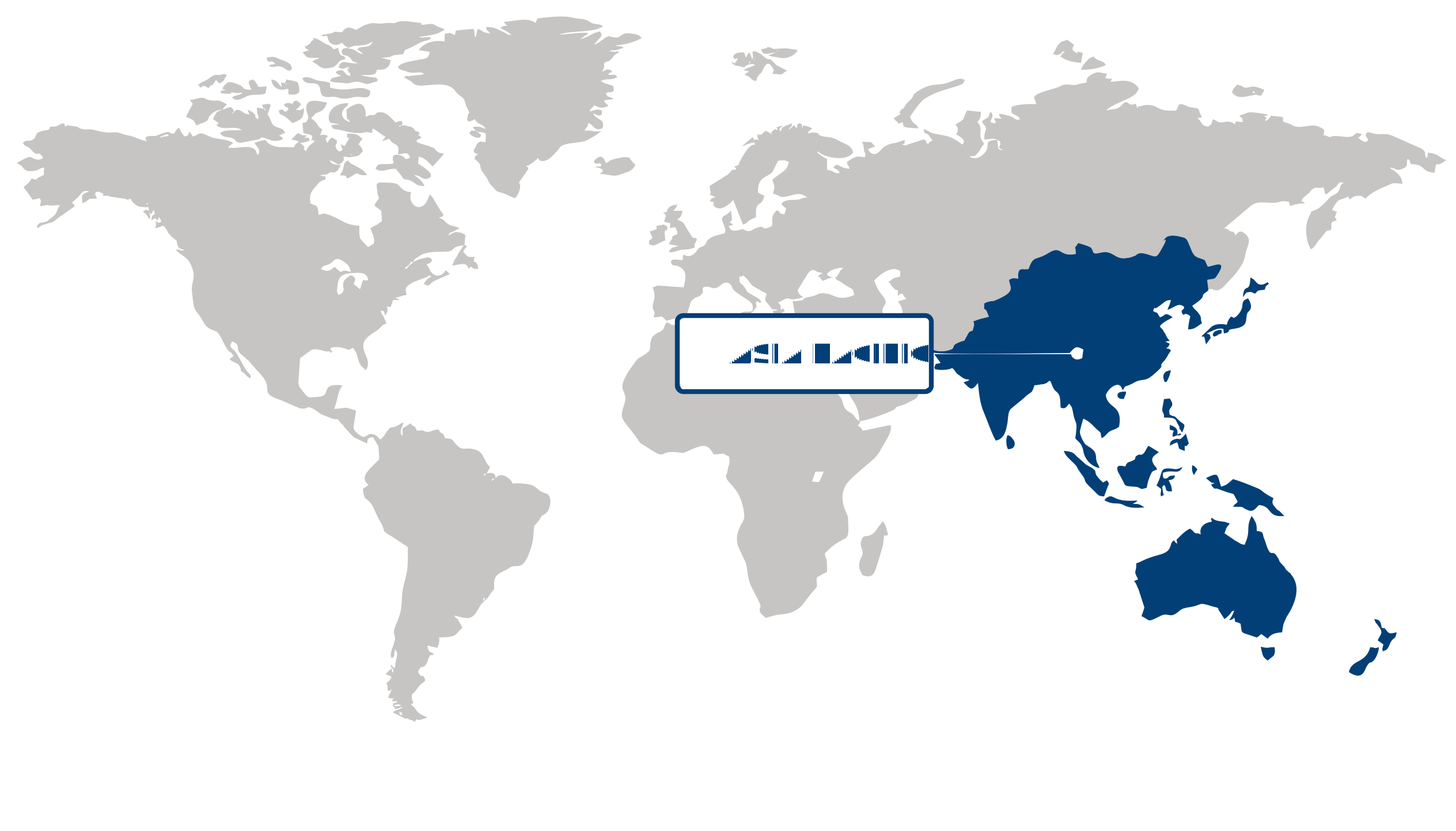
The Asia Pacific region dominated the global artemia market in 2025, capturing approximately 54% of the market share alongside an impressive CAGR of 11.88%, positioning it as both the largest and fastest-growing market worldwide. This leadership primarily stems from the region's intensive aquaculture activities concentrated in countries like China, India, and Vietnam, driving substantial demand for artemia as a critical live feed. Organizations such as the Food and Agriculture Organization (FAO) emphasize Asia Pacific's dominance in global aquaculture production, with robust investments in sustainable practices and technological integration enhancing artemia harvesting and processing efficiency. Additionally, evolving consumption patterns favoring seafood and regulatory shifts supporting sustainable aquaculture contribute to the region’s resilience and growth potential. These factors establish Asia Pacific as a strategic hub for innovation and expansion in the artemia market, presenting significant opportunities for investors aiming to leverage the region's dynamic ecosystem.
China anchors the Asia Pacific artemia market, leveraging its vast aquaculture industry tailored to meet growing domestic and export demands. Chinese enterprises such as Guangdong Haitong Feed emphasize innovation in sourcing and utilizing artemia to support their large-scale shrimp and fish farming operations, reflecting the country’s commitment to enhancing feed quality for productivity gains. Government policies promoting environmental sustainability and aquaculture modernization, as articulated by the Ministry of Agriculture and Rural Affairs of China, further stimulate market expansion. China's integration of digital monitoring tools and supply chain optimization enhances the traceability and reliability of artemia sources, strengthening its competitive edge. This strategic position enables China to drive regional market growth while setting quality and sustainability benchmarks crucial for broadening artemia adoption across Asia Pacific.
Japan is positioned as a pivotal hub in the Asia Pacific artemia market, focusing on high-value, technologically advanced aquaculture practices prioritizing quality and sustainability. Japanese companies like Marubeni Corporation invest heavily in research and development of artemia cultivation technologies to improve nutritional profiles and cost efficiency, catering to the sophisticated demand in domestic and export aquaculture sectors. Institutional support from Japan’s Ministry of Agriculture, Forestry and Fisheries facilitates regulatory frameworks that encourage innovation and resource conservation, aligning with consumer preferences for environment-friendly seafood products. Japan’s emphasis on integrating artemia into precision aquaculture systems highlights its role as a technology leader in the region. This specialized expertise reinforces Asia Pacific’s leadership in the artemia market by promoting sustainable growth and premium product development.
North America Market Analysis:
North America held a commanding share in the artemia market, driven by its sophisticated aquaculture industry and increasing demand for sustainable feed ingredients. The region's emphasis on environmental regulations and animal welfare policies has accelerated the adoption of artemia as a preferred live feed in aquafeeds, supported by guidelines from the U.S. Environmental Protection Agency and USDA initiatives promoting sustainable fish farming. Technological advancements in breeding and harvesting techniques by companies like INVE Aquaculture have enhanced supply chain efficiency, further strengthening market presence. Growing consumer preferences for organic and responsibly farmed seafood in North American markets are reshaping procurement strategies, creating a robust demand environment. These factors position North America as a vital hub for innovation and sustainability within the global artemia market, offering investors ample growth opportunities amid a resilient economic backdrop.
The U.S. plays a pivotal role in shaping North America’s artemia market trajectory, underpinned by a mature aquaculture sector and stringent regulatory frameworks endorsing sustainable inputs. Consumer spending patterns increasingly favor seafood products certified by organizations like the Aquaculture Stewardship Council, intensifying demand for high-quality live feed such as artemia. Additionally, U.S.-based firms, including Artemia Systems, have pioneered digital traceability solutions to ensure product quality and compliance, reinforcing market credibility. Government programs like the NOAA Aquaculture Program further foster innovation and investment in sustainable feed sourcing. This integrated approach amplifies the U.S.’ strategic position, reinforcing North America’s extensive opportunities in the artemia market through alignment of technological, regulatory, and consumer trends.
Europe Market Trends:
Europe maintained a notable presence in the artemia market, driven by a convergence of sustainability commitments and evolving aquaculture practices. The region’s emphasis on eco-friendly feed alternatives and regulatory frameworks supporting sustainable seafood production have fostered steady demand for artemia as a high-quality, natural feed source. Noteworthy initiatives by the European Aquaculture Technology and Innovation Platform (EATiP) underscore operational advancements optimizing brine shrimp supply chains, enhancing availability amid fluctuating climatic conditions. Concurrently, shifting consumer preferences toward organic and traceable seafood products in Europe have intensified the uptake of artemia in hatchery and fish farming operations. These dynamics, coupled with the region’s resilient economic landscape and innovation-driven market players such as INVE Aquaculture and Ocean Nutrition Canada’s European distribution, position Europe as a growth hub offering significant opportunities for scalable and sustainable artemia production.
Germany serves as a key market within Europe for the artemia industry, propelled by its advanced aquaculture sector and stringent environmental regulations endorsing sustainable feed inputs. Germany’s regulatory frameworks, shaped in part by the Federal Ministry of Food and Agriculture’s sustainable aquaculture policies, promote the adoption of natural feed sources like artemia to reduce ecological impact. Leading German aquafeed companies, such as Biomar and Veramaris, have integrated artemia-based products to meet both stringent supply chain transparency demands and high-quality nutrition standards, reflecting a sophisticated and environmentally conscious consumer base. This strategic alignment with sustainability mandates ensures Germany’s role as a pivotal market driving innovation and supply chain stability in Europe’s artemia market landscape.
France represents another influential player in Europe’s artemia market, where moderate growth stems from its robust aquaculture activities and growing investment in alternative feed resources. France’s focus on regional sourcing and minimizing environmental footprints, supported by programs from Ifremer (French Research Institute for Exploitation of the Sea), encourages the use of artemia to enhance hatchery efficiency and aquafeed sustainability. Local enterprises like Sparos have accelerated research and development in artemia feed formulations, marrying traditional aquaculture expertise with cutting-edge nutritional innovation. These efforts underscore France’s contribution to enhancing the operational viability and ecological benefits of artemia, reinforcing the broader European market’s trajectory toward sustainable aquafeed solutions.
| Parameter | North America | Asia Pacific | Europe | Latin America | MEA |
|---|---|---|---|---|---|
| Innovation Hub i Scale Nascent Developing Advanced | |||||
| Cost-Sensitive Region i Scale Low Medium High | |||||
| Regulatory Environment i Scale Restrictive Neutral Supportive | |||||
| Demand Drivers i Scale Weak Moderate Strong | |||||
| Development Stage i Scale Emerging Developing Developed | |||||
| Adoption Rate i Scale Low Medium High | |||||
| New Entrants / Startups i Scale Sparse Moderate Dense | |||||
| Macro Indicators i Scale Weak Stable Strong |
Segment Leadership and Growth Trends
Artemia Market Share (%), by Product Type, 2026
Go beyond the chart, access full insights & data tables
Request Free Sample ReportBrine Shrimp Eggs held the largest share in the artemia market in 2025, driven primarily by the expanding global aquaculture demand for high-quality live feed. This segment's leadership stems from the critical role these eggs play as a reliable source of nutrition essential for larval development in diverse aquaculture species. The increasing preference among aquaculturists for sustainable and cost-effective feed solutions further reinforces this dominance, supported by advancements in hatchery technologies and supply chain optimization. For instance, companies like INVE Aquaculture have emphasized the enhancement of brine shrimp egg quality to boost larval survival rates, reflecting a commitment to performance and sustainability. This segment presents strategic growth opportunities for established players to innovate in egg processing and emerging entrants to cater to niche regional markets. Given ongoing regulatory encouragement for sustainable aquaculture feeds, the demand for brine shrimp eggs is poised to maintain its pivotal role in the near to medium term.
Analysis by Application
Aquaculture represented the largest share in the artemia market in 2025, fueled by its indispensable use as live feed for fish and shrimp larvae. The segment’s prominence is underpinned by the sector’s growing global scale and intensifying need for reliable, nutrient-rich live feed to ensure healthy larval growth and improved yields. Market leaders, such as Artemia International, have highlighted the integration of advanced feeding protocols that enhance larval survival, reflecting both technological progress and evolving customer expectations for sustainable seafood production. This application benefits from well-established distribution networks and regulatory frameworks promoting environmentally responsible aquaculture practices. For market participants, aquaculture offers substantial avenues for value creation through product differentiation and geographic expansion. With continued emphasis on sustainable seafood and feed innovation, aquaculture’s reliance on artemia ensures this segment’s sustained relevance for the foreseeable future.
| Segment | Sub-Segment | Largest Segment | Fastest Growing |
|---|---|---|---|
| Product Type | Brine Shrimp Eggs, Artemia Nauplii | ||
| Application | Aquaculture, Pet Food, Pharmaceuticals |
Competitive Landscape and Market Positioning
The competitive environment reveals a dynamic interplay of strategic initiatives as top players focus on enhancing product portfolios and expanding operational capabilities. Collaboration and integration efforts are evident, with companies investing in refining production techniques and responding promptly to evolving aquaculture requirements. Market leaders are leveraging research and development to deliver specialized artemia strains and improve hatchery processes. This pursuit of innovation and operational efficiency enables firms to solidify their market positions and differentiate their offerings amidst intensifying competition, fostering an environment where adaptability and technological progress are decisive.
Strategic / Actionable Recommendations for Regional Players
In North America, stakeholders should explore synergistic partnerships with technology developers to enhance artemia strain quality while addressing sustainability trends. Capitalizing on rising demand for biosecure and enriched feed products will be critical to maintain leadership.
Asia Pacific players are advised to invest in scalable production technologies that meet stringent quality parameters and to forge alliances that broaden market reach across emerging aquaculture hubs. Emphasizing diversification into high-yield sub-segments could drive competitive differentiation.
European companies can focus on integrating advanced biotechnological methods to optimize artemia biomass output and foster collaborations with research institutions. Targeting niche, premium product lines aligned with regulatory frameworks may enhance market positioning and resilience.
| Company | Market Share | Company Revenue | Revenue CAGR (%) | Product Portfolio | Geographic Presence | Innovation / R&D Focus | Strategic Developments |
|---|---|---|---|---|---|---|---|
| No companies available. | |||||||
Industry Development/News
| Company Name | Date | Key Development |
|---|
Customize Your Report
Explore examples of how this report can be tailored to different research needs, including custom segments, additional topics or chapters, and related reports. Click a section of the wheel or its numbered marker to explore the available options.
Artemia Market — Custom Segments
| Segment | Sub-Segment |
|---|---|
| No segment data available. | |
Artemia Market — Custom TOC
| Custom Chapter | Custom Details | ||
|---|---|---|---|
| No custom TOC data available. | |||
Need a different cut of the data?
Request Custom ResearchHow much is the artemia industry expected to grow by 2035?
In which region is the artemia market share the greatest?
Which region has emerged as the fastest-growing for the artemia sector?
How much is the brine shrimp eggs segment expected to grow in the artemia industry beyond 2025?
What factors give aquaculture segment a competitive edge in the artemia sector?
What are the prominent companies operating in the artemia landscape?
Our Clients
"The report provided a thorough look at market trends, technological advancements, and the competitive landscape. The depth of insights was really valuable."
ITC Limited
"We would highly recommend Fundamental Business Insights & Consulting to anyone looking for reliable, detailed, and comprehensive market research in the Food industry."
Tyson Foods
"The clarity and presentation of the information were commendable. The report was delivered timely, which made the overall experience smooth and convenient."
Mondelēz International
Our Research Team & Methodology
Every Fundamental Business Insights report is built by a dedicated vertical research team, validated through a structured primary-and-secondary methodology, and reviewed for accuracy before it reaches you.
Research Team Overview
Prepared by the Food & Beverage Research Team
Delivery
Published
Demand
Available
Support
Trust & Compliance
Research Domains
10 coverage areasResearch Intelligence
| Source | Reference |
|---|---|
| Food and Agriculture Organization (FAO) | www.fao.org |
| World Health Organization (WHO) | www.who.int |
| U.S. Food & Drug Administration (FDA) | www.fda.gov |
| European Food Safety Authority (EFSA) | www.efsa.europa.eu |
| U.S. Department of Agriculture (USDA) | www.usda.gov |
| Codex Alimentarius Commission | www.fao.org/fao-who-codexalimentarius |
| International Organization for Standardization (ISO) | www.iso.org |
| AOAC INTERNATIONAL | www.aoac.org |
| Institute of Food Technologists (IFT) | www.ift.org |
| International Dairy Foods Association (IDFA) | www.idfa.org |
| International Sweeteners Association (ISA) | www.sweeteners.org |
| International Probiotics Association (IPA) | internationalprobiotics.org |
| Good Food Institute (GFI) | gfi.org |
| American Feed Industry Association (AFIA) | www.afia.org |
| International Feed Industry Federation (IFIF) | ifif.org |
| Specialty Food Association (SFA) | www.specialtyfood.com |
| Brewers Association | www.brewersassociation.org |
| International Bottled Water Association (IBWA) | bottledwater.org |
| International Alliance for Dietary/Food Supplement Associations (IADSA) | www.iadsa.org |
| OECD Agriculture & Food | www.oecd.org/agriculture |
Research Workflow & Quality Assurance
Data Collection
Verified information gathered through primary and secondary research.
Data Triangulation
Cross-validation using multiple independent data sources.
Forecast Modelling
Market estimates developed using historical trends and analytical models.
Analyst Validation
Findings reviewed by domain experts for accuracy and consistency.
Editorial & Quality Review
Final editorial, quality, and compliance checks before publication.
Final Publication
Released after successful completion of the internal review process.
Report Coverage
📊 Market Assessment
- Market Size & Forecast
- Market Segmentation
- Regional Analysis
- Growth Drivers & Challenges
- Market Dynamics
🏢 Competitive Intelligence
- Competitive Landscape
- Company Profiles
- Competitive Benchmarking
- Mergers & Acquisitions
- Market Share Analysis or Key Company Strategies
🔍 Strategic Analysis
- Value Chain Analysis
- Porter's Five Forces
- PESTLE Analysis
- Pricing Trends
- Supply-Demand Analysis
🚀 Future Outlook
- Technology Landscape
- Regulatory Landscape
- Investment & Funding Landscape
- Emerging Opportunities
- Future Market Outlook
Have a question about this report or need a custom scope?
Request Customization