Aluminum Foil Market Size & Forecasts 2026-2035, By Segments (Type, End-Use), Growth Opportunities, Innovation Landscape, Regulatory Shifts, Strategic Regional Insights (U.S., Japan, China, South Korea, UK, Germany, France), and Competitive Dynamics (Novelis, Hindalco Industries, UACJ Corporation, Constellium, Novelis Inc.)
Market Size and Growth Outlook
Aluminum Foil Market size is projected to grow steadily from USD 31.42 billion in 2025 to USD 90.84 billion by 2035, demonstrating a CAGR exceeding 11.2% through the forecast period (2026-2035). The 2026 revenue is estimated at USD 34.56 billion.
Get more details on this report
Request Free Sample ReportAluminum Foil Market Intelligence Snapshot
Regional Market Dynamics
Segment Momentum
Market Expansion Drivers
Leading Market Participants
Global Market Forecast Snapshot
Market Outlook
Regional and Segment Outlook
Market Growth Drivers and Industry Trends
The aluminum foil market is increasingly propelled by rising consumer preferences for convenient, hygienic, and lightweight packaging solutions within the food and beverage sector. Companies like Tetra Pak and Nestlé have emphasized aluminum foil's role in maintaining product freshness and extending shelf life, aligning with shifting consumer expectations for quality and safety. This trend is intensified by the global surge in ready-to-eat meals and takeaway services, which demand reliable, cost-effective packaging materials. For market players, this evolving demand creates opportunities to innovate packaging designs and enhance supply chain responsiveness. Established manufacturers can leverage their distribution networks, while new entrants may focus on niche applications or regional food trends. Given the ongoing consumer-driven transformation in food packaging, the aluminum foil market will continue to benefit from robust demand, reinforcing its critical position in this sector’s value chain.
Sustainability and Recycling Initiatives
Sustainability mandates and waste management policies are reshaping the aluminum foil market by encouraging increased use of recyclable and eco-friendly materials. Government agencies such as the European Environment Agency (EEA) have highlighted aluminum’s recyclability as a key advantage over plastic packaging, driving companies like Amcor to invest heavily in recyclable foil laminates. Rising regulatory pressures to reduce single-use plastics enhance aluminum foil's appeal as an environmentally responsible option. For incumbents, this fosters innovation in recyclable product lines and greener manufacturing processes, while newcomers can capitalize on sustainable production methods and circular economy business models. The aluminum foil market is therefore positioned to integrate sustainability as a core competitive element, responding steadily to rising environmental accountability.
Increasing Automotive and Industrial Applications
The aluminum foil market is gaining momentum from expanded usage in automotive and industrial sectors, where aluminum’s lightweight properties support fuel efficiency and performance enhancement initiatives. For example, companies such as Novelis have reported growing collaborations with automotive manufacturers to supply aluminum foil for heat exchangers and battery enclosures in electric vehicles. This application broadens the market beyond traditional packaging, appealing to corporate buyers driven by energy efficiency standards and regulatory mandates like those from the U.S. Environmental Protection Agency. Strategic opportunities exist for established firms to deepen sector-specific expertise and diversify product portfolios, while new entrants can explore specialized roles in emerging green technologies. This trend solidifies the aluminum foil market’s role in industrial innovation, with demand linked to evolving automotive technology and regulatory landscapes.
Industry Restraints:
Volatile Raw Material Costs and Supply Constraints
Fluctuating prices and inconsistent availability of bauxite and alumina restrict the aluminum foil market by inflating production costs and disrupting supply chains. The International Aluminium Institute recently reported that geopolitical tensions and reduced mining output in major bauxite-producing regions, such as Guinea and Australia, have heightened raw material volatility. This instability compels manufacturers to implement costly inventory hedging strategies or face intermittent production halts, limiting operational scalability. Both incumbents and new entrants encounter pressure on profit margins and challenges in securing stable supply contracts, thereby slowing capacity expansion and innovation investments. Moving forward, persistent geopolitical uncertainties and environmental regulations surrounding mining activities suggest that supply-side constraints and cost unpredictability will remain critical hurdles, necessitating stronger supply chain diversification and risk management approaches.
Increasing Environmental Regulations and Sustainability Expectations
Stringent environmental policies targeting carbon emissions and waste management increasingly constrain aluminum foil production, as indicated by the European Aluminium Association’s publication on the EU’s Green Deal mandates. Aluminum foil manufacturing’s energy-intensive processes attract regulatory scrutiny, raising compliance costs and operational complexities. Companies must invest in cleaner technologies and certifications to maintain market access, which disproportionately challenges smaller producers with limited capital. Additionally, consumer-driven demand for sustainable packaging, highlighted by a 2023 Nielsen survey on eco-conscious purchasing, shifts preferences toward recyclable and lower-impact alternatives, limiting conventional aluminum foil uses. This regulatory landscape compels market participants to prioritize eco-innovation, imposing short-term cost burdens but offering differentiation opportunities. Over the medium term, adherence to evolving environmental standards will be indispensable for competitive positioning, shaping product development and investment priorities across the industry.
| Growth Driver | Impact on CAGR | Regulatory Influence | Geographic Relevance | Adoption Rate | Impact Timeline |
|---|---|---|---|---|---|
| Growing food & beverage and packaging demand | 4.00% | Short term (≤ 2 yrs) | Asia Pacific, North America | Low | Fast |
| Sustainability and recycling initiatives | 3.00% | Medium term (2–5 yrs) | Europe, North America | Medium | Moderate |
| Increasing automotive and industrial applications | 3.20% | Long term (5+ yrs) | Asia Pacific, Europe | Medium | Moderate |
Explore Growth Opportunities
Request Free Sample ReportRegional Demand Dynamics
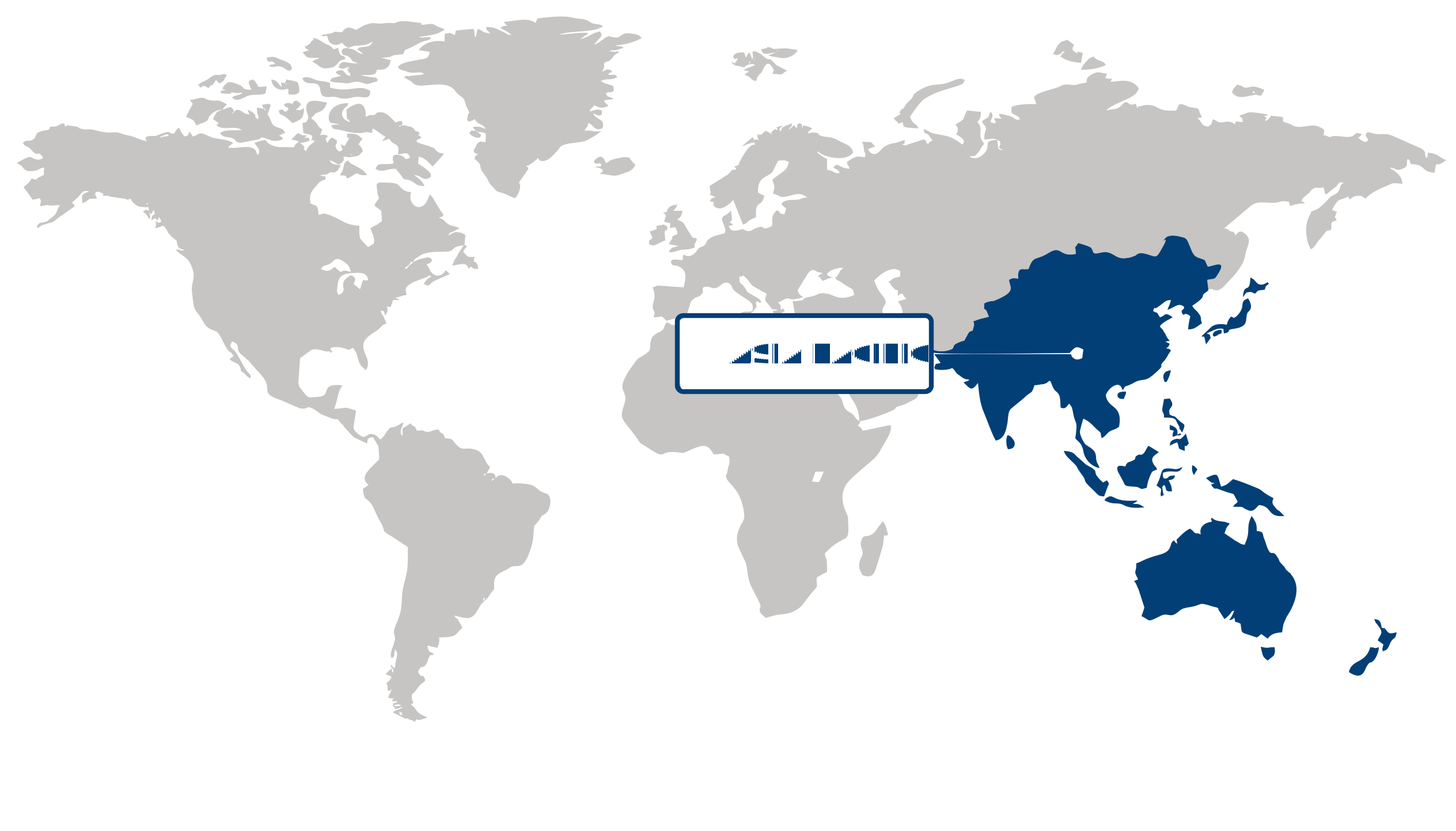
Asia Pacific dominated the aluminum foil market in 2025, capturing more than 55% of the global share and emerging as the fastest-growing region with a CAGR of 13.44%. This leadership is primarily driven by the surging demand for flexible packaging within the food and beverage sector, where rapid urbanization and rising disposable incomes have intensified consumer preference for convenience and product safety. Policy shifts towards improving packaging sustainability and advancements in manufacturing technologies, as evidenced by initiatives from the Japan Aluminium Association promoting eco-friendly packaging, further underscore the region’s dynamic market environment. Additionally, extensive supply chain networks across countries like China enable efficient distribution and cost optimization for aluminum foil products. Looking ahead, Asia Pacific’s expanding middle class and evolving food consumption patterns present significant growth opportunities for investors aiming to capitalize on innovative packaging solutions.
China anchors the Asia Pacific aluminum foil market as the largest consumer, driven by its vast food and beverage manufacturing base and escalating demand for flexible packaging solutions that enhance product preservation and extend shelf life. The government’s commitment to boosting domestic consumption and environmental reforms, highlighted in China’s Ministry of Commerce’s sustainable packaging guidelines, reinforces industry momentum. Companies such as China Zhongwang Holdings have expanded their aluminum foil capacities, reflecting strategic investments aligned with local preferences for convenience and hygiene in food packaging. This robust activity positions China as a pivotal contributor to the region’s market expansion and a fertile ground for strategic partnerships.
Japan is positioned as a pivotal hub in the Asia Pacific aluminum foil market, leveraging its advanced technological capabilities and stringent regulatory standards on packaging safety and environmental impact. The Japan Aluminium Foil Association’s proactive approach to developing recyclable and biodegradable aluminum foil products aligns with shifting consumer values toward sustainability and premium quality foods. Japanese manufacturers, including UACJ Corporation, are innovating thin-gauge aluminum foil applications tailored for the food and beverage industry, enhancing market differentiation. Japan’s role exemplifies a technologically driven, quality-focused segment that complements China’s scale-driven growth, collectively reinforcing Asia Pacific’s dominant position in the global aluminum foil market.
North America Market Analysis:
North America held a substantial share in the aluminum foil market, driven by its robust industrial base and evolving consumer preferences favoring sustainable and convenience-oriented packaging. The region’s significant demand stems from the food and beverage sector, where aluminum foil is prized for preserving freshness and extending shelf life amid rising health-conscious spending patterns, as noted in the U.S. Food and Drug Administration’s recent packaging innovation guidelines. Additionally, North America's stringent environmental regulations, such as those advocated by the Environmental Protection Agency (EPA), compel manufacturers to adopt eco-friendly production technologies and recyclable materials. The advancing digital supply chain capabilities and rapid technological modernization in manufacturing processes further bolster market resilience in the region. As consumer demand shifts toward sustainability and short supply chains, North America is well-positioned to offer strategic growth opportunities that capitalize on its regulatory efficiencies, innovation culture, and evolving market dynamics.
The U.S. serves as a pivotal contributor within North America’s aluminum foil market, highlighted by its advanced manufacturing infrastructure and strong regulatory oversight. Demand in the U.S. is notably influenced by consumer trends prioritizing convenience and environmentally responsible packaging, which have led companies like Reynolds Consumer Products to innovate biodegradable and recyclable aluminum foil solutions. Furthermore, the U.S. government’s initiatives encouraging domestic manufacturing under the Buy American Act create a favorable environment for local producers, reducing dependence on imports and reinforcing supply chain security. Such dynamics make the U.S. a strategic hub that sharpens North America’s competitive edge, underscoring the country’s essential role in driving regional market opportunities through enhanced product development and regulatory alignment.
Europe Market Trends:
Europe held a significant share in the aluminum foil market, driven by a combination of mature manufacturing ecosystems and stringent environmental policies that promote recyclable packaging solutions. The region’s demand is fueled by consumer preferences shifting towards sustainable and convenience-oriented packaging, coupled with investments in advanced metallurgical technologies enhancing foil quality and production efficiency. According to the European Aluminium Association, sustainability regulations such as the EU’s Circular Economy Action Plan have intensified the adoption of aluminum foil in food and pharmaceutical sectors, given its recyclability and barrier properties. Additionally, Europe's well-established logistics infrastructure supports seamless supply chain operations, enabling swift distribution across multiple industries. The presence of leading multinational manufacturers further enhances competitive dynamics. Moving forward, Europe’s focus on clean technology and regulatory alignment offers substantial opportunities for growth in eco-friendly aluminum foil applications.
Germany dominates Europe’s aluminum foil market, bolstered by its robust industrial base and emphasis on high-quality manufacturing standards. The country’s automotive and pharmaceutical sectors notably drive demand for specialized aluminum foil, as highlighted by a corporate release from Amcor Flexibles Germany, underscoring innovative packaging solutions that comply with evolving safety and sustainability regulations. Germany’s skilled workforce and strong R&D capabilities also facilitate technological advancements in foil production, enhancing product differentiation. Moreover, governmental incentives aimed at reducing carbon footprints encourage manufacturers to adopt lightweight and recyclable materials, reinforcing aluminum foil's market position. Strategically, Germany’s integration of innovation with regulatory compliance positions it as a pivotal hub for regional market expansion and product development within Europe.
France plays a strategic role in Europe’s aluminum foil market, particularly through its dynamic food and pharmaceutical industries that prioritize both product protection and sustainable packaging. The French Environment and Energy Management Agency (ADEME) has reported increasing governmental support for eco-friendly packaging, aligning with consumer demand for environmentally responsible products. French manufacturers increasingly utilize aluminum foil for convenience packaging and medical use, supported by industry advancements in digital printing and automation technologies, as noted in Veolia’s sustainability update. Furthermore, France’s cultural emphasis on quality and safety standards strengthens the adoption of high-performance aluminum foil solutions. This positions France as a critical market, contributing to Europe’s overall growth by fostering innovative packaging applications and sustainability-driven demand.
| Parameter | North America | Asia Pacific | Europe | Latin America | MEA |
|---|---|---|---|---|---|
| Innovation Hub i Scale Nascent Developing Advanced | |||||
| Cost-Sensitive Region i Scale Low Medium High | |||||
| Regulatory Environment i Scale Restrictive Neutral Supportive | |||||
| Demand Drivers i Scale Weak Moderate Strong | |||||
| Development Stage i Scale Emerging Developing Developed | |||||
| Adoption Rate i Scale Low Medium High | |||||
| New Entrants / Startups i Scale Sparse Moderate Dense | |||||
| Macro Indicators i Scale Weak Stable Strong |
Segment Leadership and Growth Trends
Aluminum Foil Market Share (%), by Type, 2026
Go beyond the chart, access full insights & data tables
Request Free Sample ReportThe aluminum foil market in 2025 is dominated by the wrapper foils segment, which holds the largest share due to its critical role in providing lightweight, durable, and recyclable packaging solutions for diverse industries such as food, pharmaceuticals, and consumer goods. This segment’s leadership stems from evolving consumer preferences toward sustainable and convenient packaging options, amplified by stringent regulatory frameworks from organizations like the U.S. Food and Drug Administration (FDA) promoting recyclable materials. Key market players like Amcor and Uflex have highlighted innovations in wrapper foils to enhance barrier properties while maintaining environmental compliance, reinforcing competitive positioning. The segment offers strategic advantages by enabling companies to cater to eco-conscious consumers and streamline supply chains with lightweight packaging. Given ongoing technological advances in aluminum foil manufacturing and global sustainability initiatives, the wrapper foils segment is poised to sustain its relevance amid rising environmental awareness and evolving packaging standards.
Analysis by End-Use
The packaging segment in the aluminum foil market represents the largest share in 2025, driven by soaring demand for protective, convenient, and tamper-evident packaging for food, pharmaceutical, and consumer products. This segment’s leadership is closely tied to escalating consumer demand for hygiene and product safety, supported by regulatory mandates from agencies like the European Medicines Agency that emphasize packaging integrity in pharmaceuticals. The growth also reflects a shift towards extended shelf-life packaging and innovations in laminated aluminum foil structures, as highlighted in recent product launches by Reynolds Consumer Products. Supply chain efficiencies and digital transformation in packaging workflows further bolster the segment’s prominence by enabling rapid adaptation to consumer and retailer needs. For both incumbent manufacturers and new entrants, this segment presents opportunities to differentiate through sustainable and smart packaging solutions. With continuous advancements in barrier technology and increasing emphasis on food safety, the packaging segment is expected to maintain its dominant role in the near to medium term.
| Segment | Sub-Segment | Largest Segment | Fastest Growing |
|---|---|---|---|
| Type | Wrapper Foils, Container Foils | ||
| End-Use | Industrial, Packaging |
Unlock insights tailored to your business with our bespoke market research solutions.
Click to get your customized report now.
Competitive Landscape and Market Positioning
The competitive landscape in this sector is shaped by active moves to enhance technological innovation and broaden customer reach. Market leaders prioritize development of specialized aluminum foil grades that meet stringent requirements for sustainability and performance, reflecting deeper investments in research and process optimization. Strategic joint ventures, selective acquisitions, and collaborative partnerships augment capacity expansions and entry into emerging sub-segments like flexible packaging. These concerted efforts to integrate advanced materials science with operational scale underpin robust positioning against newcomers and facilitate adaptation to evolving regulatory and consumer pressures. Players also pursue diversification through value-added services and digitalization initiatives enhancing supply chain responsiveness.
Strategic / Actionable Recommendations for Regional Players
Market participants in North America could amplify their competitive edge by nurturing alliances that integrate innovation ecosystems with demand for sustainable packaging solutions. Tapping into emerging recyclable and biodegradable foil technologies would align well with regulatory landscapes and consumer preferences, enabling differentiation through product stewardship and dynamic supply networks.
In the Asia Pacific region, firms may focus on capitalizing on rapid industrialization and expanding e-commerce sectors by tailoring lightweight, high-performance aluminum foil products. Collaborations that harness digital manufacturing technologies and optimize logistics efficiencies will be critical to serve diverse, high-growth sub-segments effectively while navigating intensifying competition.
European players should consider strengthening cross-border collaboration frameworks to leverage advanced material science capabilities and circular economy initiatives. Leveraging regional innovation hubs and aligning product development with stringent environmental policies can provide a strategic advantage, ensuring market relevance amid shifting legislative pressures and consumer expectations.
| Company | Market Share | Company Revenue | Revenue CAGR (%) | Product Portfolio | Geographic Presence | Innovation / R&D Focus | Strategic Developments |
|---|---|---|---|---|---|---|---|
| No companies available. | |||||||
Customize Your Report
Explore examples of how this report can be tailored to different research needs, including custom segments, additional topics or chapters, and related reports. Click a section of the wheel or its numbered marker to explore the available options.
Aluminum Foil Market — Custom Segments
| Segment | Sub-Segment |
|---|---|
| No segment data available. | |
Aluminum Foil Market — Custom TOC
| Custom Chapter | Chapter Details | ||
|---|---|---|---|
| No custom TOC data available. | |||
Need a different cut of the data?
Request Custom ResearchHow much is the aluminum foil market worth?
How is the aluminum foil industry expected to grow over the next 10 years?
Which geographical region leads the aluminum foil market market?
Which region has emerged as the fastest-growing for the aluminum foil sector?
Which is the largest sub-segment within the type segment for aluminum foil industry?
Why does packaging sub-segment dominate the end-use segment of aluminum foil sector?
What are the key competitors in the aluminum foil landscape?
Our Clients
"The report provided us with a clear direction, and the level of detail was beyond what we expected. I would definitely recommend their services to others."
Haier Appliances
"The collaboration with Fundamental Business Insights has added significant value to our decision-making process, and we look forward to continuing this partnership for our future market research requirements."
Luxottica Group S.p.A.
"The team at FBI delivered an exceptional research report. The insights on industry innovations were particularly impressive and added a lot of value to the overall report."
Nike
Our Research Team & Methodology
Every Fundamental Business Insights report is built by a dedicated vertical research team, validated through a structured primary-and-secondary methodology, and reviewed for accuracy before it reaches you.
Research Team Overview
Prepared by the Consumer Goods & Services Research Team
Delivery
Published
Demand
Available
Support
Trust & Compliance
Research Intelligence
| Source | Reference |
|---|---|
| International Organization for Standardization (ISO) | www.iso.org |
| ASTM International | www.astm.org |
| U.S. Consumer Product Safety Commission (CPSC) | www.cpsc.gov |
| European Commission – Consumer Safety | ec.europa.eu/safety-gate |
| Consumer Technology Association (CTA) | www.cta.tech |
| National Retail Federation (NRF) | nrf.com |
| World Retail Congress | www.worldretailcongress.com |
| World Travel & Tourism Council (WTTC) | wttc.org |
| UN Tourism | www.unwto.org |
| Personal Care Products Council (PCPC) | www.personalcarecouncil.org |
| Cosmetics Europe | cosmeticseurope.eu |
| International Housewares Association (IHA) | www.housewares.org |
| American Apparel & Footwear Association (AAFA) | www.aafaglobal.org |
| World Federation of the Sporting Goods Industry (WFSGI) | wfsgi.org |
| Juvenile Products Manufacturers Association (JPMA) | www.jpma.org |
| Pet Industry Joint Advisory Council (PIJAC) | pijac.org |
| International Council of Toy Industries (ICTI) | www.toy-icti.org |
| International Association of Amusement Parks and Attractions (IAAPA) | iaapa.org |
| Organisation for Economic Co-operation and Development (OECD) | www.oecd.org |
| World Bank Data | data.worldbank.org |
Research Workflow & Quality Assurance
Data Collection
Verified information gathered through primary and secondary research.
Data Triangulation
Cross-validation using multiple independent data sources.
Forecast Modelling
Market estimates developed using historical trends and analytical models.
Analyst Validation
Findings reviewed by domain experts for accuracy and consistency.
Editorial & Quality Review
Final editorial, quality, and compliance checks before publication.
Final Publication
Released after successful completion of the internal review process.
Report Coverage
📊 Market Assessment
- Market Size & Forecast
- Market Segmentation
- Regional Analysis
- Growth Drivers & Challenges
- Market Dynamics
🏢 Competitive Intelligence
- Competitive Landscape
- Company Profiles
- Competitive Benchmarking
- Mergers & Acquisitions
- Market Share Analysis or Key Company Strategies
🔍 Strategic Analysis
- Value Chain Analysis
- Porter's Five Forces
- PESTLE Analysis
- Pricing Trends
- Supply-Demand Analysis
🚀 Future Outlook
- Technology Landscape
- Regulatory Landscape
- Investment & Funding Landscape
- Emerging Opportunities
- Future Market Outlook
Have a question about this report or need a custom scope?
Request Customization