Alcohol Packaging Market Size & Forecasts 2026-2035, By Segments (Material Type, Application, Packaging Type), Growth Opportunities, Innovation Landscape, Regulatory Shifts, Strategic Regional Insights (U.S., Japan, China, South Korea, UK, Germany, France), and Competitive Dynamics (Amcor, Owens-Illinois, Silgan Holdings, Berlin Packaging, Ball Corporation)
Market Size and Growth Outlook
Alcohol Packaging Market size is projected to expand significantly, moving from USD 44.07 billion in 2025 to USD 67.14 billion by 2035, with a CAGR of 4.3% during the 2026-2035 forecast period. The expected revenue for 2026 is USD 45.7 billion.
Get more details on this report
Request Free Sample ReportAlcohol Packaging Market Intelligence Snapshot
Regional Market Dynamics
Segment Momentum
Market Expansion Drivers
Leading Market Participants
Global Market Forecast Snapshot
Market Outlook
Regional and Segment Outlook
Market Growth Drivers and Industry Trends
The rising global alcohol consumption is intensifying demand within the alcohol packaging market for solutions that ensure product safety, extend shelf life, and enhance brand differentiation. Data from the World Health Organization highlights increasing alcohol use among younger demographics and emergent markets, fueling a rise in packaged alcoholic beverages. This trend prompts packaging innovations like tamper-evident seals and recyclable materials, demonstrated by Diageo’s recent rollout of enhanced security features in their premium spirit lines. Established players can capitalize by integrating advanced packaging technologies that build consumer trust, while new entrants might disrupt with novel formats aligning with evolving consumption patterns. As consumption habits continue diversifying, packaging that balances functionality with brand storytelling will remain pivotal.
Growth in On-the-Go and Premium Packaging Formats
The alcohol packaging market is experiencing a surge in demand for on-the-go and premium packaging formats, driven by shifting lifestyle preferences and a growing emphasis on convenience and experiential consumption. Spirits brands like Bacardi have recently introduced single-serve, travel-friendly packaging and elegant bottles targeting affluent consumers, reflecting a strategic response to this trend. This creates opportunities for companies to explore innovative, compact designs using high-end materials that appeal to premiumization and portability. New entrants with agile manufacturing capabilities can capture niche markets swiftly, whereas incumbents benefit from leveraging extensive distribution networks. This intersection of convenience and luxury packaging is reshaping consumer expectations, ensuring sustained demand for differentiated formats.
Shift Towards Eco-Friendly and Lightweight Packaging
Environmental concerns and regulatory pressures are accelerating the shift towards eco-friendly and lightweight packaging solutions in the alcohol packaging market. Breweries such as Anheuser-Busch InBev have committed to reducing packaging weight and increasing recyclability, aligning with global sustainability targets advocated by agencies like the Ellen MacArthur Foundation. This transition opens strategic avenues for innovation in biodegradable materials, reusable containers, and minimalistic design, appealing to environmentally conscious consumers. Established companies can leverage sustainability to enhance brand equity, while startups may disrupt by innovating in green supply chains and circular packaging models. As legislation tightens and consumer demand prioritizes sustainability, eco-friendly packaging is set to become a foundational market requirement rather than a differentiator.
Industry Restraints:
Stringent Regulatory Compliance and Labeling Requirements
The alcohol packaging market faces significant constraints from complex and varying regulatory frameworks governing labeling, safety, and environmental standards across global jurisdictions. Differences in alcohol content disclosure, health warnings, and tamper-evident packaging mandated by authorities such as the U.S. Alcohol and Tobacco Tax and Trade Bureau (TTB) and the European Food Safety Authority (EFSA) create operational inefficiencies and increase compliance costs. For instance, Diageo's adaptations to multiple regulatory regimes highlight the challenge multinational players face in standardizing packaging. These hurdles slow innovation and deter smaller companies unable to absorb compliance expenses, affecting their market entry and expansion strategies. As governments intensify focus on consumer protection and transparency, regulatory complexity is expected to remain a critical factor, compelling manufacturers to invest in agile compliance frameworks and adaptable packaging solutions to sustain competitiveness.
Raw Material Supply Chain Disruptions and Sustainability Pressures
The alcohol packaging industry is increasingly restrained by fluctuations in raw material availability, particularly glass, aluminum, and paperboard, exacerbated by sustainability mandates. Supply chain interruptions driven by geopolitical tensions and pandemic-induced logistics issues, documented in Trade Data Monitor reports, inflate costs and delay production timelines for key players like Ball Corporation and Crown Holdings. Concurrently, mounting pressure from environmental agencies such as the Ellen MacArthur Foundation to reduce carbon footprints is pushing firms toward sustainable packaging alternatives, which often require costly redesigns and sourcing complexities. This dual challenge elevates operational risks and capital requirements, disproportionately impacting smaller disruptors. Moving forward, the interplay of resource constraints and evolving sustainability commitments will necessitate strategic investments in circular packaging models, reshaping supply networks and competitive positioning in the alcohol packaging segment.
| Growth Driver | Impact on CAGR | Regulatory Influence | Geographic Relevance | Adoption Rate | Impact Timeline |
|---|---|---|---|---|---|
| Rising Alcohol Consumption and Beverage Packaging Needs | 1.50% | Short term (≤ 2 yrs) | North America, Europe | Medium | Fast |
| Growth in On-the-Go and Premium Packaging Formats | 1.40% | Medium term (2–5 yrs) | Asia Pacific, North America | Low | Moderate |
| Shift Towards Eco-Friendly and Lightweight Packaging | 1.40% | Long term (5+ yrs) | Europe, Asia Pacific | High | Moderate |
Unlock insights tailored to your business with our bespoke market research solutions.
Click to get your customized report now.
Regional Demand Dynamics
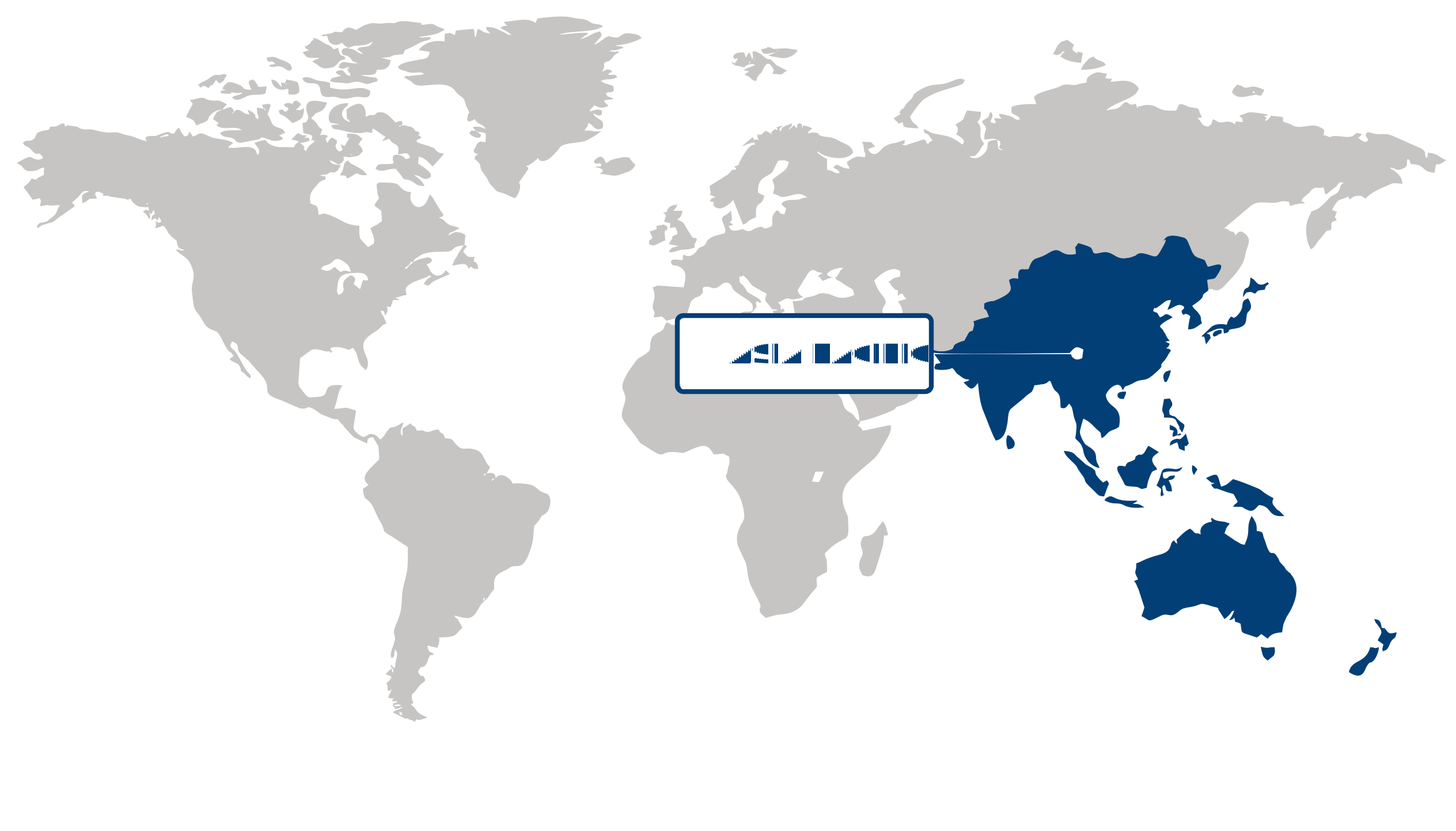
Asia Pacific dominated the alcohol packaging market, capturing more than 36% of the global share in 2025 and emerging as the fastest-growing region with a 5.2% CAGR. This leadership is primarily fueled by rising alcohol consumption driven by a steadily expanding middle class and a burgeoning demand for premium and craft beverages. Shifts in consumer preferences toward artisanal and high-quality alcohol products are catalyzing demand for innovative, sustainable packaging solutions. Industry players such as Amcor and Berry Global have reported increased investments in environmentally friendly and design-forward packaging in the region, responding to evolving consumer and regulatory expectations. Moreover, advancements in supply chain infrastructure across key markets and supportive government policies are enhancing production and distribution efficiency. These combined forces position Asia Pacific as a fertile ground for sustained innovation and growth in the alcohol packaging market.
Japan is positioned as a pivotal hub in the Asia Pacific alcohol packaging market due to its mature alcoholic beverage industry and stringent regulatory landscape emphasizing sustainability. Consumer demand increasingly favors premium, craft, and sake beverages, which require sophisticated packaging that preserves quality and elevates brand appeal. Companies like Dai Nippon Printing have introduced advanced barrier films and eco-friendly materials tailored to these market needs, as announced in their 2024 corporate report. Japan’s focus on circular economy initiatives also encourages packaging innovation and recycling, supporting long-term market adaptation. This nuanced environment allows Japan to serve as a benchmark for sustainable packaging solutions, reinforcing its strategic importance within the regional alcohol packaging market.
China holds a leading role in the Asia Pacific alcohol packaging market, propelled by rapid urbanization and a surging middle class fueling premium alcohol consumption. The competitive environment is characterized by strong local and international players innovating with digitalized and customizable packaging formats to attract younger consumers. In 2024, Yantai Changyu Pioneer Wine Company announced its adoption of QR-coded labels to enhance consumer engagement and authenticity verification, reflecting broader industry trends. Regulatory reforms tightening alcohol marketing and packaging standards further drive quality improvements. China's dynamic market scale and evolving consumer base are crucial to unlocking broader regional growth opportunities, underscoring its centrality in Asia Pacific’s alcohol packaging sector expansion.
North America Market Analysis:
North America held a commanding share in the alcohol packaging market, driven by established liquor consumption patterns and high consumer spending power. The region’s mature regulatory environment around alcohol labeling and packaging safety has pushed manufacturers to innovate with sustainable and premium materials, appealing to environmentally conscious and quality-focused consumers. The expanding craft beverage segment, supported by organizations such as the Brewers Association, has also intensified demand for customized, artisanal packaging solutions that enhance brand differentiation. Moreover, digital transformation in supply chain management adopted by leading firms like Ball Corporation has streamlined operations and improved product traceability. These factors collectively position North America as a critical hub for innovation and growth in alcohol packaging, where evolving consumer preferences and regulatory compliance present ongoing opportunities for market players to deliver superior packaging solutions.
The U.S. dominates the North American alcohol packaging market, reflecting diverse consumer preferences and a strong shift towards premium and eco-friendly packaging formats. Initiatives by the Alcohol and Tobacco Tax and Trade Bureau (TTB) to enforce stricter labeling guidelines have spurred manufacturers to invest in advanced packaging technologies, such as lightweight glass and biodegradable plastics, enhancing sustainability profiles. The rapid rise of craft distilleries, championed by the American Distilling Institute, further bolsters demand for distinctive packaging that conveys authenticity and heritage. Moreover, global packaging leaders such as Owens-Illinois have expanded U.S.-based production capacities, reflecting growing domestic demand. This proactive adaptation in the U.S. underlines North America’s strategic leverage to meet evolving market needs and sustain its leadership in the alcohol packaging market.
Europe Market Trends:
Europe held a substantial share in the alcohol packaging market, underscoring its prominence as a mature yet innovative region. The market’s significance is driven by shifting consumer preferences toward premiumization and eco-conscious packaging, coupled with stringent regulatory frameworks that promote sustainable materials. European Union initiatives on reducing plastic waste and encouraging circular economy principles have prompted manufacturers to adopt biodegradable and recyclable solutions, as highlighted by the European Bioplastics association. Additionally, the region's sophisticated supply chains and advanced manufacturing technologies facilitate rapid product innovations, supporting diverse packaging formats that cater to evolving market demands. Collaborations between packaging companies and major alcohol brands, like those reported by the European Spirits Organisation, exemplify the region’s competitive environment and commitment to quality. Moving forward, Europe’s combination of regulatory rigor, consumer sophistication, and sustainability priorities creates fertile ground for further innovation and market expansion in alcohol packaging.
Germany stands as a pivotal market within Europe’s alcohol packaging landscape, reflecting strong consumer inclination towards premium alcoholic beverages and environmentally friendly packaging formats. This is supported by data from the German Packaging Institute (Deutsches Verpackungsinstitut), which highlights increasing adoption of lightweight glass and recyclable PET bottles among leading breweries and distilleries. Regulatory support from the German Environment Agency further accelerates sustainable packaging adoption, emphasizing circular packaging systems. The high level of automation in Germany’s packaging industry also drives efficiency and quality improvements, attracting significant investment from multinational alcohol producers. Germany’s leadership in blending innovation with sustainability not only consolidates its domestic packaging sector but also reinforces Europe’s broader competitive advantage in the alcohol packaging market.
France plays a strategic role in the European alcohol packaging market by leveraging its strong cultural heritage in wine and spirits production, which fuels demand for distinctive and premium packaging solutions. French manufacturers benefit from a discerning consumer base that values aesthetic packaging aligned with luxury branding, as noted by the French Wine and Spirits Exporters Association (FEVS). The country’s regulatory landscape, guided by both EU directives and local standards, encourages the use of sustainable packaging materials without compromising quality or brand identity. Local packaging firms have embraced digital printing and smart labeling technologies, enhancing product differentiation and traceability, an approach showcased by companies like Verallia. France’s effective integration of tradition with cutting-edge packaging innovation amplifies its impact on the region’s alcohol packaging market, supporting broader European trends toward luxury and sustainability.
| Parameter | North America | Asia Pacific | Europe | Latin America | MEA |
|---|---|---|---|---|---|
| Innovation Hub i Scale Nascent Developing Advanced | |||||
| Cost-Sensitive Region i Scale Low Medium High | |||||
| Regulatory Environment i Scale Restrictive Neutral Supportive | |||||
| Demand Drivers i Scale Weak Moderate Strong | |||||
| Development Stage i Scale Emerging Developing Developed | |||||
| Adoption Rate i Scale Low Medium High | |||||
| New Entrants / Startups i Scale Sparse Moderate Dense | |||||
| Macro Indicators i Scale Weak Stable Strong |
Segment Leadership and Growth Trends
Alcohol Packaging Market Share (%), by Material Type, 2026
Go beyond the chart, access full insights & data tables
Request Free Sample ReportGlass dominated the alcohol packaging market in 2025 by capturing the largest share due to its alignment with premiumization trends driving high-quality alcoholic beverage packaging. This segment’s leadership reflects consumer preferences for sophisticated and recyclable packaging that enhances brand perception, especially among upscale wine and spirits producers. The glass segment benefits from regulatory support encouraging sustainable packaging, as highlighted by the European Container Glass Federation’s initiatives promoting glass recycling. Furthermore, glass packaging’s superior barrier properties meet increasing demand for product integrity amid global supply chain complexities. For established firms, glass offers differentiation through customization, while new entrants can leverage innovations in lightweight glass technology. With ongoing sustainability mandates and luxury market growth, glass packaging is set to maintain its critical role in the alcohol packaging market in the near to medium term.
Analysis by Application
Beer represented the largest share in the alcohol packaging market in 2025, underscored by rising global beer consumption and the surge in craft beer production. This growth within the beer segment reflects shifting consumer demand toward diverse beer styles and premium craft offerings, necessitating versatile, attractive packaging solutions that preserve freshness. Industry leaders like Anheuser-Busch InBev emphasize packaging innovations to meet rapid distribution needs and regulatory compliance on labeling. The segment’s dynamics are further shaped by digital transformation initiatives enhancing supply chain traceability. Beer packaging presents strong opportunities for players to capitalize on branding and sustainability trends, such as lightweight cans favored by North American brewers. Given its resilience amid evolving consumption patterns, the beer segment remains a strategic focus for market participants over the coming years.
Analysis by Packaging Type
Primary packaging held the largest share of the alcohol packaging market in 2025, driven by increasing demand for bottles and cans that ensure product safety and shelf appeal. This segment leads because consumers prioritize packaging that protects quality while serving as a direct brand touchpoint, reinforced by regulatory standards from authorities like the U.S. Food and Drug Administration focused on tamper-evident and durable containers. The primary packaging segment benefits from technological advancements in glass and metal container manufacturing, enabling lightweight yet robust formats. Competitive dynamics encourage innovation in design and material use, which appeals to environmentally conscious consumers. For incumbents and startups alike, primary packaging provides a platform for differentiation and sustainability leadership. Continued emphasis on product integrity and consumer engagement signals sustained relevance for primary packaging in alcohol markets globally.
| Segment | Sub-Segment | Largest Segment | Fastest Growing |
|---|---|---|---|
| Material Type | Glass, Metal, Plastic, Paper & Paperboard | ||
| Application | Beer, Wine, Spirits, Others | ||
| Packaging Type | Primary Packaging, Secondary Packaging |
Competitive Landscape and Market Positioning
The competitive landscape is shaped by these top-tier entities actively expanding their portfolios through strategic alliances, technology integration, and targeted acquisitions that enhance product diversity and production efficiency. Innovation is fueled by investments in sustainable materials and smart packaging solutions that not only elevate brand experience but also deepen consumer engagement. The emphasis on environmentally conscious packaging reflects a collective move to address regulatory pressures and consumer expectations, sustaining market leadership. Simultaneously, enhancements in manufacturing automation and customization capabilities allow these players to respond swiftly to fluctuating demand and emerging market trends, preserving their competitive edge.
Strategic / Actionable Recommendations for Regional Players
In North America, leveraging collaborations with technology firms can accelerate the development of interactive packaging that adds value through enhanced consumer connectivity and traceability. Tapping into premium alcohol sub-segments by tailoring eco-friendly and visually distinctive packaging solutions may strengthen differentiation amid intense competition.
For the Asia Pacific region, fostering partnerships with local glass and metal producers can optimize supply chain responsiveness while integrating emerging biodegradable materials to meet rising sustainability mandates. Capitalizing on the expanding spirits and craft beer markets by innovating compact, cost-effective packaging formats could unlock growth opportunities.
European companies should prioritize investment in circular economy initiatives alongside advancing smart label technologies that improve transparency and consumer trust. Aligning with both established alcohol brands and emerging craft producers through flexible, design-forward packaging services can fortify market positions. Embracing collaborative platforms for shared R&D efforts can further bolster innovation competitiveness.
| Company | Market Share | Company Revenue | Revenue CAGR (%) | Product Portfolio | Geographic Presence | Innovation / R&D Focus | Strategic Developments |
|---|---|---|---|---|---|---|---|
| No companies available. | |||||||
Industry Development/News
| Company Name | Date | Key Development |
|---|
Customize Your Report
Explore examples of how this report can be tailored to different research needs, including custom segments, additional topics or chapters, and related reports. Click a section of the wheel or its numbered marker to explore the available options.
Alcohol Packaging Market — Custom Segments
| Segment | Sub-Segment |
|---|---|
| No segment data available. | |
Alcohol Packaging Market — Custom TOC
| Custom Chapter | Custom Details | ||
|---|---|---|---|
| No custom TOC data available. | |||
Need a different cut of the data?
Request Custom ResearchHow much is the alcohol packaging industry expected to grow by 2035?
Which region captures the largest portion of the alcohol packaging market value?
Which region has emerged as the fastest-growing for the alcohol packaging sector?
Where is the glass segment seeing the strongest adoption within the alcohol packaging industry?
When did beer sub-segment emerge as the largest sub-segment in the application segment of alcohol packaging sector?
Why is the primary packaging segment leading in the alcohol packaging industry?
Which companies are driving growth in the alcohol packaging landscape?
Our Clients
"The report provided a thorough look at market trends, technological advancements, and the competitive landscape. The depth of insights was really valuable."
ITC Limited
"We would highly recommend Fundamental Business Insights & Consulting to anyone looking for reliable, detailed, and comprehensive market research in the Food industry."
Tyson Foods
"The clarity and presentation of the information were commendable. The report was delivered timely, which made the overall experience smooth and convenient."
Mondelēz International
Our Research Team & Methodology
Every Fundamental Business Insights report is built by a dedicated vertical research team, validated through a structured primary-and-secondary methodology, and reviewed for accuracy before it reaches you.
Research Team Overview
Prepared by the Food & Beverage Research Team
Delivery
Published
Demand
Available
Support
Trust & Compliance
Research Domains
10 coverage areasResearch Intelligence
| Source | Reference |
|---|---|
| Food and Agriculture Organization (FAO) | www.fao.org |
| World Health Organization (WHO) | www.who.int |
| U.S. Food & Drug Administration (FDA) | www.fda.gov |
| European Food Safety Authority (EFSA) | www.efsa.europa.eu |
| U.S. Department of Agriculture (USDA) | www.usda.gov |
| Codex Alimentarius Commission | www.fao.org/fao-who-codexalimentarius |
| International Organization for Standardization (ISO) | www.iso.org |
| AOAC INTERNATIONAL | www.aoac.org |
| Institute of Food Technologists (IFT) | www.ift.org |
| International Dairy Foods Association (IDFA) | www.idfa.org |
| International Sweeteners Association (ISA) | www.sweeteners.org |
| International Probiotics Association (IPA) | internationalprobiotics.org |
| Good Food Institute (GFI) | gfi.org |
| American Feed Industry Association (AFIA) | www.afia.org |
| International Feed Industry Federation (IFIF) | ifif.org |
| Specialty Food Association (SFA) | www.specialtyfood.com |
| Brewers Association | www.brewersassociation.org |
| International Bottled Water Association (IBWA) | bottledwater.org |
| International Alliance for Dietary/Food Supplement Associations (IADSA) | www.iadsa.org |
| OECD Agriculture & Food | www.oecd.org/agriculture |
Research Workflow & Quality Assurance
Data Collection
Verified information gathered through primary and secondary research.
Data Triangulation
Cross-validation using multiple independent data sources.
Forecast Modelling
Market estimates developed using historical trends and analytical models.
Analyst Validation
Findings reviewed by domain experts for accuracy and consistency.
Editorial & Quality Review
Final editorial, quality, and compliance checks before publication.
Final Publication
Released after successful completion of the internal review process.
Report Coverage
📊 Market Assessment
- Market Size & Forecast
- Market Segmentation
- Regional Analysis
- Growth Drivers & Challenges
- Market Dynamics
🏢 Competitive Intelligence
- Competitive Landscape
- Company Profiles
- Competitive Benchmarking
- Mergers & Acquisitions
- Market Share Analysis or Key Company Strategies
🔍 Strategic Analysis
- Value Chain Analysis
- Porter's Five Forces
- PESTLE Analysis
- Pricing Trends
- Supply-Demand Analysis
🚀 Future Outlook
- Technology Landscape
- Regulatory Landscape
- Investment & Funding Landscape
- Emerging Opportunities
- Future Market Outlook
Have a question about this report or need a custom scope?
Request Customization