Nanocellulose Market Size & Growth Forecast 2027–2036, By Segments (Type, Application), Regional Demand Trends (North America, Asia Pacific, Europe), Key Country Insights (U.S., Japan, South Korea, Germany, France, Italy), and Competitive Landscape
Market Size and Growth Outlook
Nanocellulose Market size was valued at USD 1 Billion in 2026 and is anticipated to grow at a 15.11% CAGR from 2027 to 2036, reaching USD 4.08 Billion by 2036. The industry revenue for 2027 is calculated at USD 1.13 Billion.
Get more details on this report
Request Free Sample ReportNanocellulose Market Intelligence Snapshot
Regional Market Dynamics
- Europe leads with 37.10% share supported by strong R&D ecosystems, early commercialization, and sustainable material substitution across packaging, composites, and industrial applications.
- Asia Pacific is growing at 22.11% CAGR due to rapid industrial adoption, expanding manufacturing activity, and integration of bio-based materials into packaging and electronics applications.
Segment Momentum
- CNF accounted for a 53.55% share in 2026 because it offers strong mechanical performance, compatibility with water-based systems, and easy integration into existing manufacturing processes for material enhancement applications.
- Pharmaceuticals & Biomedical is growing fastest as demand rises for high-purity, biocompatible, and performance-tunable materials that support specialized medical and health-related applications requiring precise material functionality.
Market Expansion Drivers
- Growing demand for sustainable paper-based packaging accelerating nanocellulose material adoption.
- Expanding healthcare and hygiene applications increasing utilization of nanocellulose composite materials.
- Rising investment in bio-based advanced materials strengthening commercialization across industrial applications.
Leading Market Participants
- Key players in the nanocellulose market include Stora Enso Oyj (Finland), Nippon Paper Industries Co., Ltd. (Japan), CelluForce Inc. (Canada), Borregaard ASA (Norway), Kruger Inc. (Canada), FiberLean Technologies Limited (United Kingdom), CelluComp Ltd. (United Kingdom), Melodea Ltd. (Israel), GranBio Technologies Ltd. (Brazil), Blue Goose Biorefineries Inc. (Canada).
Global Market Forecast Snapshot
Market Outlook
- 2026 Market Size: USD 1 Billion
- 2027 Estimated Market Size: USD 1.13 Billion.
- Projected Market Size: USD 4.08 Billion by 2036
- Growth Forecast: 15.11% CAGR (2027-2036)
Regional and Segment Outlook
- Leading Regional Market: Europe
- High-Growth Regional Hub: Asia Pacific
- Core Revenue Segment: CNF (Type) | Pulp & Paperboard (Application)
- Emerging Opportunity Segment: CNC (Type) | Pharmaceuticals & Biomedical (Application)
Market Growth Drivers and Industry Trends
Growing demand for sustainable paper-based packaging accelerating nanocellulose material adoption
The shift toward environmentally preferable packaging materials is creating favorable conditions for the nanocellulose market as manufacturers seek renewable alternatives to conventional packaging inputs. Nanocellulose offers lightweight, high-strength, and biodegradable characteristics that can improve the functional performance of paper-based packaging while maintaining a bio-based material profile. Increasing efforts to reduce dependence on fossil-derived packaging materials are encouraging packaging producers to explore nanocellulose for barrier coatings, reinforcement, and other applications that can enhance paper and fiber-based formats.
Expanding healthcare and hygiene applications increasing utilization of nanocellulose composite materials
Healthcare and hygiene product manufacturers are exploring advanced biomaterials that combine functional performance with biocompatibility and lightweight characteristics, supporting the nanocellulose market across specialized applications. Nanocellulose can be incorporated into composite structures, films, absorbent materials, wound-care products, and other healthcare-related formats where strength, surface properties, and material compatibility are important. Its ability to reinforce conventional bio-based materials while supporting tailored material structures is encouraging greater interest in applications requiring controlled performance and improved sustainability characteristics.
Rising investment in bio-based advanced materials strengthening commercialization across industrial applications
Increasing investment in bio-based material research and manufacturing infrastructure is helping move nanocellulose technologies from development toward broader industrial use, providing a stronger foundation for the nanocellulose market. Research into efficient extraction, functionalization, processing, and composite formulation is improving the ability to tailor nanocellulose for different end-use requirements. Greater industrial investment also supports efforts to address production scalability, material consistency, and integration with existing manufacturing processes, which are important considerations for applications across packaging, coatings, composites, and specialty materials.
| Growth Driver | Impact on CAGR | Regulatory Influence | Geographic Relevance | Adoption Rate | Impact Timeline |
|---|---|---|---|---|---|
| Growing demand for sustainable paper-based packaging accelerating nanocellulose material adoption | 2.00% | Moderate | Europe, North America | High | Near Term |
| Expanding healthcare and hygiene applications increasing utilization of nanocellulose composite materials | 1.80% | Moderate | North America, Europe | Medium | Mid Term |
| Rising investment in bio-based advanced materials strengthening commercialization across industrial applications | 1.60% | Moderate | Europe, Asia Pacific | Emerging | Long Term |
Unlock insights tailored to your business with our bespoke market research solutions.
Click to get your customized report now.
Regional Demand Dynamics
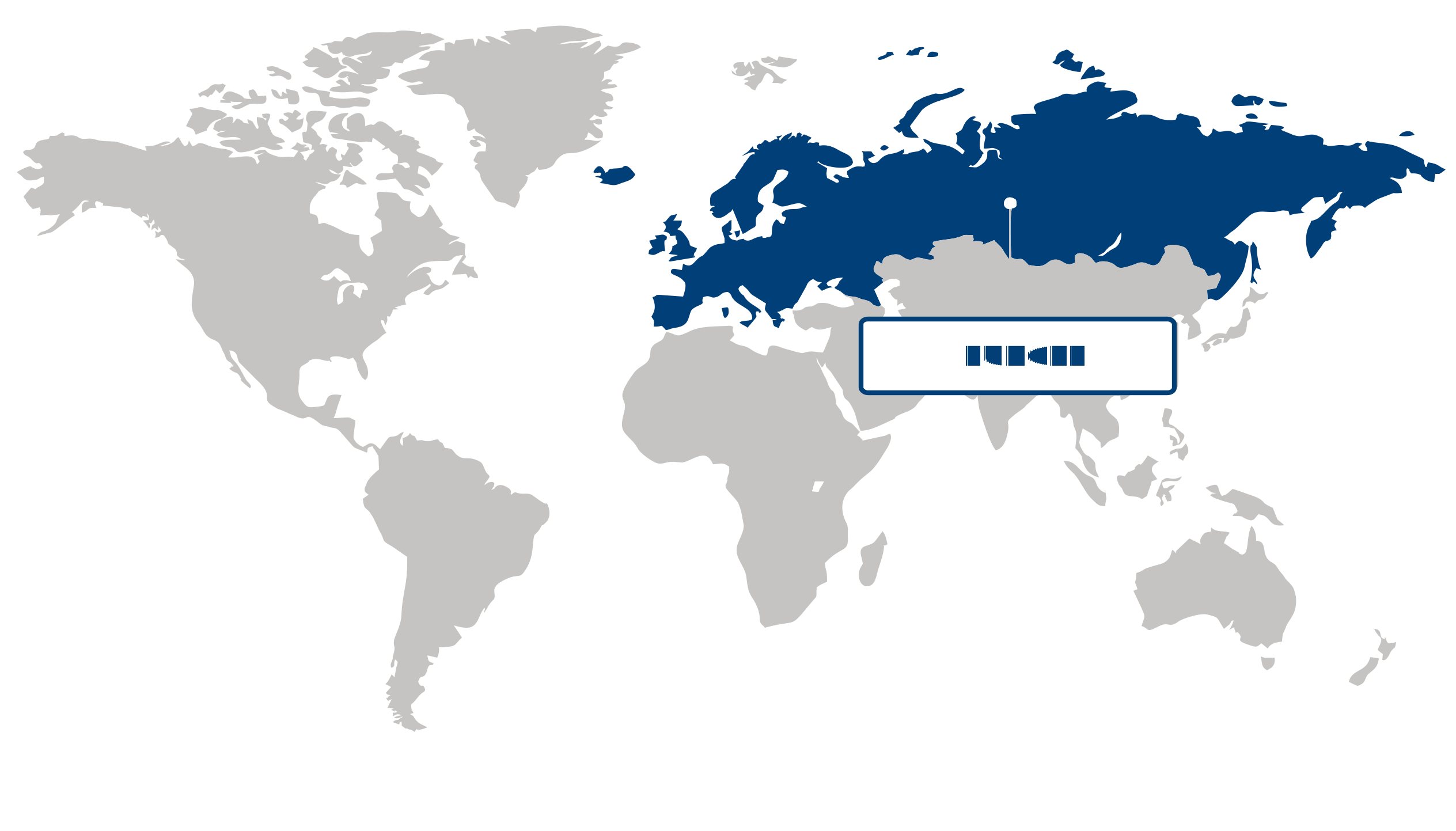
Europe (Largest Region)
Europe led the nanocellulose market with a 37.10% share in 2026, supported by strong research capabilities, advanced materials development, and growing emphasis on sustainable alternatives to conventional materials. The region benefits from established expertise in nanotechnology, biotechnology, and cellulose-based materials, enabling applications across packaging, automotive components, construction materials, and specialty products. Increasing regulatory attention toward reducing fossil-based materials and improving recyclability is encouraging manufacturers to explore bio-based and high-performance material solutions. Collaboration between research institutions and industrial users is also strengthening commercialization, while investments in circular-economy initiatives are supporting the integration of nanocellulose into emerging sustainable material value chains.
Asia Pacific (Fastest-Growing Region)
Asia Pacific is positioned as the fastest-growing regional market, driven by expanding manufacturing activity, rising demand for sustainable materials, and increasing adoption of advanced technologies across packaging, electronics, automotive, and industrial applications. Rapid industrial development is creating opportunities for nanocellulose as manufacturers seek lightweight, renewable, and performance-oriented materials. Growing environmental awareness and efforts to reduce dependence on conventional petroleum-derived inputs are further supporting demand. Improvements in local research infrastructure, production capabilities, and technology transfer are helping narrow commercialization gaps, while expanding consumer markets and industrial investment provide a favorable foundation for sustained adoption of nanocellulose across diverse end-use sectors.
| Parameter | North America | Asia Pacific | Europe | Latin America | MEA |
|---|---|---|---|---|---|
| Innovation Hub i Scale Nascent Developing Advanced | |||||
| Cost-Sensitive Region i Scale Low Medium High | |||||
| Regulatory Environment i Scale Restrictive Neutral Supportive | |||||
| Demand Drivers i Scale Weak Moderate Strong | |||||
| Development Stage i Scale Emerging Developing Developed | |||||
| Adoption Rate i Scale Low Medium High | |||||
| New Entrants / Startups i Scale Sparse Moderate Dense | |||||
| Macro Indicators i Scale Weak Stable Strong |
Key Country Insights
Germany 🇩🇪
Industrial Materials InnovationGermany applies nanocellulose across advanced manufacturing, sustainable packaging, and high-performance composite development. Industrial users in Germany prioritize material consistency, production efficiency, and integration into environmentally responsible manufacturing processes.
France 🇫🇷
Circular Packaging SolutionsFrance promotes nanocellulose adoption through sustainable packaging initiatives and environmentally responsible material development. Companies in France increasingly evaluate renewable material alternatives that complement circular economy objectives and performance requirements.
Italy 🇮🇹
Bio-Based Material ApplicationsItaly expands nanocellulose use across packaging, specialty paper, and industrial material development supported by sustainability initiatives. Manufacturers in Italy focus on improving renewable material performance while aligning production with evolving environmental and commercial expectations.
Japan 🇯🇵
High-Performance Material DesignJapan focuses on nanocellulose for lightweight engineered materials, electronics, and advanced functional applications requiring precision performance. Research institutions and manufacturers in Japan continue refining production technologies that support broader commercial utilization.
South Korea 🇰🇷
Advanced Manufacturing IntegrationSouth Korea explores nanocellulose for electronics, specialty packaging, and next-generation material applications. Manufacturers in South Korea emphasize innovation partnerships, scalable processing technologies, and compatibility with advanced industrial manufacturing systems.
United States 🇺🇸
Sustainable Materials DevelopmentThe U.S. nanocellulose market advances through research collaborations supporting lightweight materials, packaging innovation, and specialty industrial applications. Companies in the U.S. continue to explore scalable production methods that improve commercial adoption across multiple end-use industries.
Segment Leadership and Growth Trends
Nanocellulose Market Share (%), by Type, 2026
Go beyond the chart, access full insights & data tables
Request Free Sample ReportType Segment Analysis: CNF (Largest Segment) vs CNC (Fastest-Growing Segment)
The CNF segment accounted for the largest share of 53.55% in 2026 within the nanocellulose market. Cellulose nanofibrils offer a combination of high aspect ratio, lightweight characteristics, mechanical strength, and surface functionality that supports their use across a broad range of material applications. Their compatibility with renewable and bio-based production approaches also aligns with increasing industrial interest in sustainable alternatives to conventional materials. CNF can enhance the mechanical and barrier properties of composites, coatings, packaging materials, and paper products, allowing manufacturers to pursue performance improvements while supporting resource-efficiency objectives. These characteristics underpin its broad commercial relevance and leading market position.
The CNC segment is advancing at the fastest pace as manufacturers explore its distinctive crystalline structure and functional properties for specialized applications. Cellulose nanocrystals can provide reinforcing effects, tunable surface chemistry, and useful optical and barrier characteristics, creating opportunities across advanced composites, coatings, packaging, and biomedical materials. Continued research into surface modification and compatibility with different material systems is expanding the potential applications of CNC. At the same time, rising interest in renewable nanomaterials is encouraging greater investment in technologies that can translate CNC properties into commercially viable products.
Application Segment Analysis: Pulp & Paperboard (Largest Segment) vs Pharmaceuticals & Biomedical (Fastest-Growing Segment)
The pulp & paperboard segment represented a 27% share of the nanocellulose market in 2026, making it the largest application segment. Nanocellulose is increasingly relevant to the pulp and paper industry because it can improve strength, barrier performance, and functional characteristics while complementing the sector's transition toward more sustainable material solutions. Its ability to reinforce paper structures and support lightweighting can help manufacturers develop products with improved performance while maintaining the renewable characteristics of cellulose-based materials. Growing demand for sustainable packaging and enhanced paper functionality therefore provides a strong foundation for continued adoption in this established application area.
In the nanocellulose market, pharmaceuticals & biomedical is the fastest-growing application segment, driven by increasing exploration of nanocellulose as a functional material for advanced healthcare applications. Its biocompatibility, modifiable surface properties, and structural characteristics create opportunities in areas such as drug delivery, tissue engineering, wound care, and biomedical scaffolding. Research into bio-based materials is also encouraging the development of nanocellulose platforms that can be tailored for specialized therapeutic and medical uses. As pharmaceutical and biomedical developers place greater emphasis on functional, adaptable, and potentially sustainable biomaterials, demand for nanocellulose-based solutions in these applications is gaining momentum.
| Segment | Sub-Segment | Largest Segment | Fastest Growing |
|---|---|---|---|
| Type | CNF, Bacterial Cellulose, CNC | CNF | CNC |
| Application | Pulp & Paperboard, Composites, Pharmaceuticals & Biomedical, Electronics, Food & Beverages, Others | Pulp & Paperboard | Pharmaceuticals & Biomedical |
Competitive Landscape and Market Positioning
Top players in the nanocellulose market:
1. Stora Enso Oyj (Finland)
2. Nippon Paper Industries Co. Ltd. (Japan)
3. CelluForce Inc. (Canada)
4. Borregaard ASA (Norway)
5. Kruger Inc. (Canada)
6. FiberLean Technologies Limited (United Kingdom)
7. CelluComp Ltd. (United Kingdom)
8. Melodea Ltd. (Israel)
9. GranBio Technologies Ltd. (Brazil)
10. Blue Goose Biorefineries Inc. (Canada)
The nanocellulose market is progressing through expanding industrial applications across multiple sectors. Strong innovation pipelines are enabling broader material usability and performance enhancement. Technological improvements in processing methods are increasing scalability and efficiency. The material’s versatility is opening new opportunities in packaging, construction, and advanced material applications.
| Company | Market Share | Company Revenue | Revenue CAGR (%) | Product Portfolio | Geographic Presence | Innovation / R&D Focus | Strategic Developments |
|---|---|---|---|---|---|---|---|
| Stora Enso Oyj (Finland) | |||||||
| Nippon Paper Industries Co. Ltd. (Japan) | |||||||
| CelluForce Inc. (Canada) | |||||||
| Borregaard ASA (Norway) | |||||||
| Kruger Inc. (Canada) | |||||||
| FiberLean Technologies Limited (United Kingdom) | |||||||
| CelluComp Ltd. (United Kingdom) | |||||||
| Melodea Ltd. (Israel) | |||||||
| GranBio Technologies Ltd. (Brazil) | |||||||
| Blue Goose Biorefineries Inc. (Canada). |
Industry Development/News
| Company Name | Date | Key Development |
|---|---|---|
| Smobya | Mar-26 | Smobya secured funding from a Dutch investor consortium and relocated its operations to Limburg. This strategic move aims to accelerate the development and commercialization of nanocellulose-based sustainable alternatives to plastics and animal leather, strengthening the company's competitive position within the advanced biomaterials sector. |
| James Cook University and Flinders University | Jan-26 | Researchers successfully developed a process to convert wood-derived nanocellulose into high-quality graphene using a patented vortex fluidic device and water. This innovation facilitates the expansion of nanocellulose utility into advanced material and energy storage sectors, highlighting potential shifts in manufacturing pathways for high-performance nanocarbon materials. |
| U.S. Endowment for Forestry and Communities, USDA Forest Service | Dec-25 | The completion of a dam spillway in Georgia utilizing nanocellulose-enhanced concrete marks the largest application of this material in construction to date. This project serves as critical field validation for nanocellulose, demonstrating its efficacy in improving the durability and structural strength of concrete while providing a sustainable alternative in infrastructure development. |
| Modern Synthesis | Feb-25 | Modern Synthesis secured $5.5 million in funding to accelerate the scale-up and commercialization of its nanocellulose-based biomaterials platform. This investment enhances the company's production capabilities to support high-end fashion applications, representing a strategic step in advancing the adoption of cellulose-derived alternatives in the textile industry. |
| Gozen | Feb-25 | Gozen introduced Lunaform, a nanocellulose-based textile biomaterial synthesized via microbial fermentation. This launch signifies a material expansion in the industrial application of nanocellulose, providing the fashion and textile sectors with a scalable, bio-based alternative that enhances market participation in sustainable high-performance materials. |
| UPM Biomedicals | Oct-24 | UPM Biomedicals launched FibGel™, an injectable nanocellulose hydrogel designed for permanent implantable medical devices. This commercialization milestone demonstrates a significant technological advancement in medical-grade nanocellulose applications, establishing a new functional standard for biocompatible material integration in clinical and surgical settings. |
Customize Your Report
Explore examples of how this report can be tailored to different research needs, including custom segments, additional topics or chapters, and related reports. Click a section of the wheel or its numbered marker to explore the available options.
Nanocellulose Market — Custom Segments
| Segment | Sub-Segment |
|---|---|
| Production Method | Mechanical Processing, Chemical Processing, Biological Processing |
| Feedstock Source | Wood-Based Feedstock, Agricultural Residues, Non-Wood Biomass |
| Distribution Channel | Direct Sales, Distributors & Specialty Suppliers, Online B2B Platforms |
Nanocellulose Market — Custom TOC
| Custom Chapter | Custom Details |
|---|---|
| Commercialization Readiness Across End-use Industries |
|
| Sustainable Material Substitution Opportunity Assessment |
|
| Strategic Partnership Ecosystem Mapping |
|
Need a different cut of the data?
Request Custom ResearchHow much is the nanocellulose market worth?
How is the nanocellulose industry projected to perform over the next decade?
How is sustainable packaging demand accelerating commercialization in the nanocellulose market?
Which industry trends are supporting broader industrial adoption of nanocellulose?
Why is CNF the largest type segment in the nanocellulose market?
Why is Pharmaceuticals & Biomedical the fastest-growing application in the nanocellulose market?
Why does Europe dominate the nanocellulose market?
What is driving the fastest growth in the Asia Pacific nanocellulose market?
What are the key competitors in the nanocellulose landscape?
Our Clients
"The report helped us understand emerging consumer trends in our product category. It clarified where to focus innovation for the next product launch."
LyondellBasell
"The regional forecast section was incredibly useful. We were able to identify two new potential partners in Europe thanks to the vendor mapping you included."
SABIC
"We appreciated how actionable the recommendations were. It guided us to improve supply chain resilience."
Olin Corporation
Our Research Team & Methodology
Every Fundamental Business Insights report is built by a dedicated vertical research team, validated through a structured primary-and-secondary methodology, and reviewed for accuracy before it reaches you.
Research Team Overview
Prepared by the Chemicals & Materials Research Team
Delivery
Published
Demand
Available
Support
Trust & Compliance
Research Domains
10 coverage areasResearch Intelligence
| Source | Reference |
|---|---|
| American Chemistry Council (ACC) | www.americanchemistry.com |
| European Chemical Industry Council (Cefic) | cefic.org |
| International Council of Chemical Associations (ICCA) | icca-chem.org |
| European Chemicals Agency (ECHA) | echa.europa.eu |
| U.S. Environmental Protection Agency (EPA) | www.epa.gov |
| ASTM International | www.astm.org |
| International Organization for Standardization (ISO) | www.iso.org |
| National Institute of Standards and Technology (NIST) | www.nist.gov |
| Plastics Industry Association (PLASTICS) | www.plasticsindustry.org |
| European Biplastics | www.european-bioplastics.org |
| The Adhesive and Sealant Council (ASC) | www.ascouncil.org |
| National Association of Corrosion Engineers (AMPP) | www.ampp.org |
| Society of Plastics Engineers (SPE) | www.4spe.org |
| International Fertilizer Association (IFA) | www.fertilizer.org |
| CropLife International | croplife.org |
| Packaging Europe | packagingeurope.com |
| Flexible Packaging Association (FPA) | www.flexpack.org |
| Battery Council International (BCI) | batterycouncil.org |
| International Copper Association (ICA) | internationalcopper.org |
| World Steel Association | worldsteel.org |
Research Workflow & Quality Assurance
Data Collection
Verified information gathered through primary and secondary research.
Data Triangulation
Cross-validation using multiple independent data sources.
Forecast Modelling
Market estimates developed using historical trends and analytical models.
Analyst Validation
Findings reviewed by domain experts for accuracy and consistency.
Editorial & Quality Review
Final editorial, quality, and compliance checks before publication.
Final Publication
Released after successful completion of the internal review process.
Report Coverage
📊 Market Assessment
- Market Size & Forecast
- Market Segmentation
- Regional Analysis
- Growth Drivers & Challenges
- Market Dynamics
🏢 Competitive Intelligence
- Competitive Landscape
- Company Profiles
- Competitive Benchmarking
- Mergers & Acquisitions
- Market Share Analysis or Key Company Strategies
🔍 Strategic Analysis
- Value Chain Analysis
- Porter's Five Forces
- PESTLE Analysis
- Pricing Trends
- Supply-Demand Analysis
🚀 Future Outlook
- Technology Landscape
- Regulatory Landscape
- Investment & Funding Landscape
- Emerging Opportunities
- Future Market Outlook
Have a question about this report or need a custom scope?
Request Customization