Biomethane Market Size & Forecasts 2026-2035, By Segments (Production Method, End-User, Feedstock), Growth Opportunities, Innovation Landscape, Regulatory Shifts, Strategic Regional Insights (U.S., Japan, China, South Korea, UK, Germany, France), and Competitive Dynamics (Abiomed, Xebec Adsorption, InjectionTech, Clean Energy, Wärtsilä)
Market Size and Growth Outlook
Biomethane Market size is projected to expand significantly, moving from USD 3.76 billion in 2025 to USD 6.73 billion by 2035, with a CAGR of 6% during the 2026-2035 forecast period. The expected revenue for 2026 is USD 3.95 billion.
Get more details on this report
Request Free Sample ReportBiomethane Market Intelligence Snapshot
Regional Market Dynamics
Segment Momentum
Market Expansion Drivers
Leading Market Participants
Global Market Forecast Snapshot
Market Outlook
Regional and Segment Outlook
Market Growth Drivers and Industry Trends
The rising utilization of agricultural waste in biomethane production is transforming the biomethane market by turning a traditionally undervalued resource into a sustainable energy source. Leading agribusinesses and energy firms such as Abengoa and Danish Agro have pioneered initiatives converting crop residues and livestock manure into biomethane, reducing waste disposal costs and enhancing rural energy independence. This development aligns with growing environmental consciousness and circular economy principles, appealing to stakeholders focused on sustainability and carbon footprint reduction. Established energy companies can leverage such projects to integrate renewable energy into their portfolios, while new entrants may find niche opportunities in localized biogas production. As agricultural stakeholders increasingly adopt biomethane technologies, the biomethane market will deepen its ties to sustainable farming, driving continued innovation and resource efficiency.
Government Subsidies & Renewable Gas Policies
Robust government incentives and renewable gas mandates are critical growth catalysts for the biomethane market. Regulatory frameworks, exemplified by the European Commission’s Renewable Energy Directive and the U.S. Department of Energy’s biogas grants, provide direct subsidies, tax credits, and streamlined permitting processes that de-risk project investments. The strategic emphasis on decarbonizing energy sectors and meeting climate targets compels policymakers to strengthen financial support mechanisms, directly impacting project viability and scale-up speed. Market incumbents benefit from predictable policy environments to expand capacity confidently, while startups leverage subsidies to accelerate technology development and deployment. Sustained policy backing ensures the biomethane market remains aligned with national and international sustainability goals, enhancing investor confidence and long-term market stability.
Pipeline Infrastructure Expansion
The expansion of pipeline infrastructure dedicated to renewable gases is pivotal in shaping the biomethane market by facilitating large-scale integration and distribution. Industry collaborations, such as the Gas Infrastructure Europe initiative, highlight growing investments in upgrading and extending natural gas networks capable of handling biomethane, enabling seamless supply to end-users. Improved pipeline connectivity reduces dependence on localized consumption or costly transportation methods, making biomethane economically competitive with fossil fuels. Infrastructure enhancement presents strategic opportunities for energy companies to diversify offerings and for infrastructure investors to capitalize on a more resilient, decarbonized grid. As network operators further adapt gas grids to renewable inputs, the biomethane market will continue expanding its reach across industrial, commercial, and residential sectors.
Industry Restraints:
Infrastructural and Technical Bottlenecks
The biomethane market is significantly constrained by limited pipeline infrastructure and technical challenges related to gas upgrading and injection standards. Many regions lack sufficient grid connectivity or require expensive retrofitting to accommodate biomethane, raising capital expenditures and delaying projects. For example, Gas Network Ireland has highlighted the high costs and regulatory complexity of integrating biomethane into existing natural gas grids. This limits scalability for producers and requires investors to navigate protracted approval processes, restricting market entry and expansion. Established utilities struggle to balance traditional gas supply with renewable injections, while newcomers face steep barriers to access grid capacity. Moving forward, unless coordinated infrastructure investments and harmonized technical regulations accelerate, this bottleneck will continue to hinder biomethane’s broader adoption and market penetration in the foreseeable future.
Regulatory and Policy Uncertainty
Inconsistent and evolving regulatory frameworks represent a critical restraint on biomethane market growth, as sustained policy clarity is essential for investor confidence and project viability. The European Biogas Association emphasizes that varying subsidy schemes and certification requirements across countries create complexity and increase compliance costs. For instance, delays in defining sustainability criteria for feedstocks in governments’ renewable gas incentives reduce momentum and cause market fragmentation. This unpredictability disproportionately affects smaller agribusinesses and startups lacking resources to adapt quickly, undermining scale-up efforts. Market incumbents must allocate resources to policy engagement rather than solely operational efficiency. Unless governments establish stable, transparent policies and align incentives internationally, regulatory uncertainty will continue to dampen investments and slow the commercialization trajectory of biomethane in the near to mid-term.
| Growth Driver | Impact on CAGR | Regulatory Influence | Geographic Relevance | Adoption Rate | Impact Timeline |
|---|---|---|---|---|---|
| Agricultural Waste-to-Biomethane Projects | 2.00% | Short term (≤ 2 yrs) | Europe, Asia Pacific; Spillover: North America | Medium | Moderate |
| Government Subsidies & Renewable Gas Policies | 2.00% | Medium term (2–5 yrs) | Europe, North America; Spillover: MEA | High | Moderate |
| Pipeline Infrastructure Expansion | 2.00% | Long term (5+ yrs) | North America, Europe; Spillover: Asia Pacific | Medium | Slow |
Unlock insights tailored to your business with our bespoke market research solutions.
Click to get your customized report now.
Regional Demand Dynamics
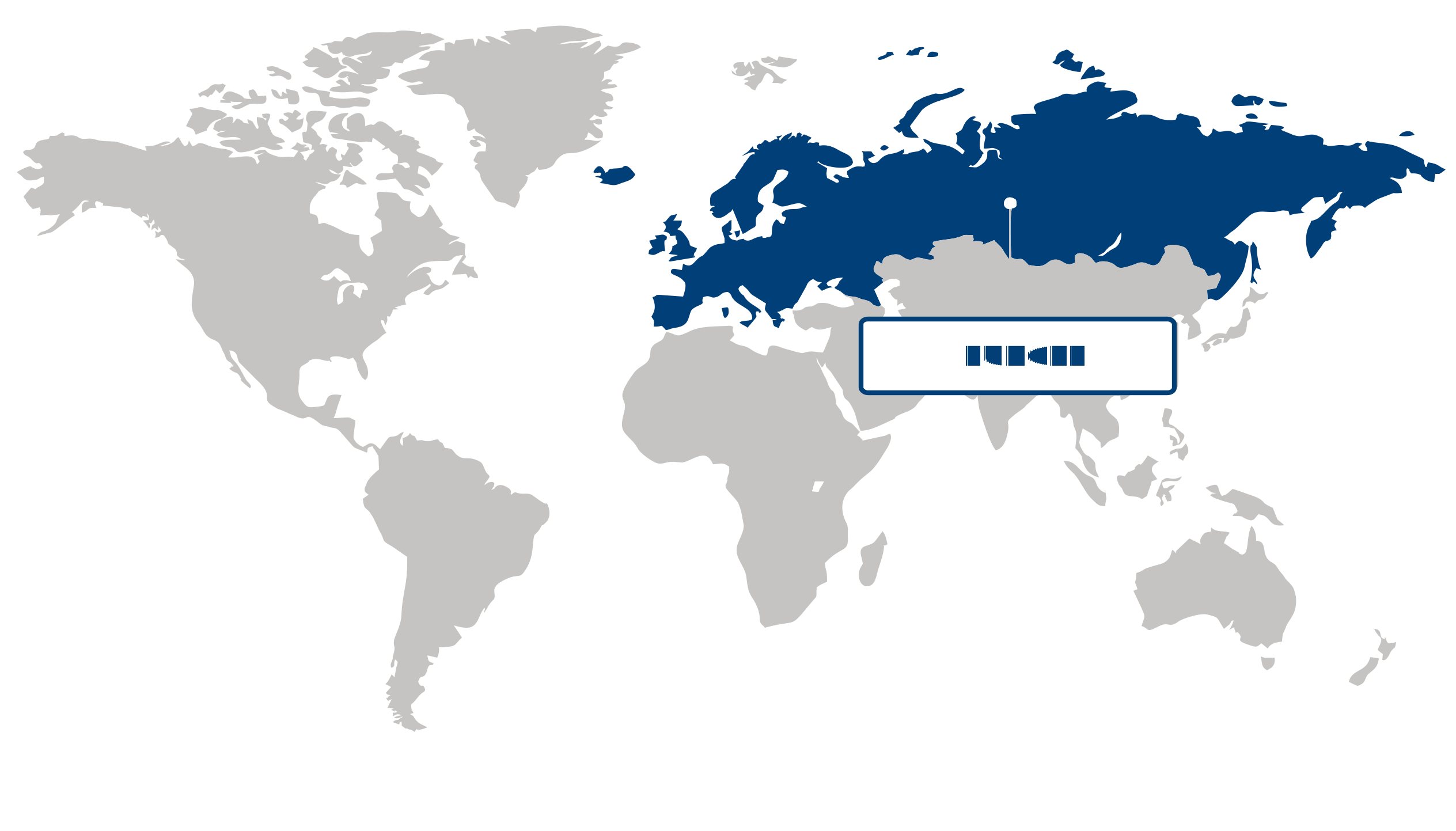
Europe dominated the biomethane market in 2025, capturing over 46.2% of the global share. This leadership stems from strong regulatory frameworks like the Renewable Energy Directive II (RED II), which enforce ambitious targets for renewable gas integration. Coupled with a well-established network of production plants, Europe has cultivated a robust supply infrastructure that supports rising demand for cleaner energy. Organizations such as the European Biogas Association have highlighted how policy coherence and sustained investment have accelerated biomethane adoption in transport and heating sectors. The region’s commitment to carbon neutrality and energy security further elevates its position, as companies and governments increasingly prioritize renewable alternatives amidst tightening emissions standards. Looking ahead, Europe’s policy environment and mature production capabilities position it as a fertile ground for innovation and expansion in the biomethane market, offering significant investment opportunities in scaling versatile applications and export potential.
Germany anchors the European biomethane market, benefiting from incentivizing policies that foster biogas upgrading and grid injection. Germany’s energy transition strategies emphasize decarbonization, which is evident in support mechanisms such as feed-in tariffs and auction systems overseen by the Federal Network Agency (Bundesnetzagentur). Industry players like EnviTec Biogas and MT-Energie lead with scalable projects, reinforcing Germany’s dominance in both capacity and technological development. Meanwhile, France contributes a complementary dynamic with a focus on agricultural waste valorization and regional cooperation schemes, supported by incentives from the French Environment and Energy Management Agency (ADEME). The country’s emerging public-private partnerships accelerate localized biomethane production, enhancing supply diversity. Together, Germany’s technological leadership and France’s integrative approach solidify Europe’s regional advantage, underpinning sustained growth prospects and competitive differentiation in the biomethane market.
North America Market Analysis:
North America emerged as the fastest-growing region in the biomethane market, registering a robust CAGR of 8.4%. This rapid growth is primarily driven by the accelerated shift toward green fuels within industrial and heavy-duty transport sectors, where stringent emissions regulations and sustainability mandates are reshaping energy consumption patterns. Companies such as Cummins Inc. and Clean Energy Fuels Corp. have intensified investments in biomethane infrastructure, responding to increasing corporate and government commitments to decarbonization. The U.S. Environmental Protection Agency’s Renewable Fuel Standard further incentivizes biomethane adoption, reinforcing the market's expansion. Coupled with advancing upgrading technologies that improve biomethane purity and delivery efficiency, North America is positioned to capitalize on the convergence of regulatory momentum and growing corporate environmental responsibility, indicating significant future opportunities for investment and innovation.
The U.S. plays a pivotal role in North America’s biomethane market as a principal adopter driving demand through its expansive industrial and transport sectors. The rapid transition toward green fuels is manifest in numerous large-scale initiatives such as the California Low Carbon Fuel Standard, which incentivizes biomethane use in heavy-duty vehicles. Additionally, the Department of Energy’s support for biogas upgrading projects underlines the country’s commitment to renewable energy integration. Companies like NextEra Energy have expanded biomethane procurement to meet rising corporate sustainability goals, illustrating a strong market pull shaped by regulatory incentives and corporate strategies. The U.S. regulatory environment and evolving consumer preferences toward cleaner energy underline its leadership within the region, reinforcing North America’s overall dominance in the biomethane market.
Asia Pacific Market Trends:
The Asia Pacific region maintained a notable presence in the biomethane market, driven by its expanding energy needs and accelerating shift toward sustainable alternatives. Rising urbanization and heightened environmental commitments from governments, such as the Asia Pacific Economic Cooperation (APEC) environmental initiatives, have catalyzed demand for cleaner fuels. Countries in the region are increasingly investing in advanced anaerobic digestion technologies and infrastructure modernization to optimize biogas upgrading processes. Moreover, growing consumer awareness around carbon neutrality and supportive policy frameworks, exemplified by regional collaboration on renewable energy standards, have enhanced the uptake of biomethane. Companies like Toshiba Energy Systems & Solutions Corporation have announced pilot projects integrating biomethane into existing gas grids, underscoring technological advancements. Given the nexus of environmental priorities and industrial growth, the Asia Pacific region offers significant opportunities for scalable, cost-efficient biomethane deployment over the medium term.
Japan plays a pivotal role in the Asia Pacific biomethane market due to its stringent environmental regulations and government-backed incentives aimed at reducing greenhouse gas emissions. The Ministry of Economy, Trade and Industry (METI) has actively promoted biomethane as a crucial part of the country’s renewable energy portfolio, leading to increased investments in upgrading agricultural waste and sewage sludge into biomethane. Japanese firms such as JERA have launched public-private partnerships to develop biomethane infrastructure tailored for transport and industrial applications, reflecting strong market demand and technological innovation. The country’s advanced waste management systems and emphasis on energy security position Japan as a leader in demonstrating biomethane’s commercial viability, setting a precedent that can catalyze regional market expansion in Asia Pacific.
China represents a high-growth engine within the Asia Pacific biomethane market, propelled by aggressive national mandates to reduce coal dependency and curb urban pollution. The National Energy Administration of China has integrated biomethane development into its 14th Five-Year Plan, fostering large-scale biogas upgrading projects across rural and industrial zones. State-owned enterprises like China National Petroleum Corporation (CNPC) have begun injecting biomethane into local gas grids, highlighting expanded supply chain integration. Additionally, consumer demand for cleaner household energy alternatives in cities aligns with government subsidies boosting biomethane adoption. China’s robust manufacturing ecosystem and scale of investment not only accelerate domestic industry maturation but also enhance competitive intensity regionally, unlocking avenues for cross-border collaboration and export-led growth across Asia Pacific.
| Parameter | North America | Asia Pacific | Europe | Latin America | MEA |
|---|---|---|---|---|---|
| Innovation Hub i Scale Nascent Developing Advanced | |||||
| Cost-Sensitive Region i Scale Low Medium High | |||||
| Regulatory Environment i Scale Restrictive Neutral Supportive | |||||
| Demand Drivers i Scale Weak Moderate Strong | |||||
| Development Stage i Scale Emerging Developing Developed | |||||
| Adoption Rate i Scale Low Medium High | |||||
| New Entrants / Startups i Scale Sparse Moderate Dense | |||||
| Macro Indicators i Scale Weak Stable Strong |
Segment Leadership and Growth Trends
Biomethane Market Share (%), by Production Method, 2026
Go beyond the chart, access full insights & data tables
Request Free Sample ReportThe biomethane market is dominated by the gasification segment in 2025, reflecting its largest share within production methods. This leadership stems from escalating investments in gasification technologies capable of converting diverse dry biomass into renewable biomethane, thereby broadening production capacities across major regions. Stakeholders benefit from enhanced supply chain efficiencies and innovation in thermal conversion processes, fostering competitive advantages. For example, the European Biomass Association has highlighted increased funding initiatives driving gasification project deployments. This segment offers strategic opportunities for technology providers and energy companies aiming to capitalize on evolving renewable energy policies. Gasification’s ability to process varied feedstocks positions it as a resilient choice, ensuring its sustained relevance amid tightening environmental regulations and advancing resource optimization trends.
Analysis by End-User
The automotive segment held the largest share in the biomethane market in 2025, propelled by the rising adoption of biomethane as a low-carbon fuel aligned with stringent emissions standards and growing sustainability expectations. This segment’s growth mirrors shifting consumer preferences for cleaner transportation and regulatory mandates such as the European Union’s Fit for 55 package, which incentivizes biomethane-fueled vehicles. Automotive industry leaders like Scania are actively integrating biomethane in their fleets, signaling robust market confidence. The segment provides established automakers and emerging clean mobility firms with profitable avenues to meet carbon neutrality targets. Given intensifying global climate commitments and increasing urbanization, demand for biomethane in automotive applications is expected to maintain momentum.
Analysis by Feedstock
Organic household waste represented the largest share in the biomethane market in 2025, driven by its abundant availability and supportive waste management policies worldwide. The segment benefits from increasing municipal regulations aimed at diverting organic waste from landfills toward renewable energy production, as observed through initiatives by the US Environmental Protection Agency and the Waste Framework Directive in the EU. Consumer environmental awareness and adoption of circular economy principles have further accelerated demand. This creates substantial entry points for waste management firms and energy producers looking to integrate sustainable feedstocks into biomethane supply chains. With ongoing enhancements in anaerobic digestion technologies and expanding urban populations generating organic waste, this segment is well-positioned to sustain its market leadership.
| Segment | Sub-Segment | Largest Segment | Fastest Growing |
|---|---|---|---|
| Production Method | Fermentation, Gasification | ||
| End-User | Power Generation, Automotive, Others | ||
| Feedstock | Organic Household Waste, Animal Manure, Energy Crops, Agricultural Waste, Sewage Sludge, Industrial Food Processing Waste, Others |
Competitive Landscape and Market Positioning
The competitive landscape is marked by a dynamic interplay of collaboration, innovation, and expansion. These key players actively enhance their technological portfolios through cross-border partnerships and targeted acquisitions, accelerating the adoption of biomethane. Advances in upgrading technology and injection systems reflect underlying research efforts, enabling more efficient and cost-effective biomethane production. Alliances between engineering specialists and fuel providers foster integrated supply chains, increasing market reach and resilience. This evolving environment intensifies competition while driving innovation, as companies seek to differentiate through enhanced product offerings and operational scalability, reinforcing their strategic market positions.
Strategic / Actionable Recommendations for Regional Players
In North America, aligning with established technology providers and investing selectively in emerging biogas upgrading methods can solidify market presence. Focusing on infrastructure compatibility and collaborations in transport and utility sectors may unlock new demand channels, while emphasizing clean energy mandates enhances stakeholder appeal.
In Asia Pacific, fostering regional partnerships that combine local biomass resources with advanced upgrading technologies can accelerate commercialization. Targeting segments such as agricultural waste conversion and urban organic refuse treatment can drive growth, especially amidst expanding governmental support for renewable gases.
European players should capitalize on their regulatory leadership by deepening engagement with cross-sector alliances and integrating digital monitoring innovations. Prioritizing scalable, modular technology solutions alongside circular economy initiatives can create value propositions that resonate with policy-driven market frameworks.
| Company | Market Share | Company Revenue | Revenue CAGR (%) | Product Portfolio | Geographic Presence | Innovation / R&D Focus | Strategic Developments |
|---|---|---|---|---|---|---|---|
| No companies available. | |||||||
Industry Development/News
| Company Name | Date | Key Development |
|---|
Customize Your Report
Explore examples of how this report can be tailored to different research needs, including custom segments, additional topics or chapters, and related reports. Click a section of the wheel or its numbered marker to explore the available options.
Biomethane Market — Custom Segments
| Segment | Sub-Segment |
|---|---|
| No segment data available. | |
Biomethane Market — Custom TOC
| Custom Chapter | Custom Details | ||
|---|---|---|---|
| No custom TOC data available. | |||
Need a different cut of the data?
Request Custom ResearchHow much is the biomethane industry expected to grow by 2035?
Which geographical region leads the biomethane market market?
Who is driving the fastest regional growth in the biomethane sector?
How much is the gasification segment expected to grow in the biomethane industry beyond 2025?
What factors give automotive segment a competitive edge in the biomethane sector?
Which is the largest sub-segment within the feedstock segment for biomethane industry?
Who are the leading players in the biomethane landscape?
Our Clients
"The information presented in the report was genuinely insightful. The data was clear and easy to understand, which made it much easier to interpret the findings."
Amara Raja Group
"The responsiveness and professionalism exhibited by the team were exemplary. They were readily available to address queries, provide clarifications, and offer additional insights."
ONGC
"The reports offered a comprehensive analysis of various segments within the market. The detailed insights into market trends, and regulatory landscapes were excellent."
TotalEnergies
Our Research Team & Methodology
Every Fundamental Business Insights report is built by a dedicated vertical research team, validated through a structured primary-and-secondary methodology, and reviewed for accuracy before it reaches you.
Research Team Overview
Prepared by the Energy & Power Research Team
Delivery
Published
Demand
Available
Support
Trust & Compliance
Research Domains
10 coverage areasResearch Intelligence
| Source | Reference |
|---|---|
| International Energy Agency (IEA) | www.iea.org |
| U.S. Energy Information Administration (EIA) | www.eia.gov |
| International Renewable Energy Agency (IRENA) | www.irena.org |
| International Electrotechnical Commission (IEC) | www.iec.ch |
| International Organization for Standardization (ISO) | www.iso.org |
| IEEE | www.ieee.org |
| CIGRE (International Council on Large Electric Systems) | www.cigre.org |
| World Energy Council (WEC) | www.worldenergy.org |
| U.S. Department of Energy (DOE) | www.energy.gov |
| International Atomic Energy Agency (IAEA) | www.iaea.org |
| American Petroleum Institute (API) | www.api.org |
| Society of Petroleum Engineers (SPE) | www.spe.org |
| Hydrogen Council | hydrogencouncil.com |
| Battery Council International (BCI) | batterycouncil.org |
| Global Wind Energy Council (GWEC) | gwec.net |
| SolarPower Europe | www.solarpowereurope.org |
| World Bioenergy Association (WBA) | worldbioenergy.org |
| International Hydropower Association (IHA) | www.hydropower.org |
| Edison Electric Institute (EEI) | www.eei.org |
| National Renewable Energy Laboratory (NREL) | www.nrel.gov |
Research Workflow & Quality Assurance
Data Collection
Verified information gathered through primary and secondary research.
Data Triangulation
Cross-validation using multiple independent data sources.
Forecast Modelling
Market estimates developed using historical trends and analytical models.
Analyst Validation
Findings reviewed by domain experts for accuracy and consistency.
Editorial & Quality Review
Final editorial, quality, and compliance checks before publication.
Final Publication
Released after successful completion of the internal review process.
Report Coverage
📊 Market Assessment
- Market Size & Forecast
- Market Segmentation
- Regional Analysis
- Growth Drivers & Challenges
- Market Dynamics
🏢 Competitive Intelligence
- Competitive Landscape
- Company Profiles
- Competitive Benchmarking
- Mergers & Acquisitions
- Market Share Analysis or Key Company Strategies
🔍 Strategic Analysis
- Value Chain Analysis
- Porter's Five Forces
- PESTLE Analysis
- Pricing Trends
- Supply-Demand Analysis
🚀 Future Outlook
- Technology Landscape
- Regulatory Landscape
- Investment & Funding Landscape
- Emerging Opportunities
- Future Market Outlook
Have a question about this report or need a custom scope?
Request Customization