Bio-based Paraxylene Market Size & Forecasts 2026-2035, By Segments (End-User, Application), Growth Opportunities, Innovation Landscape, Regulatory Shifts, Strategic Regional Insights (U.S., Japan, China, South Korea, UK, Germany, France), and Competitive Dynamics (Sabic, BP, Toray Industries, Indorama Ventures, M&G Chemicals)
Market Size and Growth Outlook
Bio-based Paraxylene Market size is forecast to climb from USD 15.09 billion in 2025 to USD 32.28 billion by 2035, expanding at a CAGR of over 7.9% during 2026-2035. Industry revenue in 2026 is projected at USD 16.13 billion.
Get more details on this report
Request Free Sample ReportBio-based Paraxylene Market Intelligence Snapshot
Regional Market Dynamics
Segment Momentum
Market Expansion Drivers
Leading Market Participants
Global Market Forecast Snapshot
Market Outlook
Regional and Segment Outlook
Market Growth Drivers and Industry Trends
Shifts in consumer preference and corporate sustainability commitments are accelerating feedstock substitution for aromatic intermediates; purchasers such as Unilever and Coca-Cola have set targets for renewable or recyclable inputs, and the European Commission’s Green Deal and Chemicals Strategy create regulatory tailwinds that elevate demand for renewable feedstocks. These dynamics are directly expanding the bio-based paraxylene market by prioritizing bio-derived PTA and related intermediates for PET and engineering polymers. Established petrochemical producers can leverage existing value chains to integrate bio-paraxylene feedstocks, while specialty entrants can capture premium, differentiated supply through brand partnerships and certification. Given ongoing policy implementation and buyer procurements, certification and logistics capacity will continue to scale.
Expansion in packaging and textile industries
Rising demand for sustainable packaging and performance fibers—evidenced by Coca-Cola’s PlantBottle initiative and H&M Group’s targets to increase recycled and renewable content—translates into greater upstream demand for bio-based PTA derivatives, positioning the bio-based paraxylene market as a strategic feedstock node for PET bottles and polyester textiles. Brand-driven procurement programs and retailer sustainability standards are reshaping supply-chain requirements, creating opportunities for converters and resin producers to co-develop certified bio-based resins. Incumbent chemical majors can secure long-term contracts with global consumer goods firms, while agile start-ups can win niche applications in premium packaging and technical textiles as certification frameworks mature.
Development of advanced bio-based paraxylene technologies
Technological advances—from Virent’s platform chemistry and Anellotech’s Bio‑TCat process to research at the National Renewable Energy Laboratory (NREL) and support from the U.S. Department of Energy—have reduced technical barriers to producing aromatics from carbohydrate feedstocks, improving yields and feedstock flexibility and thereby shaping the bio-based paraxylene market’s commercial viability. These innovations enable incumbents to retrofit existing aromatics assets and allow technology-focused entrants to license processes or pursue joint ventures; partnerships between licensors and refiners can accelerate scale. As pilot projects advance to demonstration scale and public labs publish validation, commercialization pathways and IP-sharing arrangements will increasingly define competitive dynamics.
Industry Restraints:
Feedstock Cost Volatility and Competition: Bio-based paraxylene producers face recurring feedstock price shocks and allocation pressure from biofuels and food markets, which directly inflate production costs and constrain reliable supply. The International Energy Agency (IEA) highlights bioenergy feedstock competition as a structural constraint on bio-based chemical supply, while Neste’s sustainability reporting underscores margin sensitivity to vegetable oil and waste oil price swings. Braskem’s experience with sugarcane-based polymers illustrates procurement and certification complexities in feedstock sourcing. Strategically, incumbents with integrated feedstock positions or long-term offtakes gain advantage, while new entrants must secure costly, certified supply chains (e.g., ISCC certification) to win buyers. Near to medium term this restraint will persist until diversified feedstocks (lignocellulosic streams, waste sugars) and stronger contractual/ policy supports reduce price exposure and allocation risk.
Capital Intensity and Commercial-scale Integration Risk: Moving from pilot to commercial bio-paraxylene requires high CAPEX, complex catalytic conversion units, and seamless downstream integration with existing PTA/para-xylene supply chains, creating execution and financing hurdles. The Bio-based Industries Joint Undertaking (BBI JU) has repeatedly funded demonstration projects precisely because the European Commission recognizes scale-up as a bottleneck; the U.S. Department of Energy Bioenergy Technologies Office (DOE BETO) similarly documents technology risk and capital barriers for bioproducts. Anellotech’s progression from demonstration to commercial facility exemplifies the long lead times and partner-dependency of successful scale-up. For market participants, large incumbents can underwrite plants or retrofit assets, while startups must secure strategic partners or concessional finance. In the near to medium term, commercialization will advance unevenly—driven by strategic alliances, public funding, and off-take guarantees rather than purely market-driven deployment.
| Growth Driver | Impact on CAGR | Regulatory Influence | Geographic Relevance | Adoption Rate | Impact Timeline |
|---|---|---|---|---|---|
| Increasing demand for bio-based polymers and sustainable chemicals | 2.50% | Short term (≤ 2 yrs) | Asia Pacific, Europe; Spillover: North America | Medium | Fast |
| Expansion in packaging and textile industries | 2.00% | Medium term (2–5 yrs) | Europe, North America | Low | Moderate |
| Development of advanced bio-based paraxylene technologies | 1.50% | Long term (5+ yrs) | Asia Pacific, Europe | Low | Slow |
Unlock insights tailored to your business with our bespoke market research solutions.
Click to get your customized report now.
Regional Demand Dynamics
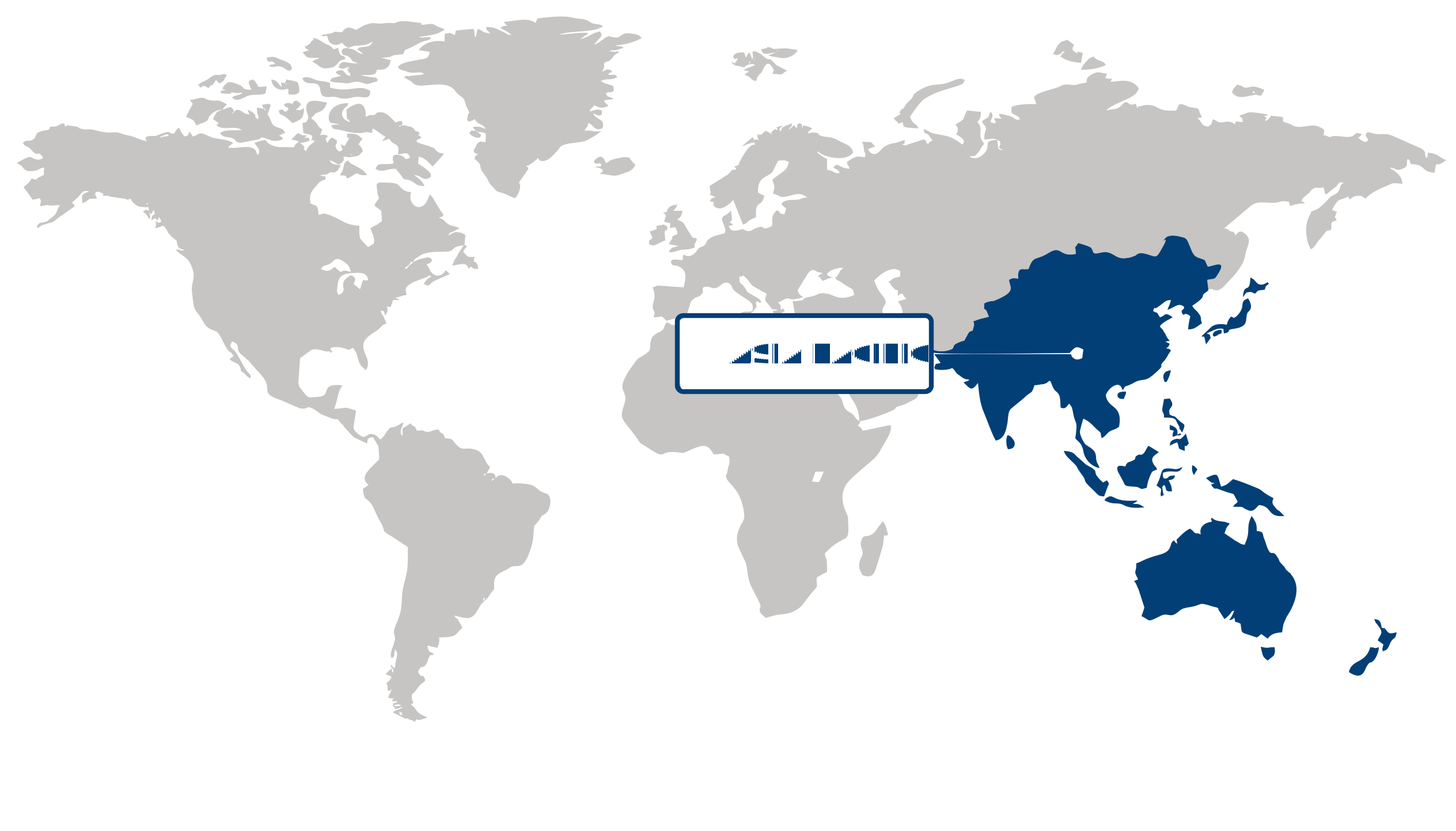
The bio-based paraxylene market captured approximately 52% of the global market in Asia Pacific in 2025, making the region the largest market globally; this leadership is driven chiefly by massive demand for polyester fiber and PET resin across textile and packaging supply chains. Rapid scaling of polyester value chains—documented by the China National Textile and Apparel Council’s commentary on sustained apparel and nonwoven demand and by corporate activity from PET producers such as Indorama Ventures—has created concentrated feedstock and conversion density that favors bio-based PX adoption. Policy signals from the Ministry of Economy, Trade and Industry (METI) and the Ministry of Industry and Information Technology (China) plus project finance and technical assistance from the Asian Development Bank further lower barriers to commercial deployment. Given integrated downstream demand, established producer clusters and growing sustainability mandates from major brands, Asia Pacific offers significant opportunities for feedstock integration, circular-PET partnerships and plant-scale bio-PX projects.
The bio-based paraxylene market in Japan is positioned as a pivotal hub in Asia Pacific due to Japan’s advanced materials ecosystem and corporate-led sustainability transition. Strong interest from firms such as Toray Industries and Teijin in bio-based and recycled polyester technologies, together with METI programs promoting circular materials and industrial decarbonization, means Japanese converters and fiber-makers can commercialize higher-value bio-PX use cases (technical textiles, performance fibers) faster than peers. This ecosystem’s emphasis on quality, process innovation and OEM-brand collaboration makes Japan an attractive pilot and commercialization market that can de-risk broader Asia Pacific rollouts.
The bio-based paraxylene market in China anchors the Asia Pacific market by scale, where textile mills and PET resin producers absorb the bulk of regional polyester demand. The China National Textile and Apparel Council’s reports of sustained polyester consumption, combined with the presence of large petrochemical players such as Sinopec supplying aromatics and integrated PX chains, create immediate offtake pathways for bio-based PX. China’s industrial policy emphasis on upgrading petrochemical value chains and the rapid pace of conversion among domestic PET bottlers and packaging converters mean newly built bio-PX capacity can be absorbed quickly, reinforcing regional supply security and enabling exporters and technology licensors to capture scale advantages across Asia Pacific.
Europe Market Analysis:
Europe emerged as the fastest-growing region in the bio-based paraxylene market, registering a robust CAGR of 11.06%. This acceleration is driven by active regional initiatives toward a sustainable circular economy—most notably the European Commission’s Circular Economy Action Plan and the European Green Deal—which are aligning regulatory incentives, public R&D funding and procurement preferences toward renewable aromatics used in PET and specialty polymers. Horizon Europe grants and state-backed demonstration funding are lowering scale-up risk for technologies converting biomass and waste streams into paraxylene precursors, while major chemical players (for example BASF and Evonik) are publicly committing to circular feedstocks. These policy and corporate signals, coupled with rising brand and retailer demand for recycled- and bio-based content for packaging, create an expanding commercial pathway for bio-based paraxylene across value chains in Europe.
Germany plays a leading industrial role in the bio-based paraxylene market, leveraging dense chemical clusters and the German Federal Government’s National Bioeconomy Strategy to accelerate commercial adoption. German federal and state programs support pilot plants and feedstock logistics in Rhine-Ruhr and Leverkusen clusters, enabling incumbents such as BASF and specialty firms like Evonik to integrate bio-based aromatics into existing PTA/PET supply chains. Strong downstream demand from automotive and consumer-packaged-goods buyers, coupled with skilled engineering capacity and proximity to North Sea ports, reduces commercialization friction. These structural advantages in Germany translate into faster technology deployment and make the country a practical hub for scaling regional bio-based paraxylene supply.
France is a strategic adopter in the bio-based paraxylene market, supported by targeted public measures including ADEME funding and the France 2030 industrial roadmap that prioritize bio-based chemicals and circular feedstocks. French clusters and industrial players (for example Arkema and select biorefinery consortia) are receiving grants and soft financing to advance demonstration projects converting biomass and industrial residues into aromatic intermediates. France’s regulatory emphasis on extended producer responsibility and packaging circularity is strengthening buyer willingness to pay for certified bio-based PET feedstocks. As a result, France offers complementary demand-side pull and policy support that reinforces Germany-led supply momentum and widens commercial opportunities across Europe.
North America Market Trends:
North America experienced lucrative growth in the bio-based paraxylene market, supported by plentiful biomass feedstocks, an integrated petrochemical infrastructure, and heightened buyer preference for lower‑carbon packaging. Evidence includes funding and technical programs from the U.S. Department of Energy (DOE) Bioenergy Technologies Office that advance aromatic conversion pathways, USDA BioPreferred Program activity that elevates biobased procurement, and California Air Resources Board (CARB) signals that increase commercial interest in low‑carbon feedstocks. Corporate signals such as Coca‑Cola’s PlantBottle initiative and Virent press releases on pilot paraxylene production illustrate commercial pull, while Anellotech announcements on Bio‑TCat development show conversion progress. Together these elements create a cost‑competitive and policy‑anchored environment that positions North America to capture scaling opportunities in sustainable PET feedstocks and downstream offtake agreements.
The United States serves as the primary growth engine in the bio-based paraxylene market, where concentrated investment, pilot‑to‑commercial projects, and federal support are accelerating scale‑up. Practical examples include DOE grant programs that de‑risk technology demonstrations, Anellotech’s publicized commercialization partnerships around Bio‑TCat pathways, and Virent press releases describing pilot paraxylene for PET applications; these illustrate financing and technical milestones converging in U.S. facilities. The result is an ecosystem where developers can secure feedstock logistics, near‑market conversion capacity, and corporate offtake — a strategic advantage that will anchor North American supply chains and draw additional private capital into regional commercialization.
| Parameter | North America | Asia Pacific | Europe | Latin America | MEA |
|---|---|---|---|---|---|
| Innovation Hub i Scale Nascent Developing Advanced | |||||
| Cost-Sensitive Region i Scale Low Medium High | |||||
| Regulatory Environment i Scale Restrictive Neutral Supportive | |||||
| Demand Drivers i Scale Weak Moderate Strong | |||||
| Development Stage i Scale Emerging Developing Developed | |||||
| Adoption Rate i Scale Low Medium High | |||||
| New Entrants / Startups i Scale Sparse Moderate Dense | |||||
| Macro Indicators i Scale Weak Stable Strong |
Segment Leadership and Growth Trends
Bio-based Paraxylene Market Share (%), by End-User, 2026
Go beyond the chart, access full insights & data tables
Request Free Sample ReportPackaging dominated the bio-based paraxylene market in 2025 within the End-User segments, holding the largest share as demand for sustainable and recyclable packaging materials accelerated. This leadership reflects the direct link to rising demand for recyclable formats and lightweighting, with brand-level commitments and retailer specifications pushing procurement toward bio-based feedstocks; examples include Coca-Cola’s World Without Waste initiative, Nestlé’s pledge for recyclable or reusable packaging by 2025, and Unilever’s sustainable packaging targets. Shifts in supply chains toward circularity, investments by converters such as Amcor in recyclable solutions, and regulatory moves by the European Commission all reinforce adoption. The segment creates scale-up advantages for incumbent packaging producers and entry points for bio-feedstock suppliers and recyclers, and it is likely to remain central near term as brands, policy, and consumers sustain demand for circular packaging solutions.
Analysis by Application
Bio-Based Polyethylene Terephthalate (BIO-PET) represented largest share of the bio-based paraxylene market in 2025 within the Application segments, driven by major brands’ commitments to lower carbon footprints through bio-based plastics. Corporate initiatives such as Coca-Cola’s PlantBottle and announcements from Origin Materials and Avantium on plant-derived polymer routes exemplify how brand demand and technology readiness favor BIO-PET; compatibility with existing PET processing and recycling streams noted by industry players like Indorama Ventures further eases adoption. Customer preference for low-carbon consumer goods, supply-chain decarbonization strategies, and supportive policy from the European Commission underpin demand. Opportunities exist for established resin producers to retrofit capacity and for startups to commercialize feedstock and catalyst innovations, and BIO-PET’s drop-in utility keeps it strategically relevant in the near to medium term.
| Segment | Sub-Segment | Largest Segment | Fastest Growing |
|---|---|---|---|
| End-User | Packaging, Food & Beverages, Others | ||
| Application | Polytrimethylene Terephthalate (PTT), Bio-Terephthalic Acid (BIO-TPA), Polybutylene Terephthalate (PBT), Bio-Based Polyethylene Terephthalate (BIO-PET) |
Competitive Landscape and Market Positioning
The competitive environment is shaped by concerted moves to secure feedstock, demonstrate novel catalytic routes, and align product specifications with downstream converters. Several companies have broadened their value chains through cooperative projects with biorefineries and offtakers, deployed demonstration facilities to de-risk scale-up, and advanced proprietary process know-how to create differentiated bio-based paraxylene grades. These efforts are tightening time-to-market for scaled supply, increasing bargaining leverage with major brand owners, and fostering product differentiation that privileges integrated players with strong R&D and commercial channels.
Strategic / Actionable Recommendations for Regional Players
North America: North American participants should accelerate collaboration with bio-refineries and materials end-users to firm long-term offtake and to justify demonstration-scale units. Prioritizing close engagement with packaging and specialty polymer converters and aligning pilot outputs to their technical specifications will shorten qualification cycles and improve feedstock resilience.
Asia Pacific: In Asia Pacific, leveraging partnerships with large integrated refiners and regional textile and packaging conglomerates will help convert manufacturing scale into secured demand. Emphasizing local feedstock tie-ups, modular capacity additions, and alignment with fast-moving consumer segments will strengthen commercial uptake across dense regional supply networks.
Europe: European players should focus on premium differentiated grades and tighter integration with brand owners and circularity-focused partners. Advancing catalytic and downstream processing innovations that meet stringent sustainability criteria while coordinating with recyclers and consumer goods companies will reinforce market access for higher-value bio-based paraxylene applications.
| Company | Market Share | Company Revenue | Revenue CAGR (%) | Product Portfolio | Geographic Presence | Innovation / R&D Focus | Strategic Developments |
|---|---|---|---|---|---|---|---|
| No companies available. | |||||||
Industry Development/News
| Company Name | Date | Key Development |
|---|
Customize Your Report
Explore examples of how this report can be tailored to different research needs, including custom segments, additional topics or chapters, and related reports. Click a section of the wheel or its numbered marker to explore the available options.
Bio-based Paraxylene Market — Custom Segments
| Segment | Sub-Segment |
|---|---|
| No segment data available. | |
Bio-based Paraxylene Market — Custom TOC
| Custom Chapter | Custom Details | ||
|---|---|---|---|
| No custom TOC data available. | |||
Need a different cut of the data?
Request Custom ResearchHow much revenue does the bio-based paraxylene market generate?
What is the forecasted size of the bio-based paraxylene industry?
Which geographical area accounts for the highest portion of the bio-based paraxylene market?
Which region shows the most rapid acceleration in the bio-based paraxylene sector?
Which is the largest sub-segment within the end-user segment for bio-based paraxylene industry?
Why does bio-based polyethylene terephthalate (BIO-PET) sub-segment dominate the application segment of bio-based paraxylene sector?
What are the prominent companies operating in the bio-based paraxylene landscape?
Our Clients
"The report helped us understand emerging consumer trends in our product category. It clarified where to focus innovation for the next product launch."
LyondellBasell
"The regional forecast section was incredibly useful. We were able to identify two new potential partners in Europe thanks to the vendor mapping you included."
SABIC
"We appreciated how actionable the recommendations were. It guided us to improve supply chain resilience."
Olin Corporation
Our Research Team & Methodology
Every Fundamental Business Insights report is built by a dedicated vertical research team, validated through a structured primary-and-secondary methodology, and reviewed for accuracy before it reaches you.
Research Team Overview
Prepared by the Chemicals & Materials Research Team
Delivery
Published
Demand
Available
Support
Trust & Compliance
Research Domains
10 coverage areasResearch Intelligence
| Source | Reference |
|---|---|
| American Chemistry Council (ACC) | www.americanchemistry.com |
| European Chemical Industry Council (Cefic) | cefic.org |
| International Council of Chemical Associations (ICCA) | icca-chem.org |
| European Chemicals Agency (ECHA) | echa.europa.eu |
| U.S. Environmental Protection Agency (EPA) | www.epa.gov |
| ASTM International | www.astm.org |
| International Organization for Standardization (ISO) | www.iso.org |
| National Institute of Standards and Technology (NIST) | www.nist.gov |
| Plastics Industry Association (PLASTICS) | www.plasticsindustry.org |
| European Biplastics | www.european-bioplastics.org |
| The Adhesive and Sealant Council (ASC) | www.ascouncil.org |
| National Association of Corrosion Engineers (AMPP) | www.ampp.org |
| Society of Plastics Engineers (SPE) | www.4spe.org |
| International Fertilizer Association (IFA) | www.fertilizer.org |
| CropLife International | croplife.org |
| Packaging Europe | packagingeurope.com |
| Flexible Packaging Association (FPA) | www.flexpack.org |
| Battery Council International (BCI) | batterycouncil.org |
| International Copper Association (ICA) | internationalcopper.org |
| World Steel Association | worldsteel.org |
Research Workflow & Quality Assurance
Data Collection
Verified information gathered through primary and secondary research.
Data Triangulation
Cross-validation using multiple independent data sources.
Forecast Modelling
Market estimates developed using historical trends and analytical models.
Analyst Validation
Findings reviewed by domain experts for accuracy and consistency.
Editorial & Quality Review
Final editorial, quality, and compliance checks before publication.
Final Publication
Released after successful completion of the internal review process.
Report Coverage
📊 Market Assessment
- Market Size & Forecast
- Market Segmentation
- Regional Analysis
- Growth Drivers & Challenges
- Market Dynamics
🏢 Competitive Intelligence
- Competitive Landscape
- Company Profiles
- Competitive Benchmarking
- Mergers & Acquisitions
- Market Share Analysis or Key Company Strategies
🔍 Strategic Analysis
- Value Chain Analysis
- Porter's Five Forces
- PESTLE Analysis
- Pricing Trends
- Supply-Demand Analysis
🚀 Future Outlook
- Technology Landscape
- Regulatory Landscape
- Investment & Funding Landscape
- Emerging Opportunities
- Future Market Outlook
Have a question about this report or need a custom scope?
Request Customization