Bio-based and Synthetic Dimethyl Ether Market Size & Forecasts 2026-2035, By Segments (Type, Application), Growth Opportunities, Innovation Landscape, Regulatory Shifts, Strategic Regional Insights (U.S., Japan, China, South Korea, UK, Germany, France), and Competitive Dynamics (Fuelchem, Oberon Fuels, Clean Fuel Ventures, United Petroleum Corporation, ECHO)
Market Size and Growth Outlook
Bio-based and Synthetic Dimethyl Ether Market size is projected to grow steadily from USD 3.16 billion in 2025 to USD 5 billion by 2035, demonstrating a CAGR exceeding 4.7% through the forecast period (2026-2035). The 2026 revenue is estimated at USD 3.29 billion.
Get more details on this report
Request Free Sample ReportBio-based and Synthetic Dimethyl Ether Market Intelligence Snapshot
Regional Market Dynamics
Segment Momentum
Market Expansion Drivers
Leading Market Participants
Global Market Forecast Snapshot
Market Outlook
Regional and Segment Outlook
Market Growth Drivers and Industry Trends
The increasing prioritization of cleaner energy sources has driven the bio-based and synthetic dimethyl ether market towards broader adoption as a clean fuel alternative and versatile chemical intermediate. Governments and agencies such as the U.S. Department of Energy have emphasized dimethyl ether’s potential to replace diesel in transportation and reduce particulate emissions, aligning with global air quality directives. This shift is fueled by more stringent emission standards and a growing consumer preference for low-emission solutions, fostering innovation in production and application technologies. For established players, this trend encourages investment in refining bio-based feedstock capabilities, while new entrants can leverage niche feedstock innovations. As regulatory frameworks continue to tighten around fossil fuels, this driver will persistently underpin demand and product diversification in the market.
Increasing Adoption in Transportation and Industrial Energy Applications
The bio-based and synthetic dimethyl ether market is benefiting from expanding applications in transport fuels and industrial energy systems, where it offers a cleaner-burning alternative that integrates well with existing infrastructure. Industry leaders such as Oberon Fuels have demonstrated commercial-scale deployments of dimethyl ether in heavy-duty fleet vehicles, affirming its viability and operational performance. This uptake reflects shifting stakeholder priorities towards sustainability without compromising reliability, especially in sectors resistant to rapid electrification. The resultant competitive environment incentivizes collaboration between fuel suppliers, vehicle manufacturers, and regulatory bodies to optimize supply chains. Consequently, established firms can strengthen market position by scaling production, while new players find opportunities in innovative logistics and specialized product formulations.
Sustained Momentum from Carbon-Neutral and Sustainable Fuel Initiatives
Long-term commitment to carbon-neutrality creates sustained growth potential for the bio-based and synthetic dimethyl ether market, as governmental policies and international agreements push for renewable energy adoption. Institutions like the European Commission’s Green Deal explicitly support chemicals derived from renewable sources, stimulating investments in carbon footprint reduction across value chains. Companies such as Oberon Fuels align with these initiatives by producing dimethyl ether from waste biomass, reinforcing circular economy principles. This trajectory encourages not only technological advancements but also strategic partnerships that promote supply chain resilience and scalability. Going forward, the alignment with global decarbonization targets will ensure that bio-based and synthetic dimethyl ether remain integral to achieving sustainable energy and chemical sectors.
Industry Restraints:
Feedstock Price Volatility and Availability Constraints
Fluctuations in feedstock costs, particularly for bio-based inputs like methanol derived from biomass and syngas sources, significantly hinder the cost competitiveness and production scalability of bio-based and synthetic dimethyl ether (DME). According to the U.S. Department of Energy, volatile agricultural commodity prices and seasonal biomass supply disruptions elevate operational risks and undermine consistent output levels. These instabilities impose cost inefficiencies that affect both incumbent energy producers, such as Oberon Fuels, and new entrants striving to scale sustainable DME production. With uncertain feedstock reliability, capital-intensive projects face longer payback periods and increased financing risk. Consequently, companies must navigate supply chain complexity with strategic sourcing and diversified feedstock portfolios. This restraint is expected to persist as biomass processing technologies and supply infrastructure remain underdeveloped, continuing to challenge market expansion efforts through the medium term.
Regulatory Uncertainty and Complex Compliance Requirements
Stringent and evolving environmental regulations present a formidable barrier to market growth, particularly as regional policies on renewable fuel standards and emissions testing vary widely. The European Chemicals Agency’s shifting criteria on sustainable classification and emissions thresholds complicate product registration and limit market access for synthetic DME producers. Additionally, the regulatory patchwork increases compliance costs and delays time-to-market, suppressing innovation momentum from startups and established chemical firms alike. For example, China’s tightening biofuel mandates have led to increased approval cycles, as reported by the National Energy Administration, slowing market entry for new technologies. The strategic implication for market participants is the necessity of proactive regulatory engagement and adaptive product development to align with divergent standards. This restraint will shape competitive dynamics by favoring entities with robust regulatory expertise and agility in navigating policy changes over the near to medium-term horizon.
| Growth Driver | Impact on CAGR | Regulatory Influence | Geographic Relevance | Adoption Rate | Impact Timeline |
|---|---|---|---|---|---|
| Use as clean fuel & chemical intermediate | 1.20% | Short term (≤ 2 yrs) | Europe, North America | Medium | Fast |
| Adoption in transport & industrial energy applications | 1.30% | Medium term (2–5 yrs) | Asia Pacific, Europe | Medium | Moderate |
| Long-term growth in sustainable fuel & carbon-neutral initiatives | 1.20% | Long term (5+ yrs) | Europe, North America | High | Slow |
Unlock insights tailored to your business with our bespoke market research solutions.
Click to get your customized report now.
Regional Demand Dynamics
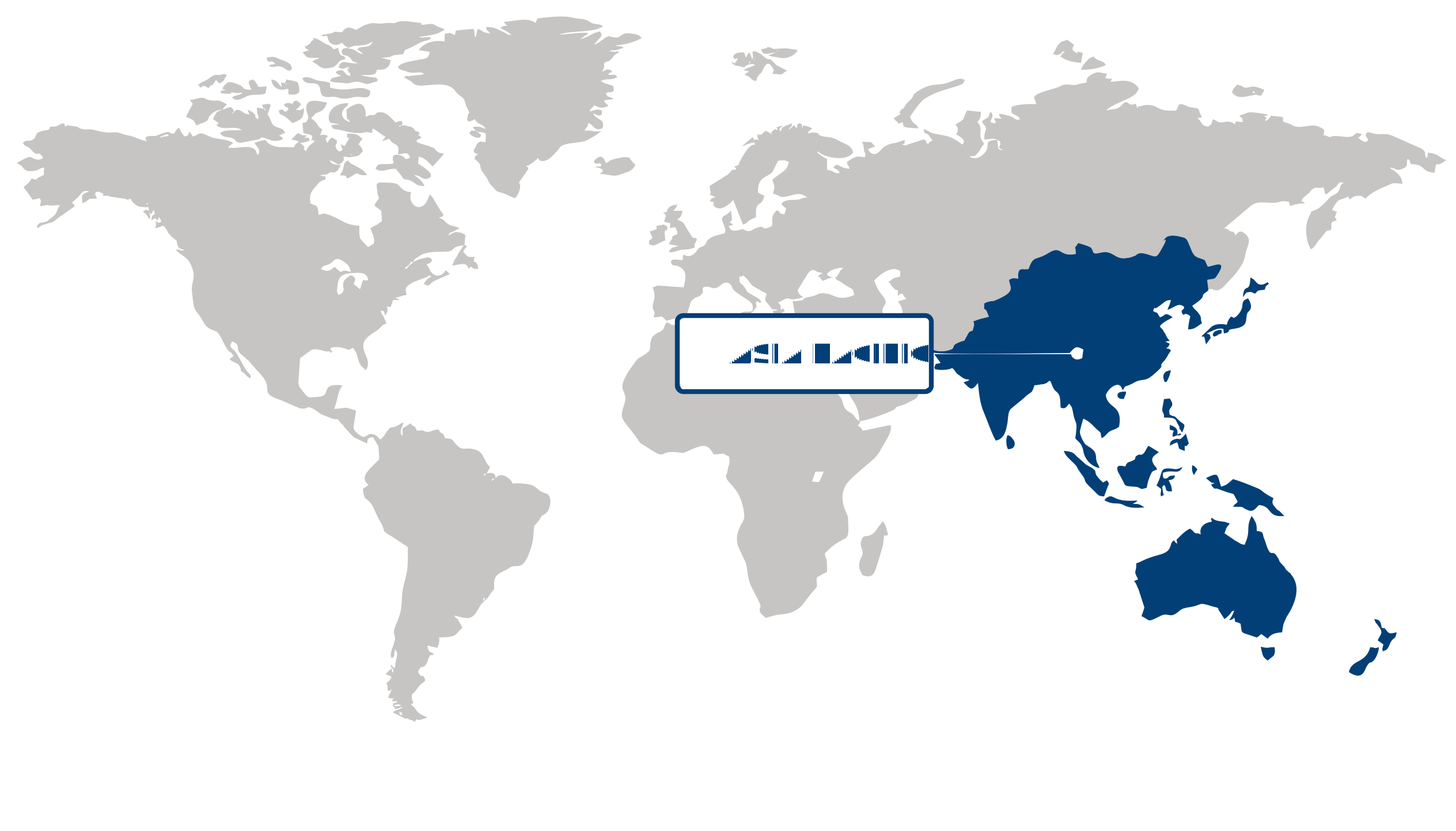
Asia Pacific dominated the bio-based and synthetic dimethyl ether market in 2025, capturing more than 38.7% of the global share and emerging as the fastest-growing region with a CAGR of 7.05%. This leadership stems largely from escalating demand for dimethyl ether (DME) as a cleaner alternative to liquefied petroleum gas (LPG) in domestic cooking, particularly amid increasing urbanization and rising environmental awareness. Governments such as India’s Ministry of Petroleum and Natural Gas actively endorse DME adoption through subsidy schemes and fuel switching initiatives, reinforcing the region’s robust policy environment. Furthermore, major energy players like China National Petroleum Corporation have enhanced supply chain infrastructure to support wider DME distribution. Together, these dynamics position Asia Pacific as a hotspot for sustainable energy transition, offering substantial growth avenues driven by consumer preferences shifting towards eco-friendly fuels and ongoing technology advancements in DME production and storage.
Japan anchors the Asia Pacific bio-based and synthetic dimethyl ether market, leveraging its advanced regulatory framework that prioritizes emissions reduction in residential fuel use. The Japanese government’s New Energy and Industrial Technology Development Organization (NEDO) has funded pilot projects integrating DME in household cooking appliances, highlighting a cultural openness to clean energy innovations alongside stringent environmental standards. Meanwhile, leading corporations such as Showa Denko K.K. have scaled synthetic DME production, underlining the country’s competitive edge in supply stability and innovation. Japan’s strategic emphasis on reducing urban air pollution and dependence on imported fossil fuels reinforces its pivotal role, which in turn bolsters the broader regional ecosystem by providing scalable models of domestic DME application.
China plays a transformative role within the Asia Pacific bio-based and synthetic dimethyl ether market, driven by its vast LPG substitution programs aligned with national carbon neutrality goals. The China National Development and Reform Commission (NDRC) has rolled out multi-year plans incentivizing DME adoption across both rural and urban households to mitigate conventional cooking fuel emissions. This policy thrust is complemented by investments from industry leaders like Sichuan Yahua Industrial Group, which are accelerating production capacity and downstream infrastructure. The convergence of regulatory support, large-scale market demand, and corporate advancement fortifies China’s influence and accelerates Asia Pacific’s leadership in DME deployment. This synergy underpins a vast opportunity for investors and strategists aiming to capitalize on the region’s expanding bio-based and synthetic dimethyl ether market.
Europe Market Analysis:
Europe emerged as the fastest-growing region in the bio-based and synthetic dimethyl ether market, registering a robust CAGR of 7.8%. This impressive growth is primarily driven by increasing adoption of renewable energy sources amid stringent environmental policies promoting emission reduction and sustainable fuels. The European Union’s Green Deal and related regulatory frameworks have accelerated investments in clean energy technologies, fostering a favorable environment for bio-based dimethyl ether as a viable alternative to fossil fuels. Companies like Oberon Fuels and the European Biofuels Technology Platform are actively advancing technology scalability, improving supply chain integration, and optimizing bio-feedstock utilization. Furthermore, the quadruple helix innovation model in several European countries enhances collaboration between industry, academia, government, and civil society, boosting innovation in synthetic fuel solutions. Looking ahead, Europe’s commitment to a carbon-neutral economy and evolving consumer demand for eco-friendly fuels position this region as an enduring hub for market expansion.
Germany plays a pivotal role as a frontrunner within Europe’s bio-based and synthetic dimethyl ether market, leveraging its robust industrial base and proactive energy transition policies. Germany’s strong emphasis on the Energiewende initiative promotes renewable fuel adoption, with companies such as Thyssenkrupp investing in advanced catalytic processes to enhance synthetic DME production efficiency. Regulatory incentives and carbon pricing mechanisms have stimulated demand from the transport and chemical sectors, while heightened consumer environmental awareness fuels preference for cleaner alternatives. Additionally, Germany’s well-developed logistics infrastructure supports seamless raw material sourcing and product distribution, crucial for market growth. The country’s technological expertise and innovation culture, supported by research institutions like Fraunhofer Society, further reinforce its competitive edge. Germany’s leadership thus underscores Europe’s broader strategic momentum towards sustainable fuel solutions.
France contributes significantly to the regional bio-based and synthetic dimethyl ether market, driven by its national bioeconomy roadmap and renewable energy commitments. French companies such as TotalEnergies have pioneered pilot projects integrating bio-based DME into public transportation fuel mixes, illustrating rising market acceptance. Policy interventions, such as subsidies for green fuel adoption and low-carbon fuel standards set by the French Ministry of Ecological Transition, have increased end-user uptake. Consumer perceptions in France increasingly favor environmentally responsible products, adding momentum to demand. Collaborative networks including ADEME (Agence de l'Environnement et de la Maîtrise de l’Énergie) facilitate innovation and investment in synthetic fuel technologies. France’s strategic initiatives synergize with broader European ambitions, reinforcing the region’s capacity to scale sustainable dimethyl ether production and deployment.
North America Market Trends:
North America maintained a notable presence in the bio-based and synthetic dimethyl ether market, driven by its evolving energy landscape and growing emphasis on cleaner fuel alternatives. The region’s moderate growth is underpinned by rising industrial demand for sustainable chemicals and fuels, supported by policy frameworks favoring low-emission technologies, such as incentives from the U.S. Department of Energy promoting biofuel innovation. Moreover, advancements in production technologies and expansion of infrastructure by companies like Oberon Fuels have enhanced supply chain efficiency and reduced operational costs. Consumer preference shifts towards environmentally friendly products, combined with investments in digitalization for process optimization, further reinforce the market’s steady ascent. With North America’s resilient economy and proactive sustainability agenda, the region is positioned to leverage expanding opportunities in bio-based and synthetic dimethyl ether as industries increasingly prioritize decarbonization and circular economy models.
The U.S. plays a pivotal role in the North American bio-based and synthetic dimethyl ether market, where government initiatives such as the Renewable Fuel Standard (RFS) program stimulate demand for low-carbon fuel substitutes. Major players like Oberon Fuels have accelerated commercialization of bio-DME, capitalizing on technological advancements and pilot collaborations with the U.S. Department of Energy. Regulatory clarity and substantial private sector investments have fostered innovation, particularly in synthetic routes utilizing renewable feedstocks. Additionally, supply chain advancements and integration with existing natural gas infrastructure enhance market accessibility. Consequently, the U.S. market’s progressive adoption patterns solidify its strategic importance, encouraging further regional momentum and attracting investor interest aligned with North America’s moderate yet stable growth trajectory in bio-based and synthetic dimethyl ether production and utilization.
| Parameter | North America | Asia Pacific | Europe | Latin America | MEA |
|---|---|---|---|---|---|
| Innovation Hub i Scale Nascent Developing Advanced | |||||
| Cost-Sensitive Region i Scale Low Medium High | |||||
| Regulatory Environment i Scale Restrictive Neutral Supportive | |||||
| Demand Drivers i Scale Weak Moderate Strong | |||||
| Development Stage i Scale Emerging Developing Developed | |||||
| Adoption Rate i Scale Low Medium High | |||||
| New Entrants / Startups i Scale Sparse Moderate Dense | |||||
| Macro Indicators i Scale Weak Stable Strong |
Segment Leadership and Growth Trends
Bio-based and Synthetic Dimethyl Ether Market Share (%), by Type, 2026
Go beyond the chart, access full insights & data tables
Request Free Sample ReportThe fossil fuel based segment held the largest share in the bio-based and synthetic dimethyl ether market in 2025, driven by its well-established production infrastructure and cost-effective manufacturing processes. This entrenched leadership is further underpinned by decades of developed supply chains and widespread industrial familiarity, enabling reliable and scalable output that meets steady demand from traditional energy users. Regulatory frameworks, such as those overseen by the U.S. Energy Information Administration, continue to support fossil-based production while encouraging incremental efficiency gains. This segment offers strategic opportunities for established energy firms to optimize existing assets and invest in cleaner fossil fuel technologies, while emerging players benefit from proven process models. Given ongoing energy transition challenges and the cost advantages of fossil-derived DME, this segment is expected to maintain prominence as industries balance sustainability with operational feasibility in the near to medium term.
Analysis by Application
The aerosol propellants segment represented the largest share in the bio-based and synthetic dimethyl ether market in 2025, benefiting from rising demand for eco-friendly propellants in personal care and household products. Consumer preferences increasingly favor low-global warming potential alternatives, aligning with regulatory milestones such as the Montreal Protocol amendments and European Chemicals Agency’s restrictions on hydrofluorocarbons. These drivers enhance DME’s appeal as a non-ozone-depleting, biodegradable propellant, which major brands like Unilever and L’Oréal have adopted to meet sustainability commitments. The expanding use of DME in aerosols offers established manufacturers a chance to innovate packaging solutions while newcomers can capitalize on a growing segment fueled by shifting environmental priorities. With ongoing regulatory tightening and heightened consumer awareness toward greener products, aerosol propellants are positioned for sustained relevance in the bio-based and synthetic dimethyl ether market over the coming years.
| Segment | Sub-Segment | Largest Segment | Fastest Growing |
|---|---|---|---|
| Type | Fossil Fuel Based, Bio Based | ||
| Application | LNG Blending, Aerosol Propellants, Transportation Fuel, Industrial, Others |
Competitive Landscape and Market Positioning
The competitive environment is characterized by concerted efforts to fortify technological leadership and expand application avenues. Collaborative ventures between specialty firms and large industrial players have accelerated process efficiencies and feedstock diversification, notably involving Clean Fuel Ventures and Oberon Fuels working to commercialize sustainable fuel solutions. Investments in proprietary catalysts and bio-refining frameworks reveal a commitment to reducing costs and environmental footprints. Concurrently, integration into established supply chains and strategic acquisitions by multinational corporations such as BASF SE and Linde plc are enhancing market accessibility and product portfolio breadth. This multifaceted approach, combining innovation with operational scale, has intensified competition while raising barriers to entry, spurring faster commercialization of bio-based and synthetic dimethyl ether.
Strategic / Actionable Recommendations for Regional Players
In North America, market participants should seek collaborative engagements that fuse innovative bio-refining methods with existing petrochemical assets, capitalizing on growing regulatory emphasis on cleaner fuels. Aligning with technology-focused startups can accelerate product development cycles, while targeting end-use sectors such as transportation fuels and power generation could unlock differentiated demand streams.
Within Asia Pacific, leveraging abundant biomass resources and government incentives can propel feedstock diversification strategies. Regional players may benefit from forging cross-border alliances that combine manufacturing capacity with R&D competencies, especially in advanced catalyst design, to enhance cost competitiveness and scale production rapidly.
For Europe, capitalizing on stringent sustainability mandates and established industrial ecosystems is essential. Prioritizing integration of digital process optimization and circular economy principles may offer distinctive advantages. Collaborations with chemical industry leaders and energy firms targeting decarbonization pathways are likely to reinforce market positioning and stimulate innovation momentum.
| Company | Market Share | Company Revenue | Revenue CAGR (%) | Product Portfolio | Geographic Presence | Innovation / R&D Focus | Strategic Developments |
|---|---|---|---|---|---|---|---|
| No companies available. | |||||||
Industry Development/News
| Company Name | Date | Key Development |
|---|
Customize Your Report
Explore examples of how this report can be tailored to different research needs, including custom segments, additional topics or chapters, and related reports. Click a section of the wheel or its numbered marker to explore the available options.
Bio-based and Synthetic Dimethyl Ether Market — Custom Segments
| Segment | Sub-Segment |
|---|---|
| No segment data available. | |
Bio-based and Synthetic Dimethyl Ether Market — Custom TOC
| Custom Chapter | Custom Details | ||
|---|---|---|---|
| No custom TOC data available. | |||
Need a different cut of the data?
Request Custom ResearchWhat is the market size of bio-based and synthetic dimethyl ether?
How is the bio-based and synthetic dimethyl ether industry expected to grow over the next 10 years?
In which region is the bio-based and synthetic dimethyl ether market share the greatest?
Which geography represents the strongest growth trajectory for the bio-based and synthetic dimethyl ether sector?
What share does fossil fuel based segment hold in the bio-based and synthetic dimethyl ether sector as of 2025?
Where is the aerosol propellants segment seeing the strongest adoption within the bio-based and synthetic dimethyl ether industry?
Which organizations are considered leaders in the bio-based and synthetic dimethyl ether landscape?
Our Clients
"The report helped us understand emerging consumer trends in our product category. It clarified where to focus innovation for the next product launch."
LyondellBasell
"The regional forecast section was incredibly useful. We were able to identify two new potential partners in Europe thanks to the vendor mapping you included."
SABIC
"We appreciated how actionable the recommendations were. It guided us to improve supply chain resilience."
Olin Corporation
Our Research Team & Methodology
Every Fundamental Business Insights report is built by a dedicated vertical research team, validated through a structured primary-and-secondary methodology, and reviewed for accuracy before it reaches you.
Research Team Overview
Prepared by the Chemicals & Materials Research Team
Delivery
Published
Demand
Available
Support
Trust & Compliance
Research Domains
10 coverage areasResearch Intelligence
| Source | Reference |
|---|---|
| American Chemistry Council (ACC) | www.americanchemistry.com |
| European Chemical Industry Council (Cefic) | cefic.org |
| International Council of Chemical Associations (ICCA) | icca-chem.org |
| European Chemicals Agency (ECHA) | echa.europa.eu |
| U.S. Environmental Protection Agency (EPA) | www.epa.gov |
| ASTM International | www.astm.org |
| International Organization for Standardization (ISO) | www.iso.org |
| National Institute of Standards and Technology (NIST) | www.nist.gov |
| Plastics Industry Association (PLASTICS) | www.plasticsindustry.org |
| European Biplastics | www.european-bioplastics.org |
| The Adhesive and Sealant Council (ASC) | www.ascouncil.org |
| National Association of Corrosion Engineers (AMPP) | www.ampp.org |
| Society of Plastics Engineers (SPE) | www.4spe.org |
| International Fertilizer Association (IFA) | www.fertilizer.org |
| CropLife International | croplife.org |
| Packaging Europe | packagingeurope.com |
| Flexible Packaging Association (FPA) | www.flexpack.org |
| Battery Council International (BCI) | batterycouncil.org |
| International Copper Association (ICA) | internationalcopper.org |
| World Steel Association | worldsteel.org |
Research Workflow & Quality Assurance
Data Collection
Verified information gathered through primary and secondary research.
Data Triangulation
Cross-validation using multiple independent data sources.
Forecast Modelling
Market estimates developed using historical trends and analytical models.
Analyst Validation
Findings reviewed by domain experts for accuracy and consistency.
Editorial & Quality Review
Final editorial, quality, and compliance checks before publication.
Final Publication
Released after successful completion of the internal review process.
Report Coverage
📊 Market Assessment
- Market Size & Forecast
- Market Segmentation
- Regional Analysis
- Growth Drivers & Challenges
- Market Dynamics
🏢 Competitive Intelligence
- Competitive Landscape
- Company Profiles
- Competitive Benchmarking
- Mergers & Acquisitions
- Market Share Analysis or Key Company Strategies
🔍 Strategic Analysis
- Value Chain Analysis
- Porter's Five Forces
- PESTLE Analysis
- Pricing Trends
- Supply-Demand Analysis
🚀 Future Outlook
- Technology Landscape
- Regulatory Landscape
- Investment & Funding Landscape
- Emerging Opportunities
- Future Market Outlook
Have a question about this report or need a custom scope?
Request Customization