Anti Icing Coating Market Size & Growth Forecast 2027–2036, By Segments (Type, End Use Industry, Substrate), Regional Demand Trends (North America, Asia Pacific, Europe), Key Country Insights (U.S., Japan, South Korea, Germany, France, Italy), and Competitive Landscape
Market Size and Growth Outlook
Anti Icing Coating Market size was over USD 2.15 Billion in 2026 and is likely to grow at 23.87% CAGR between 2027 and 2036, attaining USD 18.29 Billion by 2036. The industry revenue for 2027 is calculated at USD 2.6 Billion.
Get more details on this report
Request Free Sample ReportAnti Icing Coating Market Intelligence Snapshot
Regional Market Dynamics
- Europe led in 2026, supported by aviation activity, cold-weather infrastructure needs, operational safety priorities, and demand across aerospace, automotive, and wind energy.
- North America is expected to grow fastest, supported by severe winter conditions, aviation and transportation infrastructure, and demand for lower maintenance and improved equipment performance.
Segment Momentum
- The automotive industry accounted for 43.14% of the market in 2026, driven by demand for improved vehicle safety, visibility, reliability, and reduced maintenance in cold conditions.
- Renewable energy is the fastest-growing end-use segment as operators adopt coatings to reduce ice accumulation, improve equipment efficiency, and maintain operational continuity.
Market Expansion Drivers
- Rising infrastructure deployment in cold regions driving anti-icing surface protection demand
- Advancements in nanocoating technologies improving durability and surface performance efficiency
- Increasing aviation and transportation safety requirements accelerating coating adoption
Leading Market Participants
- Top companies in the anti icing coating market include AkzoNobel N.V. (Netherlands), PPG Industries Inc. (USA), The Dow Chemical Company (USA), Henkel AG & Co. KGaA (Germany), 3M Company (USA), RPM International Inc. (USA), NanoSonic Inc. (USA), NEI Corporation (USA), Oceanit Laboratories Inc. (USA), Cytonix LLC (USA)
Global Market Forecast Snapshot
Market Outlook
- 2026 Market Size: USD 2.15 Billion
- 2027 Estimated Market Size: USD 2.6 Billion
- Projected Market Size: USD 18.29 Billion by 2036
- Growth Forecast: 23.87% CAGR (2027-2036)
Regional and Segment Outlook
- Leading Regional Market: Europe
- High-Growth Regional Hub: North America
- Core Revenue Segment: Hydrophobic Coating (Type) | Automotive Industry (End Use Industry) | Metal (Substrate)
- Emerging Opportunity Segment: Hydrophobic Coating (Type) | Renewable Energy (End Use Industry) | Glass (Substrate)
Market Growth Drivers and Industry Trends
Rising infrastructure deployment in cold regions driving anti-icing surface protection demand
Expanding infrastructure projects in regions exposed to prolonged snow, frost, and freezing temperatures are increasing the need for advanced surface protection technologies that maintain operational reliability. This trend will drive the anti icing coating market growth as transportation networks, power infrastructure, bridges, wind energy installations, and public facilities adopt coatings that minimize ice accumulation and reduce maintenance requirements. Protective surfaces capable of limiting ice adhesion also help improve asset longevity while lowering the frequency of mechanical de-icing and associated operational disruptions.
Advancements in nanocoating technologies improving durability and surface performance efficiency
Continuous progress in nanomaterial engineering is enabling the development of coatings with enhanced resistance to harsh environmental conditions and prolonged service life. The anti icing coating market benefits from these innovations because advanced nanocoatings provide improved hydrophobicity, stronger surface adhesion, and greater resistance to abrasion while maintaining anti-icing functionality across repeated freeze-thaw cycles. These performance improvements make next-generation coatings increasingly attractive for demanding industrial, aerospace, marine, and infrastructure applications where long-term durability is a critical purchasing factor.
Increasing aviation and transportation safety requirements accelerating coating adoption
Safety standards across aviation and transportation sectors are encouraging wider implementation of technologies that reduce operational risks associated with ice formation on critical surfaces. As regulatory and operational requirements become more stringent, the anti icing coating market is propelled by growing adoption of coatings that enhance visibility, preserve aerodynamic performance, and minimize ice-related equipment failures. Operators are integrating these protective solutions into maintenance strategies to improve service reliability while reducing downtime and dependence on conventional de-icing procedures.
| Growth Driver | Impact on CAGR | Regulatory Influence | Geographic Relevance | Adoption Rate | Impact Timeline |
|---|---|---|---|---|---|
| Rising infrastructure deployment in cold regions driving anti-icing surface protection demand | 3% | Moderate | North America, Europe | High | Near Term |
| Advancements in nanocoating technologies improving durability and surface performance efficiency | 2.6% | Moderate | Europe, North America | High | Mid Term |
| Increasing aviation and transportation safety requirements accelerating coating adoption | 2.8% | High | North America, Asia Pacific | High | Near Term |
Unlock insights tailored to your business with our bespoke market research solutions.
Click to get your customized report now.
Regional Demand Dynamics
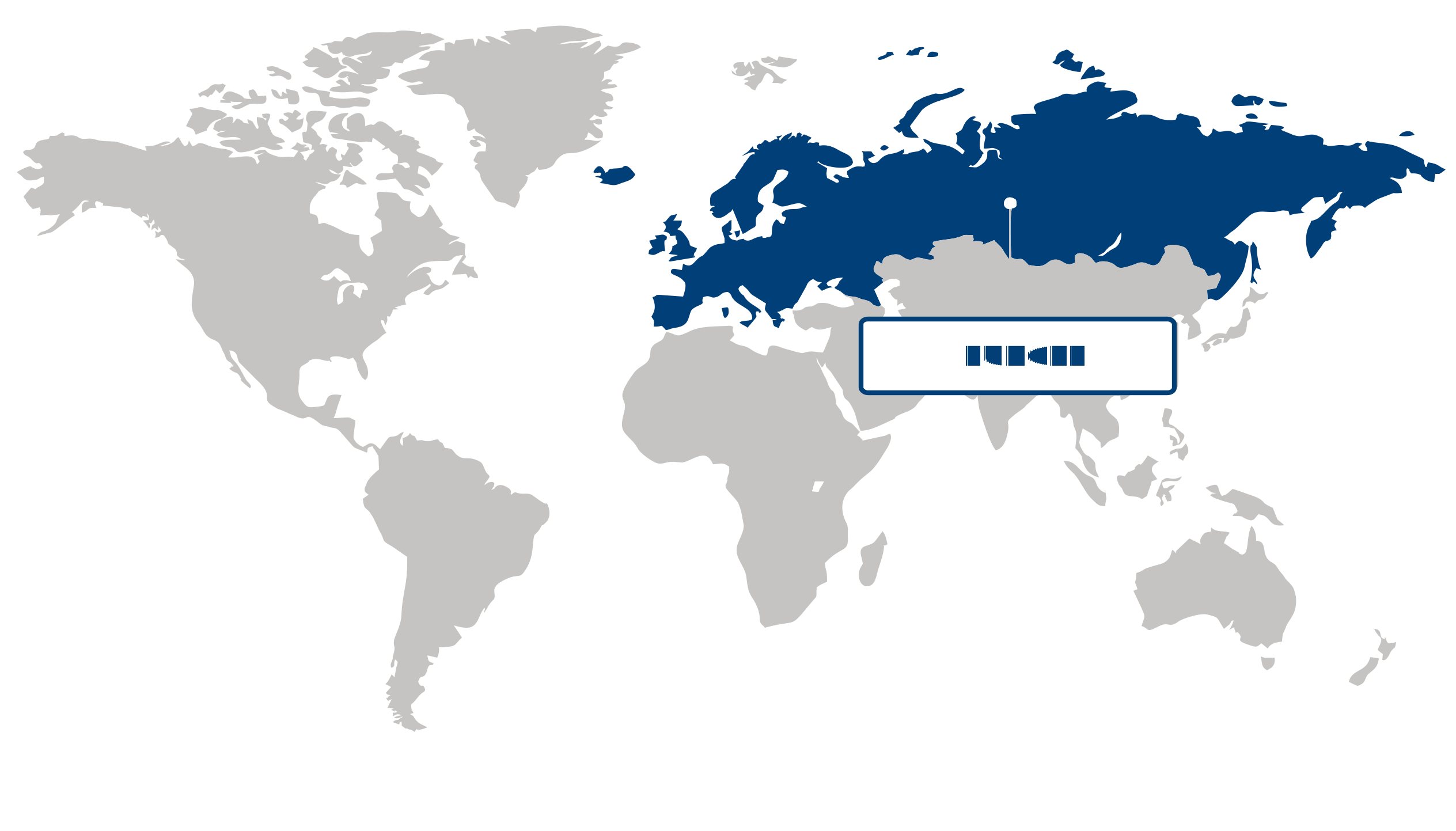
Europe (Largest Region)
Europe held the largest position in the anti icing coating market in 2026, supported by extensive aviation activity, cold-weather infrastructure requirements, and growing emphasis on operational safety across transportation and industrial applications. Demand for coatings that reduce ice accumulation is being reinforced by the need to improve equipment reliability and minimize maintenance interruptions in challenging environmental conditions. The region’s focus on infrastructure resilience and the development of advanced materials for aerospace, automotive, wind energy, and other exposed applications also provides a favorable environment for anti-icing technologies.
North America (Fastest-Growing Region)
North America is anticipated to register the fastest growth, aided by significant aviation and transportation infrastructure, exposure to severe winter conditions, and increasing efforts to improve operational efficiency in cold climates. The growing adoption of protective surface technologies across aircraft, wind turbines, transportation equipment, and infrastructure is creating broader application opportunities. Rising attention to maintenance cost reduction, equipment performance, and safety in ice-prone environments is expected to further encourage the use of advanced anti-icing coatings.
| Parameter | North America | Asia Pacific | Europe | Latin America | MEA |
|---|---|---|---|---|---|
| Innovation Hub i Scale Nascent Developing Advanced | |||||
| Cost-Sensitive Region i Scale Low Medium High | |||||
| Regulatory Environment i Scale Restrictive Neutral Supportive | |||||
| Demand Drivers i Scale Weak Moderate Strong | |||||
| Development Stage i Scale Emerging Developing Developed | |||||
| Adoption Rate i Scale Low Medium High | |||||
| New Entrants / Startups i Scale Sparse Moderate Dense | |||||
| Macro Indicators i Scale Weak Stable Strong |
Key Country Insights
United States 🇺🇸
Aerospace Protection SolutionsThe U.S. prioritizes anti icing coatings for aerospace, wind energy, and infrastructure applications exposed to severe weather conditions. Manufacturers develop durable coating technologies that reduce maintenance requirements while supporting operational reliability.
Germany 🇩🇪
Advanced Surface EngineeringGermany focuses on anti icing coatings that combine advanced material science with industrial performance requirements. Research and manufacturing efforts emphasize coating durability, environmental compliance, and compatibility with transportation and energy assets.
Japan 🇯🇵
Precision Coating DevelopmentJapan develops anti icing coatings for transportation equipment, industrial machinery, and critical infrastructure operating in cold climates. Companies prioritize long-lasting surface performance and efficient application processes to improve asset reliability.
South Korea 🇰🇷
Smart Materials IntegrationSouth Korea advances anti icing coating technologies through innovation in advanced materials and industrial manufacturing. Suppliers align coating performance with infrastructure, mobility, and renewable energy applications requiring dependable weather protection.
France 🇫🇷
Infrastructure Weather ProtectionFrance emphasizes anti icing coatings for aviation, transportation, and energy infrastructure where operational continuity is essential. Manufacturers focus on protective solutions that minimize ice accumulation while extending maintenance intervals.
Italy 🇮🇹
Industrial Asset DurabilityItaly applies anti icing coatings across transportation equipment, industrial facilities, and renewable energy installations exposed to challenging climates. Companies prioritize durable protective technologies that improve equipment performance and reduce operational disruptions.
Segment Leadership and Growth Trends
Anti Icing Coating Market Share (%), by Type, 2026
Go beyond the chart, access full insights & data tables
Request Free Sample ReportType Segment Analysis: Hydrophobic Coating (Largest & Fastest-Growing Segment)
The hydrophobic coating segment accounted for a 42.93% share of the anti icing coating market in 2026 and also emerged as the fastest-growing type. Hydrophobic coatings effectively minimize water adhesion on exposed surfaces, reducing ice formation and facilitating easier ice removal under harsh environmental conditions. Their ability to enhance operational reliability while lowering maintenance requirements has encouraged widespread adoption across transportation, energy, construction, and communication infrastructure applications. Continuous advancements in surface engineering and increasing demand for durable ice mitigation solutions continue to reinforce the segment's market leadership.
End Use Industry Segment Analysis: Automotive Industry (Largest Segment) vs Renewable Energy (Fastest-Growing Segment)
The automotive industry segment dominated the anti icing coating market with a 43.14% share in 2026. Vehicle manufacturers are increasingly incorporating anti-icing coatings on critical exterior components to improve visibility, operational reliability, and safety during cold-weather conditions. Growing emphasis on vehicle durability, reduced maintenance requirements, and enhanced driving performance in challenging climates continues to support the widespread adoption of advanced anti-icing coating technologies across the automotive sector.
The renewable energy segment is expected to witness the fastest growth as operators seek effective solutions to minimize ice accumulation on wind turbines and other energy infrastructure exposed to harsh environmental conditions. Ice formation can significantly reduce equipment efficiency and increase maintenance costs, encouraging greater investment in advanced coating technologies that improve operational continuity. Expanding renewable energy installations in colder regions and increasing focus on maximizing energy generation efficiency are accelerating demand within this segment.
Substrate Segment Analysis: Metal (Largest Segment) vs Glass (Fastest-Growing Segment)
The metal substrate segment held the largest share of the anti icing coating market with 49.08% in 2026. Metal surfaces are extensively used across transportation, industrial equipment, renewable energy systems, and infrastructure, creating substantial demand for protective coatings that prevent ice accumulation and corrosion while extending equipment lifespan. The combination of high structural strength and widespread industrial usage continues to support the segment's leading market position.
The glass substrate segment is anticipated to register the fastest growth as demand increases for anti-icing solutions in automotive windshields, architectural glazing, solar panels, and communication equipment. Applying advanced coatings to glass surfaces improves visibility, reduces manual de-icing requirements, and enhances operational efficiency in cold-weather environments. Ongoing advancements in transparent coating technologies and expanding deployment across multiple end-use industries continue to drive rapid growth in this segment.
| Segment | Sub-Segment | Largest Segment | Fastest Growing |
|---|---|---|---|
| Type | Hydrophobic Coating, Polymer Coating, Others | Hydrophobic Coating | Hydrophobic Coating |
| End Use Industry | Construction, Automotive Industry, Communication Equipment, Renewable Energy | Automotive Industry | Renewable Energy |
| Substrate | Metal, Glass, Plastic, Ceramic, Concrete | Metal | Glass |
Competitive Landscape and Market Positioning
Prominent players in the anti icing coating market:
- AkzoNobel N.V. (Netherlands)
- PPG Industries, Inc. (USA)
- The Dow Chemical Company (USA)
- Henkel AG & Co. KGaA (Germany)
- 3M Company (USA)
- RPM International, Inc. (USA)
- NanoSonic, Inc. (USA)
- NEI Corporation (USA)
- Oceanit Laboratories, Inc. (USA)
- Cytonix LLC (USA)
Competition in the anti icing coating market is shifting toward advanced surface technologies that deliver longer-lasting protection and improved performance under challenging environmental conditions. Coating developers are differentiating through formulation expertise, durability improvements, and solutions tailored to transportation, aerospace, and industrial applications. As end users seek reduced maintenance requirements and enhanced operational reliability, suppliers capable of combining performance consistency with application-specific customization are strengthening their market position.
| Company | Market Share | Company Revenue | Revenue CAGR (%) | Product Portfolio | Geographic Presence | Innovation / R&D Focus | Strategic Developments |
|---|---|---|---|---|---|---|---|
| AkzoNobel N.V. (Netherlands) | |||||||
| PPG Industries Inc. (USA) | |||||||
| The Dow Chemical Company (USA) | |||||||
| Henkel AG & Co. KGaA (Germany) | |||||||
| 3M Company (USA) | |||||||
| RPM International Inc. (USA) | |||||||
| NanoSonic Inc. (USA) | |||||||
| NEI Corporation (USA) | |||||||
| Oceanit Laboratories Inc. (USA) | |||||||
| Cytonix LLC (USA) |
Industry Development/News
| Company Name | Date | Key Development |
|---|
Customize Your Report
Explore examples of how this report can be tailored to different research needs, including custom segments, additional topics or chapters, and related reports. Click a section of the wheel or its numbered marker to explore the available options.
Anti Icing Coating Market — Custom Segments
| Segment | Sub-Segment |
|---|---|
| Application Method | Spray Application, Dip Coating, Brush & Roller Application, Other Application Methods |
| Customer Type | OEMs, Component Manufacturers, Maintenance & Retrofit Providers, End-Use Asset Operators |
| Durability | Short-Term Coatings, Medium-Term Coatings, Long-Term Coatings |
Anti Icing Coating Market — Custom TOC
| Custom Chapter | Custom Details |
|---|---|
| High-Growth Infrastructure Opportunity Assessment |
|
| Commercialization Readiness Across Emerging Applications |
|
| Sustainability and Environmental Compliance Roadmap |
|
Need a different cut of the data?
Request Custom ResearchHow much revenue does the anti icing coating market generate?
What is the projected value of the anti icing coating industry by 2036?
Why is infrastructure development in cold climates increasing demand for anti-icing coatings?
How are technology advancements and safety requirements shaping the anti icing coating market?
Why does the automotive industry represent the largest end-use segment for anti-icing coatings?
How is renewable energy driving growth in the anti-icing coating market?
Why does Europe lead the anti-icing coating market?
What is driving faster growth in North America's anti-icing coating market?
What are the prominent companies operating in the anti icing coating landscape?
Our Clients
"The report helped us understand emerging consumer trends in our product category. It clarified where to focus innovation for the next product launch."
LyondellBasell
"The regional forecast section was incredibly useful. We were able to identify two new potential partners in Europe thanks to the vendor mapping you included."
SABIC
"We appreciated how actionable the recommendations were. It guided us to improve supply chain resilience."
Olin Corporation
Our Research Team & Methodology
Every Fundamental Business Insights report is built by a dedicated vertical research team, validated through a structured primary-and-secondary methodology, and reviewed for accuracy before it reaches you.
Research Team Overview
Prepared by the Chemicals & Materials Research Team
Delivery
Published
Demand
Available
Support
Trust & Compliance
Research Domains
10 coverage areasResearch Intelligence
| Source | Reference |
|---|---|
| American Chemistry Council (ACC) | www.americanchemistry.com |
| European Chemical Industry Council (Cefic) | cefic.org |
| International Council of Chemical Associations (ICCA) | icca-chem.org |
| European Chemicals Agency (ECHA) | echa.europa.eu |
| U.S. Environmental Protection Agency (EPA) | www.epa.gov |
| ASTM International | www.astm.org |
| International Organization for Standardization (ISO) | www.iso.org |
| National Institute of Standards and Technology (NIST) | www.nist.gov |
| Plastics Industry Association (PLASTICS) | www.plasticsindustry.org |
| European Biplastics | www.european-bioplastics.org |
| The Adhesive and Sealant Council (ASC) | www.ascouncil.org |
| National Association of Corrosion Engineers (AMPP) | www.ampp.org |
| Society of Plastics Engineers (SPE) | www.4spe.org |
| International Fertilizer Association (IFA) | www.fertilizer.org |
| CropLife International | croplife.org |
| Packaging Europe | packagingeurope.com |
| Flexible Packaging Association (FPA) | www.flexpack.org |
| Battery Council International (BCI) | batterycouncil.org |
| International Copper Association (ICA) | internationalcopper.org |
| World Steel Association | worldsteel.org |
Research Workflow & Quality Assurance
Data Collection
Verified information gathered through primary and secondary research.
Data Triangulation
Cross-validation using multiple independent data sources.
Forecast Modelling
Market estimates developed using historical trends and analytical models.
Analyst Validation
Findings reviewed by domain experts for accuracy and consistency.
Editorial & Quality Review
Final editorial, quality, and compliance checks before publication.
Final Publication
Released after successful completion of the internal review process.
Report Coverage
📊 Market Assessment
- Market Size & Forecast
- Market Segmentation
- Regional Analysis
- Growth Drivers & Challenges
- Market Dynamics
🏢 Competitive Intelligence
- Competitive Landscape
- Company Profiles
- Competitive Benchmarking
- Mergers & Acquisitions
- Market Share Analysis or Key Company Strategies
🔍 Strategic Analysis
- Value Chain Analysis
- Porter's Five Forces
- PESTLE Analysis
- Pricing Trends
- Supply-Demand Analysis
🚀 Future Outlook
- Technology Landscape
- Regulatory Landscape
- Investment & Funding Landscape
- Emerging Opportunities
- Future Market Outlook
Have a question about this report or need a custom scope?
Request Customization