The Non-woven Fabric Market Size & Forecasts 2026-2035, By Segments (Function, Technology, Material, End-user Industry), Growth Opportunities, Innovation Landscape, Regulatory Shifts, Strategic Regional Insights (U.S., Japan, China, South Korea, UK, Germany, France), and Competitive Dynamics (Berry Global, Ahlstrom-Munksjö, Toray, Freudenberg, Kimberly-Clark)
Market Size and Growth Outlook
The Non-woven Fabric Market size is estimated to increase from USD 60.55 billion in 2025 to USD 112.6 billion by 2035, supported by a CAGR exceeding 6.4% during 2026-2035. In 2026, revenues are forecast to reach USD 63.93 billion.
Get more details on this report
Request Free Sample ReportThe Non-woven Fabric Market Intelligence Snapshot
Regional Market Dynamics
Segment Momentum
Market Expansion Drivers
Leading Market Participants
Global Market Forecast Snapshot
Market Outlook
Regional and Segment Outlook
Market Growth Drivers and Industry Trends
The non-woven fabric market is significantly shaped by growing demand within the healthcare sector, driven by heightened awareness of infection control and hygiene. Hospitals and clinics increasingly rely on non-woven materials for masks, gowns, surgical drapes, and wound dressings, underscored by regulatory guidance from agencies such as the U.S. Food and Drug Administration (FDA) and the European Medicines Agency (EMA). The COVID-19 pandemic accelerated this trend, compelling manufacturers like Berry Global and Ahlstrom-Munksjö to scale production capacity. This driver presents strategic opportunities for incumbents to innovate around antimicrobial treatments and advanced filtration technologies, while new entrants can carve niches in specialized medical disposables. Continued public health emphasis and evolving standards ensure this healthcare reliance will steadfastly sustain the non-woven fabric market's evolution.
Rising Adoption in Hygiene and Packaging Applications
The surge in consumer preference for convenience and single-use hygiene products fuels expansion in the non-woven fabric market’s hygiene and packaging segments. Companies like Kimberly-Clark and Procter & Gamble deploy non-woven materials extensively in diapers, wipes, and feminine care products, responding to evolving consumer expectations for comfort and disposability. Additionally, packaging firms leverage non-woven fabrics to enhance product protection and shelf appeal, aligning with stricter transportation and food safety regulations enforced by bodies such as the U.S. Food Safety and Inspection Service (FSIS). This convergence of consumer behavior and regulatory standards unlocks growth for market participants focusing on high-performance, cost-effective solutions, revealing a landscape ripe for both diversified product portfolios and regional expansion into emerging economies where demand for hygienic products is rising rapidly.
Sustainability and Eco-Friendly Material Adoption
Environmental concerns and policy pressures are driving the non-woven fabric market to embrace sustainable and biodegradable alternatives. Industry leaders like DuPont and Suominen are investing in bio-based fibers and recyclable product lines following frameworks stipulated by the European Green Deal and the U.S. Environmental Protection Agency (EPA). This shift is propelled by consumer demand for eco-conscious products and corporate commitments to reduce plastic waste and carbon footprints. Such dynamics create competitive differentiation opportunities for innovators capable of integrating circular economy principles into production processes. The progressive tightening of environmental regulations will continue to incentivize transparency and eco-friendly product development, positioning sustainability as a critical, long-term growth lever for the non-woven fabric market globally.
Industry Restraints:
Environmental Regulations and Compliance Costs
Stringent environmental regulations significantly restrict the non-woven fabric market by imposing higher compliance costs and operational constraints. Agencies such as the U.S. Environmental Protection Agency (EPA) and the European Chemicals Agency (ECHA) have tightened rules around chemical use and waste management in manufacturing, compelling producers to invest in costly greener technologies. For instance, DuPont’s announcement of increased capital expenditures for sustainable production underscores rising compliance burdens. These measures slow innovation and delay product launches, challenging both incumbents and smaller firms with constrained resources. Strategically, companies must balance regulatory adherence with cost management, often diverting funds from R&D or capacity expansion. Given escalating global sustainability mandates, this restraint will persist, compelling firms to prioritize eco-friendly processes to maintain market access and investor confidence over the medium term.
Raw Material Price Volatility
Volatility in raw material prices acts as a critical market restraint, undermining margin stability and production planning for non-woven fabric manufacturers. Fluctuations in the cost of petroleum-based polymers, central to many non-woven products, are influenced by geopolitical tensions and supply chain disruptions, as noted by recent price surges reported by the International Energy Agency (IEA). For example, Kimberly-Clark disclosed margin pressure due to resin price spikes in its quarterly earnings release. This cost unpredictability complicates contractual negotiations and inventory management, disproportionately affecting new entrants lacking hedging capabilities. Strategically, firms must enhance supply chain agility and explore alternative materials to mitigate risk. Given ongoing global economic uncertainties and supply chain fragility, raw material price volatility will remain a defining challenge for market players in the coming years.
| Growth Driver | Impact on CAGR | Regulatory Influence | Geographic Relevance | Adoption Rate | Impact Timeline |
|---|---|---|---|---|---|
| Increasing Non-woven Fabric Demand in Healthcare | 2.50% | Short term (≤ 2 yrs) | North America, Europe | Medium | Fast |
| Rising Adoption in Hygiene and Packaging Applications | 2.00% | Medium term (2–5 yrs) | Asia Pacific, North America | Low | Moderate |
| Sustainability and Eco-Friendly Material Adoption | 1.50% | Long term (5+ yrs) | Europe, Asia Pacific | Low | Moderate |
Explore Growth Opportunities
Request Free Sample ReportRegional Demand Dynamics
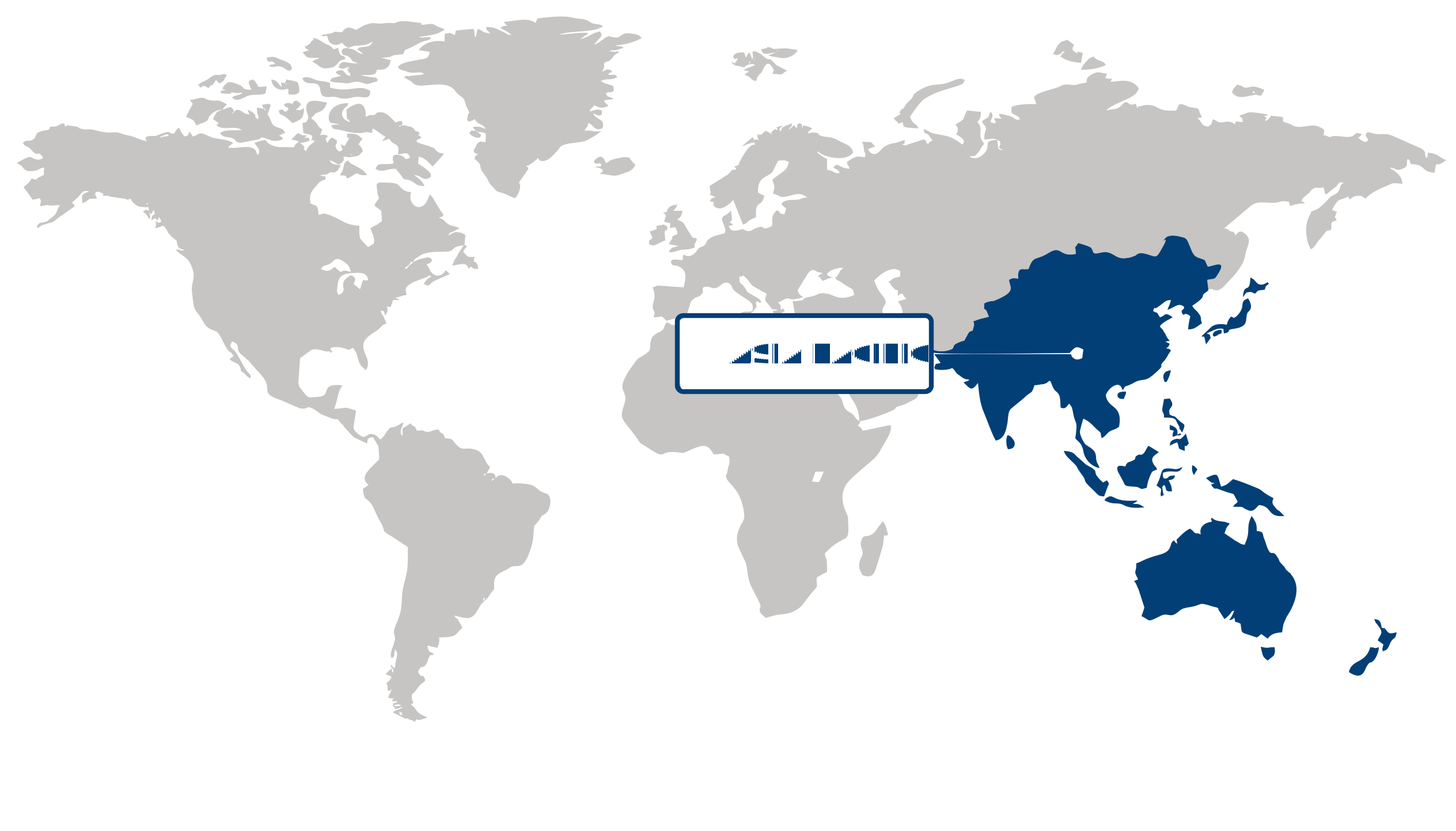
Asia Pacific dominated the non-woven fabric market in 2025, capturing approximately 42.5% of the global share and standing as the fastest-growing region with a 7.68% CAGR. This leadership stems largely from the surging demand for durable polypropylene fabrics within the region’s expanding construction and automotive sectors. Rapid urbanization coupled with infrastructure development in countries like China and India has escalated the use of high-performance non-woven textiles. According to data from the Asia Pacific Economic Cooperation (APEC), investments in sustainable and efficient construction materials have intensified, aligning supply chain innovations and competitive dynamics to favor polypropylene-based fabrics. Further, manufacturers are leveraging advanced production technologies to meet diverse industry requirements, solidifying the region’s competitive edge. These trends position Asia Pacific as a focal point for strategic investment in the non-woven fabric market, fueled by resilient economic growth and evolving industry standards emphasizing durability and sustainability.
Japan occupies a pivotal role in the Asia Pacific non-woven fabric market, leveraging advanced manufacturing capabilities and stringent regulatory frameworks that drive quality and innovation. Major firms such as Toray Industries have pioneered polypropylene fabric applications in automotive components, reflecting rising consumer demand for lightweight, durable materials. Japan’s regulatory emphasis on environmental sustainability accelerates adoption of recyclable non-woven fabrics, influencing regional supply chains. Concurrently, China acts as the growth engine, propelled by vast infrastructure projects and rapid automotive production expansion. The Chinese Ministry of Industry and Information Technology’s initiatives to boost domestic production of high-grade polypropylene fabrics underscore the country’s strategic focus. These country-specific dynamics collectively reinforce Asia Pacific’s dominance, illustrating how mature innovation hubs and large-scale industrial demands coalesce to advance the non-woven fabric market’s trajectory in the region.
North America Market Analysis:
North America maintained notable market presence in the non-woven fabric market, driven by rising demand for medical-grade materials and sustainable alternatives in packaging sectors. The region benefits from stringent regulatory standards set by agencies such as the U.S. Food and Drug Administration (FDA), which have increased adoption of specialized non-woven fabrics in healthcare products like surgical masks and gowns. Additionally, growing consumer preference for eco-friendly and biodegradable materials aligns with initiatives promoted by organizations like the Environmental Protection Agency (EPA), fostering innovation in renewable fibers and recycling technologies. Established manufacturing infrastructure and strong supply chain networks further enhance North America’s competitiveness. With ongoing investments in advanced production techniques and increasing industrial automation reported by key players like Berry Global Group, the region is positioned to capitalize on evolving demand for high-performance, sustainable non-woven solutions in both healthcare and consumer sectors.
The U.S. plays a pivotal role in North America’s non-woven fabric market by driving demand primarily through its expansive healthcare and hygiene product industries. Consumer focus on health and safety amid pandemic aftereffects continues to support elevated use of non-woven materials in protective equipment and disposable hygiene products. The U.S. Centers for Disease Control and Prevention (CDC) recommendations have stimulated production scale-ups in non-woven-based PPE, while government incentives facilitate domestic sourcing and innovation. U.S. manufacturers like Kimberly-Clark Corporation are actively developing biodegradable non-woven products to meet growing environmental regulations and consumer preferences for sustainability. This trend positions the U.S. as a critical hub in the regional market, where robust regulatory frameworks and dynamic consumer behavior converge to drive ongoing market expansion and technological advancement in the non-woven fabric sector.
Europe Market Trends:
Europe held a commanding share in the non-woven fabric market, underscoring its status as a pivotal hub driven by rising demand across healthcare, automotive, and hygiene sectors. This region's prominence stems from evolving consumer preferences favoring sustainable and innovative materials, coupled with stringent environmental regulations championed by the European Chemicals Agency (ECHA), encouraging eco-friendly production practices. Enhanced digital transformation within European manufacturing centers, evidenced by BASF’s adoption of advanced production technologies, has also optimized operational efficiency and product quality. Additionally, Europe's robust logistics infrastructure continues to facilitate seamless supply chain integration amid shifting trade policies. With proactive industry collaborations supported by bodies like the European Disposables and Nonwovens Association (EDANA), the region is well-positioned to capitalize on growing demand for biodegradable non-wovens and lightweight composites, signaling compelling prospects for market players aiming at sustainability-led growth.
Germany serves as the linchpin in Europe’s non-woven fabric market, propelled by its advanced industrial base and strong uptake in automotive and medical applications. The country’s focus on precision engineering and innovation is evident from Freudenberg Group’s investment in sustainable fiber technologies, which align with Germany’s rigorous environmental standards set by the Federal Environment Agency (UBA). Rising demand for high-performance filtration materials and hygiene products also reflects shifting consumer and regulatory landscapes. Germany’s strategic emphasis on Industry 4.0 practices enhances manufacturing scalability and customization capabilities, reinforcing its competitive edge. This dynamic underpins Germany’s role as a critical supply and innovation node within the European market, offering investors and strategists a reliable gateway to broader regional expansion.
France is a significant contributor to Europe’s non-woven fabric market, distinguished by its strong consumer orientation towards sustainability and luxury hygiene products. French companies like Lemoine Frères leverage bio-based fibers and advanced bonding techniques to meet evolving consumer expectations and regulatory frameworks set by the Ministry of Ecological Transition. The rise in healthcare infrastructure investments, supported by Agence Nationale de Sécurité du Médicament et des Produits de Santé (ANSM), further stimulates demand for medical-grade non-wovens. France’s emphasis on circular economy practices fosters innovation in recycling technologies and eco-design, enhancing product lifecycle management. These factors collectively reinforce France’s strategic importance in the European market, creating a robust platform for expanding sustainable product portfolios and addressing increasing consumer and regulatory demands across the continent.
| Parameter | North America | Asia Pacific | Europe | Latin America | MEA |
|---|---|---|---|---|---|
| Innovation Hub i Scale Nascent Developing Advanced | |||||
| Cost-Sensitive Region i Scale Low Medium High | |||||
| Regulatory Environment i Scale Restrictive Neutral Supportive | |||||
| Demand Drivers i Scale Weak Moderate Strong | |||||
| Development Stage i Scale Emerging Developing Developed | |||||
| Adoption Rate i Scale Low Medium High | |||||
| New Entrants / Startups i Scale Sparse Moderate Dense | |||||
| Macro Indicators i Scale Weak Stable Strong |
Segment Leadership and Growth Trends
The Non-woven Fabric Market Share (%), by Function, 2026
Go beyond the chart, access full insights & data tables
Request Free Sample ReportThe non-woven fabric market is led by the disposable segment, which represented the largest share in 2025, primarily driven by its rising usage in hygiene and medical applications. The demand for single-use products such as surgical gowns and masks has surged, enhancing infection control and patient safety standards globally. Regulatory endorsements from the U.S. Centers for Disease Control and Prevention (CDC) and WHO guidelines have reinforced the critical role of disposables in healthcare settings. Moreover, evolving consumer awareness around hygiene and convenience continues to fuel this segment’s growth. This dominance creates strategic opportunities for both established manufacturers and agile startups focused on innovation in biodegradable and skin-friendly disposables. Given ongoing public health priorities and stringent regulatory frameworks, the disposable segment is expected to retain its prominence in the foreseeable future.
Analysis by Technology
The non-woven fabric market’s spun-bond segment held the largest share in 2025, supported by its cost-efficient production of lightweight and durable materials. This technology is widely favored across hygiene, medical, and consumer sectors due to its versatility and scalability. Market leaders like Berry Global emphasize spun-bond’s adaptability in producing breathable fabrics that meet stringent performance standards while minimizing costs. The segment’s supply chain benefits from advancements in automated manufacturing and digital process controls, bolstering quality and output consistency. Its leadership position offers competitive advantages in addressing sustainability targets through energy-efficient processes and recyclability initiatives. As demand for multifunctional and eco-conscious products grows, spun-bond technology is positioned to remain central to non-woven fabric innovation and industry growth.
Analysis by Material
The non-woven fabric market is dominated by the polypropylene segment, which held the largest share in 2025 due to its broad applicability across hygiene, medical, and industrial uses. Polypropylene’s favorable attributes such as chemical resistance, lightweight nature, and cost-effectiveness have been highlighted by industry players like ExxonMobil Chemical, reinforcing its widespread adoption. Increasing regulatory emphasis on product safety and environmental compliance is fostering the development of advanced polypropylene grades with enhanced performance and recyclability. This segment also benefits from robust supply chain infrastructure and feedstock availability, enabling consistent production at scale. Strategic opportunities abound for firms advancing sustainable polypropylene innovations aligned with industry-wide circular economy goals. Given ongoing industrial demand and innovation, polypropylene-based non-woven fabrics will sustain their critical role in market growth.
| Segment | Sub-Segment | Largest Segment | Fastest Growing |
|---|---|---|---|
| Function | Disposable, Non-disposable | ||
| Technology | Spun-bond, Wet-laid, Dry-laid, Others | ||
| Material | Polyester, Polypropylene, Polyethylene, Rayon, Others | ||
| End-user Industry | Construction, Textiles, Healthcare, Automotive, Others |
Unlock insights tailored to your business with our bespoke market research solutions.
Click to get your customized report now.
Competitive Landscape and Market Positioning
The competitive environment is characterized by frequent collaborations, strategic acquisitions, and robust innovation pipelines among these top players. Many invest heavily in R&D to enhance product durability, eco-friendliness, and performance attributes, addressing evolving customer demands. Joint ventures and partnerships aimed at expanding end-use applications, such as in automotive and filtration sectors, have become common. New product developments focus on biodegradable and recycled materials, strengthening sustainability credentials. Such initiatives promote stronger market positioning by enabling quicker adaptation to regulatory changes and consumer preferences, while also heightening barriers to entry for smaller competitors.
Strategic / Actionable Recommendations for Regional Players
In North America, players should intensify alliances with technology firms to integrate smart textile functionalities and capitalize on healthcare segment growth. Strengthening vertical integration could improve cost efficiencies and responsiveness to supply chain disruptions.
In the Asia Pacific, manufacturers can benefit from targeting fast-expanding hygiene and construction segments by adopting flexible production technologies. Collaborations supporting circular economy practices would bolster sustainability credentials in environmentally conscious markets.
European firms are advised to deepen cooperation with research institutions to accelerate innovations focused on bio-based fibers. Emphasizing premium and specialty applications may distinguish offerings amid stringent regulatory frameworks and mature competition.
| Company | Market Share | Company Revenue | Revenue CAGR (%) | Product Portfolio | Geographic Presence | Innovation / R&D Focus | Strategic Developments |
|---|---|---|---|---|---|---|---|
| No companies available. | |||||||
Customize Your Report
Explore examples of how this report can be tailored to different research needs, including custom segments, additional topics or chapters, and related reports. Click a section of the wheel or its numbered marker to explore the available options.
The Non-woven Fabric Market — Custom Segments
| Segment | Sub-Segment |
|---|---|
| No segment data available. | |
The Non-woven Fabric Market — Custom TOC
| Custom Chapter | Chapter Details | ||
|---|---|---|---|
| No custom TOC data available. | |||
Need a different cut of the data?
Request Custom ResearchWhat is the expected industry size of the non-woven fabric by 2035?
Which territory demonstrates the strongest presence in the the non-woven fabric market?
What is the fastest growing region in the the non-woven fabric sector?
Which is the largest sub-segment within the function segment for the non-woven fabric industry?
Why does spun-bond sub-segment dominate the technology segment of the non-woven fabric sector?
How does polypropylene segment fare in the the non-woven fabric industry?
What share does healthcare segment hold in the the non-woven fabric sector as of 2025?
What are the key competitors in the the non-woven fabric landscape?
Our Clients
"The report helped us understand emerging consumer trends in our product category. It clarified where to focus innovation for the next product launch."
LyondellBasell
"The regional forecast section was incredibly useful. We were able to identify two new potential partners in Europe thanks to the vendor mapping you included."
SABIC
"We appreciated how actionable the recommendations were. It guided us to improve supply chain resilience."
Olin Corporation
Our Research Team & Methodology
Every Fundamental Business Insights report is built by a dedicated vertical research team, validated through a structured primary-and-secondary methodology, and reviewed for accuracy before it reaches you.
Research Team Overview
Prepared by the Chemicals & Materials Research Team
Delivery
Published
Demand
Available
Support
Trust & Compliance
Research Intelligence
| Source | Reference |
|---|---|
| American Chemistry Council (ACC) | www.americanchemistry.com |
| European Chemical Industry Council (Cefic) | cefic.org |
| International Council of Chemical Associations (ICCA) | icca-chem.org |
| European Chemicals Agency (ECHA) | echa.europa.eu |
| U.S. Environmental Protection Agency (EPA) | www.epa.gov |
| ASTM International | www.astm.org |
| International Organization for Standardization (ISO) | www.iso.org |
| National Institute of Standards and Technology (NIST) | www.nist.gov |
| Plastics Industry Association (PLASTICS) | www.plasticsindustry.org |
| European Biplastics | www.european-bioplastics.org |
| The Adhesive and Sealant Council (ASC) | www.ascouncil.org |
| National Association of Corrosion Engineers (AMPP) | www.ampp.org |
| Society of Plastics Engineers (SPE) | www.4spe.org |
| International Fertilizer Association (IFA) | www.fertilizer.org |
| CropLife International | croplife.org |
| Packaging Europe | packagingeurope.com |
| Flexible Packaging Association (FPA) | www.flexpack.org |
| Battery Council International (BCI) | batterycouncil.org |
| International Copper Association (ICA) | internationalcopper.org |
| World Steel Association | worldsteel.org |
Research Workflow & Quality Assurance
Data Collection
Verified information gathered through primary and secondary research.
Data Triangulation
Cross-validation using multiple independent data sources.
Forecast Modelling
Market estimates developed using historical trends and analytical models.
Analyst Validation
Findings reviewed by domain experts for accuracy and consistency.
Editorial & Quality Review
Final editorial, quality, and compliance checks before publication.
Final Publication
Released after successful completion of the internal review process.
Report Coverage
📊 Market Assessment
- Market Size & Forecast
- Market Segmentation
- Regional Analysis
- Growth Drivers & Challenges
- Market Dynamics
🏢 Competitive Intelligence
- Competitive Landscape
- Company Profiles
- Competitive Benchmarking
- Mergers & Acquisitions
- Market Share Analysis or Key Company Strategies
🔍 Strategic Analysis
- Value Chain Analysis
- Porter's Five Forces
- PESTLE Analysis
- Pricing Trends
- Supply-Demand Analysis
🚀 Future Outlook
- Technology Landscape
- Regulatory Landscape
- Investment & Funding Landscape
- Emerging Opportunities
- Future Market Outlook
Have a question about this report or need a custom scope?
Request Customization