Synthetic Leather Market Size & Growth Forecast 2027–2036, By Segments (Type, Application), Regional Demand Trends (North America, Asia Pacific, Europe), Key Country Insights (U.S., Japan, South Korea, Germany, France, Italy), and Competitive Landscape
Market Size and Growth Outlook
Synthetic Leather Market size was estimated at USD 50.6 billion in 2026 and is projected to grow at a 11.88% CAGR from 2027 to 2036, crossing USD 155.48 billion by 2036. The industry revenue for 2027 is calculated at USD 55.66 billion.
Get more details on this report
Request Free Sample ReportSynthetic Leather Market Intelligence Snapshot
Regional Market Dynamics
- Asia Pacific accounted for a 49.59% share in 2026, supported by large-scale footwear, automotive, furnishings, and fashion manufacturing networks.
- North America is projected to expand at an 8.93% CAGR, driven by automotive, furniture, and consumer goods demand for engineered materials.
Segment Momentum
- PU Synthetic Leather captured 59.92% of the market in 2026 due to its strong balance of appearance, flexibility, processing consistency, and suitability for large-scale consumer product manufacturing.
- The segment is growing rapidly because manufacturers need flexible materials that support frequent design updates, diverse finishes, and fast responses to changing fashion trends.
Market Expansion Drivers
- Growing footwear manufacturing demand driving large-scale synthetic leather consumption globally.
- Automotive interior applications accelerating demand for durable synthetic leather materials.
- Cost-efficient material alternatives replacing natural leather in consumer goods production.
Leading Market Participants
- Prominent players in the synthetic leather market include Kuraray Co., Ltd. (Japan), Teijin Limited (Japan), Nan Ya Plastics Corporation (Taiwan), San Fang Chemical Industry Co., Ltd. (Taiwan), Yantai Wanhua Synthetic Leather Group Co., Ltd. (China), Mayur Uniquoters Limited (India), H.R. Polycoats Pvt. Ltd. (India), Alfatex Italia Srl (Italy), Filwel Co., Ltd. (Japan), BASF SE (Germany).
Global Market Forecast Snapshot
Market Outlook
- 2026 Market Size: USD 50.6 billion
- 2027 Estimated Market Size: USD 55.66 billion.
- Projected Market Size: USD 155.48 billion by 2036
- Growth Forecast: 11.88% CAGR (2027-2036)
Regional and Segment Outlook
- Leading Regional Market: Asia Pacific
- High-Growth Regional Hub: North America
- Core Revenue Segment: PU Synthetic Leather (Type) | Footwear (Application)
- Emerging Opportunity Segment: PVC Synthetic Leather (Type) | Wallets, Bags & Purses (Application)
Market Growth Drivers and Industry Trends
Growing footwear manufacturing demand driving large-scale synthetic leather consumption globally
Expansion of footwear production will drive the synthetic leather market as manufacturers seek materials that provide consistent appearance, flexibility, durability, and design versatility across different footwear categories. Synthetic leather can be produced with controlled surface textures, colors, and finishes, allowing footwear producers to accommodate changing styles while maintaining manufacturing consistency. Its suitability for shoes, sneakers, sandals, and other footwear products supports broad material usage as production volumes expand across established and emerging consumer markets.
Automotive interior applications accelerating demand for durable synthetic leather materials
Automotive interior applications are creating additional momentum for the synthetic leather market because vehicle manufacturers require materials that combine durability, visual appeal, ease of maintenance, and resistance to regular wear. Synthetic leather is used across seating, door panels, dashboards, armrests, and other interior surfaces where consistent finishing and resistance to abrasion are important. Improvements in surface treatment and material construction are also enabling synthetic leather to deliver enhanced tactile qualities and performance characteristics for increasingly design-focused vehicle interiors.
Cost-efficient material alternatives replacing natural leather in consumer goods production
The availability of cost-efficient alternatives to natural leather will strengthen the synthetic leather market as consumer goods manufacturers balance material performance with production economics. Synthetic leather can offer greater consistency in thickness, texture, color, and finish while allowing manufacturers to develop products across different price segments. Its adaptability across handbags, footwear, accessories, furniture, and other consumer products also gives producers greater flexibility in product design and sourcing, encouraging substitution where natural leather presents higher material costs or supply constraints.
| Growth Driver | Impact on CAGR | Regulatory Influence | Geographic Relevance | Adoption Rate | Impact Timeline |
|---|---|---|---|---|---|
| Growing footwear manufacturing demand driving large-scale synthetic leather consumption globally | 2.20% | Low | Asia Pacific | High | Near Term |
| Automotive interior applications accelerating demand for durable synthetic leather materials | 2.00% | Moderate | Asia Pacific, Europe | High | Mid Term |
| Cost-efficient material alternatives replacing natural leather in consumer goods production | 1.70% | Low | Asia Pacific, North America | Medium | Mid Term |
Unlock insights tailored to your business with our bespoke market research solutions.
Click to get your customized report now.
Regional Demand Dynamics
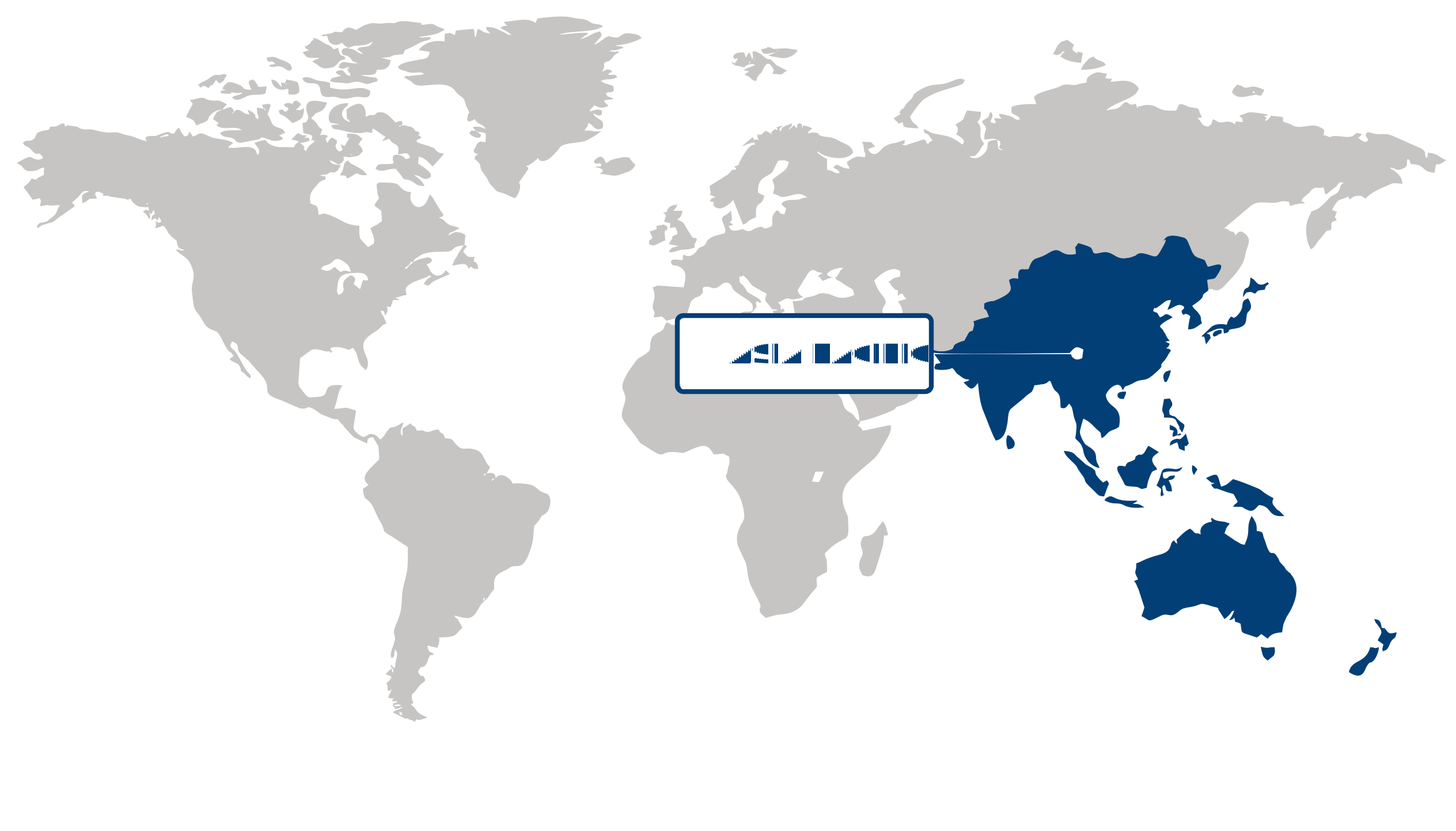
Asia Pacific (Largest Region)
Holding the largest share of the synthetic leather market in 2026, Asia Pacific benefits from its extensive footwear, apparel, automotive, furniture, and consumer-goods manufacturing ecosystem. The region combines strong production capabilities with established raw-material and processing infrastructure, enabling synthetic leather to be supplied across a wide range of applications. Demand is supported by the cost and design flexibility of synthetic alternatives, increasing consumption of fashion and lifestyle products, and the expanding use of leather-like materials in automotive interiors and furnishings. Manufacturers are also placing greater emphasis on improved textures, durability, and lower-impact material formulations as sustainability considerations become more important across supply chains. The concentration of downstream industries and strong export-oriented manufacturing activity further reinforce Asia Pacific's leading position.
North America (Fastest-Growing Region)
North America is emerging as the fastest-growing region, supported by changing consumer preferences, expanding applications beyond traditional fashion uses, and rising interest in alternatives that offer design versatility and consistent performance. Demand is gaining traction across automotive interiors, furniture, footwear, accessories, and other consumer applications as manufacturers seek materials that can provide leather-like aesthetics while offering greater production flexibility. Sustainability considerations are also influencing product development, encouraging greater attention to recycled inputs, bio-based alternatives, and manufacturing processes with improved environmental characteristics. At the same time, established retail and automotive markets, higher awareness of material innovation, and continued investment in premium and performance-oriented synthetic leather products are creating favorable conditions for regional expansion.
| Parameter | North America | Asia Pacific | Europe | Latin America | MEA |
|---|---|---|---|---|---|
| Innovation Hub i Scale Nascent Developing Advanced | |||||
| Cost-Sensitive Region i Scale Low Medium High | |||||
| Regulatory Environment i Scale Restrictive Neutral Supportive | |||||
| Demand Drivers i Scale Weak Moderate Strong | |||||
| Development Stage i Scale Emerging Developing Developed | |||||
| Adoption Rate i Scale Low Medium High | |||||
| New Entrants / Startups i Scale Sparse Moderate Dense | |||||
| Macro Indicators i Scale Weak Stable Strong |
Key Country Insights
Germany 🇩🇪
Automotive Interior MaterialsGermany integrates synthetic leather into automotive interiors where durability, appearance, and material consistency are important purchasing factors. Manufacturers continue refining advanced materials that satisfy quality expectations while supporting more sustainable production practices.
France 🇫🇷
Luxury Alternative MaterialsFrance adopts synthetic leather across fashion, interiors, and consumer products where premium appearance and responsible material sourcing are increasingly valued. Manufacturers balance aesthetic quality with evolving sustainability considerations in product development.
Italy 🇮🇹
Fashion Manufacturing SupportItaly integrates synthetic leather into footwear, furniture, and fashion manufacturing where craftsmanship and material versatility remain important. Suppliers increasingly develop products that complement premium designs while addressing durability and sustainability requirements across multiple end-use industries.
Japan 🇯🇵
Functional Material DevelopmentJapan focuses on synthetic leather with enhanced comfort, durability, and aesthetic performance for automotive, consumer goods, and upholstery applications. Material innovation remains central as manufacturers respond to evolving product quality and environmental expectations.
South Korea 🇰🇷
Design-Led ManufacturingSouth Korea combines synthetic leather production with strong consumer goods and automotive manufacturing capabilities that value design flexibility. Companies emphasize innovative textures, lightweight materials, and sustainable production approaches to address changing customer preferences.
United States 🇺🇸
Premium Product InnovationThe U.S. synthetic leather market is shaped by demand from automotive, furniture, and fashion manufacturers seeking durable alternatives to natural leather. Product development increasingly emphasizes premium finishes, performance characteristics, and materials with improved sustainability profiles.
Segment Leadership and Growth Trends
Synthetic Leather Market Share (%), by Type, 2026
Go beyond the chart, access full insights & data tables
Request Free Sample ReportType Segment Analysis: PU Synthetic Leather (Largest Segment) vs PVC Synthetic Leather (Fastest-Growing Segment)
PU synthetic leather held the largest share of 59.92% in 2026, reflecting its strong adoption across applications where manufacturers and consumers seek materials with a leather-like appearance, flexibility, and relatively refined surface characteristics. Polyurethane-based materials can offer versatility in texture, finish, and design, making them suitable for fashion, footwear, automotive interiors, furniture, and other consumer applications. Increasing preference for animal-free materials and ongoing improvements in synthetic leather quality are supporting the continued dominance of PU synthetic leather.
PVC synthetic leather is expected to be the fastest-growing segment as manufacturers continue to value its durability, cost efficiency, and adaptability across a wide range of products. PVC-based materials can provide resistance to wear and moisture while allowing manufacturers to produce varied textures and finishes. Demand from applications requiring economical and durable leather alternatives, together with expanding use in consumer and industrial products, is supporting the segment's growth momentum.
Application Segment Analysis: Footwear (Largest Segment) vs Wallets, Bags & Purses (Fastest-Growing Segment)
Footwear represented the largest application in the synthetic leather market, accounting for a 31.44% share in 2026. Synthetic leather is extensively used in footwear because it offers design flexibility, consistent appearance, and durability while providing an alternative to natural leather. Manufacturers can use synthetic materials across a broad range of styles and price points, supporting their integration into everyday, fashion, and functional footwear. Increasing consumer interest in animal-free materials and the need for versatile materials with consistent production characteristics are further supporting footwear demand.
The wallets, bags & purses segment is anticipated to be the fastest-growing application as synthetic leather gains wider acceptance in fashion accessories that require visual appeal, durability, and design versatility. These products allow manufacturers to experiment with textures, colors, finishes, and shapes while maintaining consistent material characteristics. Growing demand for affordable fashion accessories, increasing preference for animal-free alternatives, and frequent product innovation in the accessories industry are contributing to stronger adoption of synthetic leather in wallets, bags, and purses.
| Segment | Sub-Segment | Largest Segment | Fastest Growing |
|---|---|---|---|
| Type | PU Synthetic Leather, PVC Synthetic Leather, Bio-based Leather | PU Synthetic Leather | PVC Synthetic Leather |
| Application | Furnishing, Automotive, Footwear, Wallets, Bags & Purses, Clothing, Others | Footwear | Wallets, Bags & Purses |
Competitive Landscape and Market Positioning
Leading companies in the synthetic leather market:
1. Kuraray Co. Ltd. (Japan)
2. Teijin Limited (Japan)
3. Nan Ya Plastics Corporation (Taiwan)
4. San Fang Chemical Industry Co. Ltd. (Taiwan)
5. Yantai Wanhua Synthetic Leather Group Co. Ltd. (China)
6. Mayur Uniquoters Limited (India)
7. H.R. Polycoats Pvt. Ltd. (India)
8. Alfatex Italia Srl (Italy)
9. Filwel Co. Ltd. (Japan)
10. BASF SE (Germany)
The synthetic leather market is increasingly influenced by sustainable manufacturing trends and demand for cruelty-free material alternatives across automotive, fashion, and furniture applications. Advances in bio-based coatings, enhanced durability technologies, and premium texture development are supporting continuous product innovation and stronger market differentiation.
| Company | Market Share | Company Revenue | Revenue CAGR (%) | Product Portfolio | Geographic Presence | Innovation / R&D Focus | Strategic Developments |
|---|---|---|---|---|---|---|---|
| Kuraray Co. Ltd. (Japan) | |||||||
| Teijin Limited (Japan) | |||||||
| Nan Ya Plastics Corporation (Taiwan) | |||||||
| San Fang Chemical Industry Co. Ltd. (Taiwan) | |||||||
| Yantai Wanhua Synthetic Leather Group Co. Ltd. (China) | |||||||
| Mayur Uniquoters Limited (India) | |||||||
| H.R. Polycoats Pvt. Ltd. (India) | |||||||
| Alfatex Italia Srl (Italy) | |||||||
| Filwel Co. Ltd. (Japan) | |||||||
| BASF SE (Germany). |
Industry Development/News
| Company Name | Date | Key Development |
|---|---|---|
| MycoWorks | Feb-26 | MycoWorks was acquired by DFX Corp and initiated a strategic restructuring to scale its proprietary Fine Mycelium technology. This acquisition is intended to accelerate the commercialization of animal-free, high-performance leather alternatives, strengthening the company’s supply chain capabilities across the fashion and automotive sectors as manufacturers increasingly seek sustainable material substitutes. |
| ASICS | Oct-25 | ASICS announced the phase-out of kangaroo leather across its performance sports footwear portfolio. This strategic material transition underscores the broader shift in the athletic footwear industry toward synthetic and alternative leather inputs, reflecting changing consumer preferences and corporate commitments to sustainable sourcing within high-performance product categories. |
| Mercedes-Benz | Jul-25 | Mercedes-Benz partnered with Modern Meadow to develop bio-based, cow-free leather alternatives. This technology program aligns with the automaker's sustainability roadmap to transition vehicle interior materials toward animal-free synthetic solutions, marking a strategic commitment to integrate next-generation sustainable materials into high-volume automotive production lines. |
| Hyundai | May-25 | Hyundai entered a partnership with biomaterials startup Uncaged Innovations to co-develop plastic- and animal-free leather alternatives. This initiative expands Hyundai’s material innovation pipeline for future vehicle interiors, emphasizing the strategic importance of developing scalable, sustainable synthetic substrates that meet the rigorous durability and aesthetic standards required for premium automotive applications. |
| Xuchuan Chemical | Jan-25 | Xuchuan Chemical and Anan established a joint innovation laboratory to advance sustainable polyurethane resin technologies for synthetic leather. By leveraging biomass-balanced MDI and building on existing collaborations with BASF, this initiative focuses on reducing the carbon footprint of production processes, directly addressing the industry-wide shift toward eco-friendly, low-carbon material supply chains. |
Customize Your Report
Explore examples of how this report can be tailored to different research needs, including custom segments, additional topics or chapters, and related reports. Click a section of the wheel or its numbered marker to explore the available options.
Synthetic Leather Market — Custom Segments
| Segment | Sub-Segment |
|---|---|
| Manufacturing Process | Wet Process, Dry Process, Solvent-free Process |
| Distribution Channel | Direct Sales, Distributors & Wholesalers, Online Channels |
| Price Tier | Economy, Mid-range, Premium |
Synthetic Leather Market — Custom TOC
| Custom Chapter | Custom Details |
|---|---|
| Sustainable Material Transition Readiness |
|
| Fashion and Automotive Demand Shift Outlook |
|
| Circularity and End-of-Life Ecosystem Analysis |
|
Need a different cut of the data?
Request Custom ResearchHow big is the synthetic leather market?
How is the synthetic leather industry expected to grow over the next 10 years?
Which procurement trends are accelerating synthetic leather adoption across manufacturing industries?
How are automotive interior applications strengthening demand in the synthetic leather market?
What factors support the leadership of PU Synthetic Leather in the synthetic leather market?
Why are Wallets, Bags & Purses the fastest-growing application in the synthetic leather market?
Why is Asia Pacific the largest synthetic leather market region?
How is North America creating growth opportunities in synthetic leather?
Who are the major participants shaping the synthetic leather landscape?
Our Clients
"The report helped us understand emerging consumer trends in our product category. It clarified where to focus innovation for the next product launch."
LyondellBasell
"The regional forecast section was incredibly useful. We were able to identify two new potential partners in Europe thanks to the vendor mapping you included."
SABIC
"We appreciated how actionable the recommendations were. It guided us to improve supply chain resilience."
Olin Corporation
Our Research Team & Methodology
Every Fundamental Business Insights report is built by a dedicated vertical research team, validated through a structured primary-and-secondary methodology, and reviewed for accuracy before it reaches you.
Research Team Overview
Prepared by the Chemicals & Materials Research Team
Delivery
Published
Demand
Available
Support
Trust & Compliance
Research Domains
10 coverage areasResearch Intelligence
| Source | Reference |
|---|---|
| American Chemistry Council (ACC) | www.americanchemistry.com |
| European Chemical Industry Council (Cefic) | cefic.org |
| International Council of Chemical Associations (ICCA) | icca-chem.org |
| European Chemicals Agency (ECHA) | echa.europa.eu |
| U.S. Environmental Protection Agency (EPA) | www.epa.gov |
| ASTM International | www.astm.org |
| International Organization for Standardization (ISO) | www.iso.org |
| National Institute of Standards and Technology (NIST) | www.nist.gov |
| Plastics Industry Association (PLASTICS) | www.plasticsindustry.org |
| European Biplastics | www.european-bioplastics.org |
| The Adhesive and Sealant Council (ASC) | www.ascouncil.org |
| National Association of Corrosion Engineers (AMPP) | www.ampp.org |
| Society of Plastics Engineers (SPE) | www.4spe.org |
| International Fertilizer Association (IFA) | www.fertilizer.org |
| CropLife International | croplife.org |
| Packaging Europe | packagingeurope.com |
| Flexible Packaging Association (FPA) | www.flexpack.org |
| Battery Council International (BCI) | batterycouncil.org |
| International Copper Association (ICA) | internationalcopper.org |
| World Steel Association | worldsteel.org |
Research Workflow & Quality Assurance
Data Collection
Verified information gathered through primary and secondary research.
Data Triangulation
Cross-validation using multiple independent data sources.
Forecast Modelling
Market estimates developed using historical trends and analytical models.
Analyst Validation
Findings reviewed by domain experts for accuracy and consistency.
Editorial & Quality Review
Final editorial, quality, and compliance checks before publication.
Final Publication
Released after successful completion of the internal review process.
Report Coverage
📊 Market Assessment
- Market Size & Forecast
- Market Segmentation
- Regional Analysis
- Growth Drivers & Challenges
- Market Dynamics
🏢 Competitive Intelligence
- Competitive Landscape
- Company Profiles
- Competitive Benchmarking
- Mergers & Acquisitions
- Market Share Analysis or Key Company Strategies
🔍 Strategic Analysis
- Value Chain Analysis
- Porter's Five Forces
- PESTLE Analysis
- Pricing Trends
- Supply-Demand Analysis
🚀 Future Outlook
- Technology Landscape
- Regulatory Landscape
- Investment & Funding Landscape
- Emerging Opportunities
- Future Market Outlook
Have a question about this report or need a custom scope?
Request Customization