Sucrose Esters Market Size & Forecasts 2026-2035, By Segments (Form, Application, Function), Growth Opportunities, Innovation Landscape, Regulatory Shifts, Strategic Regional Insights (U.S., Japan, China, South Korea, UK, Germany, France), and Competitive Dynamics (Hawkins Inc, Palsgaard A/S, Danisco A/S, Acme-Hardesty Company, Kerry Group)
Market Size and Growth Outlook
Sucrose Esters Market size is projected to grow steadily from USD 91.24 million in 2025 to USD 161.86 million by 2035, demonstrating a CAGR exceeding 5.9% through the forecast period (2026-2035). The 2026 revenue is estimated at USD 95.92 million.
Get more details on this report
Request Free Sample ReportSucrose Esters Market Intelligence Snapshot
Regional Market Dynamics
Segment Momentum
Market Expansion Drivers
Leading Market Participants
Global Market Forecast Snapshot
Market Outlook
Regional and Segment Outlook
Market Growth Drivers and Industry Trends
The increasing incorporation of sucrose esters in food and beverage formulations is a pivotal growth driver for the sucrose esters market. Manufacturers such as Cargill have highlighted their use in improving emulsification, texture, and shelf life in products ranging from baked goods to dairy alternatives. This demand is propelled by consumers’ rising preference for clean-label ingredients and plant-based alternatives, aligning with broader health and wellness trends emphasized by organizations like the International Food Information Council. Established companies can leverage this trend by expanding application-specific product portfolios, while new entrants may focus on niche segments offering tailored emulsifier solutions. The trajectory suggests that as regulatory scrutiny intensifies around synthetic additives, the food industry's shift toward natural emulsifiers like sucrose esters will sustain momentum for market participants.
Research and Development in Specialty Sucrose Ester Applications
Ongoing research unlocking novel applications for sucrose esters is reshaping their market potential. Innovation spearheaded by firms such as Evonik has explored uses beyond traditional emulsification, including drug delivery and advanced cosmetic formulations, signifying cross-industry appeal. Regulatory endorsements by agencies like the U.S. Food and Drug Administration for new applications add credibility and encourage investment in R&D. For incumbents, this opens opportunities to diversify product portfolios and tap into high-margin specialty markets, while startups can capitalize on developing proprietary formulations to secure competitive advantages. This expanding application spectrum, supported by robust scientific validation, indicates that the sucrose esters market will continue its evolution toward multifunctional ingredient status.
Expansion of Nutraceuticals and Functional Foods in Emerging Markets
Emerging economies are witnessing significant growth in nutraceuticals and functional foods, bolstering demand for sucrose esters as key formulation components. Regions such as Asia-Pacific, underscored in reports by the Food and Agriculture Organization of the United Nations, are experiencing a demographic shift toward health-conscious middle classes seeking products with enhanced bioavailability and stability—attributes improved by sucrose esters. This market evolution favors players who can localize formulations and adapt supply chains to regional regulatory frameworks. New entrants with agility in market customization can capture unmet needs, while established firms benefit from scale and innovation capabilities. Given these dynamics, sucrose esters are positioned to become integral to ingredient blends tailored for the growing functional food categories worldwide.
Industry Restraints:
Regulatory Complexity and Compliance Costs
The sucrose esters market faces significant headwinds from complex regulatory frameworks governing food additives and cosmetic ingredients across different geographies. Variations in permissible usage levels and labeling requirements—such as those enforced by the U.S. Food and Drug Administration (FDA) and the European Food Safety Authority (EFSA)—create costly compliance challenges for manufacturers. For instance, Dupont’s regulatory affairs team has frequently highlighted the need for extensive testing and documentation prior to market entry, limiting agile product launches. These inconsistencies raise entry barriers, particularly for smaller firms lacking resources to navigate diverse global standards, thereby dampening innovation and market expansion. Strategic players must continuously invest in regulatory intelligence and adaptive formulations to mitigate risks. This restraint is expected to persist as regulatory bodies amplify safety scrutiny amid rising consumer demand for clean-label solutions, necessitating sustained industry collaboration and investment in compliance infrastructure.
Raw Material Supply Volatility
The sucrose esters market is heavily influenced by raw material supply instability, primarily linked to fluctuations in sucrose availability driven by agricultural yields and sugar market dynamics. Climatic events affecting sugarcane and sugar beet production, as documented by the International Sugar Organization, directly impact input costs and procurement timelines. For example, sudden shortages in key sugar-producing regions have historically led companies like BASF to secure long-term contracts or diversify suppliers to stabilize supply chains. Such volatility imposes operational inefficiencies and cost unpredictability, disproportionately affecting new entrants with limited supplier networks and financial buffers. Established players often leverage scale and forward integration to offset risks. Going forward, supply-side unpredictability will likely continue to pressure margins and strategic sourcing, encouraging innovation in alternative feedstocks or synthetic routes to reduce dependency on fluctuating raw materials.
| Growth Driver | Impact on CAGR | Regulatory Influence | Geographic Relevance | Adoption Rate | Impact Timeline |
|---|---|---|---|---|---|
| Growing use of sucrose esters in food and beverages | 2.00% | Short term (≤ 2 yrs) | North America, Europe | Medium | Fast |
| Research and development in specialty sucrose ester applications | 1.80% | Medium term (2–5 yrs) | Asia Pacific, Europe | Medium | Moderate |
| Expansion of nutraceuticals and functional foods in emerging markets | 2.10% | Long term (5+ yrs) | Asia Pacific, Latin America | Low | Moderate |
Unlock insights tailored to your business with our bespoke market research solutions.
Click to get your customized report now.
Regional Demand Dynamics
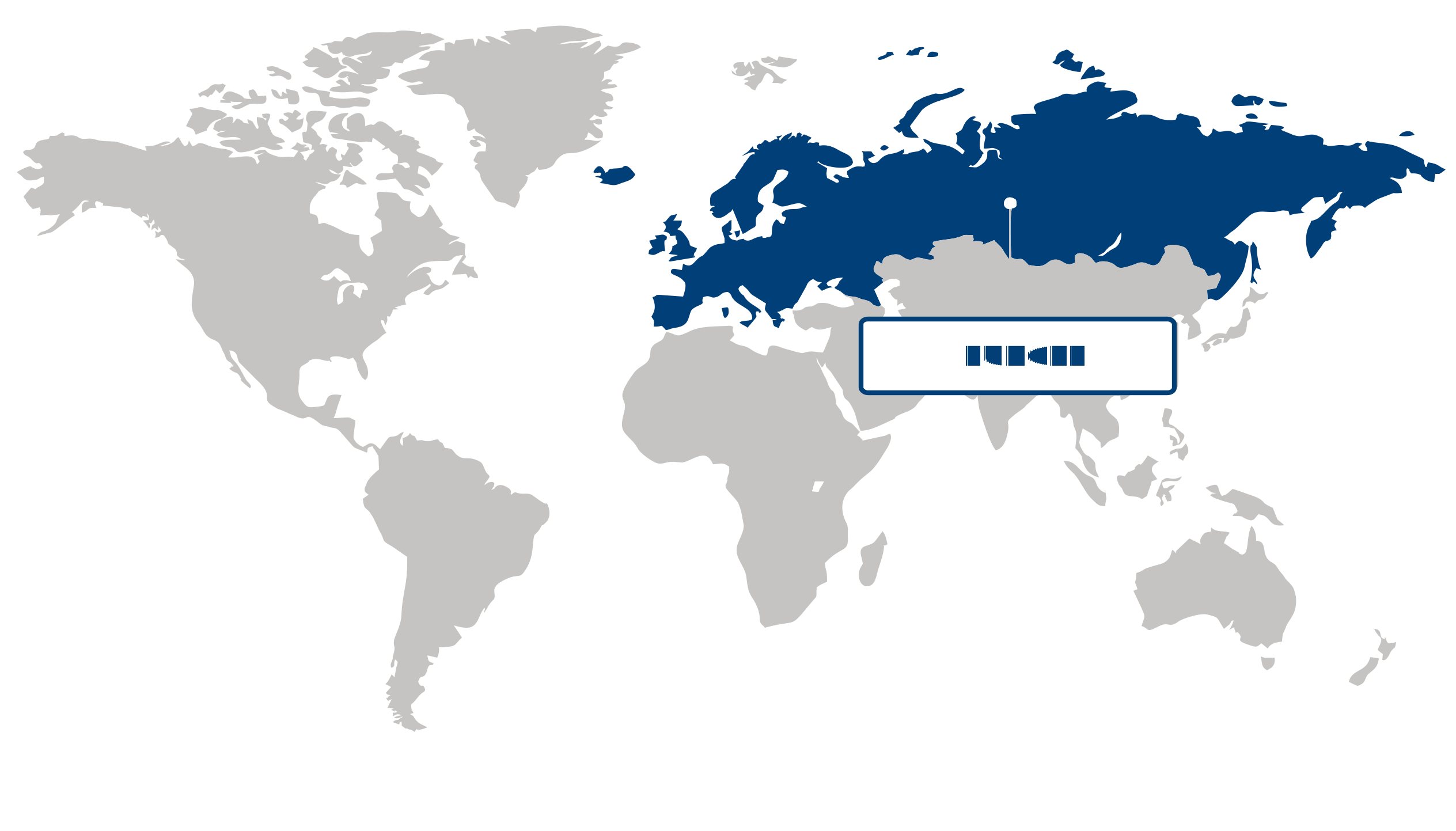
Europe captured over 32% of the global sucrose esters market in 2025, solidifying its position as the largest regional player. This leadership is primarily driven by the continent's robust production and consumption of premium bakery and confectionery products, which leverage sucrose esters for their emulsifying and texture-enhancing properties. For instance, companies such as Europastry and Barry Callebaut have reported increased integration of sucrose esters in their premium product formulations, underscoring the ingredient’s rising importance. The region’s consumers demonstrate a preference for high-quality, innovative food items, supported by stringent food safety regulations from the European Food Safety Authority (EFSA) that ensure product reliability and trust. Additionally, Europe’s advanced supply chain infrastructure and sustainability initiatives foster steady availability and responsible sourcing of raw materials, further strengthening market momentum. Looking ahead, the region’s emphasis on clean-label solutions and artisanal food trends presents substantial opportunities for sucrose esters suppliers to expand their footprint.
Germany anchors the European sucrose esters market with its prominent bakery and confectionery industries, renowned for their innovative approaches and premium product development. German manufacturers like Dr. Oetker are increasingly incorporating sucrose esters to improve product shelf life and texture, meeting the sophisticated demands of domestic and export markets alike. Regulatory frameworks, including the stringent guidelines set by the Federal Institute for Risk Assessment (BfR), ensure ingredient safety and encourage manufacturers to adopt technologically advanced emulsifiers. Germany’s substantial consumer base values product quality and sustainability, allowing sucrose ester producers to capitalize on these market preferences. This strong local ecosystem enables Germany to drive product innovation and maintain Europe’s competitive edge.
France plays a pivotal role in the European sucrose esters market, leveraging a deep cultural appreciation for high-end bakery and confectionery delights. French companies such as Valrhona and Groupe Poult use sucrose esters to enhance the indulgence and visual appeal of their products, aligning with consumer expectations of premium taste and texture. The country benefits from rigorous oversight by the French Agency for Food, Environmental and Occupational Health & Safety (ANSES), which supports compliance with safety and quality standards, facilitating market confidence. Moreover, French consumers’ willingness to invest in gourmet food experiences complements the expanding use of clean-label and natural emulsifiers like sucrose esters. This cultural affinity combined with regulatory support positions France as a strategic hub for market growth across Europe.
Asia Pacific Market Analysis:
Asia Pacific emerged as the fastest-growing region in the sucrose esters market, registering a robust CAGR of 6.8%. This rapid growth is primarily driven by the expanding processed food industry coupled with rising demand for personal care emulsifiers. The increasing consumer inclination towards convenience foods has propelled food manufacturers to incorporate sucrose esters for improved texture and shelf life. Simultaneously, personal care sectors are leveraging sucrose esters for their biodegradable and skin-friendly emulsifying properties, aligning with sustainability trends and stricter regulatory standards like those set by the Japan Ministry of Health, Labour and Welfare. Additionally, technological advancements in production processes and efficient supply chains across the region enhance product availability and affordability. Organizations such as the Asia Pacific Food and Beverage Alliance underscore the region’s innovation in clean-label ingredients, supporting sustained market momentum. These factors collectively position Asia Pacific as a critical hub for investors seeking growth opportunities in the sucrose esters market.
Japan plays a pivotal role in the sucrose esters market within Asia Pacific, driven by sophisticated consumer demand for high-quality processed foods and advanced personal care formulations. Its regulatory environment, overseen by the Pharmaceuticals and Medical Devices Agency (PMDA), supports stringent quality and safety standards, fostering innovation in emulsifier applications. Japanese companies such as Kao Corporation are pioneering formulations incorporating sucrose esters for improved product performance, reflecting domestic consumer preferences for natural and sustainable ingredients. The country’s aging population also intensifies demand for gentle personal care products, further reinforcing market growth. Japan’s strategic integration of innovation, regulatory compliance, and evolving consumer habits enhances its influence on broader regional trends in sucrose esters.
China’s role within the Asia Pacific sucrose esters market is marked by the sheer scale of its processed food industry and booming personal care sector, propelled by rising urbanization and disposable incomes. Domestic manufacturers emphasize functionality and eco-friendly product positioning, responding to consumer trends highlighted by data from the China Food and Drug Administration (CFDA). Major corporations, including Inner Mongolia Fufeng Biotechnologies, are expanding production capacity and investing in sucrose esters to meet growing demand for clean-label and emulsifier solutions in bakery, dairy, and cosmetics sectors. Rapid digitization and e-commerce proliferation also boost consumer access and market penetration. China's expansive manufacturing base, combined with evolving consumer preferences, underscores its strategic importance, reinforcing Asia Pacific’s leading role in the global sucrose esters market.
North America Market Trends:
North America maintained a notable presence in the sucrose esters market, driven by evolving consumer preferences for clean-label and plant-based ingredients. This region benefits from an environment where regulatory bodies such as the U.S. Food and Drug Administration emphasize transparency and natural additives, encouraging manufacturers to integrate sucrose esters as emulsifiers and stabilizers. The growing demand in personal care and food sectors, coupled with increasing investment in sustainable product formulations by companies like DuPont Nutrition & Health, underscores operational advancements influencing the market. Additionally, the presence of robust supply chain infrastructure and technological adoption accelerates product innovation, meeting shifting consumer expectations for healthier and eco-friendly alternatives. According to the U.S. Department of Agriculture, the rise in organic and natural product consumption reflects broader cultural trends favoring sustainability and wellness. These factors collectively position North America for continued moderate growth, offering significant prospects in new product development and market expansion.
The U.S. holds a pivotal role in the sucrose esters market, propelled by a sophisticated consumer base attuned to nutritional benefits and natural labels. Demand growth is further fueled by stringent regulatory frameworks established by the FDA and innovations from key players like Ingredion Incorporated, which recently announced expanded production capabilities for natural emulsifiers. This regulatory environment ensures product safety and quality, fostering trust and widespread adoption in both the food and cosmetic sectors. Moreover, shifting demographics towards health-conscious younger consumers drive tailored product formulations, reflecting cultural nuances unique to the U.S. market. The country’s advanced supply chain networks and innovation ecosystems enable rapid scaling of sucrose ester applications, from bakery goods to skincare. Consequently, the U.S. market acts as a catalyst for regional opportunities, underpinning North America’s moderate growth trajectory in the sucrose esters market.
| Parameter | North America | Asia Pacific | Europe | Latin America | MEA |
|---|---|---|---|---|---|
| Innovation Hub i Scale Nascent Developing Advanced | |||||
| Cost-Sensitive Region i Scale Low Medium High | |||||
| Regulatory Environment i Scale Restrictive Neutral Supportive | |||||
| Demand Drivers i Scale Weak Moderate Strong | |||||
| Development Stage i Scale Emerging Developing Developed | |||||
| Adoption Rate i Scale Low Medium High | |||||
| New Entrants / Startups i Scale Sparse Moderate Dense | |||||
| Macro Indicators i Scale Weak Stable Strong |
Segment Leadership and Growth Trends
Sucrose Esters Market Share (%), by Form, 2026
Go beyond the chart, access full insights & data tables
Request Free Sample ReportThe powder segment held the largest share in the sucrose esters market in 2025, driven primarily by its ease of handling and extended shelf life compared to other forms. This leadership reflects broader customer preferences for stable, convenient ingredients that streamline manufacturing processes and reduce waste, aligning with supply chain optimization trends. For instance, companies like Croda International have highlighted powdered sucrose esters in product releases emphasizing durability and user-friendliness. This segment enables established firms to reinforce efficient production lines while offering emerging players a lower barrier to entry through simplified logistics. Given ongoing industry focus on supply chain resilience and operational efficiency, the powder form is poised to sustain its prominence as manufacturers seek reliability alongside performance in ingredient sourcing.
Analysis by Application
The food segment represented the largest share of the sucrose esters market in 2025, fueled by the growing consumer demand for natural and clean-label food emulsifiers. This demand is linked to a cultural shift emphasizing health-conscious eating and ingredient transparency, which has been supported by endorsements from agencies such as the U.S. FDA recognizing sucrose esters as safe and natural additives. Retailers and food processors, including companies like Nestlé, increasingly incorporate sucrose esters to meet regulatory milestones and cater to evolving dietary preferences. The segment offers strategic advantages by enabling product differentiation through clean-label certification and expanding into plant-based and organic food sectors. With sustained consumer focus on natural ingredients and regulatory validation, the food application segment remains critical for innovation and market expansion.
Analysis by Function
The emulsification segment dominated the sucrose esters market in 2025, supported by its widespread use in enhancing the texture and stability of food products. This functional leadership aligns with industry priorities around product quality consistency and shelf-life extension, which are vital to meeting both consumer expectations and retailer standards. Regulatory bodies, such as the European Food Safety Authority (EFSA), have reinforced the safety profile of sucrose esters in emulsification applications, encouraging broader adoption. The segment affords established firms opportunities to innovate in formulation science and supports startups targeting niche functional benefits. As advancements in food technology continue to demand reliable emulsifiers for diverse product formats, this segment is well-positioned to maintain its significance in the medium term.
| Segment | Sub-Segment | Largest Segment | Fastest Growing |
|---|---|---|---|
| Form | Powder, Liquid, Pellet | ||
| Application | Food, Personal Care Products, Detergents & Cleaners, Others | ||
| Function | Aeration, Antimicrobial Property, Emulsification, Protein & Starch Interaction, Controlled Sugar Crystallization |
Competitive Landscape and Market Positioning
The competitive landscape of the sucrose esters market is marked by proactive moves encompassing product diversification, scalable manufacturing, and technology adoption among the top contenders. Several companies have strategically broadened their ingredient portfolios to cater to shifting consumer preferences for natural emulsifiers and multifunctional additives. Collaborative efforts aimed at enhancing formulation efficiency and sustainability credentials are evident, driven by underlying R&D intensity. For example, DowDuPont and Ingredion have focused on refining production processes and advancing bio-based raw material integration, which has elevated their innovation pipelines. Simultaneously, regional leaderships such as Mitsubishi Corporation leverage strategic alliances to penetrate emerging Asian markets more effectively. These initiatives collectively augment market responsiveness, enabling players not only to address regulatory and environmental imperatives but also to pre-empt competitive pressures through enhanced product differentiation.
Strategic / Actionable Recommendations for Regional Players
In North America, companies should consider leveraging strategic alliances that enhance access to renewable feedstocks and specialized manufacturing technologies. Exploring collaborations with biotech firms could accelerate innovation tailored towards clean-label formulations, aligning with growing consumer demand. Additionally, targeting niche segments such as gluten-free and plant-based product lines offers pathways for differentiated growth amidst a mature competitive environment.
Within the Asia Pacific region, expanding partnerships that facilitate entry into rapidly developing consumer markets will be critical. Emphasizing scalable production that aligns with evolving regulatory frameworks can strengthen regional positioning. Adoption of cutting-edge process optimization technologies will also be essential to improve cost efficiency and meet the heightened emphasis on sustainability.
European players can reinforce their market presence by deepening integration of green chemistry principles in product development. Collaborating with local academic and research institutions could amplify innovation capabilities around novel sucrose ester functionalities. Moreover, attracting investment towards specialty applications in cosmetics and pharmaceuticals may unlock high-value opportunities while addressing stringent regional quality standards.
| Company | Market Share | Company Revenue | Revenue CAGR (%) | Product Portfolio | Geographic Presence | Innovation / R&D Focus | Strategic Developments |
|---|---|---|---|---|---|---|---|
| No companies available. | |||||||
Industry Development/News
| Company Name | Date | Key Development |
|---|
Customize Your Report
Explore examples of how this report can be tailored to different research needs, including custom segments, additional topics or chapters, and related reports. Click a section of the wheel or its numbered marker to explore the available options.
Sucrose Esters Market — Custom Segments
| Segment | Sub-Segment |
|---|---|
| No segment data available. | |
Sucrose Esters Market — Custom TOC
| Custom Chapter | Custom Details | ||
|---|---|---|---|
| No custom TOC data available. | |||
Need a different cut of the data?
Request Custom ResearchHow large is the sucrose esters market?
How is the sucrose esters industry expected to grow over the next 10 years?
Which geographical region leads the sucrose esters market market?
Which area is showing the greatest surge in sucrose esters sector?
Where is the powder segment seeing the strongest adoption within the sucrose esters industry?
When did food sub-segment emerge as the largest sub-segment in the application segment of sucrose esters sector?
Why is the emulsification segment leading in the sucrose esters industry?
Who holds a significant market share in the sucrose esters landscape?
Our Clients
"The report provided a thorough look at market trends, technological advancements, and the competitive landscape. The depth of insights was really valuable."
ITC Limited
"We would highly recommend Fundamental Business Insights & Consulting to anyone looking for reliable, detailed, and comprehensive market research in the Food industry."
Tyson Foods
"The clarity and presentation of the information were commendable. The report was delivered timely, which made the overall experience smooth and convenient."
Mondelēz International
Our Research Team & Methodology
Every Fundamental Business Insights report is built by a dedicated vertical research team, validated through a structured primary-and-secondary methodology, and reviewed for accuracy before it reaches you.
Research Team Overview
Prepared by the Food & Beverage Research Team
Delivery
Published
Demand
Available
Support
Trust & Compliance
Research Domains
10 coverage areasResearch Intelligence
| Source | Reference |
|---|---|
| Food and Agriculture Organization (FAO) | www.fao.org |
| World Health Organization (WHO) | www.who.int |
| U.S. Food & Drug Administration (FDA) | www.fda.gov |
| European Food Safety Authority (EFSA) | www.efsa.europa.eu |
| U.S. Department of Agriculture (USDA) | www.usda.gov |
| Codex Alimentarius Commission | www.fao.org/fao-who-codexalimentarius |
| International Organization for Standardization (ISO) | www.iso.org |
| AOAC INTERNATIONAL | www.aoac.org |
| Institute of Food Technologists (IFT) | www.ift.org |
| International Dairy Foods Association (IDFA) | www.idfa.org |
| International Sweeteners Association (ISA) | www.sweeteners.org |
| International Probiotics Association (IPA) | internationalprobiotics.org |
| Good Food Institute (GFI) | gfi.org |
| American Feed Industry Association (AFIA) | www.afia.org |
| International Feed Industry Federation (IFIF) | ifif.org |
| Specialty Food Association (SFA) | www.specialtyfood.com |
| Brewers Association | www.brewersassociation.org |
| International Bottled Water Association (IBWA) | bottledwater.org |
| International Alliance for Dietary/Food Supplement Associations (IADSA) | www.iadsa.org |
| OECD Agriculture & Food | www.oecd.org/agriculture |
Research Workflow & Quality Assurance
Data Collection
Verified information gathered through primary and secondary research.
Data Triangulation
Cross-validation using multiple independent data sources.
Forecast Modelling
Market estimates developed using historical trends and analytical models.
Analyst Validation
Findings reviewed by domain experts for accuracy and consistency.
Editorial & Quality Review
Final editorial, quality, and compliance checks before publication.
Final Publication
Released after successful completion of the internal review process.
Report Coverage
📊 Market Assessment
- Market Size & Forecast
- Market Segmentation
- Regional Analysis
- Growth Drivers & Challenges
- Market Dynamics
🏢 Competitive Intelligence
- Competitive Landscape
- Company Profiles
- Competitive Benchmarking
- Mergers & Acquisitions
- Market Share Analysis or Key Company Strategies
🔍 Strategic Analysis
- Value Chain Analysis
- Porter's Five Forces
- PESTLE Analysis
- Pricing Trends
- Supply-Demand Analysis
🚀 Future Outlook
- Technology Landscape
- Regulatory Landscape
- Investment & Funding Landscape
- Emerging Opportunities
- Future Market Outlook
Have a question about this report or need a custom scope?
Request Customization