Shoe Packaging Market Size & Forecasts 2026-2035, By Segments (Distribution Channel, Product Type, Shoes Type), Growth Opportunities, Innovation Landscape, Regulatory Shifts, Strategic Regional Insights (U.S., Japan, China, South Korea, UK, Germany, France), and Competitive Dynamics (WestRock, International Paper, Smurfit Kappa, DS Smith, Mondi Group)
Market Size and Growth Outlook
Shoe Packaging Market size is estimated to increase from USD 7.19 billion in 2025 to USD 10.64 billion by 2035, supported by a CAGR exceeding 4% during 2026-2035. In 2026, revenues are forecast to reach USD 7.44 billion.
Get more details on this report
Request Free Sample ReportShoe Packaging Market Intelligence Snapshot
Regional Market Dynamics
Segment Momentum
Market Expansion Drivers
Leading Market Participants
Global Market Forecast Snapshot
Market Outlook
Regional and Segment Outlook
Market Growth Drivers and Industry Trends
The continuous increase in global footwear production directly fuels demand across the shoe packaging market, as consumer expectations for protective and visually appealing packaging intensify. According to data from the International Footwear Association, growing urbanization and expanding e-commerce platforms have stimulated higher retail shipment volumes requiring enhanced packaging solutions. This trend compels packaging manufacturers to scale operations while innovating for efficiency and durability. For market incumbents, the surge offers opportunities to optimize supply chains and strengthen partnerships with major footwear brands, while new entrants can differentiate through agility and cost-competitive proposals. Moving forward, alignment with the footwear industry’s production cycles will be essential to meet this rising demand sustainably and responsively.
Adoption of Innovative and Sustainable Shoe Packaging Solutions
Consumer preferences for environmentally responsible products drive innovation within the shoe packaging market, as brands emphasize sustainability to enhance brand value and comply with regulations. Nike’s 2023 sustainability report highlights its shift to recyclable and biodegradable packaging, reflecting a wider industry pivot towards reducing carbon footprints. These innovations, including smart packaging with RFID tracking and reusable designs, cater to heightened consumer awareness and regulatory pressure from agencies like the EU’s Circular Economy Action Plan. For established firms, this creates scope to lead sustainable product lines, while startups may leverage novel technologies to capture niche segments. Continued innovation tied to evolving sustainability mandates will shape competitive differentiation across the market.
Development of Eco-Friendly and Premium Shoe Packaging Materials
The shift towards premiumization coupled with environmental concerns motivates the development of eco-friendly shoe packaging materials, reshaping the material landscape in this market. Companies such as Fabri-Kal, known for compostable polymers, report rising demand from footwear brands seeking high-quality, sustainable packaging alternatives. This movement responds to consumers’ willingness to pay a premium for packaging that signifies both luxury and environmental stewardship, as observed by research from McKinsey & Company on luxury goods packaging. Both legacy packaging suppliers and innovative material developers benefit from expanding R&D investments to meet these dual demands. Going forward, collaboration between material scientists and brand strategists will be pivotal in delivering packaging that balances sustainability with premium consumer experiences.
Industry Restraints:
Sustainability Regulations and Environmental Compliance
Increasing regulatory pressure to reduce plastic waste and carbon emissions significantly restricts the shoe packaging market's product innovation and material choices. Agencies such as the European Chemicals Agency (ECHA) have enforced stricter guidelines on single-use plastics, compelling manufacturers to adopt biodegradable and recycled materials. While this shift aligns with consumer demand for eco-friendly packaging, it raises operational costs and complicates supply chains due to material scarcity and processing requirements reported by the Sustainable Packaging Coalition. Established players face costly redesigns and certification hurdles, while new entrants struggle with compliance complexity and capital intensity. Moving forward, adherence to evolving global environmental standards will remain a critical barrier, driving market consolidation around firms that can invest in sustainable innovation and secure compliant supply networks.
Raw Material Supply Chain Instabilities
Volatility in raw material availability, especially paperboard and bio-based polymers, constrains the shoe packaging market by causing production delays and cost fluctuations. Disruptions highlighted by the World Bank, including labor shortages and geopolitical tensions affecting pulp and resin supply, exacerbate price unpredictability and inventory management challenges. Companies like Smurfit Kappa have reported tightened margins and deferred capacity expansions due to supply constraints. This creates substantial hurdles for smaller manufacturers reliant on spot markets and limits scalability for innovative packaging solutions. In the near term, persistent supply chain vulnerabilities will force market participants to enhance sourcing strategies, diversify suppliers, and adopt adaptive manufacturing processes to maintain competitiveness amid fluctuating material dynamics.
| Growth Driver | Impact on CAGR | Regulatory Influence | Geographic Relevance | Adoption Rate | Impact Timeline |
|---|---|---|---|---|---|
| Increasing footwear production and retail packaging demand | 1.50% | Short term (≤ 2 yrs) | Europe, North America | Medium | Fast |
| Adoption of innovative and sustainable shoe packaging solutions | 1.20% | Medium term (2–5 yrs) | Asia Pacific, Europe | Medium | Moderate |
| Development of eco-friendly and premium shoe packaging materials | 1.30% | Long term (5+ yrs) | North America, Europe | High | Slow |
Explore Growth Opportunities
Request Free Sample ReportRegional Demand Dynamics
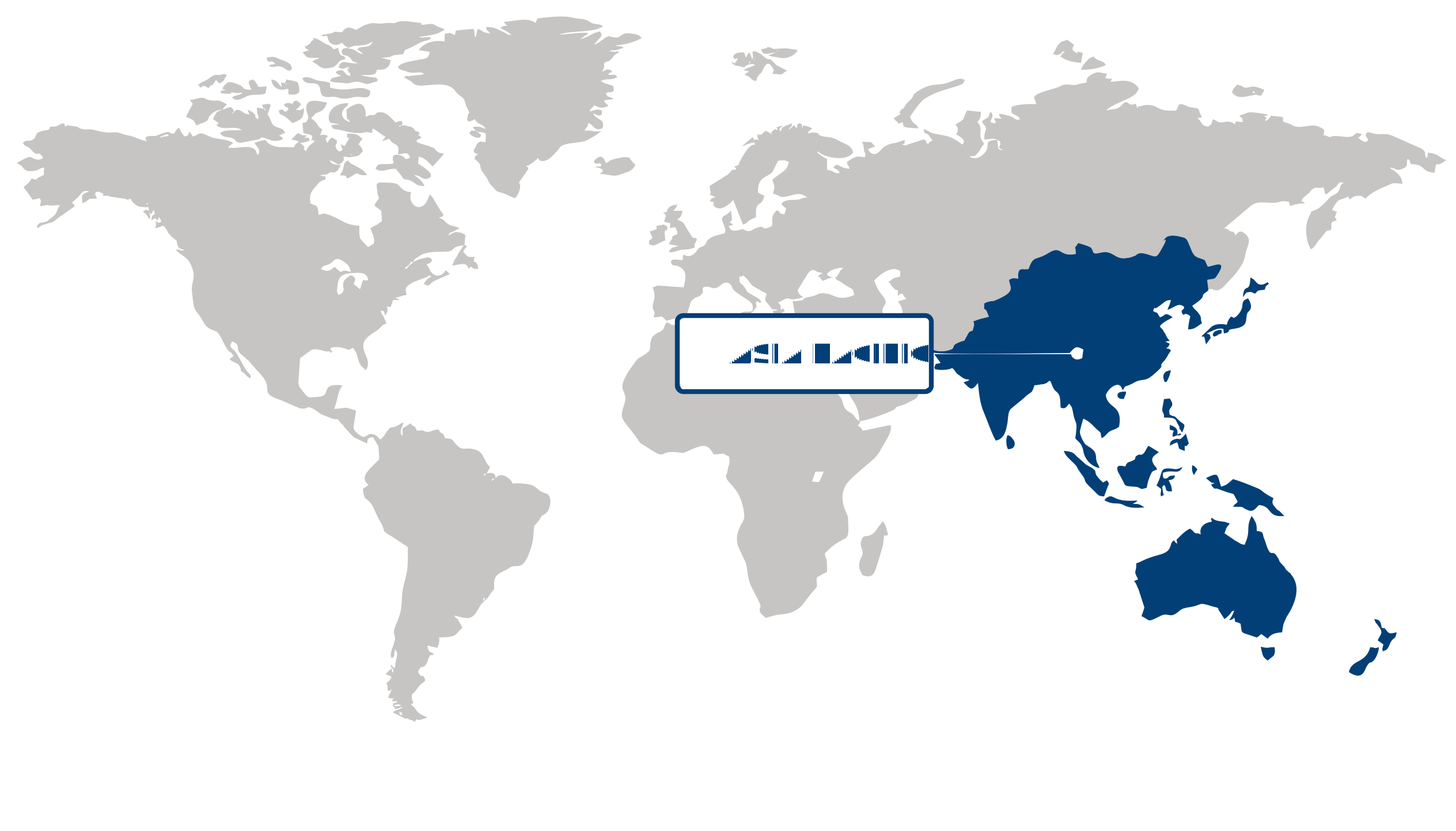
The Asia Pacific shoe packaging market dominated with approximately 52% share of the global market in 2025 and is also the fastest-growing region, expanding at a CAGR of 5.1%. This leadership stems largely from the region’s status as the highest footwear manufacturer and exporter worldwide, driving an amplified demand for efficient and innovative shoe packaging solutions. The combination of extensive manufacturing hubs, particularly in China and Southeast Asia, and increasing global footwear exports has necessitated advancements in protective, sustainable, and cost-effective packaging formats. For example, organizations like the China National Light Industry Council emphasize packaging innovations to meet both export standards and evolving consumer preferences toward eco-friendly materials. These dynamics, supported by government incentives fostering manufacturing growth, position Asia Pacific as a critical arena for evolving shoe packaging technologies and sustainable practices, offering significant opportunities for market expansion and operational optimization.
China anchors the Asia Pacific shoe packaging market, leveraging its dominant role as the world’s largest footwear producer and exporter. The country’s expansive industrial base, supported by initiatives from the Ministry of Industry and Information Technology to promote modern packaging technology, facilitates a shift toward lightweight, recyclable packaging variants aligned with global sustainability trends. Major manufacturers and exporters in China, such as Belle International, have increasingly partnered with packaging firms integrating digital printing and biodegradable materials, reflecting consumer demand for environmental responsibility. This strategic focus enhances China’s export competitiveness while setting higher industry standards, reinforcing regional growth through innovation and compliance with international regulations.
Japan is positioned as a pivotal hub in the Asia Pacific shoe packaging market by focusing on precision, quality, and technological advancement in packaging solutions, driven by high domestic consumer expectations and sustainable manufacturing practices. The Ministry of Economy, Trade and Industry advocates for cutting-edge packaging technologies that improve shelf appeal and reduce waste, tailored for premium footwear brands with stringent packaging requirements. Japanese packaging companies like Rengo Co., Ltd. are innovating with smart packaging integrated with IoT for supply chain transparency, meeting both local and export market needs. Japan’s emphasis on advanced, eco-conscious packaging solutions complements the broader regional trend and reinforces Asia Pacific’s competitive edge in the global shoe packaging market.
Europe Market Analysis:
Europe maintained a substantial share in the shoe packaging market, driven by evolving sustainability priorities and stringent regulatory frameworks that encourage eco-friendly solutions. The region's emphasis on reducing plastic waste and increasing the use of recyclable materials has prompted packaging manufacturers to innovate in biodegradable and reusable options. Consumer preferences are shifting towards premium, sustainable packaging that enhances brand value, particularly among environmentally conscious demographics. The European Union’s Circular Economy Action Plan and regulations by the European Chemicals Agency continue to incentivize manufacturers and brands to adopt greener packaging practices. Moreover, Europe's well-integrated supply chains and advanced logistical infrastructure support timely delivery and customization, crucial for the fashion-forward shoe industry. These factors collectively position Europe as a critical player in offering sustainable and technologically advanced shoe packaging solutions, with ongoing regulatory support expected to fuel further growth.
Germany plays a pivotal role within Europe’s shoe packaging market by leveraging its robust manufacturing base and strong regulatory compliance. German consumers increasingly demand sustainable and high-quality packaging, reflecting the country’s broader environmental commitments, as seen in the enforcement of the Packaging Act (VerpackG). Major companies such as BASF and Smurfit Kappa are actively developing eco-friendly packaging materials, highlighting Germany's leading innovation in this sector. The country’s expansive e-commerce market intensifies the need for protective yet environmentally responsible packaging, enhancing customer experience through better durability and design. This combination of consumer awareness, regulatory push, and industrial innovation enables Germany to significantly influence the regional shoe packaging landscape.
France contributes substantially to Europe’s shoe packaging market with its vibrant luxury footwear industry that prioritizes aesthetic and sustainable packaging solutions. French brands are increasingly adopting sustainable materials, driven by consumer demand for premium unboxing experiences aligned with environmental consciousness. The French government's policies supporting sustainable development, alongside initiatives like the National Pact for Circular Economy, foster innovation within packaging suppliers. Companies such as Antalis France focus on eco-designed packaging, reflecting the country’s blend of tradition and contemporary sustainability trends. France’s emphasis on craftsmanship and sustainable luxury packaging strengthens its role as a key market, reinforcing Europe’s position as a leader in environmentally responsible shoe packaging solutions.
North America Market Trends:
North America maintained a notable presence in the shoe packaging market, driven by evolving consumer preferences toward eco-friendly and customized packaging solutions. The region’s commitment to sustainability, highlighted by regulatory frameworks such as California’s Extended Producer Responsibility (EPR) regulations, has influenced manufacturers to invest in biodegradable and recyclable materials, enhancing demand for innovative packaging. Furthermore, the growing e-commerce sector, underscored by Amazon’s expansion in fulfillment capabilities reported by the U.S. Chamber of Commerce, has necessitated adaptive, resilient packaging designs that optimize shipping efficiency. Advanced digital printing technologies adopted by key players like WestRock have streamlined customization at scale, reflecting a sophisticated supply chain adept at rapid response. As North American consumers increasingly prioritize premium unboxing experiences, the shoe packaging market is poised to leverage these shifting dynamics, underpinned by robust investment in sustainable packaging infrastructure and technological innovation.
The U.S. plays a pivotal role in the North American shoe packaging market, characterized by significant adoption of sustainable materials aligned with environmental regulations such as the Federal Trade Commission’s Green Guides. Consumer demand trends, driven by millennials and Gen Z’s preference for transparency in product lifecycle, push brands to innovate packaging that communicates sustainability commitments. Notably, Nike’s recent release of eco-conscious packaging, detailed in its corporate sustainability report, exemplifies this trend toward minimalistic yet functional design. The competitive intensity in direct-to-consumer channels incentivizes agility in packaging solutions, enabling rapid customization and fulfillment. This emphasis on sustainable innovation and consumer engagement positions the U.S. as a critical hub within North America, strategically contributing to the region’s moderate yet steady growth in the shoe packaging market.
| Parameter | North America | Asia Pacific | Europe | Latin America | MEA |
|---|---|---|---|---|---|
| Innovation Hub i Scale Nascent Developing Advanced | |||||
| Cost-Sensitive Region i Scale Low Medium High | |||||
| Regulatory Environment i Scale Restrictive Neutral Supportive | |||||
| Demand Drivers i Scale Weak Moderate Strong | |||||
| Development Stage i Scale Emerging Developing Developed | |||||
| Adoption Rate i Scale Low Medium High | |||||
| New Entrants / Startups i Scale Sparse Moderate Dense | |||||
| Macro Indicators i Scale Weak Stable Strong |
Segment Leadership and Growth Trends
Shoe Packaging Market Share (%), by Distribution Channel, 2026
Go beyond the chart, access full insights & data tables
Request Free Sample ReportOffline held largest share in the shoe packaging market in 2025, driven by the sustained dominance of brick-and-mortar retail stores and brand outlets worldwide. Physical retail remains preferred by many consumers for the tactile experience and immediate product availability, especially in emerging economies where e-commerce penetration is still developing. The supply chains supporting offline channels benefit from established logistics networks, enabling timely restocking and consistent packaging demands. Nike’s retail expansion strategy exemplifies this trend, emphasizing flagship stores with customized packaging solutions. This segment offers strategic advantages for established firms leveraging retail partnerships and for emerging players focusing on localized distribution. Given the enduring consumer preference for in-person shopping and ongoing retail infrastructure investments, the offline segment is poised to maintain its relevance in the near to medium term.
Analysis by Product Type
Corrugated boxes represented largest share in the shoe packaging market due to their durability, recyclability, and cost-effectiveness in safeguarding footwear during transport. These properties align with growing sustainability priorities and regulatory encouragements for eco-friendly packaging, as highlighted by the Sustainable Packaging Coalition’s guidelines favoring recyclable materials. Customer demand increasingly favors brands adopting greener packaging that also ensures product integrity. The widespread availability of corrugated materials and advances in printing technology offer companies opportunities to enhance brand appeal via customized, eco-conscious designs. Major manufacturers like Smurfit Kappa have reinforced their commitment to sustainable corrugated solutions, further solidifying this segment’s dominance. As environmental regulations tighten and consumer awareness heightens, corrugated boxes will remain a critical segment within shoe packaging markets.
Analysis by Shoes Type
Running shoes dominated the shoe packaging market in 2025, propelled by rising health consciousness and increased participation in sports and fitness activities globally. The surge in active lifestyles has intensified demand for running footwear, consequently boosting demand for protective and branded packaging. Brands such as Adidas have capitalized on this trend by integrating innovative packaging designs that emphasize performance and sustainability, resonating with their health-focused customer base. Demographic shifts towards younger, fitness-oriented consumers, coupled with regulatory frameworks encouraging sustainable practices, reinforce this segment’s leadership. For both incumbents and new entrants, the running shoes segment presents opportunities to capture value through differentiated packaging solutions that enhance brand positioning. The persistence of fitness trends and wellness awareness suggests this segment will sustain strong demand in coming years.
| Segment | Sub-Segment | Largest Segment | Fastest Growing |
|---|---|---|---|
| Distribution Channel | Offline, Online | ||
| Product Type | Corrugated Boxes, Reusable Shoe Packaging, Sustainable Reduced Shoe Boxes, Tubular Packaging | ||
| Shoes Type | Loafers, Running Shoes, Short Shoes, Leather Shoes, Casual Shoes, Long Boots |
Unlock insights tailored to your business with our bespoke market research solutions.
Click to get your customized report now.
Competitive Landscape and Market Positioning
The competitive environment in the shoe packaging market is marked by dynamic initiatives among the top players aimed at reinforcing leadership and fostering differentiation. Strategic partnerships and alliances have enabled shared expertise in sustainable materials, accelerating innovation cycles. Several have expanded portfolios through targeted acquisitions, enhancing capacity in recyclable and customizable packaging offerings that resonate with evolving brand requirements. Product launches emphasize lightweight, durable, and design-focused solutions, addressing logistics efficiency and consumer experience. Investments in advanced R&D platforms underscore commitments to biodegradable composites and smart packaging integrated with digital tracking, collectively enhancing market competitiveness and setting the pace for future packaging trends across footwear supply chains.
Strategic / Actionable Recommendations for Regional Players
North American companies should prioritize collaborations that augment sustainability credentials with eco-conscious brands, emphasizing recyclable and reduced-footprint packaging to meet stringent regulatory and consumer expectations. Engaging in co-innovation initiatives with footwear manufacturers can unlock value in customized solutions that streamline distribution and enhance brand differentiation.
In the Asia Pacific region, tapping into emerging technologies such as bio-based polymers and smart packaging can create a distinct competitive edge, especially as demand for premium athletic and casual footwear grows. Forging alliances with regional footwear producers and investing in scalable packaging innovations will support market expansion and operational agility.
European players can capitalize on their strong position in sustainable innovation by deepening integration with circular economy frameworks and expanding offerings in biodegradable and reusable packaging formats. Forming strategic partnerships within local value chains will reinforce responsiveness to strict environmental standards while addressing consumer preferences for transparency and functionality.
| Company | Market Share | Company Revenue | Revenue CAGR (%) | Product Portfolio | Geographic Presence | Innovation / R&D Focus | Strategic Developments |
|---|---|---|---|---|---|---|---|
| No companies available. | |||||||
Customize Your Report
Explore examples of how this report can be tailored to different research needs, including custom segments, additional topics or chapters, and related reports. Click a section of the wheel or its numbered marker to explore the available options.
Shoe Packaging Market — Custom Segments
| Segment | Sub-Segment |
|---|---|
| No segment data available. | |
Shoe Packaging Market — Custom TOC
| Custom Chapter | Chapter Details | ||
|---|---|---|---|
| No custom TOC data available. | |||
Need a different cut of the data?
Request Custom ResearchHow big is the shoe packaging market?
What is the expected industry size of shoe packaging by 2035?
Which region holds the largest share of the shoe packaging market?
Which geography represents the strongest growth trajectory for the shoe packaging sector?
What factors give offline segment a competitive edge in the shoe packaging sector?
Which is the largest sub-segment within the product type segment for shoe packaging industry?
Why does running shoes sub-segment dominate the shoes type segment of shoe packaging sector?
Who are the major participants shaping the shoe packaging landscape?
Our Clients
"The report provided us with a clear direction, and the level of detail was beyond what we expected. I would definitely recommend their services to others."
Haier Appliances
"The collaboration with Fundamental Business Insights has added significant value to our decision-making process, and we look forward to continuing this partnership for our future market research requirements."
Luxottica Group S.p.A.
"The team at FBI delivered an exceptional research report. The insights on industry innovations were particularly impressive and added a lot of value to the overall report."
Nike
Our Research Team & Methodology
Every Fundamental Business Insights report is built by a dedicated vertical research team, validated through a structured primary-and-secondary methodology, and reviewed for accuracy before it reaches you.
Research Team Overview
Prepared by the Consumer Goods & Services Research Team
Delivery
Published
Demand
Available
Support
Trust & Compliance
Research Intelligence
| Source | Reference |
|---|---|
| International Organization for Standardization (ISO) | www.iso.org |
| ASTM International | www.astm.org |
| U.S. Consumer Product Safety Commission (CPSC) | www.cpsc.gov |
| European Commission – Consumer Safety | ec.europa.eu/safety-gate |
| Consumer Technology Association (CTA) | www.cta.tech |
| National Retail Federation (NRF) | nrf.com |
| World Retail Congress | www.worldretailcongress.com |
| World Travel & Tourism Council (WTTC) | wttc.org |
| UN Tourism | www.unwto.org |
| Personal Care Products Council (PCPC) | www.personalcarecouncil.org |
| Cosmetics Europe | cosmeticseurope.eu |
| International Housewares Association (IHA) | www.housewares.org |
| American Apparel & Footwear Association (AAFA) | www.aafaglobal.org |
| World Federation of the Sporting Goods Industry (WFSGI) | wfsgi.org |
| Juvenile Products Manufacturers Association (JPMA) | www.jpma.org |
| Pet Industry Joint Advisory Council (PIJAC) | pijac.org |
| International Council of Toy Industries (ICTI) | www.toy-icti.org |
| International Association of Amusement Parks and Attractions (IAAPA) | iaapa.org |
| Organisation for Economic Co-operation and Development (OECD) | www.oecd.org |
| World Bank Data | data.worldbank.org |
Research Workflow & Quality Assurance
Data Collection
Verified information gathered through primary and secondary research.
Data Triangulation
Cross-validation using multiple independent data sources.
Forecast Modelling
Market estimates developed using historical trends and analytical models.
Analyst Validation
Findings reviewed by domain experts for accuracy and consistency.
Editorial & Quality Review
Final editorial, quality, and compliance checks before publication.
Final Publication
Released after successful completion of the internal review process.
Report Coverage
📊 Market Assessment
- Market Size & Forecast
- Market Segmentation
- Regional Analysis
- Growth Drivers & Challenges
- Market Dynamics
🏢 Competitive Intelligence
- Competitive Landscape
- Company Profiles
- Competitive Benchmarking
- Mergers & Acquisitions
- Market Share Analysis or Key Company Strategies
🔍 Strategic Analysis
- Value Chain Analysis
- Porter's Five Forces
- PESTLE Analysis
- Pricing Trends
- Supply-Demand Analysis
🚀 Future Outlook
- Technology Landscape
- Regulatory Landscape
- Investment & Funding Landscape
- Emerging Opportunities
- Future Market Outlook
Have a question about this report or need a custom scope?
Request Customization