Shea Butter Market Size & Growth Forecast 2027–2036, By Segments (Product, Application), Regional Demand Trends (North America, Asia Pacific, Europe), Key Country Insights (U.S., Japan, South Korea, Germany, France, Italy), and Competitive Landscape
Market Size and Growth Outlook
Shea Butter Market size was over USD 2.7 billion in 2026 and is likely to grow at a 8.74% CAGR between 2027 and 2036, attaining USD 6.24 billion by 2036. The industry revenue for 2027 is assessed at USD 2.9 billion.
Get more details on this report
Request Free Sample ReportShea Butter Market Intelligence Snapshot
Regional Market Dynamics
- Europe accounted for 32.40% of the shea butter market in 2026, supported by strong demand across cosmetics, personal care, and food applications, alongside stringent quality and sourcing standards.
- Asia Pacific is projected to grow at an 8.93% CAGR, driven by expanding personal care manufacturing, rising demand for plant-based ingredients, and broader adoption across regional consumer goods supply chains.
Segment Momentum
- Cosmetics & Personal Care accounted for 76.8% of the market in 2026, supported by the widespread use of shea butter in skin care and hair care formulations, where established product demand sustains high consumption.
- Refined shea butter is growing fastest because manufacturers increasingly prefer standardized color, texture, and odor, improving formulation consistency, processing efficiency, and suitability for large-scale commercial production.
Market Expansion Drivers
- Rising demand for natural organic skincare boosting shea butter cosmetics usage.
- Eco-friendly sustainable ingredient preference increasing cosmetic manufacturers adoption of shea butter.
- West African shea supply chain expansion and fair-trade certification improving product quality consistency.
Leading Market Participants
- Prominent companies in the shea butter market include BASF SE (Germany), Cargill, Incorporated (United States), Croda International Plc (United Kingdom), AAK AB (Sweden), Clariant AG (Switzerland), OLVEA Group (France), Sophim S.A. (France), Ghana Nuts Company Limited (Ghana), Agrobotanicals, LLC (United States), Suru Chemicals & Pharmaceuticals Pvt. Ltd. (India).
Global Market Forecast Snapshot
Market Outlook
- 2026 Market Size: USD 2.7 billion
- 2027 Estimated Market Size: USD 2.9 billion.
- Projected Market Size: USD 6.24 billion by 2036
- Growth Forecast: 8.74% CAGR (2027-2036)
Regional and Segment Outlook
- Leading Regional Market: Europe
- High-Growth Regional Hub: Asia Pacific
- Core Revenue Segment: Raw/Unrefined (Product) | Cosmetics & Personal Care (Application)
- Emerging Opportunity Segment: Refined (Product) | Food (Application)
Market Growth Drivers and Industry Trends
Rising demand for natural organic skincare boosting shea butter cosmetics usage
The growing consumer preference for naturally derived personal care ingredients is supporting the shea butter market as skincare brands increasingly incorporate plant-based emollients into moisturizing and nourishing formulations. Shea butter is valued in cosmetics for its rich texture and ability to support products designed for dry and sensitive skin, making it suitable for creams, lotions, body care products, lip care, and hair treatments. Rising interest in organic and minimally processed beauty products is also encouraging formulators to highlight naturally sourced ingredients, while consumers seeking recognizable botanical components are increasing the use of shea butter-based cosmetics across everyday personal care routines.
Eco-friendly sustainable ingredient preference increasing cosmetic manufacturers adoption of shea butter
Sustainability considerations are influencing ingredient selection across the shea butter market, with cosmetic manufacturers increasingly looking for renewable, plant-derived materials that align with environmentally conscious product positioning. Shea butter can support formulations marketed around natural sourcing and responsible ingredient choices, allowing brands to respond to consumers who place greater importance on the environmental characteristics of personal care products. Demand is also strengthened as manufacturers explore alternatives to petroleum-derived or highly synthetic ingredients in selected formulations, while sustainable sourcing practices and responsible supply relationships can enhance the appeal of shea butter among producers developing environmentally focused skincare and haircare ranges.
West African shea supply chain expansion and fair-trade certification improving product quality consistency
Improving sourcing and processing capabilities in west africa is strengthening the shea butter market by supporting more organized supply networks and greater consistency in the availability and quality of raw material. Expansion of collection, processing, storage, and distribution activities can help manufacturers obtain shea butter with more predictable characteristics for cosmetic formulation, while fair-trade certification provides additional assurance around responsible sourcing and producer practices. Greater traceability within the supply chain also enables buyers to evaluate sourcing standards more closely, helping cosmetic manufacturers incorporate shea butter into products where ingredient provenance, quality control, and ethical procurement are important purchasing considerations.
| Growth Driver | Impact on CAGR | Regulatory Influence | Geographic Relevance | Adoption Rate | Impact Timeline |
|---|---|---|---|---|---|
| Rising demand for natural organic skincare boosting shea butter cosmetics usage | 2.20% | Moderate | Europe, North America | High | Near Term |
| Eco-friendly sustainable ingredient preference increasing cosmetic manufacturers adoption of shea butter | 1.80% | Moderate | Europe, North America, Asia Pacific | High | Near Term |
| West African shea supply chain expansion and fair-trade certification improving product quality consistency | 1.50% | Moderate | Africa, Europe | Medium | Mid Term |
Unlock insights tailored to your business with our bespoke market research solutions.
Click to get your customized report now.
Regional Demand Dynamics
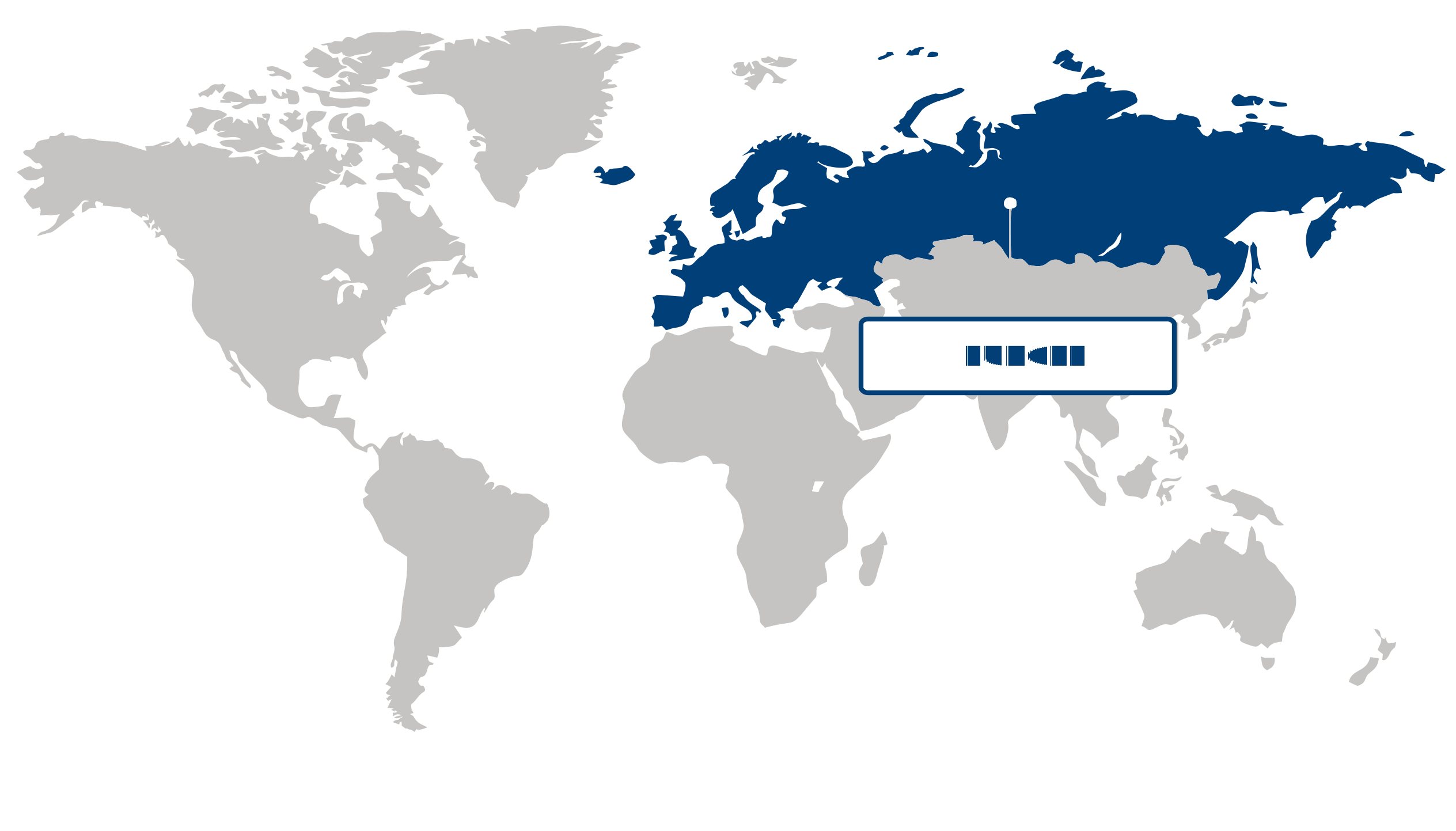
Europe (Largest Region)
Europe led the shea butter market with a 32.40% share in 2026, supported by strong demand for natural personal care ingredients, established cosmetics industries, and growing consumer preference for plant-based formulations. Shea butter is widely valued for its moisturizing and skin-conditioning properties, making it relevant across skincare, haircare, and other beauty applications. Increasing interest in clean-label and sustainably sourced ingredients is also encouraging manufacturers to incorporate natural butters into premium personal care formulations.
Asia Pacific (Fastest-Growing Region)
Asia Pacific is the fastest-growing region in the shea butter market, driven by expanding beauty and personal care consumption, rising disposable incomes, and increasing interest in natural and multifunctional skincare ingredients. Growing e-commerce penetration is improving access to imported and locally formulated products, while consumers are becoming more attentive to ingredient quality and wellness-oriented beauty routines. Expanding cosmetics manufacturing and rising demand for premium personal care products are creating additional opportunities for shea butter applications.
| Parameter | North America | Asia Pacific | Europe | Latin America | MEA |
|---|---|---|---|---|---|
| Innovation Hub i Scale Nascent Developing Advanced | |||||
| Cost-Sensitive Region i Scale Low Medium High | |||||
| Regulatory Environment i Scale Restrictive Neutral Supportive | |||||
| Demand Drivers i Scale Weak Moderate Strong | |||||
| Development Stage i Scale Emerging Developing Developed | |||||
| Adoption Rate i Scale Low Medium High | |||||
| New Entrants / Startups i Scale Sparse Moderate Dense | |||||
| Macro Indicators i Scale Weak Stable Strong |
Key Country Insights
Germany 🇩🇪
Organic Formulation DemandGermany’s shea butter market is centered on certified organic and sustainably sourced ingredients for cosmetics and wellness products. Manufacturers in Germany are prioritizing supplier transparency to meet strict formulation and consumer quality expectations.
France 🇫🇷
Luxury Personal Care InputFrance positions shea butter as a valuable ingredient in premium cosmetic and personal care formulations. French manufacturers are increasingly focused on ethical sourcing and ingredient storytelling to strengthen brand appeal in skincare portfolios.
Italy 🇮🇹
Artisan Beauty IngredientItaly’s shea butter market is supported by niche cosmetic producers and natural beauty brands seeking rich emollient ingredients. In Italy, product development often emphasizes botanical blends and handcrafted formulations for specialized skincare lines.
Japan 🇯🇵
Premium Texture ApplicationsJapan uses shea butter primarily in premium skincare and haircare products where texture refinement and skin compatibility are important. Japanese brands are focusing on formulation balance to maintain product lightness while enhancing hydration performance.
South Korea 🇰🇷
Cosmetic Ingredient InnovationSouth Korea is incorporating shea butter into multifunctional beauty products, especially in hydration and barrier-repair categories. Product developers in South Korea are blending shea butter with active ingredients to support innovation in competitive skincare segments.
United States 🇺🇸
Clean Beauty IngredientIn the U.S., shea butter is widely used in personal care and cosmetic formulations that emphasize natural moisturizing properties. Consumer preference for clean-label skincare is encouraging suppliers to strengthen sourcing consistency and product traceability.
Segment Leadership and Growth Trends
Shea Butter Market Share (%), by Product, 2026
Go beyond the chart, access full insights & data tables
Request Free Sample ReportProduct Segment Analysis: Raw/Unrefined (Largest Segment) vs Refined (Fastest-Growing Segment)
Raw/unrefined products dominated the shea butter market in 2026 with a 60.76% share, supported by strong demand for naturally derived ingredients that retain the characteristic properties of shea butter with limited processing. Consumers and manufacturers increasingly value plant-based ingredients associated with natural formulations, particularly in personal care and beauty products. Raw shea butter is widely used in formulations where its natural texture and moisturizing characteristics are desirable, while growing interest in clean-label and minimally processed ingredients reinforces its appeal. Its established use across traditional and modern applications also supports continued demand for unrefined products.
Refined shea butter is the fastest-growing product segment as manufacturers increasingly seek consistent appearance, texture, odor, and formulation performance. Refining can make the ingredient easier to incorporate into products where uniformity and controlled characteristics are important, supporting its use in standardized commercial formulations. The expansion of personal care, food, and specialty ingredient applications is encouraging manufacturers to adopt processing approaches that improve compatibility with different product requirements. Growing demand for versatile, reliable plant-derived ingredients is therefore creating additional opportunities for refined shea butter.
Application Segment Analysis: Cosmetics & Personal Care (Largest Segment) vs Food (Fastest-Growing Segment)
Cosmetics & personal care accounted for the largest share of the shea butter market in 2026 at 76.8%, reflecting the ingredient's strong functional and sensory properties in skin care, hair care, body care, and beauty formulations. Shea butter is valued for its moisturizing and emollient characteristics, making it suitable for products designed to nourish and condition skin and hair. Rising consumer interest in natural and plant-derived beauty ingredients is further supporting its incorporation into personal care formulations. The growing preference for multifunctional ingredients that combine perceived natural origin with effective cosmetic functionality continues to reinforce the dominance of cosmetics and personal care applications.
Food is the fastest-growing application segment as shea butter gains wider relevance as a plant-derived fat and functional ingredient in food formulations. Increasing interest in alternative fats, ingredient diversification, and naturally sourced food components is encouraging manufacturers to explore broader uses. Shea butter can contribute to texture and formulation characteristics in selected food applications, creating opportunities beyond its established personal care role. As food producers respond to changing ingredient preferences and seek versatile plant-based inputs, demand from food applications is gaining momentum.
| Segment | Sub-Segment | Largest Segment | Fastest Growing |
|---|---|---|---|
| Product | Raw/Unrefined, Refined | Raw/Unrefined | Refined |
| Application | Cosmetics & Personal Care, Food, Others | Cosmetics & Personal Care | Food |
Competitive Landscape and Market Positioning
Prominent players in the shea butter market:
1. BASF SE (Germany)
2. Cargill Incorporated (United States)
3. Croda International Plc (United Kingdom)
4. AAK AB (Sweden)
5. Clariant AG (Switzerland)
6. OLVEA Group (France)
7. Sophim S.A. (France)
8. Ghana Nuts Company Limited (Ghana)
9. Agrobotanicals LLC (United States)
10. Suru Chemicals & Pharmaceuticals Pvt. Ltd. (India)
Growing demand for natural cosmetic ingredients is influencing strategic developments in the shea butter market. Producers are improving sourcing transparency, refining extraction methods, and strengthening supply chain partnerships to ensure consistent quality and sustainability compliance. Technological improvements in processing efficiency are also enabling wider use of shea butter across skincare, haircare, and personal wellness applications.
| Company | Market Share | Company Revenue | Revenue CAGR (%) | Product Portfolio | Geographic Presence | Innovation / R&D Focus | Strategic Developments |
|---|---|---|---|---|---|---|---|
| BASF SE (Germany) | |||||||
| Cargill Incorporated (United States) | |||||||
| Croda International Plc (United Kingdom) | |||||||
| AAK AB (Sweden) | |||||||
| Clariant AG (Switzerland) | |||||||
| OLVEA Group (France) | |||||||
| Sophim S.A. (France) | |||||||
| Ghana Nuts Company Limited (Ghana) | |||||||
| Agrobotanicals LLC (United States) | |||||||
| Suru Chemicals & Pharmaceuticals Pvt. Ltd. (India). |
Industry Development/News
| Company Name | Date | Key Development |
|---|---|---|
| Government of Niger State | Aug-25 | The Government of Niger State commissioned a 30,000 metric ton shea butter processing facility in Mokwa, Nigeria. This infrastructure investment significantly expands industrial-scale processing capacity, aiming to increase local value addition, strengthen supply chain resilience, and improve the region's competitive positioning within the global shea butter market. |
| SheaMoisture | Aug-25 | SheaMoisture expanded its personal care portfolio beyond haircare into the body care segment with a new line of deodorants and body sprays. This move diversifies the company’s product offerings in natural, shea-based hygiene products, strengthening its competitive footprint in the broader personal care market through specialized formulation capabilities. |
| eos | Mar-25 | The company executed a strategic expansion of its personal care range, moving from its established lip care segment into body washes and lotions. By leveraging shea butter in new formulations, the brand is scaling its presence in mass-market skincare, capitalizing on its existing consumer base to drive growth in adjacent body care categories. |
| Innersense | Sep-24 | Innersense transitioned from its traditional focus on professional haircare to include a comprehensive body care line, featuring scrubs, washes, and lotions. This strategic diversification leverages the brand’s existing clean-label equity to expand its footprint in the natural personal care market, targeting broader consumer segments through extended category participation. |
| Ghana Shea Landscape Emission Reductions Project | Jan-24 | A USD 54.5 million sustainability initiative was launched to mitigate deforestation and enhance the shea butter value chain. The project focuses on strengthening long-term supply chain stability and supporting local farming communities, representing a significant strategic investment in the environmental and operational sustainability of shea production. |
| Fuji Oil Group | Jun-21 | The company established the Responsible Shea Kernels Sourcing Policy to formalize sustainable supply chain practices. By planting 6,000 saplings annually and providing operational training to local cooperatives, the strategy aims to enhance production capacity, ensure future resource availability, and support economic development within the shea kernel industry. |
Customize Your Report
Explore examples of how this report can be tailored to different research needs, including custom segments, additional topics or chapters, and related reports. Click a section of the wheel or its numbered marker to explore the available options.
Shea Butter Market — Custom Segments
| Segment | Sub-Segment |
|---|---|
| Distribution Channel | Direct Sales, Distributors & Wholesalers, Specialty Ingredient Suppliers, Online & E-commerce |
| Source Certification | Certified Organic, Fair Trade Certified, Sustainability & Ethical Sourcing Certified, Non-certified |
| Price Tier | Economy, Mid-range, Premium |
Shea Butter Market — Custom TOC
| Custom Chapter | Custom Details |
|---|---|
| Sustainable Sourcing and Origin Competitiveness Assessment |
|
| Value-Added Product Opportunity Assessment |
|
| Regional Export Competitiveness Assessment |
|
Need a different cut of the data?
Request Custom ResearchHow much revenue does the shea butter market generate?
How much is the shea butter industry expected to grow by 2036?
How is the shift toward clean beauty influencing formulation strategies and purchasing behavior in the shea butter market?
How are sustainability sourcing expectations and West African supply chain improvements shaping procurement decisions in the shea butter market?
Why does Cosmetics & Personal Care lead the shea butter market?
Why is refined shea butter the fastest-growing product segment?
Why does Europe lead the shea butter market?
What is driving rapid growth in the Asia Pacific shea butter market?
What are the prominent companies operating in the shea butter landscape?
Our Clients
"The report provided us with a clear direction, and the level of detail was beyond what we expected. I would definitely recommend their services to others."
Haier Appliances
"The collaboration with Fundamental Business Insights has added significant value to our decision-making process, and we look forward to continuing this partnership for our future market research requirements."
Luxottica Group S.p.A.
"The team at FBI delivered an exceptional research report. The insights on industry innovations were particularly impressive and added a lot of value to the overall report."
Nike
Our Research Team & Methodology
Every Fundamental Business Insights report is built by a dedicated vertical research team, validated through a structured primary-and-secondary methodology, and reviewed for accuracy before it reaches you.
Research Team Overview
Prepared by the Consumer Goods & Services Research Team
Delivery
Published
Demand
Available
Support
Trust & Compliance
Research Domains
10 coverage areasResearch Intelligence
| Source | Reference |
|---|---|
| International Organization for Standardization (ISO) | www.iso.org |
| ASTM International | www.astm.org |
| U.S. Consumer Product Safety Commission (CPSC) | www.cpsc.gov |
| European Commission – Consumer Safety | ec.europa.eu/safety-gate |
| Consumer Technology Association (CTA) | www.cta.tech |
| National Retail Federation (NRF) | nrf.com |
| World Retail Congress | www.worldretailcongress.com |
| World Travel & Tourism Council (WTTC) | wttc.org |
| UN Tourism | www.unwto.org |
| Personal Care Products Council (PCPC) | www.personalcarecouncil.org |
| Cosmetics Europe | cosmeticseurope.eu |
| International Housewares Association (IHA) | www.housewares.org |
| American Apparel & Footwear Association (AAFA) | www.aafaglobal.org |
| World Federation of the Sporting Goods Industry (WFSGI) | wfsgi.org |
| Juvenile Products Manufacturers Association (JPMA) | www.jpma.org |
| Pet Industry Joint Advisory Council (PIJAC) | pijac.org |
| International Council of Toy Industries (ICTI) | www.toy-icti.org |
| International Association of Amusement Parks and Attractions (IAAPA) | iaapa.org |
| Organisation for Economic Co-operation and Development (OECD) | www.oecd.org |
| World Bank Data | data.worldbank.org |
Research Workflow & Quality Assurance
Data Collection
Verified information gathered through primary and secondary research.
Data Triangulation
Cross-validation using multiple independent data sources.
Forecast Modelling
Market estimates developed using historical trends and analytical models.
Analyst Validation
Findings reviewed by domain experts for accuracy and consistency.
Editorial & Quality Review
Final editorial, quality, and compliance checks before publication.
Final Publication
Released after successful completion of the internal review process.
Report Coverage
📊 Market Assessment
- Market Size & Forecast
- Market Segmentation
- Regional Analysis
- Growth Drivers & Challenges
- Market Dynamics
🏢 Competitive Intelligence
- Competitive Landscape
- Company Profiles
- Competitive Benchmarking
- Mergers & Acquisitions
- Market Share Analysis or Key Company Strategies
🔍 Strategic Analysis
- Value Chain Analysis
- Porter's Five Forces
- PESTLE Analysis
- Pricing Trends
- Supply-Demand Analysis
🚀 Future Outlook
- Technology Landscape
- Regulatory Landscape
- Investment & Funding Landscape
- Emerging Opportunities
- Future Market Outlook
Have a question about this report or need a custom scope?
Request Customization