Phthalocyanine Blue Market Size & Forecasts 2026-2035, By Segments (Product Formulation, Quality Grade, Distribution Channel, Application Type, End-Use Industry), Growth Opportunities, Innovation Landscape, Regulatory Shifts, Strategic Regional Insights (U.S., Japan, China, South Korea, UK, Germany, France), and Competitive Dynamics (Huntsman, BASF, DIC Corporation, Clariant, Sun Chemical)
Market Size and Growth Outlook
Phthalocyanine Blue Market size is forecasted to reach USD 4.52 billion by 2035, rising from USD 2.83 billion in 2025, at a CAGR of more than 4.8% between 2026 and 2035. In 2026, revenue is projected at USD 2.95 billion.
Get more details on this report
Request Free Sample ReportPhthalocyanine Blue Market Intelligence Snapshot
Regional Market Dynamics
Segment Momentum
Market Expansion Drivers
Leading Market Participants
Global Market Forecast Snapshot
Market Outlook
Regional and Segment Outlook
Market Growth Drivers and Industry Trends
The rising use of phthalocyanine blue pigments in automotive coatings and plastics is a key driver in the phthalocyanine blue market’s evolution. Automotive manufacturers increasingly prioritize vibrant, durable colors that resist UV degradation and chemical exposure, aligning with the industry's push towards enhanced vehicle aesthetics and longevity. For instance, AkzoNobel’s announcements highlight their development of advanced pigment formulations tailored for automotive coatings, illustrating a strategic response to evolving automotive trends. This demand invites opportunities for established chemical companies to innovate formulations for specialized coatings, while new entrants can capitalize on niche segments such as eco-friendly plastic colorants. As regulatory bodies emphasize durability and environmental compliance, adoption of phthalocyanine blue pigments adapted to meet these criteria will likely intensify, cementing their role in automotive manufacturing.
Expansion of Printing Inks and Pigment Applications
The broadening application scope of phthalocyanine blue in printing inks significantly shapes the market landscape. As packaging demand escalates globally, driven by e-commerce and consumer goods growth, companies like DIC Corporation are investing heavily in high-performance pigment inks that offer superior color stability and resistance. The phthalocyanine blue market benefits from this trend by supplying pigments that enhance print quality and longevity, crucial factors for brand differentiation and compliance with increasingly stringent environmental regulations on ink formulations. Strategically, this expansion enables players to diversify portfolios and collaborate with packaging manufacturers seeking sustainable, high-quality pigment solutions, fostering innovation in ink technology. Given ongoing shifts towards more sustainable materials and printing technologies, the imprint of phthalocyanine blue pigments in this sector is set to deepen.
Innovations in Phthalocyanine Pigment Chemistry
Advancements in phthalocyanine pigment chemistry are transforming the phthalocyanine blue market through enhanced color fastness, tinting strength, and environmental safety profiles. Leading firms such as BASF disclose ongoing R&D into new molecular structures that reduce VOC emissions and improve pigment dispersibility in various mediums, addressing regulatory pressures and sustainability trends. These innovations present strategic advantages by enabling the creation of customized pigments for diverse industrial applications, from textiles to electronics, broadening market reach. For both incumbents and startups, investing in next-generation pigment technologies opens pathways for differentiation in a competitive market landscape increasingly driven by regulatory demands and end-user performance criteria. Continued innovation grounded in green chemistry principles will likely become a defining characteristic of the market’s trajectory.
Industry Restraints:
Environmental Regulations on Chemical Emissions
Stricter environmental regulations on chemical emissions significantly constrain the phthalocyanine blue market by elevating compliance costs and operational complexities. Agencies such as the U.S. Environmental Protection Agency (EPA) and the European Chemicals Agency (ECHA) have intensified scrutiny on dyes and pigments due to their potential ecological impact, requiring manufacturers to implement costly pollution control technologies and reformulate products to meet VOC (volatile organic compounds) limits. This regulatory landscape slows product innovation cycles and deters smaller players lacking resources for compliance. Leading firms like BASF have publicly underscored the need for investment in green manufacturing processes, indicating broader industry acknowledgment of these burdens. Going forward, adherence to evolving sustainability mandates will remain a critical barrier, compelling market participants to prioritize eco-friendly production practices or risk regulatory penalties and market exclusion.
Raw Material Price Volatility
The fluctuation in raw material prices, notably copper salts and organic precursors essential for phthalocyanine blue synthesis, acts as a persistent restraint by undermining cost predictability and margin stability. Global supply disruptions stemming from geopolitical tensions and disruptions in mining output, as reported by the International Copper Study Group (ICSG), drive price spikes that challenge manufacturers’ ability to offer competitively priced pigments. This volatility disproportionately impacts newcomers with limited hedging capacity and established companies reliant on long-term contracts, impeding strategic planning and capital allocation. For example, DIC Corporation highlighted in its 2023 financial disclosures how input cost surges pressured earnings. As raw material markets remain susceptible to external shocks, phthalocyanine blue producers will need to enhance supply chain resilience and explore alternative sourcing or synthetic routes to sustain profitability and market competitiveness.
| Growth Driver | Impact on CAGR | Regulatory Influence | Geographic Relevance | Adoption Rate | Impact Timeline |
|---|---|---|---|---|---|
| Rising demand in automotive coatings and plastics | 1.50% | Short term (≤ 2 yrs) | Asia Pacific, North America; Spillover: Europe | Medium | Fast |
| Expansion of printing inks and pigment applications | 1.20% | Medium term (2–5 yrs) | Europe, Asia Pacific | Low | Moderate |
| Innovations in phthalocyanine pigment chemistry | 1.00% | Long term (5+ yrs) | North America, Europe | Low | Slow |
Explore Growth Opportunities
Request Free Sample ReportRegional Demand Dynamics
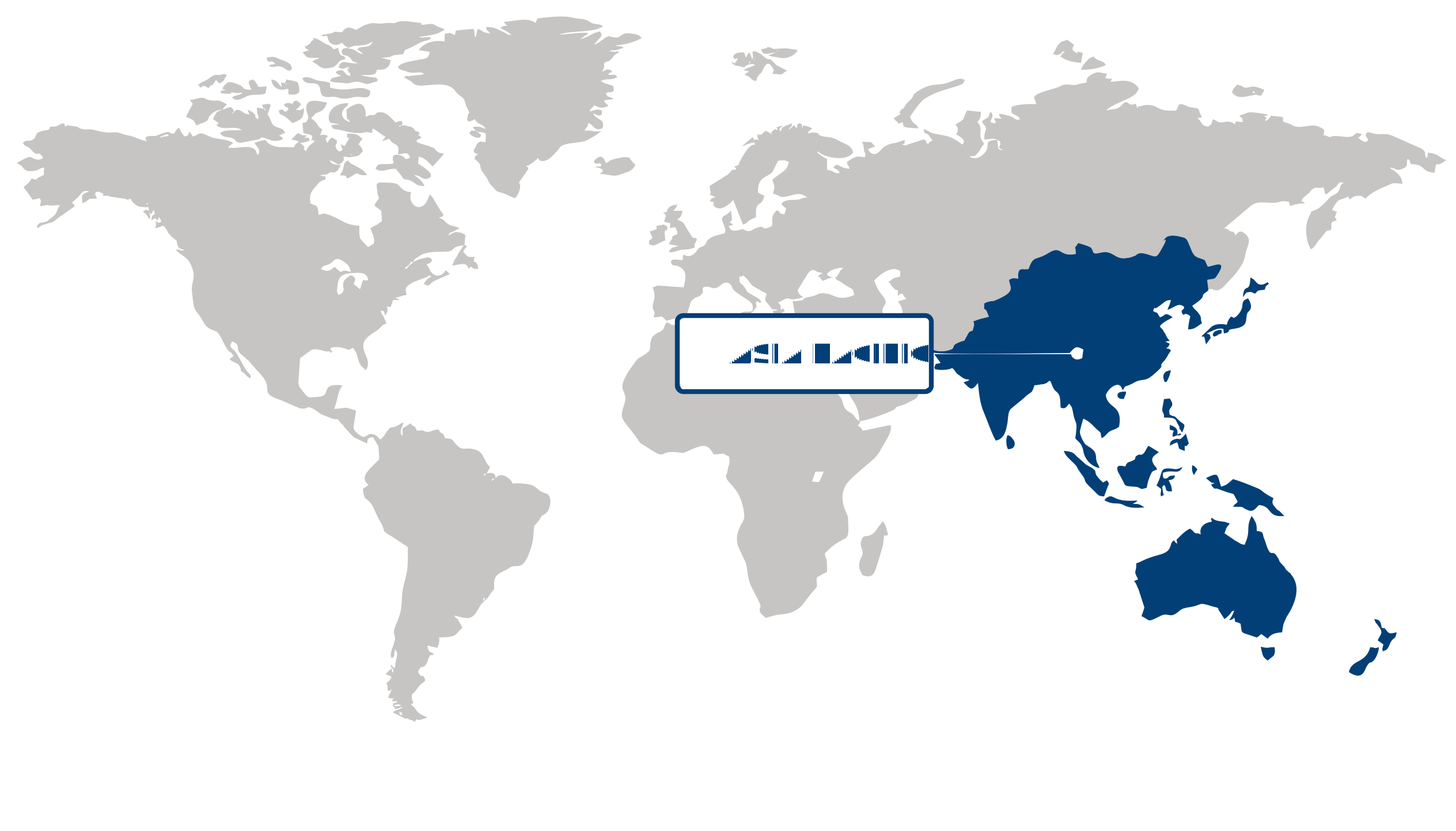
The Asia Pacific phthalocyanine blue market captured over 44% of the global share in 2025, establishing it as both the largest and fastest-growing region, with a robust CAGR of 6.2%. This dominance is largely driven by the high concentration of textile and plastic manufacturing facilities across the region, which fuels consistent demand for phthalocyanine blue pigments used in dyes and coatings. Additionally, evolving consumer preferences toward vibrant, durable coloration in consumer goods, combined with increased industrial output and investments in advanced manufacturing techniques, further strengthen the market. For instance, the Ministry of Commerce of the People's Republic of China highlights ongoing industrial policy support for textile and plastic sectors. The region’s ability to adapt to sustainability norms and regulatory frameworks while leveraging supply chain integration underscores its resilience. Given these dynamics, Asia Pacific presents significant growth opportunities, particularly as expanding middle-class consumption and export-oriented manufacturing continue to elevate pigment requirements.
Japan stands as a pivotal hub in the Asia Pacific phthalocyanine blue market, characterized by its sophisticated manufacturing base and stringent environmental standards. The country’s focus on innovation in textile technology and polymer composites drives demand for high-quality pigments that meet durable and eco-friendly criteria. Companies like DIC Corporation exemplify this, investing heavily in sustainable pigment development that aligns with Japan’s regulatory emphasis on minimizing environmental impact. Meanwhile, China plays a critical role as a production powerhouse with expansive textile and plastic industries supported by large-scale manufacturing infrastructure. The China National Textile and Apparel Council underscores robust growth in textile exports, reinforcing pigment demand. Both nations’ complementary strengths enhance regional competitiveness, with Japan leading in quality innovation and China providing scale, collectively reinforcing Asia Pacific’s leading position in the phthalocyanine blue market.
North America Market Analysis:
North America held a substantial share in the phthalocyanine blue market, driven predominantly by its advanced manufacturing infrastructure and high demand from automotive coatings and printing inks industries. The region’s emphasis on product quality and regulatory compliance, reflected in stringent environmental standards enforced by the U.S. Environmental Protection Agency (EPA), has propelled innovation towards sustainable pigment formulations. Additionally, North America’s well-established supply chain networks and investments in R&D by key players like BASF and DIC Corporation further contribute to its robust market presence. As demand patterns increasingly favor eco-friendly and durable colorants for industrial and consumer applications, North America is poised to capitalize on evolving manufacturing technologies and digital integration in production processes, solidifying its position as a major hub in the phthalocyanine blue market.
The U.S. is the principal contributor to North America’s strong phthalocyanine blue market, benefiting from extensive industrial activity and innovation-driven demand. Market participants, including Chemours and Sun Chemical, leverage the country’s robust intellectual property infrastructure and growing preference for green chemistry solutions, aligning with regulations such as California’s Proposition 65. This regulatory landscape encourages manufacturers to develop low-toxicity, high-performance pigments favored in automotive and packaging sectors. Furthermore, the U.S.’s dense network of distribution channels and skilled workforce enhances market responsiveness to shifting consumer preferences and rapid technological advancements. Consequently, the U.S. market dynamics reinforce North America’s leadership by fostering an ecosystem conducive to sustainable growth and competitive differentiation in the phthalocyanine blue market.
Europe Market Trends:
Europe held a commanding share in the phthalocyanine blue market, driven by the region’s robust manufacturing base and stringent environmental policies that encourage the adoption of sustainable dyes. The increasing preference for eco-friendly pigments within Europe’s automotive and construction sectors has bolstered demand, supported by regulatory frameworks such as the European Chemicals Agency’s REACH regulations, which promote safer chemical use. Additionally, Europe's advanced logistics infrastructure allows efficient distribution of phthalocyanine blue products across the continent, facilitating timely supply chain operations for key end-users. Industry leaders like BASF have recently enhanced their product lines to address evolving consumer and regulatory demands, as shown in their Q4 2023 press releases. These factors create a dynamic environment ripe for innovation, positioning Europe to capitalize on increasing investments in green technology and digitalization in pigment production.
Germany serves as a pivotal market in the phthalocyanine blue market due to its strong industrial manufacturing ecosystem that sustains significant demand for high-performance pigments. The growing automotive and electronics sectors in Germany have driven manufacturers to seek high-quality, durable colorants that meet both performance and regulatory standards. Evonik Industries’ recent announcement of expanding specialty pigment capabilities in Germany highlights the country’s role in scaling advanced pigment innovation. Germany’s skilled workforce and emphasis on R&D further enhance its capacity to develop next-generation phthalocyanine blue products, which supports the broader European market by serving as a hub for technical refinement and product quality assurance.
France maintains a notable presence in the phthalocyanine blue market, fueled by its emphasis on green chemistry and sustainable manufacturing practices. The national policies favoring renewable materials and stricter emission standards have prompted pigment manufacturers to innovate within eco-friendly formulations. Companies like Arkema, headquartered in France, recently reported progress in developing bio-based pigments aligned with these objectives, illustrating the country’s proactive stance toward environmental stewardship in pigments. This positions France as a crucial contributor to Europe’s sustainability-driven demand, augmenting regional opportunities through its leadership in integrating regulatory compliance with product innovation in phthalocyanine blue applications.
| Parameter | North America | Asia Pacific | Europe | Latin America | MEA |
|---|---|---|---|---|---|
| Innovation Hub i Scale Nascent Developing Advanced | |||||
| Cost-Sensitive Region i Scale Low Medium High | |||||
| Regulatory Environment i Scale Restrictive Neutral Supportive | |||||
| Demand Drivers i Scale Weak Moderate Strong | |||||
| Development Stage i Scale Emerging Developing Developed | |||||
| Adoption Rate i Scale Low Medium High | |||||
| New Entrants / Startups i Scale Sparse Moderate Dense | |||||
| Macro Indicators i Scale Weak Stable Strong |
Segment Leadership and Growth Trends
Phthalocyanine Blue Market Share (%), by Product Formulation, 2026
Go beyond the chart, access full insights & data tables
Request Free Sample ReportWater-soluble phthalocyanine blue dominated the phthalocyanine blue market in 2025, buoyed by the rising adoption of water-based pigment formulations in coatings, inks, and plastics. This segment’s leadership stems from evolving regulatory mandates favoring low-VOC and eco-friendly products, such as those promoted by the U.S. Environmental Protection Agency, which incentivize water-based systems for reduced environmental impact. Customer preferences increasingly prioritize sustainability and compliance, encouraging manufacturers to innovate in dispersibility and colorfastness of water-soluble variants. Industry leaders like BASF have emphasized product lines that cater to these trends, reinforcing the segment’s competitive edge. For both incumbents and new entrants, water-soluble formulations present strategic opportunities in diverse applications and greener product portfolios. Given ongoing regulatory tightening and end-user demand for safer, high-performance pigments, this segment is poised to retain its market prominence moving forward.
Analysis by Quality Grade
High-grade phthalocyanine blue represented the largest share in the phthalocyanine blue market in 2025, driven primarily by surging demand for pigments with superior purity and consistency in premium coatings and advanced printing applications. The emphasis on higher-grade materials aligns with manufacturers’ goals for richer color intensity and enhanced durability, which are critical for automotive, aerospace, and luxury packaging applications. Organizations such as the American Coatings Association endorse the use of high-purity pigments to meet stringent performance and environmental standards, reinforcing market confidence. This segment benefits from evolving technological manufacturing processes and heightened industrial quality control that assure product consistency. Both established specialists and disruptive innovators can capitalize on these quality requirements to differentiate offerings. The segment’s relevance remains strong as premium application areas continue to expand and prioritize reliability.
Analysis by Distribution Channel
Distributors held the largest share in the phthalocyanine blue market in 2025, facilitated by their role in expanding global distribution networks that enhance product availability and deepen market penetration. Their expansive reach ensures timely delivery and localized service, which appeals to diverse customer bases spanning industrial manufacturers to small-scale processors. Leading distributors such as Brenntag and Univar Solutions have invested in logistics infrastructure and digital platforms, streamlining procurement and inventory management for pigment customers worldwide. This segment’s prominence reflects shifting supply chain dynamics favoring network agility and risk mitigation amid global trade fluctuations. For market players, collaborating with established distribution partners offers strategic advantages in scaling reach and customer relationships. Given the continued complexity of international markets and supply chains, distributors are well-positioned to sustain their central role in enabling market access.
| Segment | Sub-Segment | Largest Segment | Fastest Growing |
|---|---|---|---|
| Product Formulation | Water-soluble Phthalocyanine Blue, Oil-soluble Phthalocyanine Blue, Powder Form, Liquid Form | ||
| Quality Grade | Standard Grade, High-grade, Food-Grade, Eco-friendly Grade | ||
| Distribution Channel | Direct Sales, Distributors, Online Retailers, Specialty Stores | ||
| Application Type | Architectural Coatings, Industrial Coatings, Automotive Coatings, Graphic Arts Applications, Specialty Applications | ||
| End-Use Industry | Paints and Coatings, Plastics, Pulp and Paper, Textiles, Cosmetics and Personal Care, Printing Inks |
Unlock insights tailored to your business with our bespoke market research solutions.
Click to get your customized report now.
Competitive Landscape and Market Positioning
The competitive environment within the phthalocyanine blue market is characterized by active innovation and strategic resource alignment among top firms. Leading companies have engaged in initiatives that strengthen both upstream pigment synthesis and downstream application development, fostering differentiation and market responsiveness. Partnerships and refined supply chain management have enhanced raw material accessibility and product customization. Additionally, significant investments in research and development have underpinned the introduction of variants with improved color strength, durability, and environmental profiles. This dynamic interplay of enhancing technical capabilities while broadening geographic and application reach has intensified competitive positioning, compelling industry players to continuously adapt through targeted expansions and technology integration.
Strategic / Actionable Recommendations for Regional Players
In North America, leveraging established industrial clusters with advanced manufacturing ecosystems offers opportunities to deepen collaborative product innovation. Aligning with technology-driven end-users in automotive and electronics sectors can expedite the adoption of phthalocyanine blue variants optimized for high-performance requirements. Exploring synergies with materials innovation hubs could also facilitate expedited scale-up of novel pigment formulations, thereby enhancing competitiveness.
For the Asia Pacific region, where demand growth clusters in packaging and printing are notable, aligning more closely with regional ink and coating manufacturers can unlock tailored product solutions. Capitalizing on emerging digital printing technologies and sustainable pigment options may meet evolving customer preferences, while forging strategic links with technology centers in China and Japan will help local players stay abreast of rapid technological developments.
Within Europe, fostering partnerships centered on regulation-compliant and eco-friendly pigment solutions aligns with rising environmental standards. Engaging with chemical research institutions and industry consortia focused on sustainability can accelerate access to advanced production methods. Additionally, targeting niche high-purity and specialty pigment applications supports differentiation, enabling European companies to sustain their influence amid intense competition.
| Company | Market Share | Company Revenue | Revenue CAGR (%) | Product Portfolio | Geographic Presence | Innovation / R&D Focus | Strategic Developments |
|---|---|---|---|---|---|---|---|
| No companies available. | |||||||
Customize Your Report
Explore examples of how this report can be tailored to different research needs, including custom segments, additional topics or chapters, and related reports. Click a section of the wheel or its numbered marker to explore the available options.
Phthalocyanine Blue Market — Custom Segments
| Segment | Sub-Segment |
|---|---|
| No segment data available. | |
Phthalocyanine Blue Market — Custom TOC
| Custom Chapter | Chapter Details | ||
|---|---|---|---|
| No custom TOC data available. | |||
Need a different cut of the data?
Request Custom ResearchWhat is the current revenue of the phthalocyanine blue market?
How is the phthalocyanine blue industry size expected to evolve during the forecast period?
Which part of the world represents the largest segment of the phthalocyanine blue market?
Which region is experiencing the fastest growth in the phthalocyanine blue sector?
Why does water-soluble phthalocyanine blue sub-segment dominate the product formulation segment of phthalocyanine blue sector?
How much is the high-grade segment expected to grow in the phthalocyanine blue industry beyond 2025?
What factors give distributors segment a competitive edge in the phthalocyanine blue sector?
Which is the largest sub-segment within the application type segment for phthalocyanine blue industry?
Why does paints and coatings sub-segment dominate the end-use industry segment of phthalocyanine blue sector?
Which companies are driving growth in the phthalocyanine blue landscape?
Our Clients
"The report helped us understand emerging consumer trends in our product category. It clarified where to focus innovation for the next product launch."
LyondellBasell
"The regional forecast section was incredibly useful. We were able to identify two new potential partners in Europe thanks to the vendor mapping you included."
SABIC
"We appreciated how actionable the recommendations were. It guided us to improve supply chain resilience."
Olin Corporation
Our Research Team & Methodology
Every Fundamental Business Insights report is built by a dedicated vertical research team, validated through a structured primary-and-secondary methodology, and reviewed for accuracy before it reaches you.
Research Team Overview
Prepared by the Chemicals & Materials Research Team
Delivery
Published
Demand
Available
Support
Trust & Compliance
Research Intelligence
| Source | Reference |
|---|---|
| American Chemistry Council (ACC) | www.americanchemistry.com |
| European Chemical Industry Council (Cefic) | cefic.org |
| International Council of Chemical Associations (ICCA) | icca-chem.org |
| European Chemicals Agency (ECHA) | echa.europa.eu |
| U.S. Environmental Protection Agency (EPA) | www.epa.gov |
| ASTM International | www.astm.org |
| International Organization for Standardization (ISO) | www.iso.org |
| National Institute of Standards and Technology (NIST) | www.nist.gov |
| Plastics Industry Association (PLASTICS) | www.plasticsindustry.org |
| European Biplastics | www.european-bioplastics.org |
| The Adhesive and Sealant Council (ASC) | www.ascouncil.org |
| National Association of Corrosion Engineers (AMPP) | www.ampp.org |
| Society of Plastics Engineers (SPE) | www.4spe.org |
| International Fertilizer Association (IFA) | www.fertilizer.org |
| CropLife International | croplife.org |
| Packaging Europe | packagingeurope.com |
| Flexible Packaging Association (FPA) | www.flexpack.org |
| Battery Council International (BCI) | batterycouncil.org |
| International Copper Association (ICA) | internationalcopper.org |
| World Steel Association | worldsteel.org |
Research Workflow & Quality Assurance
Data Collection
Verified information gathered through primary and secondary research.
Data Triangulation
Cross-validation using multiple independent data sources.
Forecast Modelling
Market estimates developed using historical trends and analytical models.
Analyst Validation
Findings reviewed by domain experts for accuracy and consistency.
Editorial & Quality Review
Final editorial, quality, and compliance checks before publication.
Final Publication
Released after successful completion of the internal review process.
Report Coverage
📊 Market Assessment
- Market Size & Forecast
- Market Segmentation
- Regional Analysis
- Growth Drivers & Challenges
- Market Dynamics
🏢 Competitive Intelligence
- Competitive Landscape
- Company Profiles
- Competitive Benchmarking
- Mergers & Acquisitions
- Market Share Analysis or Key Company Strategies
🔍 Strategic Analysis
- Value Chain Analysis
- Porter's Five Forces
- PESTLE Analysis
- Pricing Trends
- Supply-Demand Analysis
🚀 Future Outlook
- Technology Landscape
- Regulatory Landscape
- Investment & Funding Landscape
- Emerging Opportunities
- Future Market Outlook
Have a question about this report or need a custom scope?
Request Customization