Neem Extract Market Size & Forecasts 2026-2035, By Segments (Application), Growth Opportunities, Innovation Landscape, Regulatory Shifts, Strategic Regional Insights (U.S., Japan, China, South Korea, UK, Germany, France), and Competitive Dynamics (Azadirachta Enterprises, Patanjali Ayurved, Himalaya Global Holdings, Arista Biologicals, Moris International)
Market Size and Growth Outlook
Neem Extract Market size is projected to grow steadily from USD 2.19 billion in 2025 to USD 5.94 billion by 2035, demonstrating a CAGR exceeding 10.5% through the forecast period (2026-2035). The 2026 revenue is estimated at USD 2.39 billion.
Get more details on this report
Request Free Sample ReportNeem Extract Market Intelligence Snapshot
Regional Market Dynamics
Segment Momentum
Market Expansion Drivers
Leading Market Participants
Global Market Forecast Snapshot
Market Outlook
Regional and Segment Outlook
Market Growth Drivers and Industry Trends
Increasing consumer preference for natural and herbal health solutions is reshaping the neem extract market, driven by heightened health consciousness and a shift away from synthetic chemicals. According to the World Health Organization (WHO), the global trend towards traditional and plant-based medicines is gaining momentum, with neem's well-documented antimicrobial and anti-inflammatory properties garnering renewed interest. This behavioral shift encourages manufacturers to innovate and formulate neem-based products targeting wellness-conscious demographics. For established companies, leveraging this trend offers opportunities to differentiate through certification and product transparency, while new entrants can capitalize on niche segments like organic supplements. As regulatory bodies such as the U.S. FDA and the European Medicines Agency emphasize safety and efficacy for herbal claims, industry participants that align with these standards will strengthen trust and broaden market access.
Expansion of Neem-Based Personal Care and Pharmaceutical Products
The diversification of neem extract applications into personal care and pharmaceutical sectors is a key catalyst for market evolution. Corporate announcements from firms like Dabur India and Himalaya Herbal Healthcare highlight significant investments in neem-infused skincare, dental, and therapeutic formulations that tap into consumers’ demand for multifunctional natural products. This broadening product portfolio is supported by innovative extraction technologies improving purity and bioavailability, which enhance product effectiveness. Additionally, collaboration with research institutions fosters validated claims, elevating market credibility. For market incumbents, this expansion enables portfolio diversification and premium product development, while newcomers can explore specialized formulations in dermatology or oral care. Continued R&D and adherence to evolving pharmaceutical regulations will underpin sustainable growth in the neem extract market’s expanding application horizon.
Growth of E-Commerce Channels in Emerging Markets
The rapid growth of e-commerce in emerging markets such as India, Southeast Asia, and Latin America is transforming distribution dynamics in the neem extract market. Companies including Patanjali Ayurved and Emami Ltd. have reported increased sales revenues through direct-to-consumer digital platforms, reflecting rising internet penetration and consumer comfort with online purchasing. This channel enables wider reach, faster product launches, and personalized marketing strategies, particularly targeting younger, tech-savvy consumers seeking natural and herbal goods. For established firms, digitization facilitates enhanced customer engagement and data-driven product development. Meanwhile, startups gain cost-effective access to markets previously constrained by traditional retail infrastructures. Given evolving digital payment ecosystems and improving logistics reported by the World Bank’s Global Findex database, e-commerce-driven expansion will remain a pivotal growth avenue for neem extract suppliers.
Industry Restraints:
Stringent Regulatory Frameworks on Herbal Extracts
The neem extract market faces significant hurdles due to evolving and often fragmented regulatory standards across key regions. Regulatory bodies like the U.S. FDA and the European Medicines Agency impose rigorous safety and efficacy testing for botanical extracts used in cosmetics, pharmaceuticals, and food supplements, extending product development timelines and inflating costs. For instance, the complexities around obtaining GRAS (Generally Recognized As Safe) status in the U.S. delay market entry for new neem formulations, as highlighted by the American Botanical Council. This environment challenges both incumbents and new entrants to invest heavily in compliance, limiting smaller players with constrained resources. Going forward, the increasing scrutiny on herbal product claims and traceability is expected to sustain high market entry barriers, compelling firms to prioritize regulatory navigation and collaborative engagement with authorities to innovate within compliance frameworks.
Supply Chain Disruptions in Raw Neem Procurement
The neem extract industry is heavily reliant on consistent access to high-quality neem seeds and leaves, primarily sourced from India and parts of Southeast Asia, regions prone to climatic variability and logistical bottlenecks. The Food and Agriculture Organization (FAO) reports irregular monsoon patterns have recently led to fluctuating neem yields, reducing raw material availability and causing price volatility. Additionally, infrastructure challenges in rural harvesting areas complicate timely collection and transport, undermining production schedules for manufacturers. These supply-side constraints disproportionately affect smaller processors lacking diversified sourcing channels, limiting their scalability and responsiveness. Given ongoing climate uncertainties and persistent supply chain inefficiencies, market participants must increasingly adopt integrated sourcing strategies and invest in sustainable harvesting practices to mitigate disruptions and ensure steady progression in product availability and innovation.
| Growth Driver | Impact on CAGR | Regulatory Influence | Geographic Relevance | Adoption Rate | Impact Timeline |
|---|---|---|---|---|---|
| Rising awareness of natural and herbal health products | 3.50% | Short term (≤ 2 yrs) | North America, Europe; Spillover: Asia Pacific | Low | Fast |
| Expansion of neem-based personal care and pharmaceutical products | 3.00% | Medium term (2–5 yrs) | Asia Pacific, Europe; Spillover: North America | Medium | Moderate |
| Growth of e-commerce channels in emerging markets | 2.00% | Long term (5+ yrs) | Asia Pacific, Latin America; Spillover: MEA | Low | Slow |
Unlock insights tailored to your business with our bespoke market research solutions.
Click to get your customized report now.
Regional Demand Dynamics
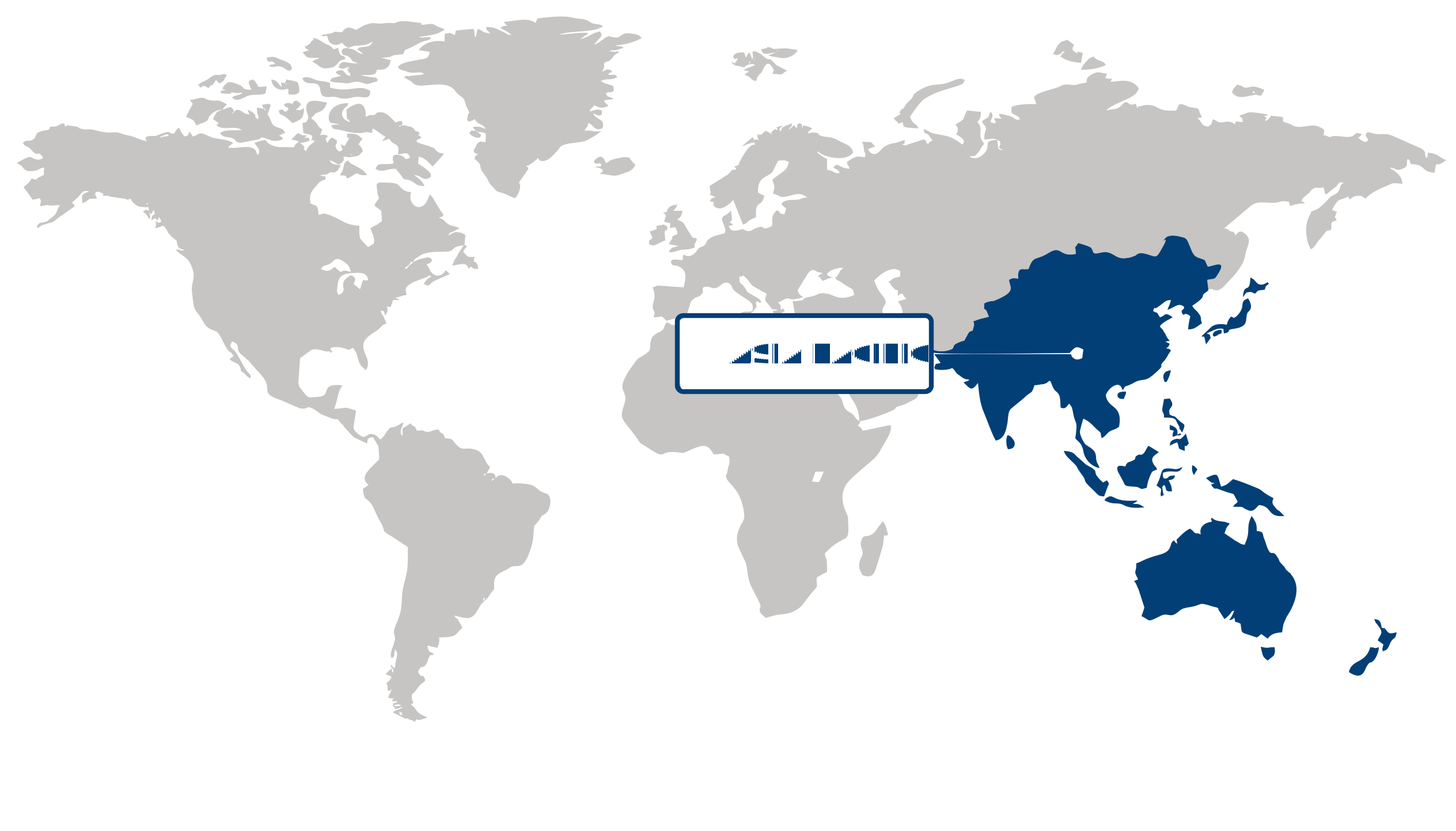
The Asia Pacific neem extract market captured over 56% of the global share in 2025, emerging as the largest and fastest-growing region with a robust 12.6% CAGR. This dominance stems primarily from the region's entrenched adoption of traditional medicine and abundant availability of neem raw materials, particularly in India and Southeast Asian countries. Governments like India’s Ministry of AYUSH have actively promoted neem-based remedies, fostering widespread acceptance. Additionally, the rise in consumer preference for natural and sustainable products across Asia Pacific supports market expansion. Industry players benefit from cost-effective supply chains and technological integration in herbal processing, illustrated by the initiatives from companies such as Tata Chemicals. These dynamics, coupled with strong regional economic resilience and cultural affinity towards neem, position Asia Pacific as a key growth arena with ongoing opportunities for investors and strategists seeking long-term value in neem extract.
Japan anchors the Asia Pacific neem extract market with its strategic focus on innovation within natural health products and functional cosmetics. The country’s stringent regulatory framework, led by the Pharmaceuticals and Medical Devices Agency (PMDA), encourages high standards in neem extract application, promoting consumer trust and broad acceptance. Japanese consumers’ increasing inclination towards preventive healthcare and organic skincare solutions drives demand for premium neem extracts. Companies like Kaneka Corporation leverage advanced extraction technologies to introduce novel neem-based formulations, enhancing product efficacy and appeal. Japan's integration of tradition with modern technology exemplifies how tailored innovation fosters niche market growth, reinforcing Asia Pacific’s regional leadership and attracting targeted investments in neem extract product development.
China plays a pivotal role in the Asia Pacific neem extract market through its extensive cultivation capacity and expanding herbal pharmaceutical sector. The government's support via the China National Medicinal Materials Administration (CNMMA) has improved quality standards and streamlined supply chains, ensuring consistent neem raw material availability. Increasing urbanization and health awareness have pushed Chinese consumers toward natural remedies, with neem gaining traction in both traditional and contemporary wellness products. Companies like Guangxi Yulin Pharmaceutical capitalize on local neem sourcing while investing in R&D to diversify applications into agriculture and personal care. China’s scale and evolving consumer landscape complement Japan’s innovation, collectively reinforcing Asia Pacific’s growth potential and attracting multinational players aiming to consolidate regional presence in neem extract.
North America Market Analysis:
North America emerged as the fastest-growing region in the neem extract market, registering a robust CAGR of 12.8%. This rapid expansion is primarily driven by burgeoning demand for natural and sustainable personal care and agricultural products, as consumers increasingly prioritize health and environmental safety. Companies like The Scotts Miracle-Gro Company are accelerating the adoption of neem-based biopesticides, capitalizing on shifting preferences toward organic farming inputs amid tightening regulatory scrutiny on chemical pesticides by the U.S. Environmental Protection Agency (EPA). Furthermore, the region’s strong infrastructure and advanced logistics networks enhance supply chain resilience, facilitating timely distribution of neem extracts. Heightened awareness through platforms such as the Organic Trade Association reinforces consumer education and adoption. North America’s proclivity for innovation and stringent regulatory frameworks will continue fostering opportunities in neem extract applications, underpinning sustainable growth trajectories across personal care and agriculture sectors.
The U.S. plays a pivotal role in North America’s neem extract market by spearheading demand for eco-friendly solutions, particularly in the personal care and agricultural domains. Regulatory measures enforced by the EPA against synthetic pesticides have amplified the shift toward neem-based alternatives, supporting companies like Marrone Bio Innovations in scaling biopesticide production. U.S. consumers’ preference for clean-label and organic personal care products invigorates market growth, with retail giants such as Whole Foods Market driving product accessibility. Additionally, public initiatives promoting sustainable agriculture and increased funding for biopesticide research under the USDA fortify innovation pipelines. This alignment between regulatory support, consumer preferences, and industry innovation positions the U.S. as a critical strategic epicenter, reinforcing North America’s leadership and underpinning long-term value creation in the neem extract market.
Europe Market Trends:
Europe maintained notable presence in the neem extract market, driven by increasing consumer preference for natural and sustainable agricultural inputs and personal care products. The region’s established regulatory frameworks supporting organic farming and stringent chemical pesticide restrictions have shifted demand toward botanical solutions like neem extract. Companies such as Azelis, a European specialty chemicals distributor, recently expanded their portfolio to include neem-based biopesticides, reflecting operational advancements catering to eco-conscious consumers. Moreover, Europe’s well-integrated supply chains and digitized distribution networks enable efficient market penetration and reduced lead times. Sustainable agriculture initiatives endorsed by the European Commission further bolster the market’s growth potential. As shifting consumer spending patterns favor clean-label and environmentally responsible products, Europe's neem extract market is well-positioned for continued moderate expansion, presenting compelling opportunities for industry stakeholders aiming to capitalize on the convergence of sustainability priorities and advancing regulatory support.
Germany plays a pivotal role in Europe’s neem extract market, anchored by its robust organic farming sector and growing demand for eco-friendly pest management solutions. The German Federal Agency for Agriculture and Food (BLE) has highlighted increasing adoption of biopesticides, including neem extracts, in response to stringent pesticide regulations under the German Plant Protection Act. Leading agritech firms such as Biobest Group have advanced innovative neem-based formulations, leveraging Germany’s high R&D capacity and strong industrial base. This demand-driven innovation, coupled with Germany’s consumer preference for sustainable personal care products, solidifies its position as a growth nucleus within Europe. Strategically, Germany’s trajectory underscores the region-wide shift toward greener supply chain integration and product diversification in the neem extract market.
France contributes significantly to Europe’s neem extract market, propelled by evolving agricultural policies supporting integrated pest management (IPM) and the rising consumer inclination toward organic cosmetics enriched with neem derivatives. The French Ministry of Agriculture has actively promoted biopesticides in recent reforms, encouraging wider neem extract utilization in farming. Additionally, French personal care brands like Yves Rocher have prominently incorporated neem extract in formulations, enhancing consumer acceptance and market pull. High competitive intensity in France fosters product innovation and quicker adoption cycles, supported by efficient logistics and distribution. This dynamic reinforces France’s strategic role in amplifying demand and innovation within Europe, thereby enhancing regional growth prospects for neem extract applications across agrochemical and cosmetic sectors.
| Parameter | North America | Asia Pacific | Europe | Latin America | MEA |
|---|---|---|---|---|---|
| Innovation Hub i Scale Nascent Developing Advanced | |||||
| Cost-Sensitive Region i Scale Low Medium High | |||||
| Regulatory Environment i Scale Restrictive Neutral Supportive | |||||
| Demand Drivers i Scale Weak Moderate Strong | |||||
| Development Stage i Scale Emerging Developing Developed | |||||
| Adoption Rate i Scale Low Medium High | |||||
| New Entrants / Startups i Scale Sparse Moderate Dense | |||||
| Macro Indicators i Scale Weak Stable Strong |
Segment Leadership and Growth Trends
Neem Extract Market Share (%), by Application, 2026
Go beyond the chart, access full insights & data tables
Request Free Sample ReportThe agriculture segment held the largest share in the neem extract market in 2025, primarily due to the rising adoption of organic and sustainable farming practices that enhance neem extract use in pest control solutions. Growing consumer demand for residue-free and eco-friendly agricultural produce has propelled farmers to seek bio-based alternatives, making neem extract a preferred choice. Regulatory endorsements from bodies like the U.S. Environmental Protection Agency (EPA) for neem-based biopesticides underline its market acceptance and safety profile. Companies such as Tata Chemicals have actively expanded their neem extract-based agricultural offerings, further bolstering supply chains. This segment creates strategic openings for both legacy agrochemical firms shifting to natural inputs and nimble startups innovating in biopesticide formulations. Given the sustained emphasis on environmental regulations and organic farming incentives, the agriculture segment is positioned to maintain its leadership in the neem extract market in the near to medium term.
| Segment | Sub-Segment | Largest Segment | Fastest Growing |
|---|---|---|---|
| Application | Pharmaceutical, Personal Care, Agriculture, Animal Feed, Others |
Competitive Landscape and Market Positioning
The competitive landscape is characterized by these players refining their core competencies through concerted efforts such as strategic integrations, introduction of novel formulations, and enhancement of bioactive concentration processes. Investment in research networks and technology-driven product enhancements foster differentiation, while selective collaborations broaden geographical outreach and operational capabilities. This evolution not only heightens market agility and responsiveness but also intensifies competitive pressure, compelling participants to elevate product efficacy, sustainability credentials, and regulatory compliance, thereby shaping leadership in multiple niche categories.
Strategic / Actionable Recommendations for Regional Players
In North America, players can fortify their presence by partnering with agricultural technology firms to incorporate neem-based bio-pesticides in organic farming, leveraging emerging bioprocessing innovations for higher purity extracts. Enhancing collaboration with wellness and pharmaceutical sectors could widen application scopes and consumer acceptance.
Within the Asia Pacific, strengthening engagements with traditional medicine institutions and integrating digital platforms for product traceability and consumer education can amplify market penetration. Focusing on rapidly expanding segments such as natural personal care products aligns with evolving consumer preferences and regulatory encouragements.
European players might consider alliances with sustainability-focused enterprises to improve environmental impact messaging and certification attainment. Emphasizing research collaborations to develop multifunctional neem formulations targeting both health and agritech applications can sharpen competitive edges in sophisticated markets highly sensitive to quality and provenance.
| Company | Market Share | Company Revenue | Revenue CAGR (%) | Product Portfolio | Geographic Presence | Innovation / R&D Focus | Strategic Developments |
|---|---|---|---|---|---|---|---|
| No companies available. | |||||||
Industry Development/News
| Company Name | Date | Key Development |
|---|
Customize Your Report
Explore examples of how this report can be tailored to different research needs, including custom segments, additional topics or chapters, and related reports. Click a section of the wheel or its numbered marker to explore the available options.
Neem Extract Market — Custom Segments
| Segment | Sub-Segment |
|---|---|
| No segment data available. | |
Neem Extract Market — Custom TOC
| Custom Chapter | Custom Details | ||
|---|---|---|---|
| No custom TOC data available. | |||
Need a different cut of the data?
Request Custom ResearchHow is the neem extract industry expected to grow over the next 10 years?
Which region captures the largest portion of the neem extract market value?
Which area is showing the greatest surge in neem extract sector?
What factors give agriculture segment a competitive edge in the neem extract sector?
Who holds a significant market share in the neem extract landscape?
Our Clients
"The report provided a thorough look at market trends, technological advancements, and the competitive landscape. The depth of insights was really valuable."
ITC Limited
"We would highly recommend Fundamental Business Insights & Consulting to anyone looking for reliable, detailed, and comprehensive market research in the Food industry."
Tyson Foods
"The clarity and presentation of the information were commendable. The report was delivered timely, which made the overall experience smooth and convenient."
Mondelēz International
Our Research Team & Methodology
Every Fundamental Business Insights report is built by a dedicated vertical research team, validated through a structured primary-and-secondary methodology, and reviewed for accuracy before it reaches you.
Research Team Overview
Prepared by the Food & Beverage Research Team
Delivery
Published
Demand
Available
Support
Trust & Compliance
Research Domains
10 coverage areasResearch Intelligence
| Source | Reference |
|---|---|
| Food and Agriculture Organization (FAO) | www.fao.org |
| World Health Organization (WHO) | www.who.int |
| U.S. Food & Drug Administration (FDA) | www.fda.gov |
| European Food Safety Authority (EFSA) | www.efsa.europa.eu |
| U.S. Department of Agriculture (USDA) | www.usda.gov |
| Codex Alimentarius Commission | www.fao.org/fao-who-codexalimentarius |
| International Organization for Standardization (ISO) | www.iso.org |
| AOAC INTERNATIONAL | www.aoac.org |
| Institute of Food Technologists (IFT) | www.ift.org |
| International Dairy Foods Association (IDFA) | www.idfa.org |
| International Sweeteners Association (ISA) | www.sweeteners.org |
| International Probiotics Association (IPA) | internationalprobiotics.org |
| Good Food Institute (GFI) | gfi.org |
| American Feed Industry Association (AFIA) | www.afia.org |
| International Feed Industry Federation (IFIF) | ifif.org |
| Specialty Food Association (SFA) | www.specialtyfood.com |
| Brewers Association | www.brewersassociation.org |
| International Bottled Water Association (IBWA) | bottledwater.org |
| International Alliance for Dietary/Food Supplement Associations (IADSA) | www.iadsa.org |
| OECD Agriculture & Food | www.oecd.org/agriculture |
Research Workflow & Quality Assurance
Data Collection
Verified information gathered through primary and secondary research.
Data Triangulation
Cross-validation using multiple independent data sources.
Forecast Modelling
Market estimates developed using historical trends and analytical models.
Analyst Validation
Findings reviewed by domain experts for accuracy and consistency.
Editorial & Quality Review
Final editorial, quality, and compliance checks before publication.
Final Publication
Released after successful completion of the internal review process.
Report Coverage
📊 Market Assessment
- Market Size & Forecast
- Market Segmentation
- Regional Analysis
- Growth Drivers & Challenges
- Market Dynamics
🏢 Competitive Intelligence
- Competitive Landscape
- Company Profiles
- Competitive Benchmarking
- Mergers & Acquisitions
- Market Share Analysis or Key Company Strategies
🔍 Strategic Analysis
- Value Chain Analysis
- Porter's Five Forces
- PESTLE Analysis
- Pricing Trends
- Supply-Demand Analysis
🚀 Future Outlook
- Technology Landscape
- Regulatory Landscape
- Investment & Funding Landscape
- Emerging Opportunities
- Future Market Outlook
Have a question about this report or need a custom scope?
Request Customization