Mother Care Products Market Size & Growth Forecast 2027–2036, By Segments (Distribution Channel, Price Range, Type), Regional Demand Trends (North America, Asia Pacific, Europe), Key Country Insights (U.S., Japan, South Korea, Germany, France, Italy), and Competitive Landscape
Market Size and Growth Outlook
Mother Care Products Market size stood at USD 13.7 Billion in 2026 and is predicted to grow at 5.62% CAGR from 2027 to 2036, exceeding USD 23.67 Billion by 2036. The industry revenue for 2027 is calculated at USD 14.35 Billion.
Get more details on this report
Request Free Sample ReportMother Care Products Market Intelligence Snapshot
Regional Market Dynamics
- Asia Pacific held 37.8% in 2026, supported by rising maternal healthcare awareness, expanding healthcare access, improving purchasing power, and broader availability of specialized products.
- Growth is being reinforced by healthcare infrastructure development, greater maternal well-being awareness, urbanization, and expanding organized retail and digital commerce access.
Segment Momentum
- Offline channels accounted for 61.48% of the market in 2026 because consumers prefer evaluating products in person while benefiting from personalized assistance, immediate availability, and product comparisons at specialty stores, pharmacies, and supermarkets.
- Postpartum care is the fastest-growing type segment as demand rises for products supporting maternal recovery, breastfeeding, rehabilitation, and post-delivery well-being, reinforced by expanding healthcare education and specialized recovery solutions.
Market Expansion Drivers
- Increasing postpartum care awareness driving demand for maternal health and recovery products
- Rising health and safety consciousness boosting adoption of premium mother care essentials
- Cultural shift toward professional maternal wellness care increasing structured product consumption
Leading Market Participants
- Major players in the mother care products market include Johnson & Johnson (United States), Procter & Gamble Company (United States), Nestlé S.A. (Switzerland), Kimberly-Clark Corporation (United States), Beiersdorf AG (Germany), Essity AB (Sweden), Pigeon Corporation (Japan), Himalaya Global Holdings Ltd. (India), Medela AG (Switzerland)
Global Market Forecast Snapshot
Market Outlook
- 2026 Market Size: USD 13.7 Billion
- 2027 Estimated Market Size: USD 14.35 Billion
- Projected Market Size: USD 23.67 Billion by 2036
- Growth Forecast: 5.62% CAGR (2027-2036)
Regional and Segment Outlook
- Leading Regional Market: Asia Pacific
- High-Growth Regional Hub: Asia Pacific
- Core Revenue Segment: Offline (Distribution Channel) | Mid-range (Price Range) | Prenatal Care (Type)
- Emerging Opportunity Segment: Online (Distribution Channel) | High (Price Range) | Postpartum Care (Type)
Market Growth Drivers and Industry Trends
Increasing postpartum care awareness driving demand for maternal health and recovery products
Greater awareness of maternal recovery needs is encouraging families to invest in products that support physical comfort and post-delivery wellness. The mother care products market growth is driven by rising recognition of postpartum requirements, including recovery aids, nursing essentials, and personal care solutions designed for new mothers. Healthcare discussions and improved access to maternal information are encouraging consumers to seek specialized products that address changing needs during the postpartum period.
Rising health and safety consciousness boosting adoption of premium mother care essentials
Parents are becoming more attentive toward product quality, hygiene, and safety standards when selecting items for mothers and infants. The mother care products market will gain momentum as consumers increasingly prefer premium essentials made with safer materials and designed for enhanced comfort. Manufacturers are responding with products that emphasize quality assurance, ergonomic designs, and specialized functionality to meet the expectations of health-conscious households.
Cultural shift toward professional maternal wellness care increasing structured product consumption
Changing attitudes toward maternal well-being are driving acceptance of organized care routines and specialized wellness solutions after childbirth. The mother care products market growth is supported by a cultural shift toward professional maternal care practices that encourage planned purchases of recovery, nutrition, and personal wellness products. Increased participation of healthcare professionals and wellness providers in maternal support is helping normalize structured care approaches among new parents.
| Growth Driver | Impact on CAGR | Regulatory Influence | Geographic Relevance | Adoption Rate | Impact Timeline |
|---|---|---|---|---|---|
| Increasing postpartum care awareness driving demand for maternal health and recovery products | 2% | Moderate | North America, Europe | High | Near Term |
| Rising health and safety consciousness boosting adoption of premium mother care essentials | 1.5% | Low | Asia Pacific, North America | High | Near Term |
| Cultural shift toward professional maternal wellness care increasing structured product consumption | 1% | Low | Asia Pacific, Latin America | Medium | Mid Term |
Unlock insights tailored to your business with our bespoke market research solutions.
Click to get your customized report now.
Regional Demand Dynamics
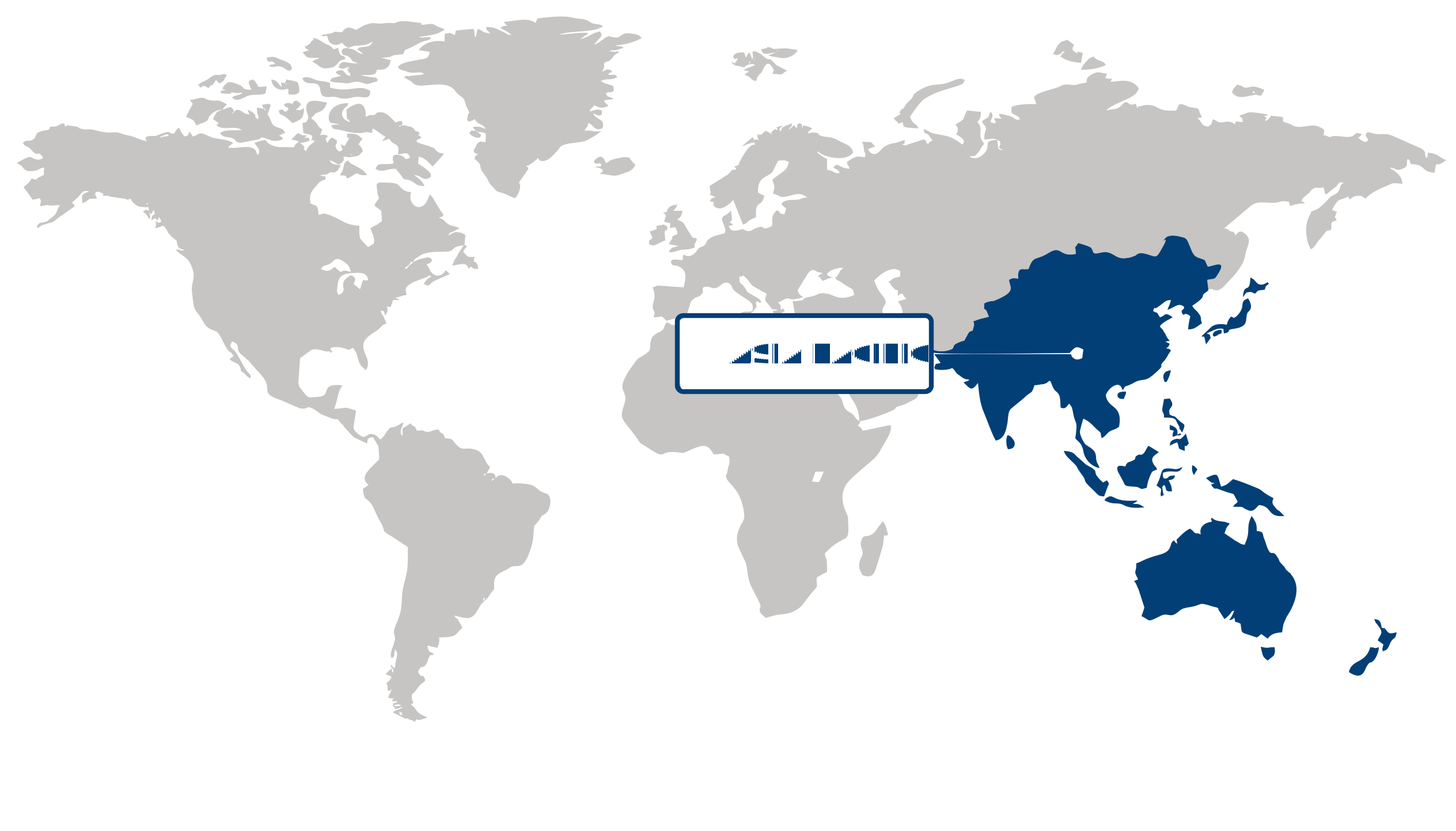
Asia Pacific (Largest & Fastest-Growing Region)
Asia Pacific dominated the mother care products market with a share of 37.8% in 2026 and is also positioned as the fastest-growing regional market. The region’s strong market position is supported by increasing maternal and infant healthcare awareness, expanding access to healthcare services, and rising consumer attention toward products designed to support mothers during pregnancy, childbirth, and the postnatal period. Urbanization and improving household purchasing power are also encouraging greater adoption of specialized maternity and postpartum products. At the same time, broader healthcare infrastructure development and growing awareness of maternal well-being are creating demand for products that provide comfort, convenience, hygiene, and recovery support. The increasing availability of such products through organized retail and digital commerce is further improving accessibility and supporting market expansion across the region.
| Parameter | North America | Asia Pacific | Europe | Latin America | MEA |
|---|---|---|---|---|---|
| Innovation Hub i Scale Nascent Developing Advanced | |||||
| Cost-Sensitive Region i Scale Low Medium High | |||||
| Regulatory Environment i Scale Restrictive Neutral Supportive | |||||
| Demand Drivers i Scale Weak Moderate Strong | |||||
| Development Stage i Scale Emerging Developing Developed | |||||
| Adoption Rate i Scale Low Medium High | |||||
| New Entrants/Startups i Scale Low Medium High | |||||
| Macro Indicators i Scale Weak Stable Strong |
Key Country Insights
United States 🇺🇸
Premium Parenting SolutionsThe U.S. mother care products market is characterized by strong demand for premium maternity and infant care products that combine convenience, safety, and digital engagement. Brands are expanding multifunctional offerings supported by omnichannel retail strategies and evidence-based product development.
Germany 🇩🇪
Quality-Centered Family CareGermany prioritizes mother care products that emphasize certified quality, product safety, and sustainable material selection. Manufacturers continue introducing durable maternity and baby care solutions designed to meet informed consumer expectations and established healthcare standards.
Japan 🇯🇵
Convenience-Focused Infant CareJapan's mother care products market favors compact, hygienic, and easy-to-use products suited to modern parenting lifestyles. Companies are introducing functional innovations that enhance daily caregiving while maintaining high standards for product reliability and comfort.
South Korea 🇰🇷
Digitally Connected ParentingSouth Korea integrates digital retail channels and innovative product design to strengthen the mother care products market. Brands focus on premium skincare, feeding, and maternity solutions that appeal to consumers seeking convenience, quality, and technology-enabled purchasing experiences.
France 🇫🇷
Natural Care PreferencesFrance encourages mother care products formulated with gentle ingredients, transparent labeling, and environmentally conscious packaging. Companies respond by expanding maternity and infant care portfolios that combine wellness-oriented positioning with practical everyday functionality for families.
Italy 🇮🇹
Everyday Family EssentialsItaly's mother care products market is supported by consistent demand for reliable maternity and infant care products distributed through pharmacies, specialty retailers, and online channels. Suppliers emphasize comfort, trusted product quality, and practical designs that fit routine childcare needs.
Segment Leadership and Growth Trends
Mother Care Products Market Share (%), by Distribution Channel, 2026
Go beyond the chart, access full insights & data tables
Request Free Sample ReportDistribution Channel Segment Analysis: Offline (Largest Segment) vs Online (Fastest-Growing Segment)
The offline distribution channel segment led the mother care products market and accounted for a 61.48% share in 2026. Its strong position is supported by consumer preference for physically evaluating products such as maternity wear, feeding accessories, and infant care essentials before purchase. Specialty baby stores, supermarkets, pharmacies, and department stores continue to play a critical role by offering personalized assistance, immediate product availability, and opportunities for product comparison, factors that remain highly influential in purchasing decisions for maternal and infant care products.
The online distribution channel segment is emerging as the fastest-growing category, driven by increasing digital adoption and the convenience of home delivery. Expanding product selections, competitive pricing, customer reviews, and subscription-based purchasing options are encouraging consumers to shift toward e-commerce platforms. Growing smartphone penetration and improvements in digital payment infrastructure are further supporting online sales, particularly among younger parents seeking efficient and flexible shopping experiences.
Price Range Segment Analysis: Mid-range (Largest Segment) vs High (Fastest-Growing Segment)
Holding a 51.94% share in 2026, the mid-range price segment represented the largest portion of demand. This segment benefits from its ability to balance affordability with product quality, making it attractive to a broad consumer base. Parents increasingly seek reliable and safe mother care products without incurring premium costs, supporting sustained demand for mid-range offerings across categories such as skincare, feeding products, maternity apparel, and baby care accessories.
The high-price segment is witnessing the fastest growth as consumers become more willing to invest in premium and specialized products. Rising awareness regarding product safety, ingredient quality, advanced functionality, and brand reputation is encouraging purchases of higher-value offerings. The growing influence of premium parenting trends and demand for organic, sustainable, and technologically enhanced products are further contributing to the expansion of this segment.
Type Segment Analysis: Prenatal Care (Largest Segment) vs Postpartum Care (Fastest-Growing Segment)
In the mother care products market, the prenatal care segment held the largest share of 44.2% in 2026. Demand is supported by the increasing focus on maternal health during pregnancy, including nutritional support, maternity wellness products, and monitoring solutions designed to promote healthy pregnancy outcomes. Greater awareness among expectant mothers and healthcare professionals regarding preventive care and early-stage maternal well-being continues to strengthen the segment’s market position.
The postpartum care segment is the fastest-growing category, reflecting rising recognition of the importance of maternal recovery after childbirth. Growing attention to physical rehabilitation, emotional well-being, breastfeeding support, and post-delivery healthcare needs is driving demand for specialized postpartum products. Expanding healthcare education initiatives and the increasing availability of targeted recovery solutions are further accelerating growth within this segment.
| Segment | Sub-Segment | Largest Segment | Fastest Growing |
|---|---|---|---|
| Distribution Channel | Online, Offline | Offline | Online |
| Price Range | Low, Mid-range, High | Mid-range | High |
| Type | Prenatal Care, Privatecare, Postpartum Care, Neonatal Care | Prenatal Care | Postpartum Care |
Competitive Landscape and Market Positioning
Key companies in the mother care products market:
- Johnson & Johnson (United States)
- Procter & Gamble Company (United States)
- Nestlé S.A. (Switzerland)
- Kimberly-Clark Corporation (United States)
- Beiersdorf AG (Germany)
- Essity AB (Sweden)
- Pigeon Corporation (Japan)
- Himalaya Global Holdings Ltd. (India)
- Medela AG (Switzerland)
Product differentiation is increasingly shaped by how effectively manufacturers address evolving expectations around maternal wellness, infant safety, and convenience across multiple stages of caregiving. Competitive positioning is moving beyond basic functionality as suppliers refine material selection, ergonomic design, and ingredient transparency to appeal to informed consumers seeking reliable, everyday solutions. At the same time, retail dynamics are encouraging brands to develop broader product ecosystems rather than isolated offerings, creating stronger customer retention through coordinated portfolios that support pregnancy, postpartum recovery, feeding, hygiene, and infant care. Regional manufacturing capabilities, compliance with stringent safety standards, and the ability to adapt products to local parenting preferences are becoming equally important in defining long-term competitive strength.
| Company | Market Share | Company Revenue | Revenue CAGR (%) | Product Portfolio | Geographic Presence | Innovation / R&D Focus | Strategic Developments |
|---|---|---|---|---|---|---|---|
| Johnson & Johnson (United States) | |||||||
| Procter & Gamble Company (United States) | |||||||
| Nestlé S.A. (Switzerland) | |||||||
| Kimberly-Clark Corporation (United States) | |||||||
| Beiersdorf AG (Germany) | |||||||
| Essity AB (Sweden) | |||||||
| Pigeon Corporation (Japan) | |||||||
| Himalaya Global Holdings Ltd. (India) | |||||||
| Medela AG (Switzerland) |
Industry Development/News
| Company Name | Date | Key Development |
|---|---|---|
| Mylo | Apr-24 | Mylo initiated a long-term strategic transformation to transition into a global direct-to-consumer brand over the next five to ten years, leveraging its established parenting application ecosystem to scale manufacturing and commercialization of its core mother and baby care product portfolios. |
| Procter & Gamble | Aug-20 | Procter & Gamble acquired Merck's consumer health business, incorporating its baby care portfolio to scale the company's operational footprint and enhance competitive positioning within the global mother and baby care product segment. |
| Procter & Gamble | Aug-20 | Procter & Gamble formed a strategic partnership with the World Health Organization to launch a new line of organic mother care products, driving value chain collaboration and expanding the company's sustainable product offerings. |
Customize Your Report
Explore examples of how this report can be tailored to different research needs, including custom segments, additional topics or chapters, and related reports. Click a section of the wheel or its numbered marker to explore the available options.
Mother Care Products Market — Custom Segments
| Segment | Sub-Segment |
|---|---|
| Purchase Occasion | Routine Care, Pregnancy Milestones, Hospital Discharge, Gifting |
| Customer Need State | Hygiene and Comfort, Nutrition and Feeding, Recovery and Wellness, Infant Care Support |
| Product Format | Wearable Products, Topical Products, Consumable Products, Devices and Accessories |
Mother Care Products Market — Custom TOC
| Custom Chapter | Custom Details |
|---|---|
| Maternal Consumer Journey Analysis |
|
| Premiumization and Product Innovation Outlook |
|
| Retail Channel Transformation |
|
Need a different cut of the data?
Request Custom ResearchWhat is the market size of mother care products?
How is the mother care products industry projected to perform over the next decade?
What consumer trends are accelerating growth in the mother care products market?
Why are premium mother care products gaining stronger market acceptance?
Why does the offline distribution channel dominate the mother care products market?
Which type segment is growing the fastest in the mother care products market?
Why does Asia Pacific lead the mother care products market?
What is driving rapid mother care products growth in Asia Pacific?
Which organizations are considered leaders in the mother care products landscape?
Our Clients
"The report provided us with a clear direction, and the level of detail was beyond what we expected. I would definitely recommend their services to others."
Haier Appliances
"The collaboration with Fundamental Business Insights has added significant value to our decision-making process, and we look forward to continuing this partnership for our future market research requirements."
Luxottica Group S.p.A.
"The team at FBI delivered an exceptional research report. The insights on industry innovations were particularly impressive and added a lot of value to the overall report."
Nike
Our Research Team & Methodology
Every Fundamental Business Insights report is built by a dedicated vertical research team, validated through a structured primary-and-secondary methodology, and reviewed for accuracy before it reaches you.
Research Team Overview
Prepared by the Consumer Goods & Services Research Team
Delivery
Published
Demand
Available
Support
Trust & Compliance
Research Domains
10 coverage areasResearch Intelligence
| Source | Reference |
|---|---|
| International Organization for Standardization (ISO) | www.iso.org |
| ASTM International | www.astm.org |
| U.S. Consumer Product Safety Commission (CPSC) | www.cpsc.gov |
| European Commission – Consumer Safety | ec.europa.eu/safety-gate |
| Consumer Technology Association (CTA) | www.cta.tech |
| National Retail Federation (NRF) | nrf.com |
| World Retail Congress | www.worldretailcongress.com |
| World Travel & Tourism Council (WTTC) | wttc.org |
| UN Tourism | www.unwto.org |
| Personal Care Products Council (PCPC) | www.personalcarecouncil.org |
| Cosmetics Europe | cosmeticseurope.eu |
| International Housewares Association (IHA) | www.housewares.org |
| American Apparel & Footwear Association (AAFA) | www.aafaglobal.org |
| World Federation of the Sporting Goods Industry (WFSGI) | wfsgi.org |
| Juvenile Products Manufacturers Association (JPMA) | www.jpma.org |
| Pet Industry Joint Advisory Council (PIJAC) | pijac.org |
| International Council of Toy Industries (ICTI) | www.toy-icti.org |
| International Association of Amusement Parks and Attractions (IAAPA) | iaapa.org |
| Organisation for Economic Co-operation and Development (OECD) | www.oecd.org |
| World Bank Data | data.worldbank.org |
Research Workflow & Quality Assurance
Data Collection
Verified information gathered through primary and secondary research.
Data Triangulation
Cross-validation using multiple independent data sources.
Forecast Modelling
Market estimates developed using historical trends and analytical models.
Analyst Validation
Findings reviewed by domain experts for accuracy and consistency.
Editorial & Quality Review
Final editorial, quality, and compliance checks before publication.
Final Publication
Released after successful completion of the internal review process.
Report Coverage
📊 Market Assessment
- Market Size & Forecast
- Market Segmentation
- Regional Analysis
- Growth Drivers & Challenges
- Market Dynamics
🏢 Competitive Intelligence
- Competitive Landscape
- Company Profiles
- Competitive Benchmarking
- Mergers & Acquisitions
- Market Share Analysis or Key Company Strategies
🔍 Strategic Analysis
- Value Chain Analysis
- Porter's Five Forces
- PESTLE Analysis
- Pricing Trends
- Supply-Demand Analysis
🚀 Future Outlook
- Technology Landscape
- Regulatory Landscape
- Investment & Funding Landscape
- Emerging Opportunities
- Future Market Outlook
Have a question about this report or need a custom scope?
Request Customization