Massage Oil Market Size & Forecasts 2026-2035, By Segments (Application, Product Type), Growth Opportunities, Innovation Landscape, Regulatory Shifts, Strategic Regional Insights (U.S., Japan, China, South Korea, UK, Germany, France), and Competitive Dynamics (Bio-Oil, Dr Teal's, Weleda, Sukin, Neutrogena)
Market Size and Growth Outlook
Massage Oil Market size is forecast to climb from USD 5.64 billion in 2025 to USD 9.82 billion by 2035, expanding at a CAGR of over 5.7% during 2026-2035. Industry revenue in 2026 is projected at USD 5.92 billion.
Get more details on this report
Request Free Sample ReportMassage Oil Market Intelligence Snapshot
Regional Market Dynamics
Segment Momentum
Market Expansion Drivers
Leading Market Participants
Global Market Forecast Snapshot
Market Outlook
Regional and Segment Outlook
Market Growth Drivers and Industry Trends
The rising consumer inclination toward natural and aromatherapy oils is significantly shaping the massage oil market, as customers increasingly seek holistic wellness solutions. Leading brands such as Neal’s Yard Remedies have responded by promoting plant-based, organic formulations that align with health-conscious lifestyles, reflecting broader trends reported by the International Federation of Aromatherapists. This shift enhances differentiation opportunities for both incumbents and new entrants to innovate around clean-label and ethically sourced ingredients. The preference for natural oils also encourages transparent supply chains, responding to heightened sustainability expectations. Moving forward, this demand trajectory will likely intensify, prompting industry players to deepen their partnerships with sustainable growers and invest in educating consumers on the therapeutic qualities of natural massage oils.
Launch of Multifunctional Massage Oil Products with Therapeutic Benefits
Innovation in multifunctional massage oils that offer combined cosmetic, therapeutic, and wellness benefits is driving product diversification within the massage oil market. Companies such as L’Occitane have introduced blends infused with calming essential oils that address stress relief alongside skin nourishment, capturing growing consumer interest in efficiency and holistic care. Regulatory developments allowing clearer health claims on packaging further promote these innovations. This convergence of benefits enables brands to target a broader audience, including the wellness and skincare segments, enhancing competitive positioning. As consumer expectations evolve, players who integrate clinical research and natural actives into multifunctional oils position themselves to capitalize on market growth without overextension.
Expansion of Wellness and Spa Services in Emerging Regions
The rapid expansion of wellness and spa services across emerging markets is a pivotal growth driver for the massage oil market, fueled by increasing disposable incomes and rising health awareness. The Global Wellness Institute documents robust spa industry growth in regions such as Southeast Asia and Latin America, creating substantial demand for premium and specialized massage oils. This geographic diversification opens strategic avenues for companies to tailor formulations to regional preferences, including traditional healing oils popularized by local cultures. Both global brands and local startups can leverage regional partnerships to optimize distribution and consumer engagement. Sustained investment in emerging markets, aligned with infrastructure development and tourism growth, signals lasting demand expansion for massage oils reflective of localized wellness trends.
Industry Restraints:
Regulatory Complexity and Compliance Costs
The massage oil market faces significant constraints due to increasingly stringent regulations governing cosmetic and personal care products. Regulatory bodies such as the U.S. Food and Drug Administration (FDA) and the European Medicines Agency (EMA) impose rigorous testing and labeling requirements to ensure consumer safety, limiting companies’ flexibility in formulation and packaging. For example, the FDA’s guidelines on ingredient disclosures and allergen warnings compel firms to invest heavily in compliance infrastructure. This creates operational inefficiencies and elevates entry barriers, particularly for small and medium-sized enterprises lacking the resources of industry leaders like Johnson & Johnson. As regulatory frameworks evolve with growing consumer health awareness, participants must prioritize compliance strategies, potentially slowing product innovation cycles. In the near term, these complexities will likely sustain a market environment favoring established players with robust regulatory capabilities while posing ongoing challenges for new entrants aiming to scale efficiently.
Raw Material Supply Volatility and Sustainability Pressures
Volatility in the supply of key natural ingredients—such as essential oils derived from lavender, jojoba, or almond—poses a substantial challenge to the massage oil market, amplified by sustainability concerns. Organizations like the Rainforest Alliance have documented that climate change and unsustainable harvesting practices disrupt supply chains, leading to price fluctuations and inconsistent product availability. Major players, including L’Occitane, have publicly acknowledged the financial and reputational risks associated with sourcing sustainable botanicals, necessitating costly investments in traceability and supplier partnerships. This constraint limits manufacturers’ ability to maintain consistent quality and affordability, thereby affecting consumer trust and loyalty. Moving forward, pressure to meet environmental standards and ethical sourcing mandates will compel market participants to develop resilient supply chain strategies, likely intensifying capital demands and favoring companies with established, sustainable procurement frameworks.
| Growth Driver | Impact on CAGR | Regulatory Influence | Geographic Relevance | Adoption Rate | Impact Timeline |
|---|---|---|---|---|---|
| Growing consumer preference for natural and aromatherapy oils | 2.00% | Short term (≤ 2 yrs) | North America, Europe; Spillover: Asia Pacific | Low | Fast |
| Launch of multifunctional massage oil products with therapeutic benefits | 1.50% | Medium term (2–5 yrs) | Europe, North America; Spillover: Asia Pacific | Low | Moderate |
| Expansion of wellness and spa services in emerging regions | 1.00% | Long term (5+ yrs) | Asia Pacific, Latin America; Spillover: MEA | Low | Slow |
Explore Growth Opportunities
Request Free Sample ReportRegional Demand Dynamics
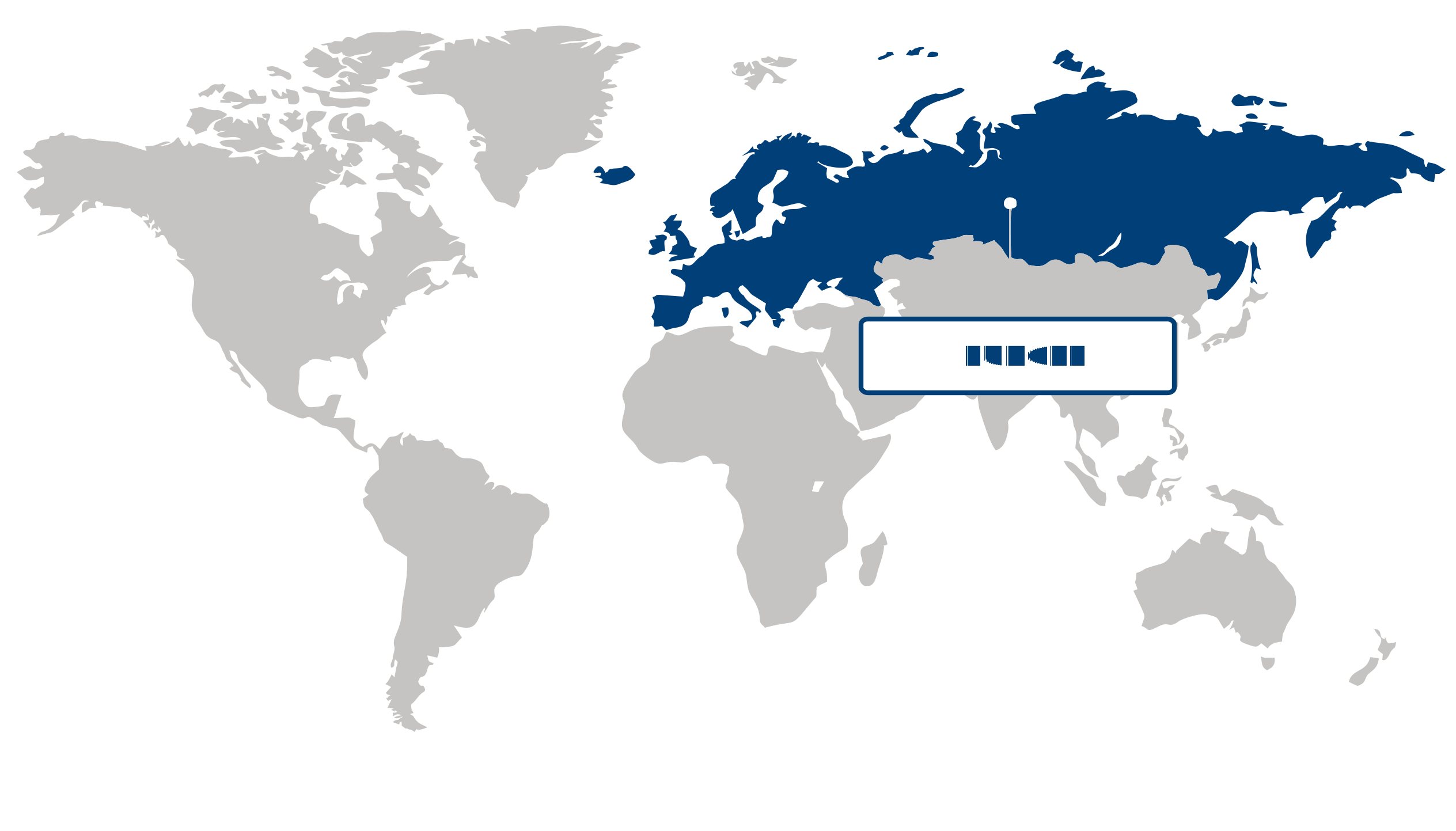
Europe captured over 35% of the global massage oil market in 2025, establishing itself as the largest regional player. This leadership is primarily underpinned by rising consumer preferences for wellness, self-care, and organic or natural products, which have spurred demand across the continent. For instance, German retailers such as Douglas have expanded their organic personal care lines, leveraging shifting consumer spending toward clean-label, sustainable offerings. Regulatory frameworks from the European Chemicals Agency (ECHA) also promote safe ingredient transparency, fostering trust in natural massage oils. The region’s robust supply chain infrastructure and widespread adoption of digital channels further enhance market accessibility. Looking ahead, Europe’s increasing focus on holistic health and sustainability is expected to sustain strong growth trajectories, offering investors valuable entry points.
Germany anchors the European massage oil market with its mature wellness culture and stringent regulatory oversight by the Federal Institute for Risk Assessment (BfR). German consumers prioritize certified natural ingredients, encouraging companies like Weleda to innovate within organic product segments. Additionally, Germany’s retail environment supports experiential marketing, blending in-store demonstrations with e-commerce growth. France complements this trend by integrating traditional aromatherapy heritage with modern consumer habits, as seen in L’Occitane’s expansion of natural massage oils. French regulatory standards guided by ANSM ensure product efficacy and safety, enhancing consumer confidence. Together, these markets exemplify Europe's leadership and provide strategic footholds for expanding massage oil portfolios across the region.
Asia Pacific Market Analysis:
Asia Pacific emerged as the fastest-growing region in the massage oil market, registering a robust CAGR of 6.84%. This impressive growth is primarily driven by the accelerating wellness tourism sector, alongside rising disposable incomes and increasing consumer preference for traditional and herbal oils. Countries in the region are witnessing a shift toward holistic health and natural remedies, supported by culturally ingrained practices and strengthened by endorsement from local governments. For instance, initiatives by the Tourism Authority of Thailand to promote wellness tourism have significantly heightened consumer interest in natural massage therapies. Moreover, manufacturers are leveraging digital commerce platforms to enhance accessibility, while regulatory frameworks in countries like India and Malaysia encourage the use of organic ingredients, further fueling expansion. These trends position Asia Pacific as a crucial hub for innovation and demand, offering considerable long-term prospects in the massage oil market.
Japan plays a pivotal role within Asia Pacific’s massage oil market, characterized by high consumer sophistication and a strong inclination toward wellness and holistic health. The country’s aging population, combined with increasing health awareness, has significantly boosted demand for therapeutic and herbal massage oils, emphasizing premium quality and efficacy. Japanese companies such as Kracie Holdings have introduced advanced herbal formulations that cater to this discerning market, often integrating traditional Kampo medicine elements. Furthermore, Japan’s stringent quality standards and regulatory environment ensure widespread consumer trust, facilitating growth in both domestic consumption and exports. This strategic positioning reinforces Japan’s contribution to the broader Asia Pacific opportunity by driving innovation and elevating market standards.
China’s influence in the Asia Pacific massage oil market is underscored by rapidly rising disposable incomes and a burgeoning middle class embracing wellness tourism. The traditional herbal oil segment is particularly robust, reflecting deep-rooted cultural preferences aligned with Traditional Chinese Medicine (TCM). Major players like Beijing Tong Ren Tang are capitalizing on this heritage by expanding product portfolios tailored to urban consumers seeking restorative, natural solutions amid rising stress levels. Government policies promoting health-focused lifestyles and investment in wellness infrastructure further stimulate market expansion. This environment makes China a critical growth engine within Asia Pacific, where evolving consumer behavior and policy support converge to magnify regional opportunities in the massage oil market.
North America Market Trends:
North America held a commanding share in the massage oil market, driven by evolving consumer lifestyles and heightened wellness awareness. The region’s significance stems from robust demand for premium, natural, and organic personal care products, encouraged by health-conscious demographics and rising disposable incomes. The U.S. Food and Drug Administration’s evolving guidelines on ingredient safety and labeling have prompted manufacturers to innovate, ensuring compliance and enhancing product credibility. Additionally, North America benefits from advanced supply chain infrastructure and widespread digital retail penetration, facilitating efficient distribution and consumer access. Industry leaders such as doTERRA and Young Living essential oils have reported sustained growth, reflecting consumer preference for ethically sourced and therapeutic-grade oils. With rising interest in integrative health approaches and a culturally diverse population embracing alternative wellness modalities, North America offers substantial opportunities for market expansion.
The U.S. is a pivotal player in the massage oil market, where demand is catalyzed by increasing consumer preference for holistic and self-care routines. Government initiatives promoting natural product safety and transparency, such as updated FDA cosmetic regulations, have compelled brands to elevate standards and innovate, fostering consumer trust. Notably, companies like Neal’s Yard Remedies emphasize organic certifications and sustainability, resonating with eco-conscious consumers. Simultaneously, the country’s evolving retail landscape, including growth in e-commerce platforms such as Amazon and Sephora, has broadened market reach. These dynamics position the U.S. as a strategic gateway for introducing novel massage oil formulations that meet stringent regulatory and quality demands, underpinning North America’s significant role in driving market evolution.
| Parameter | North America | Asia Pacific | Europe | Latin America | MEA |
|---|---|---|---|---|---|
| Innovation Hub i Scale Nascent Developing Advanced | |||||
| Cost-Sensitive Region i Scale Low Medium High | |||||
| Regulatory Environment i Scale Restrictive Neutral Supportive | |||||
| Demand Drivers i Scale Weak Moderate Strong | |||||
| Development Stage i Scale Emerging Developing Developed | |||||
| Adoption Rate i Scale Low Medium High | |||||
| New Entrants / Startups i Scale Sparse Moderate Dense | |||||
| Macro Indicators i Scale Weak Stable Strong |
Segment Leadership and Growth Trends
Massage Oil Market Share (%), by Application, 2026
Go beyond the chart, access full insights & data tables
Request Free Sample ReportThe spa & wellness units segment held the largest share in the massage oil market in 2025, driven primarily by increasing consumer spending on personal wellness and therapeutic experiences. This segment's leadership reflects a growing preference for holistic health treatments and self-care rituals, supported by the global rise in wellness tourism and integrative health services. According to the International Spa Association, over 70% of spas reported enhanced customer loyalty through expanded massage therapy offerings using premium oils, underscoring the competitive advantage in this space. Sustainable sourcing and organic certification have further strengthened consumer trust, benefiting both established spas and emerging boutique wellness centers. With ongoing investments in spa infrastructure and rising awareness of mental and physical health benefits, the spa & wellness units segment is poised to sustain its dominant role in the massage oil market for the foreseeable future.
Analysis by Product Type
The almond oil segment represented the largest share in the massage oil market in 2025, fueled by rising demand for natural and skin-friendly oils in wellness and home care applications. Almond oil's emollient properties and mild fragrance align with consumer trends favoring clean-label, non-irritating ingredients, as substantiated by the United States Department of Agriculture’s endorsement of almond oil as a hypoallergenic option. Supply chain enhancements, including improved cold-press extraction methods, have increased product purity and availability, strengthening competitive positioning among key players such as NOW Foods and Majestic Pure. This segment offers strategic growth opportunities by catering to a broad demographic seeking premium natural alternatives. Continued innovation in sustainable harvesting and formulation will ensure almond oil remains a cornerstone in the massage oil market's evolving landscape.
| Segment | Sub-Segment | Largest Segment | Fastest Growing |
|---|---|---|---|
| Application | Spa & Wellness Units, Medical Therapeutics | ||
| Product Type | Olive, Almond, Coconut, Citrus |
Unlock insights tailored to your business with our bespoke market research solutions.
Click to get your customized report now.
Competitive Landscape and Market Positioning
The competitive landscape is marked by dynamic initiatives that broaden product portfolios and enhance customer engagement. Many of these players have introduced specialized blends targeting wellness and aromatherapy, reflecting rising consumer demand for holistic self-care. Investments in sustainable sourcing and eco-friendly packaging underpin brand differentiation in a crowded marketplace. Collaborative ventures and expansions into adjacent personal care categories further fortify market presence. The integration of customer feedback and emerging ingredient technologies points to an evolving innovation pipeline, which sustains these companies’ ability to capture discerning, health-conscious consumers.
Strategic / Actionable Recommendations for Regional Players
In North America, aligning with wellness-focused platforms and leveraging digital channels can amplify brand visibility while addressing consumers' growing interest in therapeutic and multi-functional massage oils. Embracing partnerships that enhance organic and clean label credentials may enhance appeal amid stringent regulatory and consumer scrutiny.
Asia Pacific players stand to benefit from collaborations that integrate traditional medicinal knowledge with modern formulations, catering to a diverse and rapidly expanding market. Incorporating advanced extraction and formulation technologies could provide a competitive edge in premium segments.
In Europe, capitalizing on sustainability initiatives and local ingredient sourcing can bolster brand authenticity and compliance with environmental standards. Focusing on personalization and niche sub-segments such as luxury spa products may distinguish offerings in a saturated market landscape.
| Company | Market Share | Company Revenue | Revenue CAGR (%) | Product Portfolio | Geographic Presence | Innovation / R&D Focus | Strategic Developments |
|---|---|---|---|---|---|---|---|
| No companies available. | |||||||
Customize Your Report
Explore examples of how this report can be tailored to different research needs, including custom segments, additional topics or chapters, and related reports. Click a section of the wheel or its numbered marker to explore the available options.
Massage Oil Market — Custom Segments
| Segment | Sub-Segment |
|---|---|
| No segment data available. | |
Massage Oil Market — Custom TOC
| Custom Chapter | Chapter Details | ||
|---|---|---|---|
| No custom TOC data available. | |||
Need a different cut of the data?
Request Custom ResearchWhat is the forecasted size of the massage oil industry?
Which region holds the largest share of the massage oil market?
Which geographical area is witnessing the highest growth rate in the massage oil sector?
What share does spa & wellness units segment hold in the massage oil sector as of 2025?
Where is the almond segment seeing the strongest adoption within the massage oil industry?
Which companies dominate the massage oil landscape?
Our Clients
"The report provided us with a clear direction, and the level of detail was beyond what we expected. I would definitely recommend their services to others."
Haier Appliances
"The collaboration with Fundamental Business Insights has added significant value to our decision-making process, and we look forward to continuing this partnership for our future market research requirements."
Luxottica Group S.p.A.
"The team at FBI delivered an exceptional research report. The insights on industry innovations were particularly impressive and added a lot of value to the overall report."
Nike
Our Research Team & Methodology
Every Fundamental Business Insights report is built by a dedicated vertical research team, validated through a structured primary-and-secondary methodology, and reviewed for accuracy before it reaches you.
Research Team Overview
Prepared by the Consumer Goods & Services Research Team
Delivery
Published
Demand
Available
Support
Trust & Compliance
Research Intelligence
| Source | Reference |
|---|---|
| International Organization for Standardization (ISO) | www.iso.org |
| ASTM International | www.astm.org |
| U.S. Consumer Product Safety Commission (CPSC) | www.cpsc.gov |
| European Commission – Consumer Safety | ec.europa.eu/safety-gate |
| Consumer Technology Association (CTA) | www.cta.tech |
| National Retail Federation (NRF) | nrf.com |
| World Retail Congress | www.worldretailcongress.com |
| World Travel & Tourism Council (WTTC) | wttc.org |
| UN Tourism | www.unwto.org |
| Personal Care Products Council (PCPC) | www.personalcarecouncil.org |
| Cosmetics Europe | cosmeticseurope.eu |
| International Housewares Association (IHA) | www.housewares.org |
| American Apparel & Footwear Association (AAFA) | www.aafaglobal.org |
| World Federation of the Sporting Goods Industry (WFSGI) | wfsgi.org |
| Juvenile Products Manufacturers Association (JPMA) | www.jpma.org |
| Pet Industry Joint Advisory Council (PIJAC) | pijac.org |
| International Council of Toy Industries (ICTI) | www.toy-icti.org |
| International Association of Amusement Parks and Attractions (IAAPA) | iaapa.org |
| Organisation for Economic Co-operation and Development (OECD) | www.oecd.org |
| World Bank Data | data.worldbank.org |
Research Workflow & Quality Assurance
Data Collection
Verified information gathered through primary and secondary research.
Data Triangulation
Cross-validation using multiple independent data sources.
Forecast Modelling
Market estimates developed using historical trends and analytical models.
Analyst Validation
Findings reviewed by domain experts for accuracy and consistency.
Editorial & Quality Review
Final editorial, quality, and compliance checks before publication.
Final Publication
Released after successful completion of the internal review process.
Report Coverage
📊 Market Assessment
- Market Size & Forecast
- Market Segmentation
- Regional Analysis
- Growth Drivers & Challenges
- Market Dynamics
🏢 Competitive Intelligence
- Competitive Landscape
- Company Profiles
- Competitive Benchmarking
- Mergers & Acquisitions
- Market Share Analysis or Key Company Strategies
🔍 Strategic Analysis
- Value Chain Analysis
- Porter's Five Forces
- PESTLE Analysis
- Pricing Trends
- Supply-Demand Analysis
🚀 Future Outlook
- Technology Landscape
- Regulatory Landscape
- Investment & Funding Landscape
- Emerging Opportunities
- Future Market Outlook
Have a question about this report or need a custom scope?
Request Customization