Iron Chloride Market Size & Forecasts 2026-2035, By Segments (Product Form, Grade, Distribution Channel, Application, End-User), Growth Opportunities, Innovation Landscape, Regulatory Shifts, Strategic Regional Insights (U.S., Japan, China, South Korea, UK, Germany, France), and Competitive Dynamics (Kemira, BASF, Nouryon, Aditya Birla Chemicals, Tata Chemicals)
Market Size and Growth Outlook
Iron Chloride Market size is forecasted to reach USD 12.65 billion by 2035, rising from USD 7.13 billion in 2025, at a CAGR of more than 5.9% between 2026 and 2035. In 2026, revenue is projected at USD 7.5 billion.
Get more details on this report
Request Free Sample ReportIron Chloride Market Intelligence Snapshot
Regional Market Dynamics
Segment Momentum
Market Expansion Drivers
Leading Market Participants
Global Market Forecast Snapshot
Market Outlook
Regional and Segment Outlook
Market Growth Drivers and Industry Trends
The iron chloride market is increasingly driven by its expanding role in water treatment and purification, as municipalities and industries prioritize sustainable water management solutions. Environmental agencies like the U.S. Environmental Protection Agency (EPA) promote advanced coagulation processes to meet stricter water quality standards, enhancing demand for iron chloride as an effective flocculant. This shift reflects growing consumer and regulatory emphasis on clean water access and pollution control. Established suppliers can capitalize on this trend by expanding tailored formulations for wastewater treatment, while new entrants may innovate cost-effective or environmentally friendly variants. With global urbanization intensifying water scarcity concerns, iron chloride applications in purification remain a critical, stable growth avenue linked tightly to evolving environmental policies and infrastructure investments.
Growth in Industrial Chemical Applications
Industrial sectors increasingly rely on iron chloride for diverse chemical synthesis and manufacturing processes, fueling market growth. Companies such as BASF and Kemira emphasize iron chloride’s role in pigment production, catalyst applications, and corrosion control, reinforcing its significance in complex industrial value chains. The broad adoption reflects industrial modernization and demand for specialty chemicals with consistent quality and performance. This trend unlocks opportunities for players investing in specialized production capabilities and supply chain integration to serve bulk and niche industrial customers. Given rising industrial output in emerging economies and ongoing process innovations, the iron chloride market stands to benefit from intensified industrial consumption anchored in operational efficiency and product differentiation.
Development of High-Purity Iron Chloride Products
The market transformation toward high-purity iron chloride solutions is propelled by rising application needs in sectors such as electronics, pharmaceuticals, and advanced materials manufacturing. Leading chemical companies like Solvay report investments in refining technologies to meet stringent purity standards, enabling iron chloride use in sensitive processes requiring minimal contaminants. This evolution aligns with increased regulatory scrutiny on chemical quality and product safety across industries. For incumbents, prioritizing R&D in purification technologies enhances competitive advantage and market segmentation. Meanwhile, new entrants with innovative high-purity production methods can challenge traditional suppliers. The emphasis on purity signals a maturation of the iron chloride market focused on precision applications, ensuring that quality-driven innovation remains a key differentiator.
Industry Restraints:
Environmental Regulatory Constraints
Strict environmental regulations on chemical manufacturing and waste disposal considerably hamper the iron chloride market's expansion. Compliance with frameworks such as the U.S. Environmental Protection Agency (EPA) hazardous waste standards and the European Chemicals Agency (ECHA) REACH regulations increases operational costs and necessitates investment in cleaner, safer production technologies. For instance, SUEZ’s 2022 sustainability report highlights the rising expenses chemical producers face in meeting discharge limits for chlorides and heavy metals. These compliance demands restrict smaller producers lacking capital for upgrades and create entry barriers in established markets. Strategically, companies must balance regulatory adherence with cost efficiency, often delaying capacity expansions or innovations. Given the global tightening of environmental policies, regulatory constraints will remain a significant hurdle, compelling market participants to prioritize sustainable processes and potentially consolidate to handle compliance burdens effectively.
Volatility in Raw Material Supply and Pricing
Fluctuations in the availability and cost of raw materials, particularly iron ore and hydrochloric acid, pose operational challenges that inhibit steady growth in the iron chloride sector. According to the International Iron and Steel Institute’s 2023 report, geopolitical tensions and mining disruptions have sporadically escalated iron ore prices, while volatility in hydrochloric acid supply—frequently tied to chlor-alkali industry shifts as noted by Olin Corporation—disrupt production planning. Such unpredictability raises input costs unpredictably, squeezing margins and complicating long-term contracts, especially for smaller or newer market entrants without diversified sourcing. Strategically, firms must enhance supply chain agility and secure stable procurement channels to mitigate risks. This volatility is expected to persist in the medium term due to ongoing geopolitical uncertainties and demand-supply imbalances in key raw materials, forcing continuous adaptation in procurement and pricing strategies.
| Growth Driver | Impact on CAGR | Regulatory Influence | Geographic Relevance | Adoption Rate | Impact Timeline |
|---|---|---|---|---|---|
| Rising use in water treatment and purification | 1.50% | Short term (≤ 2 yrs) | North America, Europe; Spillover: Asia Pacific | Medium | Fast |
| Growth in industrial chemical applications | 1.20% | Medium term (2–5 yrs) | Asia Pacific, North America | Low | Moderate |
| Development of high-purity iron chloride products | 1.00% | Long term (5+ yrs) | Europe, Asia Pacific | Low | Slow |
Explore Growth Opportunities
Request Free Sample ReportRegional Demand Dynamics
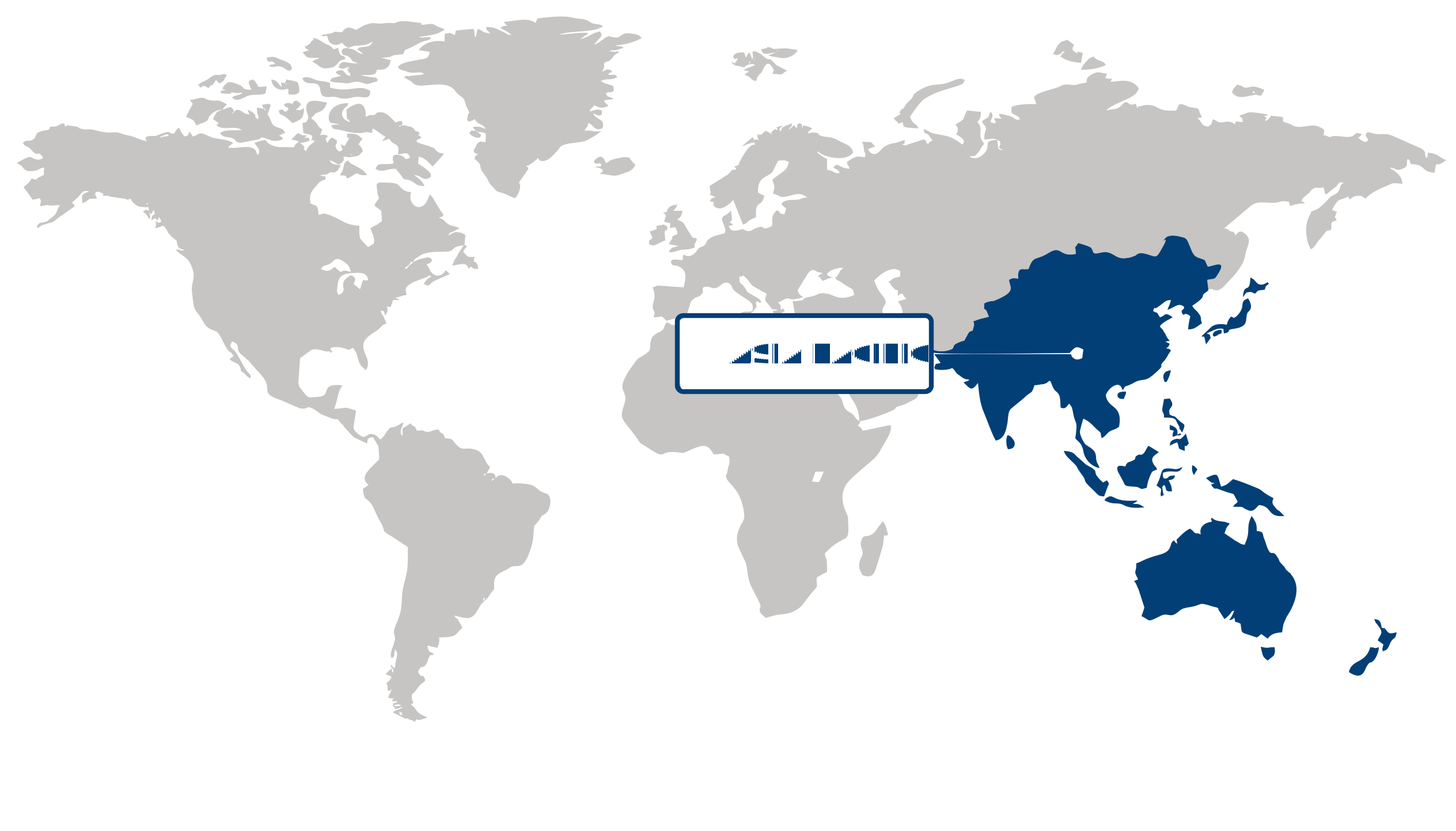
The Asia Pacific iron chloride market captured over 45% of the global market share in 2025, establishing itself as the largest regional contributor. This dominant position is propelled primarily by escalating municipal wastewater treatment initiatives alongside expanded industrial applications across the region. Countries such as China and India have ramped up infrastructure investments to address water pollution and industrial effluents, as evidenced by the Ministry of Ecology and Environment of China’s 14th Five-Year Plan emphasizing enhanced wastewater management technologies. Additionally, heightened regulatory focus on environmental standards in Asia Pacific nations encourages broader adoption of iron chloride in water treatment, supported by operational advancements in chemical manufacturing reported by Sumitomo Chemical in Japan. These factors create a robust demand foundation while fostering innovation in supply chain efficiencies, positioning Asia Pacific as a high-opportunity market for continued iron chloride consumption growth.
China anchors the Asia Pacific iron chloride market with its vast industrial landscape and stringent environmental regulations driving increased usage in wastewater treatment applications. The Ministry of Ecology and Environment of China has intensified efforts to curb water pollution under policies like the Water Pollution Prevention Action Plan, accelerating demand for iron chloride as a key treatment chemical. Furthermore, major Chinese chemical manufacturers such as China National Chemical Corporation have expanded production capacities to meet this growing need, reflecting strong domestic and export market momentum. This expansion underscores China’s strategic role in reinforcing regional supply capabilities while sustaining market leadership in iron chloride consumption.
Japan plays a pivotal role in the Asia Pacific iron chloride market, catalyzed by technological innovation and stringent environmental compliance standards that stimulate advanced water treatment methods. Japanese firms like Kurita Water Industries actively develop proprietary iron chloride formulations and eco-friendly treatment solutions to align with the country's stringent wastewater regulations set forth by the Ministry of the Environment, Japan. This focus on technological differentiation and sustainability strengthens Japan’s market influence and supports regional integration through technology transfers and partnerships. Japan’s leadership in innovation enhances Asia Pacific’s overall competitiveness and underpins the region’s long-term growth prospects in the iron chloride market.
Europe Market Analysis:
Europe emerged as the fastest-growing region in the iron chloride market, registering a robust CAGR of 6.5%. This significant acceleration is primarily driven by stricter wastewater treatment regulations and increasing etching applications across the continent. European governments have intensified environmental policies to address water pollution, compelling industries to adopt efficient coagulation agents like iron chloride for treating effluents. Additionally, the semiconductor and electronics sectors are fueling demand through expanded use of iron chloride in metal etching processes. Organizations such as the European Environment Agency have documented stringent directives on industrial discharge, prompting higher compliance spending and technological upgrades. These factors combined reflect Europe’s dynamic regulatory landscape and industrial modernization efforts, positioning the region as a key growth hub. Moving forward, Europe's commitment to sustainability and innovation offers substantial opportunities for expanding iron chloride deployment in both wastewater management and precision manufacturing.
Germany plays a pivotal role in Europe’s iron chloride market growth, driven by its stringent environmental standards and advanced industrial base. German regulatory bodies, including the Federal Environment Agency, have enforced tight wastewater treatment criteria, accelerating iron chloride adoption for pollutant removal. Moreover, Germany’s robust electronics manufacturing sector is leveraging iron chloride in etching applications, supporting demand growth. The country’s focus on circular economy initiatives enhances investment in sustainable chemical solutions, reinforcing competitive positioning within the market.
Similarly, France contributes substantially to the regional growth through progressive environmental policies and a strong manufacturing sector. French authorities, under the Ministry of Ecological Transition, have implemented rigorous water quality regulations that increase reliance on effective treatment chemicals like iron chloride. Additionally, innovations in France’s industrial processes, including metal finishing and circuit board production, underscore growing etching applications. Collectively, Germany and France’s regulatory and industrial advancements amplify Europe’s leadership, underscoring the region’s promising outlook in the iron chloride market.
North America Market Trends:
North America maintained a notable presence in the iron chloride market, driven by increasing industrial water treatment activities and stricter environmental regulations. The region’s focus on sustainable manufacturing practices and infrastructure modernization underpins moderate growth, as highlighted by the U.S. Environmental Protection Agency’s initiatives to reduce water pollution and improve effluent treatment. Moreover, advancements in supply chain integration and the adoption of digital monitoring technologies by key players like Kemira Oyj enhance operational efficiencies in the region. The rising demand for cost-effective coagulants in municipal and industrial wastewater treatment further strengthens North America’s market position. Looking ahead, the region’s regulatory rigor combined with technological innovation offers substantial avenues for iron chloride applications, especially as industries aim to balance economic resilience with environmental accountability.
The U.S. plays a pivotal role within the North American iron chloride market, supported by its extensive industrial base and stringent environmental standards. The country’s regulatory framework, enforced by the U.S. Environmental Protection Agency, fosters growing adoption of iron chloride in water and wastewater treatment, particularly across sectors such as chemical manufacturing and municipal utilities. For instance, Evoqua Water Technologies has recently expanded its iron chloride production capacity to meet shifting demand patterns fueled by infrastructure investments under the American Jobs Plan. Additionally, the U.S. emphasis on digital transformation for water management systems enables more precise dosing and efficient chemical usage, reinforcing growth prospects. Consequently, the U.S. market’s evolution directly enhances North America’s strategic outlook by exemplifying how innovation and regulation collectively drive market expansion in iron chloride.
| Parameter | North America | Asia Pacific | Europe | Latin America | MEA |
|---|---|---|---|---|---|
| Innovation Hub i Scale Nascent Developing Advanced | |||||
| Cost-Sensitive Region i Scale Low Medium High | |||||
| Regulatory Environment i Scale Restrictive Neutral Supportive | |||||
| Demand Drivers i Scale Weak Moderate Strong | |||||
| Development Stage i Scale Emerging Developing Developed | |||||
| Adoption Rate i Scale Low Medium High | |||||
| New Entrants / Startups i Scale Sparse Moderate Dense | |||||
| Macro Indicators i Scale Weak Stable Strong |
Segment Leadership and Growth Trends
Iron Chloride Market Share (%), by Product Form, 2026
Go beyond the chart, access full insights & data tables
Request Free Sample ReportLiquid iron chloride dominated the iron chloride market in 2025 by holding the largest share due to its extensive use in large-scale municipal and industrial wastewater treatment. This segment’s leadership is anchored in its superior solubility and ease of handling, which align with increasing regulatory emphasis on sustainable water management practices worldwide. Organizations such as the U.S. Environmental Protection Agency have highlighted liquid iron chloride’s role in reducing harmful contaminants, boosting demand among public utilities and industries adapting to stricter discharge norms. The established supply chains ensuring consistent quality and timely delivery further support this segment’s stronghold. For industry players, liquid iron chloride presents strategic opportunities to innovate in eco-friendly formulations and scalable solutions. Given ongoing investments in infrastructure modernization and water contamination mitigation, this segment is poised to maintain its pivotal role in the iron chloride market in the near to medium term.
Analysis by Grade
Industrial grade represented the largest share of the iron chloride market in 2025, propelled by its widespread application in chemical manufacturing and water treatment sectors. Its dominance stems from tailored specifications that meet rigorous industrial standards, accommodating diverse processes across heavy industries and municipal systems. The continued expansion of industries such as pulp and paper, textiles, and pharmaceuticals relies on the consistent performance of industrial grade products, as underscored by market leaders like BASF and AkzoNobel in their technical literature. Additionally, regulatory frameworks supporting industrial pollution control underscore its importance. The segment benefits from customer preferences prioritizing reliability and cost-effectiveness, creating attractive entry points for emerging manufacturers and niches focused on sustainable process adaptations. Advancements in production technologies and increasing industrial automation emphasize this segment’s sustained relevance amidst evolving operational demands.
Analysis by Distribution Channel
Distributors and wholesalers held the largest share of the iron chloride market in 2025, driven by their established, extensive networks that ensure wide product availability across geographic and sectoral boundaries. This segment’s leadership is reinforced by the critical role these intermediaries play in managing complex supply chains in both industrial and municipal markets, facilitating timely access to diverse grades and forms of iron chloride. Companies like Univar Solutions and Brenntag AG exemplify how such distribution channels integrate digital inventory management and logistics optimization to meet growing demand efficiently. The channel’s responsiveness to regional regulatory variations and customer service expectations underpins competitive differentiation. For both entrenched and emerging players, leveraging distributor partnerships offers scalable market penetration and nimble adaptation to evolving end-user needs. Continued emphasis on supply chain resilience and technological enhancements promises to keep this segment vital in the iron chloride market landscape.
| Segment | Sub-Segment | Largest Segment | Fastest Growing |
|---|---|---|---|
| Product Form | Powdered Iron Chloride, Granulated Iron Chloride, Liquid Iron Chloride | ||
| Grade | Industrial Grade, Laboratory Grade, Food Grade | ||
| Distribution Channel | Direct Sales, Distributors and Wholesalers, Online Retail, Specialty Chemicals Suppliers | ||
| Application | Water Treatment, Pigment Production, Electronics and Electrical Applications, Chemical Manufacturing, Metallurgical Processes | ||
| End-User | Municipal Wastewater Treatment Plants, Pharmaceutical Companies, Textile Industry, Electronics Industry, Agriculture and Fertilizers |
Unlock insights tailored to your business with our bespoke market research solutions.
Click to get your customized report now.
Competitive Landscape and Market Positioning
The competitive landscape is marked by dynamic initiatives that reinforce the market presence of top players. Many have engaged in synergistic collaborations and broadened their portfolios through acquisitions to enhance operational efficiency and product diversity. Technological advancements, especially in manufacturing processes and product formulations, are a focal point for maintaining differentiation, supported by continuous investments in research and development. Market entrants are also refining end-use applications by tailoring iron chloride variants to meet stringent environmental and industrial standards. These efforts collectively foster innovation ecosystems and reinforce positioning, enabling leading companies to adapt swiftly to evolving regulatory frameworks and customer demands, thus sustaining competitive advantage across multiple geographies.
Strategic / Actionable Recommendations for Regional Players
North American players can capitalize on expanding collaborations with technology providers and end-users in water treatment and electronics sectors, where specialized iron chloride grades are gaining traction. Leveraging digitization and automation within production and supply chains may enhance operational agility and speed responsiveness to shifting market requirements. Emphasizing sustainable practices aligned with tightening environmental regulations will further consolidate their credibility and market relevance.
In the Asia Pacific region, firms should explore partnerships that expand raw material access and strengthen regional distribution networks, particularly targeting fast-growing industries such as textiles and metal finishing. Investing in innovative product development that addresses unique local regulatory and environmental challenges could differentiate offerings amid competitive pressure. Enhanced focus on cost optimization through technology adaptation will be critical to balancing rising demand with competitive pricing strategies.
European players stand to benefit from integrated approaches combining circular economy principles with next-generation catalytic and chemical processing technologies. Collaborating within industry clusters to accelerate development of eco-friendly iron chloride variants aligns with stringent EU environmental directives. Targeted engagement with downstream sectors prioritizing sustainability-oriented solutions can unlock high-value applications, reinforcing Europe’s position as a nexus of innovation and regulatory leadership in the iron chloride market.
| Company | Market Share | Company Revenue | Revenue CAGR (%) | Product Portfolio | Geographic Presence | Innovation / R&D Focus | Strategic Developments |
|---|---|---|---|---|---|---|---|
| No companies available. | |||||||
Customize Your Report
Explore examples of how this report can be tailored to different research needs, including custom segments, additional topics or chapters, and related reports. Click a section of the wheel or its numbered marker to explore the available options.
Iron Chloride Market — Custom Segments
| Segment | Sub-Segment |
|---|---|
| No segment data available. | |
Iron Chloride Market — Custom TOC
| Custom Chapter | Chapter Details | ||
|---|---|---|---|
| No custom TOC data available. | |||
Need a different cut of the data?
Request Custom ResearchHow much revenue does the iron chloride market generate?
How is the iron chloride industry size expected to evolve during the forecast period?
Which geographic area exhibits the highest level of iron chloride market penetration?
Where has the iron chloride sector recorded the sharpest year-over-year increase?
Why does liquid iron chloride sub-segment dominate the product form segment of iron chloride sector?
How does industrial grade segment fare in the iron chloride industry?
What share does distributors and wholesalers segment hold in the iron chloride sector as of 2025?
Where is the water treatment segment seeing the strongest adoption within the iron chloride industry?
When did municipal wastewater treatment plants sub-segment emerge as the largest sub-segment in the end-user segment of iron chloride sector?
What are the prominent companies operating in the iron chloride landscape?
Our Clients
"The report helped us understand emerging consumer trends in our product category. It clarified where to focus innovation for the next product launch."
LyondellBasell
"The regional forecast section was incredibly useful. We were able to identify two new potential partners in Europe thanks to the vendor mapping you included."
SABIC
"We appreciated how actionable the recommendations were. It guided us to improve supply chain resilience."
Olin Corporation
Our Research Team & Methodology
Every Fundamental Business Insights report is built by a dedicated vertical research team, validated through a structured primary-and-secondary methodology, and reviewed for accuracy before it reaches you.
Research Team Overview
Prepared by the Chemicals & Materials Research Team
Delivery
Published
Demand
Available
Support
Trust & Compliance
Research Intelligence
| Source | Reference |
|---|---|
| American Chemistry Council (ACC) | www.americanchemistry.com |
| European Chemical Industry Council (Cefic) | cefic.org |
| International Council of Chemical Associations (ICCA) | icca-chem.org |
| European Chemicals Agency (ECHA) | echa.europa.eu |
| U.S. Environmental Protection Agency (EPA) | www.epa.gov |
| ASTM International | www.astm.org |
| International Organization for Standardization (ISO) | www.iso.org |
| National Institute of Standards and Technology (NIST) | www.nist.gov |
| Plastics Industry Association (PLASTICS) | www.plasticsindustry.org |
| European Biplastics | www.european-bioplastics.org |
| The Adhesive and Sealant Council (ASC) | www.ascouncil.org |
| National Association of Corrosion Engineers (AMPP) | www.ampp.org |
| Society of Plastics Engineers (SPE) | www.4spe.org |
| International Fertilizer Association (IFA) | www.fertilizer.org |
| CropLife International | croplife.org |
| Packaging Europe | packagingeurope.com |
| Flexible Packaging Association (FPA) | www.flexpack.org |
| Battery Council International (BCI) | batterycouncil.org |
| International Copper Association (ICA) | internationalcopper.org |
| World Steel Association | worldsteel.org |
Research Workflow & Quality Assurance
Data Collection
Verified information gathered through primary and secondary research.
Data Triangulation
Cross-validation using multiple independent data sources.
Forecast Modelling
Market estimates developed using historical trends and analytical models.
Analyst Validation
Findings reviewed by domain experts for accuracy and consistency.
Editorial & Quality Review
Final editorial, quality, and compliance checks before publication.
Final Publication
Released after successful completion of the internal review process.
Report Coverage
📊 Market Assessment
- Market Size & Forecast
- Market Segmentation
- Regional Analysis
- Growth Drivers & Challenges
- Market Dynamics
🏢 Competitive Intelligence
- Competitive Landscape
- Company Profiles
- Competitive Benchmarking
- Mergers & Acquisitions
- Market Share Analysis or Key Company Strategies
🔍 Strategic Analysis
- Value Chain Analysis
- Porter's Five Forces
- PESTLE Analysis
- Pricing Trends
- Supply-Demand Analysis
🚀 Future Outlook
- Technology Landscape
- Regulatory Landscape
- Investment & Funding Landscape
- Emerging Opportunities
- Future Market Outlook
Have a question about this report or need a custom scope?
Request Customization