Industrial Labels Market Size & Forecasts 2026-2035, By Segments (Material, Label Technology, Type, Printing Technology, Mechanism, End Use), Growth Opportunities, Innovation Landscape, Regulatory Shifts, Strategic Regional Insights (U.S., Japan, China, South Korea, UK, Germany, France), and Competitive Dynamics (3M, Avery Dennison, UPM Raflatac, CCL Industries, Brady Corporation)
Market Size and Growth Outlook
Industrial Labels Market size is projected to grow steadily from USD 65.56 billion in 2025 to USD 117.41 billion by 2035, demonstrating a CAGR exceeding 6% through the forecast period (2026-2035). The 2026 revenue is estimated at USD 68.98 billion.
Get more details on this report
Request Free Sample ReportIndustrial Labels Market Intelligence Snapshot
Regional Market Dynamics
Segment Momentum
Market Expansion Drivers
Leading Market Participants
Global Market Forecast Snapshot
Market Outlook
Regional and Segment Outlook
Market Growth Drivers and Industry Trends
The surge in industrial automation has propelled the industrial labels market towards smart labeling technologies that enhance operational efficiency and traceability. Companies like Zebra Technologies have highlighted how integrating smart labels with automated systems streamlines inventory tracking and quality control. This evolution responds to heightened requirements for real-time data monitoring and error reduction in manufacturing and logistics, reflecting broader digital transformation trends. Established players can leverage this shift by developing interoperable labeling solutions compatible with Industry 4.0 infrastructures, while new entrants may focus on niche smart labeling innovations. With continued adoption of automation across sectors, the industrial labels market is poised to further integrate IoT-enabled labeling, enhancing precision and connectivity in supply chains.
Growing Demand in Food & Pharmaceutical Packaging
Stringent safety regulations and rising consumer expectations for product transparency have intensified demand for high-quality, durable labels in food and pharmaceutical packaging. The U.S. Food and Drug Administration's (FDA) tightening of traceability and serialization mandates exemplifies regulatory forces driving label innovation, ensuring product authenticity and consumer safety. This evolving landscape creates opportunities for market participants to offer tamper-evident, anti-counterfeit, and variable data printing solutions. Both incumbents and startups can capitalize on this trend by aligning product development with compliance frameworks and consumer preference for clear, informative labeling. As food and pharmaceutical sectors expand and formalize supply chains globally, demand for specialized industrial labels will sustain market growth.
Development of Eco-Friendly & RFID-Enabled Labels
Environmental concerns and efficiency demands have catalyzed the development of eco-friendly and RFID-enabled labels within the industrial labels market. Industry associations such as AIM, the global RFID association, emphasize RFID technology’s role in reducing waste and enhancing supply chain visibility, while companies like Avery Dennison champion sustainable adhesives and recyclable materials in label design. This convergence of sustainability and technology meets investor and consumer pressure for greener packaging solutions and smarter inventory management. Market leaders have the opportunity to differentiate through sustainable innovation and RFID integration, while agile entrants can exploit these trends to disrupt traditional labeling norms. Given increasing regulatory scrutiny on packaging waste and digital supply chain adoption, these label technologies will remain central to the market’s trajectory.
Industry Restraints:
Regulatory Complexity and Compliance Costs
The industrial labels market faces significant friction from evolving regulatory frameworks, particularly stringent environmental and safety standards imposed by agencies like the U.S. Environmental Protection Agency (EPA) and the European Chemicals Agency (ECHA). These regulations demand the use of eco-friendly materials and limit hazardous chemical substances within labels, pushing manufacturers to invest heavily in research and reformulation. Such compliance efforts elevate production costs and delay product rollouts, constraining operational efficiency and innovation. For instance, Avery Dennison’s shift toward sustainable adhesives and substrates reflects the capital-intensive adaptation necessary for compliance. Both incumbents and new entrants grapple with navigating diverse regional regulations, which complicates cross-border scaling. As regulatory agencies continue tightening mandates amid growing sustainability concerns, companies will need to integrate compliance-driven innovations early in product development, making regulatory agility a pivotal competitive advantage.
Supply Chain Disruptions and Raw Material Scarcity
Volatility in raw material availability, especially specialty films, inks, and adhesives critical for industrial labels, impedes consistent production and inflates costs. The COVID-19 pandemic exposed and amplified global supply chain fragilities, with suppliers like 3M reporting raw material shortages impacting label output. Furthermore, geopolitical tensions and rising freight expenses exacerbate lead time unpredictability, leading to frequent stockouts or overstocking risks. These inefficiencies disproportionately burden smaller manufacturers lacking diversified supplier networks, raising barriers to entry and compressing margins for incumbents. Strategic sourcing and supply chain resilience have become essential capabilities, as evidenced by industry-wide moves toward localizing supply bases and adopting digital inventory management tools. Given continuing global trade uncertainties and raw material price pressures, supply chain constraints will persist as a critical challenge, compelling market participants to prioritize agility and robustness in procurement strategies.
| Growth Driver | Impact on CAGR | Regulatory Influence | Geographic Relevance | Adoption Rate | Impact Timeline |
|---|---|---|---|---|---|
| Expansion in industrial automation & smart labeling | 1.50% | Short term (≤ 2 yrs) | North America, Europe | Medium | Fast |
| Growing demand in food & pharmaceutical packaging | 1.60% | Medium term (2–5 yrs) | Asia Pacific, North America | Medium | Moderate |
| Development of eco-friendly & RFID-enabled labels | 1.00% | Long term (5+ yrs) | Europe, Asia Pacific | High | Slow |
Unlock insights tailored to your business with our bespoke market research solutions.
Click to get your customized report now.
Regional Demand Dynamics
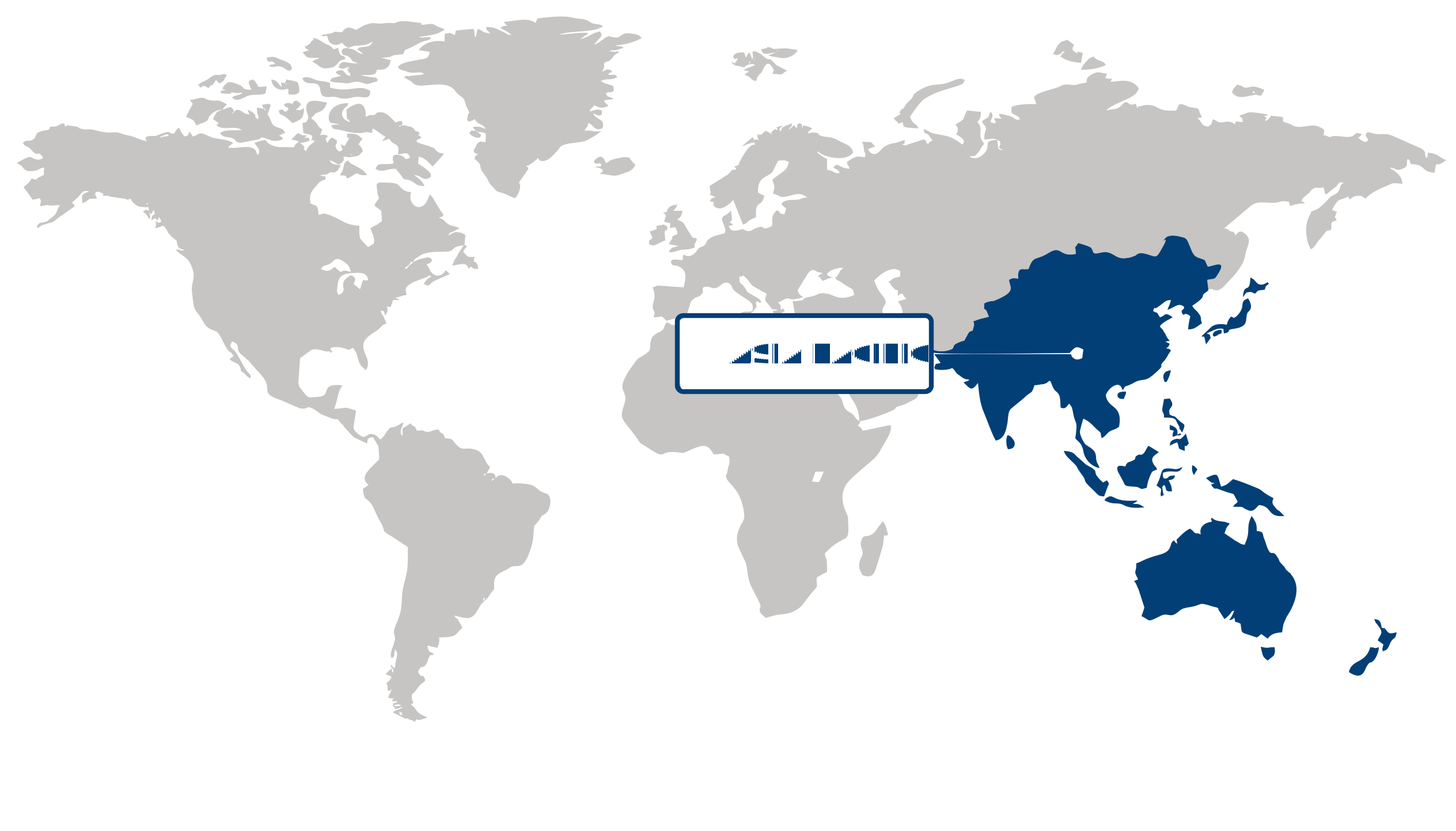
Asia Pacific dominated the industrial labels market in 2025, capturing over 38.3% of the global share and emerging as the fastest-growing region with a robust CAGR of 8.67%. This leadership stems from the region’s status as a manufacturing powerhouse, propelled by burgeoning electronics, automotive, and e-commerce sectors that demand precise traceability and compliance. For instance, the rise of smart manufacturing ecosystems in South Korea and Singapore, supported by agile supply chains and digital labeling technologies, further reinforces this growth. Additionally, regional policies aimed at enhancing product safety and sustainability, such as India’s Goods and Services Tax (GST) system improving transparency, have elevated demand for sophisticated labeling solutions. Looking ahead, the Asia Pacific’s integration of Industry 4.0 innovations alongside escalating industrial output positions it as a fertile ground for investors and strategists seeking sustained expansion in the industrial labels market.
Japan plays a pivotal role in Asia Pacific’s industrial labels market, leveraging its advanced automotive and electronics manufacturing sectors to drive demand for high-precision labeling systems. Companies like Toyota and Sony emphasize strict compliance and product tracking, prompting adoption of durable, high-tech industrial labels. The country’s regulatory frameworks, including stringent product safety standards enforced by the Ministry of Economy, Trade and Industry (METI), ensure rigorous labeling requirements are met. This environment fosters innovation in label materials and printing technologies, as seen in Mitsubishi Electric’s corporate initiatives to improve traceability. Japan’s position as a technological leader enhances Asia Pacific’s overall industrial labels ecosystem, providing sophisticated solutions that elevate the region's competitive edge.
China anchors the Asia Pacific industrial labels market through its vast manufacturing landscape and explosive e-commerce growth, which amplify the need for effective labeling across supply chains. The Chinese government’s Made in China 2025 policy underlines an emphasis on quality and traceability, pushing industries to adopt smart labeling technologies. Leading players such as Huawei and Alibaba integrate advanced labeling for product authentication and logistical efficiency. Additionally, increasing consumer awareness regarding product provenance drives demand for transparent labeling, supported by regulations from the State Administration for Market Regulation (SAMR). China’s massive scale and innovation in industrial labeling reinforce Asia Pacific’s market dominance and create multiple avenues for strategic investment and regional synergy.
North America Market Analysis:
North America held a commanding share in the industrial labels market, driven by its diversified manufacturing base and advanced logistics infrastructure. The region’s industrial sectors, including automotive, aerospace, and pharmaceuticals, continue to increasingly adopt smart labeling solutions to enhance traceability and compliance with stringent regulatory frameworks enforced by the U.S. Food and Drug Administration (FDA) and the Environmental Protection Agency (EPA). Additionally, growing emphasis on sustainability has prompted manufacturers to integrate eco-friendly label materials, supported by initiatives from organizations like the Sustainable Packaging Coalition. Corporate investments in digital transformation, as seen in 3M’s announcement of new digital labeling technologies, further underscore North America’s leading position. These factors combine to position the region as a resilient and innovation-oriented market, offering vast opportunities for industrial label suppliers catering to evolving industry requirements and regulatory landscapes.
The U.S. stands as the pivotal market within North America’s industrial labels market, propelled by substantial industrial output and progressive adoption of automation in supply chains. American manufacturers’ focus on precision, driven by regulations such as the FDA’s Unique Device Identification (UDI) system, demands advanced labeling solutions that ensure product authenticity and safety. Moreover, the U.S. Environmental Protection Agency’s push for reduced chemical waste encourages adoption of recyclable and biodegradable label materials, as highlighted by Avery Dennison’s product launches in sustainable label technologies. High consumer awareness and stringent compliance norms foster a competitive environment that incentivizes innovation in labeling products and services. This dynamic makes the U.S. a strategic hub, amplifying North America’s leadership while encouraging continued technological advancements within the industrial labels market.
Europe Market Trends:
Europe maintained a notable presence in the industrial labels market, driven by its advanced manufacturing base and stringent regulatory landscape emphasizing product traceability and safety. Demand dynamics in this region reflect a shift towards eco-friendly labeling solutions, as highlighted by the European Chemicals Agency’s evolving compliance standards, which encourage sustainable materials adoption. Furthermore, the continent’s focus on digital transformation within industries has led to increased integration of smart labels and automation in labeling processes. Logistics and supply chain sophistication, supported by well-established transportation networks, underpin efficient label distribution across multiple sectors. Companies such as Avery Dennison have announced investments in Europe to bolster innovation in sustainable label offerings, signaling a commitment to long-term regional growth. With its blend of regulatory rigor and innovation, Europe offers significant opportunities for industrial label providers aiming to capitalize on evolving sustainability and technological trends.
Germany holds a dominant position within Europe’s industrial labels market, fueled by its robust automotive and industrial manufacturing sectors that demand high-performance, durable labeling solutions. The country’s push for Industry 4.0, as championed by the German Federal Ministry for Economic Affairs and Energy, promotes the integration of smart labels embedded with RFID and IoT capabilities, enhancing operational efficiency and asset tracking. Additionally, German environmental policies encourage the use of recyclable and biodegradable materials in labeling, as reported by the Federal Environment Agency, reinforcing sustainability commitments across industries. Corporate initiatives such as those by HERMA, a prominent German label manufacturer, emphasize eco-innovation and digital labeling technologies. Germany’s leadership in both industrial output and technological advancement strategically positions it as a cornerstone for driving Europe’s industrial labels market forward.
France plays a critical role in Europe’s industrial labels market, characterized by growing adoption of eco-conscious labeling and stringent chemical regulations propelled by the French Agency for Food, Environmental and Occupational Health & Safety (ANSES). The country’s packaging and consumer goods sectors increasingly favor biodegradable and solvent-free label adhesives, responding to heightened consumer demand for environmentally responsible products. Innovation hubs like those fostered by CCL Industries in France underscore a trend towards integrating digital printing and variable data technologies in labels, enhancing customization and supply chain visibility. These dynamics, reinforced by France’s expanding clean-tech initiatives, contribute to steady industrial label market expansion within the region. France’s evolving regulatory environment and consumer preferences make it a strategic contributor to Europe’s broader market opportunities in sustainable industrial labeling solutions.
| Parameter | North America | Asia Pacific | Europe | Latin America | MEA |
|---|---|---|---|---|---|
| Innovation Hub i Scale Nascent Developing Advanced | |||||
| Cost-Sensitive Region i Scale Low Medium High | |||||
| Regulatory Environment i Scale Restrictive Neutral Supportive | |||||
| Demand Drivers i Scale Weak Moderate Strong | |||||
| Development Stage i Scale Emerging Developing Developed | |||||
| Adoption Rate i Scale Low Medium High | |||||
| New Entrants / Startups i Scale Sparse Moderate Dense | |||||
| Macro Indicators i Scale Weak Stable Strong |
Segment Leadership and Growth Trends
Industrial Labels Market Share (%), by Material, 2026
Go beyond the chart, access full insights & data tables
Request Free Sample ReportPolymer dominated the industrial labels market in 2025, capturing the largest share due to its superior durability and flexibility, which are critical in harsh industrial settings. This leadership stems from increasing demand for materials that withstand extreme temperatures, chemicals, and abrasion, aligning with the need for reliable long-lasting labels. Heightened environmental regulations and sustainability considerations are promoting polymer innovations that reduce waste and enhance recyclability, as highlighted by advancements reported by the U.S. Environmental Protection Agency (EPA). Polymer’s versatility benefits both established manufacturers optimizing supply chains and new entrants targeting niche applications. Given ongoing investments in polymer technology and evolving industry standards, this segment is poised to maintain its prominence as industries prioritize resilient labeling solutions adapting to complex operational challenges.
Analysis by Label Technology
Bar codes represented the largest share in the industrial labels market in 2025, driven predominantly by the escalating demand for efficient product tracking and inventory management. Their widespread adoption is supported by global logistics firms such as DHL and FedEx, which emphasize bar code systems for enhancing operational accuracy and supply chain visibility. Customer preferences favor cost-effective, scalable technologies that integrate seamlessly with digital transformation initiatives, positioning bar codes as essential in manufacturing, retail, and warehousing sectors. The segment’s leadership creates strategic opportunities for companies to innovate through enhanced scanning devices and software solutions. Continued emphasis on streamlined asset tracking and regulatory reporting ensures that bar code labeling remains a cornerstone technology in near- and medium-term industrial logistics infrastructure.
Analysis by Type
Warning/security labels held the largest share of the industrial labels market in 2025, propelled by increasingly stringent workplace safety regulations and compliance mandates internationally. Regulatory bodies like the U.S. Occupational Safety and Health Administration (OSHA) and the European Agency for Safety and Health at Work (EU-OSHA) have reinforced labeling standards requiring clear hazard communication, which escalates demand for highly visible, durable warning labels. Industrial sectors prioritize employee safety and risk mitigation, reflecting cultural shifts towards sustainability and corporate responsibility. This segment allows market participants to develop innovative materials and printing technologies tailored for hazardous environments, fostering competitive differentiation. As regulatory scrutiny continues to tighten and safety remains a top priority, warning and security labels will sustain their critical role across industrial applications in the foreseeable future.
| Segment | Sub-Segment | Largest Segment | Fastest Growing |
|---|---|---|---|
| Material | Polymer, Metal | ||
| Label Technology | Bar Codes, Radio Frequency Identification (RFID), Others | ||
| Type | Warning/Security Labels, Branding Labels, Weatherproof Labels, Equipment Asset Tags, Others | ||
| Printing Technology | Digital Printing, Flexography, Lithography, Screen Printing, Others | ||
| Mechanism | Glue-Applied, Heat-Shrink, Pressure Sensitive, In-Mold, Heat Transfer, Others | ||
| End Use | Consumer Durables, Automotive, Chemicals, Construction, Pharmaceuticals, Food & Beverage, Transportation & Logistics, Others |
Competitive Landscape and Market Positioning
The competitive environment in the industrial labels market features dynamic efforts by leading companies to deepen their market foothold. Several of these firms have expanded through integrated supply chains and broadening their label offerings to include RFID-enabled and smart label technologies, enhancing traceability and automation for clients. Innovations in adhesive formulas, substrate materials, and digital printing have also resulted from sustained research and development, fostering differentiation in application-specific labels for sectors such as automotive, electronics, and healthcare. Cross-border partnerships and targeted acquisitions have strengthened regional presence and product diversification, creating multifaceted competitive pressure that elevates service levels and product customizability. This evolving landscape pushes companies to continuously innovate operationally and strategically to secure distinctive competitive advantages.
Strategic / Actionable Recommendations for Regional Players
In North America, industrial label manufacturers should consider forging alliances with technology firms specializing in IoT and smart sensors to accelerate development of connected labeling solutions that meet rising industry automation demands. Strengthening collaboration with logistics and manufacturing sectors can enhance integrated offerings, particularly in high-growth sub-segments like automotive and electronics, amplifying value propositions through advanced tracking and compliance capabilities.
Within the Asia Pacific market, regional players could benefit from harnessing emerging digital printing and sustainable substrate technologies to address increasing environmental regulations while catering to diverse industrial sectors. Additionally, partnering with global entities for technology transfer could accelerate local innovation, driving scalability. Focusing on nimble production models may capture opportunities in fast-developing economies requiring tailored, low-volume specialty labels.
In Europe, industrial label suppliers might optimize competitiveness by deepening investments in eco-friendly materials and certifications aligned with stringent regulatory frameworks. Collaborations with research institutions to pioneer biodegradable adhesives and advanced recyclability can serve as differentiators. Emphasizing customization through digitalization and service-oriented solutions could strengthen positions amid a mature, innovation-driven marketplace demanding high compliance and technical precision.
| Company | Market Share | Company Revenue | Revenue CAGR (%) | Product Portfolio | Geographic Presence | Innovation / R&D Focus | Strategic Developments |
|---|---|---|---|---|---|---|---|
| No companies available. | |||||||
Industry Development/News
| Company Name | Date | Key Development |
|---|
Customize Your Report
Explore examples of how this report can be tailored to different research needs, including custom segments, additional topics or chapters, and related reports. Click a section of the wheel or its numbered marker to explore the available options.
Industrial Labels Market — Custom Segments
| Segment | Sub-Segment |
|---|---|
| No segment data available. | |
Industrial Labels Market — Custom TOC
| Custom Chapter | Custom Details | ||
|---|---|---|---|
| No custom TOC data available. | |||
Need a different cut of the data?
Request Custom ResearchHow large is the industrial labels market?
How is the industrial labels industry expected to grow over the next 10 years?
Which region captures the largest portion of the industrial labels market value?
Which region has emerged as the fastest-growing for the industrial labels sector?
Why is the polymer segment leading in the industrial labels industry?
Why does bar codes sub-segment dominate the label technology segment of industrial labels sector?
How much is the Warning/Security labels segment expected to grow in the industrial labels industry beyond 2025?
What factors give flexography segment a competitive edge in the industrial labels sector?
Which is the largest sub-segment within the mechanism segment for industrial labels industry?
Why does food & beverage sub-segment dominate the end use segment of industrial labels sector?
Who holds a significant market share in the industrial labels landscape?
Our Clients
"The team at Fundamental Business Insights & Consulting demonstrated a commitment to excellence, not only in the quality of the report but also in their client-centric approach."
FANUC
"The level of detail in the market segmentation provided were particularly noteworthy. The detailed country-level insights were also very helpful."
B&R Industrial Automation GmbH
"The consultant took the time to understand our specific business objectives, ensuring that the reports were tailored to address our unique challenges and opportunities."
KUKA SE & Co. KGaA
Our Research Team & Methodology
Every Fundamental Business Insights report is built by a dedicated vertical research team, validated through a structured primary-and-secondary methodology, and reviewed for accuracy before it reaches you.
Research Team Overview
Prepared by the Industrial Automation & Equipment Research Team
Delivery
Published
Demand
Available
Support
Trust & Compliance
Research Domains
10 coverage areasResearch Intelligence
| Source | Reference |
|---|---|
| International Society of Automation (ISA) | www.isa.org |
| International Organization for Standardization (ISO) | www.iso.org |
| National Institute of Standards and Technology (NIST) | www.nist.gov |
| IEEE | www.ieee.org |
| VDMA (German Mechanical Engineering Industry Association) | www.vdma.org |
| Association for Advancing Automation (A3) | www.automate.org |
| International Federation of Robotics (IFR) | ifr.org |
| ASME (American Society of Mechanical Engineers) | www.asme.org |
| ASHRAE | www.ashrae.org |
| American Society of Heating, Refrigerating and Air-Conditioning Engineers (ASHRAE) | www.ashrae.org |
| Material Handling Industry (MHI) | www.mhi.org |
| OSHA (Occupational Safety and Health Administration) | www.osha.gov |
| National Fire Protection Association (NFPA) | www.nfpa.org |
| ASTM International | www.astm.org |
| International Electrotechnical Commission (IEC) | www.iec.ch |
| Open Process Automation Forum (The Open Group) | www.opengroup.org/open-process-automation-forum |
| AGMA (American Gear Manufacturers Association) | www.agma.org |
| Association of Equipment Manufacturers (AEM) | www.aem.org |
| Food and Agriculture Organization (FAO) | www.fao.org |
| International Labour Organization (ILO) | www.ilo.org |
Research Workflow & Quality Assurance
Data Collection
Verified information gathered through primary and secondary research.
Data Triangulation
Cross-validation using multiple independent data sources.
Forecast Modelling
Market estimates developed using historical trends and analytical models.
Analyst Validation
Findings reviewed by domain experts for accuracy and consistency.
Editorial & Quality Review
Final editorial, quality, and compliance checks before publication.
Final Publication
Released after successful completion of the internal review process.
Report Coverage
📊 Market Assessment
- Market Size & Forecast
- Market Segmentation
- Regional Analysis
- Growth Drivers & Challenges
- Market Dynamics
🏢 Competitive Intelligence
- Competitive Landscape
- Company Profiles
- Competitive Benchmarking
- Mergers & Acquisitions
- Market Share Analysis or Key Company Strategies
🔍 Strategic Analysis
- Value Chain Analysis
- Porter's Five Forces
- PESTLE Analysis
- Pricing Trends
- Supply-Demand Analysis
🚀 Future Outlook
- Technology Landscape
- Regulatory Landscape
- Investment & Funding Landscape
- Emerging Opportunities
- Future Market Outlook
Have a question about this report or need a custom scope?
Request Customization