High Strength Steel Market Size & Forecasts 2026-2035, By Segments (Type, End-Use Industry), Growth Opportunities, Innovation Landscape, Regulatory Shifts, Strategic Regional Insights (U.S., Japan, China, South Korea, UK, Germany, France), and Competitive Dynamics (ArcelorMittal, Nippon Steel, Baosteel Group, POSCO, Tata Steel)
Market Size and Growth Outlook
High Strength Steel Market size is predicted to expand from USD 217.83 billion in 2025 to USD 732.92 billion by 2035, with growth underpinned by a CAGR above 12.9% between 2026 and 2035. The industry revenue outlook for 2026 is USD 242.94 billion.
Get more details on this report
Request Free Sample ReportHigh Strength Steel Market Intelligence Snapshot
Regional Market Dynamics
Segment Momentum
Market Expansion Drivers
Leading Market Participants
Global Market Forecast Snapshot
Market Outlook
Regional and Segment Outlook
Market Growth Drivers and Industry Trends
The high strength steel market is significantly propelled by increasing requirements from the automotive, construction, and defense industries, each prioritizing enhanced performance and safety standards. Automotive companies such as Ford and General Motors emphasize lightweight, durable materials to meet stringent fuel efficiency and crashworthiness regulations set by agencies like the National Highway Traffic Safety Administration (NHTSA). Similarly, the construction sector's push toward resilient infrastructure, highlighted in recent U.S. Department of Transportation initiatives, demands steels capable of withstanding extreme conditions. Defense contractors, including Lockheed Martin, seek high strength steel for armored vehicles and military assets, reflecting heightened geopolitical tensions. This cross-sector demand creates opportunities for both established mills to innovate and newcomers to focus on niche, specialized alloys. The convergence of these industries ensures sustained momentum in adoption, with ongoing regulatory and safety-driven enhancements reinforcing market expansion.
Innovation in High-Strength and Lightweight Steel Alloys
Technological advancements in alloy composition and processing are reshaping the high strength steel market, driven by a need for materials offering superior strength-to-weight ratios. Companies such as ArcelorMittal and Nippon Steel have unveiled new grades of steel that improve structural integrity while reducing mass, securing competitive advantages in automotive and aerospace applications. These innovations align with sustainability goals emphasized by global frameworks from the International Energy Agency, catering to end-users’ pursuit of lower carbon footprints. Enhanced metallurgical techniques, including advanced heat treatment and coating methods, open avenues for product differentiation and premium pricing strategies, encouraging entrants with specialized R&D capabilities. Continued innovation points toward increasingly sophisticated steel solutions tailored for demanding applications, supporting long-term resilience and diversity within the high strength steel market ecosystem.
Expansion in Infrastructure and Industrial Applications in Emerging Markets
Rapid urbanization and industrialization in emerging economies are key forces expanding the high strength steel market, driven by large-scale infrastructure projects and manufacturing growth. Governments in India and Brazil, through their respective Ministries of Steel or Infrastructure, have ramped up investments in transportation networks, energy facilities, and industrial parks that require durable, high-performance steel materials. This trend benefits steel producers willing to localize supply chains and cultivate partnerships with regional contractors, differentiating themselves through responsiveness and customization. New entrants can leverage cost advantages and regional insights to capture market share, while major players focus on scaling production and logistical efficiency. Sustained infrastructure development in these regions points to a durable demand baseline, securing the market’s geographic diversification and supporting global competitiveness over the medium term.
Industry Restraints:
High Production Costs and Energy Intensity
The high production costs associated with manufacturing high strength steel serve as a significant barrier to market expansion by limiting widespread adoption, particularly in cost-sensitive end-use industries. Elevated energy consumption—highlighted in the International Energy Agency’s report on steelmaking—drives operational expenses and subjects producers to volatile energy pricing, constraining margin flexibility. ArcelorMittal’s financial disclosures illustrate that energy remains among the top cost components, pressuring pricing strategies for both premium and bulk contracts. These cost pressures limit smaller enterprises’ ability to compete and deter new entrants lacking capital for advanced, energy-efficient technologies. In the medium term, as global energy markets face instability and carbon pricing mechanisms intensify, companies that fail to optimize energy use or secure affordable inputs will likely face increasing cost disadvantages, slowing innovation and commercial penetration in the high strength steel segment.
Stringent Environmental Regulations and Decarbonization Mandates
Evolving environmental policies impose stringent emissions limits that restrict the operational latitude of high strength steel manufacturers, particularly those reliant on traditional blast furnace methods. The European Union’s Emissions Trading System (ETS) escalates carbon costs, as evidenced by Tata Steel Europe’s recent acknowledgments of regulatory impacts on profit margins. This regulatory climate necessitates significant capital investments in breakthrough processes like hydrogen-based direct reduction, posing barriers to incumbents with legacy infrastructure and small innovators unable to fund costly retrofits. As global consensus on carbon neutrality tightens, compliance imperatives will increasingly dictate market participation and shift competitive advantage toward firms embracing green steel solutions. This regulatory pressure is poised to intensify, reshaping supply chains and prompting strategic realignments around sustainability commitments in the coming years.
| Growth Driver | Impact on CAGR | Regulatory Influence | Geographic Relevance | Adoption Rate | Impact Timeline |
|---|---|---|---|---|---|
| Demand from automotive, construction & defense sectors | 5.00% | Short term (≤ 2 yrs) | North America, Europe | Medium | Fast |
| Innovation in high-strength & lightweight steel alloys | 4.00% | Medium term (2–5 yrs) | Europe, Asia Pacific | Low | Moderate |
| Expansion in infrastructure and industrial applications in emerging markets | 3.90% | Long term (5+ yrs) | Asia Pacific; Spillover: Latin America | Low | Moderate |
Unlock insights tailored to your business with our bespoke market research solutions.
Click to get your customized report now.
Regional Demand Dynamics
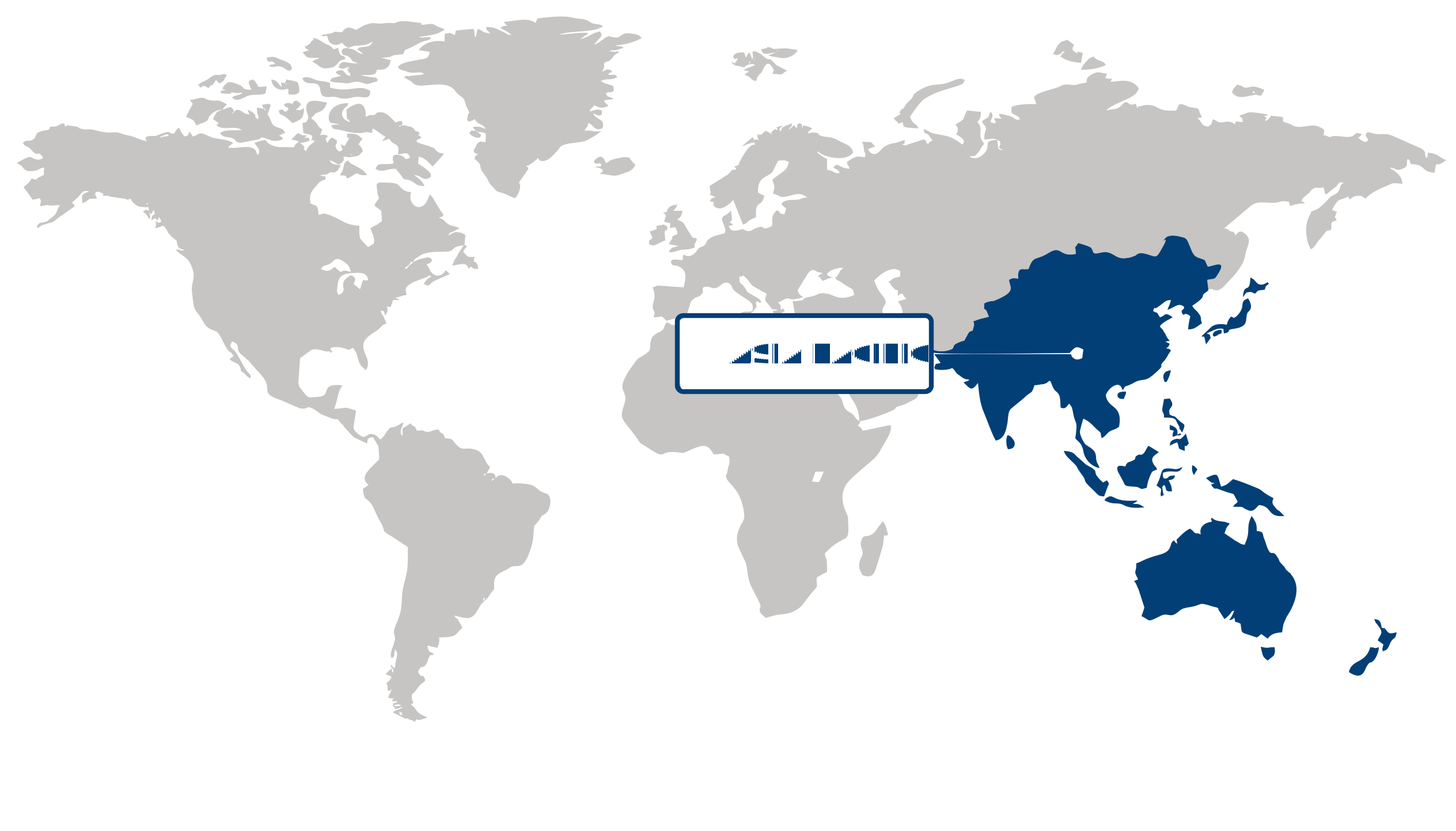
The Asia Pacific region dominated the high strength steel market in 2025, representing more than 63.62% of the global share and exhibiting the fastest growth with a 15.48% CAGR. This leadership is primarily driven by massive investments in construction mega-projects and expansive automotive production, which continue to fuel demand for advanced materials that combine durability with weight efficiency. Governments including China’s Ministry of Housing and Urban-Rural Development have accelerated infrastructure spending, while automotive manufacturers like Toyota have increased adoption of high strength steel to meet evolving safety and emissions standards. The region’s dynamic urbanization, coupled with advancements in steel processing technologies and streamlined supply chains, positions Asia Pacific as a critical hub offering substantial opportunities for investment and innovation in the high strength steel market.
Japan plays a pivotal role in the Asia Pacific high strength steel market as a leader in automotive innovation and industrial steel production. As companies such as Nissan and Toyota integrate next-generation high strength steel to enhance vehicle safety and reduce carbon footprints, Japan’s regulatory environment supports sustainable material use, underpinning demand growth. Furthermore, Japan’s steelmakers, including Nippon Steel Corporation, focus on technological innovation that improves product performance, reinforcing the country’s influence on regional supply capabilities. This continuous advancement bolsters Asia Pacific’s position as the largest and fastest-growing market by supplying cutting-edge materials for automotive and infrastructural development.
China anchors the Asia Pacific high strength steel market by virtue of its vast scale of construction and automotive manufacturing activities. The country’s ambitious infrastructure initiatives, driven by policies from the National Development and Reform Commission, stimulate high strength steel demand to support resilient urban structures and efficient transport systems. Major steel producers such as Baosteel emphasize capacity expansion and sustainability to meet these needs amid competitive pressures. Moreover, rising consumer preferences for advanced, safer vehicles enhance the adoption of high strength steel in passenger and commercial automotive segments. China’s central role amplifies the region’s growth potential, exemplifying how localized industrial strategies fuel broader regional opportunities in the high strength steel market.
Europe Market Analysis:
Europe held a commanding share of the high strength steel market, driven by its advanced manufacturing base and stringent regulatory frameworks emphasizing sustainability and safety. The region benefits from a robust automotive and infrastructure sector that demands enhanced material performance to meet evolving environmental standards set by entities like the European Commission. Germany and France, as key contributors, leverage technological innovation and efficiency improvements, supported by initiatives such as Germany’s Industrie 4.0 and France’s push for green manufacturing practices spearheaded by ADEME (French Environment and Energy Management Agency). These factors, combined with evolving consumer preferences toward sustainable and lightweight vehicles, elevate Europe’s strategic importance. Continuous investments in digital transformation and strong integration across supply chains promise sustained opportunities in the high strength steel market, as companies align products with the EU’s Green Deal targets for carbon neutrality.
Germany serves as a pivotal player within Europe’s high strength steel market, anchored by its leading automotive industry and precision engineering sectors. German manufacturers such as Thyssenkrupp and ArcelorMittal strategically focus on lightweight and ultra-high-strength steel variants to meet the demands of rigorous EU safety and emissions regulations. This is exemplified by Volkswagen’s adoption of advanced high strength steel in its electric vehicle platforms, responding to increasing consumer expectations for performance and efficiency. Germany’s emphasis on Industry 4.0 automation and smart factory innovations further enhances production capability and supply chain resiliency. These dynamics reinforce Germany’s role as a technology and manufacturing hub, underpinning Europe’s overall competitive edge in the high strength steel market.
France contributes significantly to the European high strength steel market through its diversified industrial ecosystem and government-backed environmental initiatives. The country’s steel manufacturers, supported by the French Ministry for the Ecological Transition, are accelerating the use of sustainable production methods and recycled content, aligning with broader EU climate goals. PSA Group’s integration of high strength steel in premium automotive segments evidences rising domestic demand for advanced materials that improve fuel efficiency and safety. Additionally, infrastructure projects focused on public transportation modernization expand steel consumption. France’s combination of regulatory support, evolving industrial standards, and customer preference shifts towards eco-friendly products positions it as a vital contributor to Europe’s robust market presence in high strength steel, enhancing regional growth opportunities.
North America Market Trends:
North America held a substantial share in the high strength steel market, driven by the region's robust automotive and aerospace sectors that demand lighter yet durable materials. The increasing emphasis on fuel efficiency and carbon footprint reduction has accelerated adoption, supported by stringent environmental regulations spearheaded by agencies such as the U.S. Environmental Protection Agency. Moreover, advancements in manufacturing technologies, including automation and advanced rolling techniques reported by the American Iron and Steel Institute, have enhanced production efficiency and material performance. The region’s well-established logistics infrastructure and skilled workforce further bolster supply chain reliability. With sustained investment in research and development and governmental encouragement for sustainable materials, North America presents considerable opportunities to capitalize on evolving consumer preferences and regulatory frameworks favoring high strength steel.
The U.S. plays a pivotal role in the high strength steel market as a primary demand driver, influenced by its significant automotive manufacturing base where light-weighting remains a key strategic goal. The U.S. Department of Energy’s initiatives promoting energy-efficient vehicle technologies have incentivized the use of stronger, lighter steels, prominently impacting domestic demand dynamics. Leading firms like Nucor Corporation have reported capacity expansions and technological upgrades emphasizing high strength steel products, reflecting competitive intensity and innovation in the region. This domestic momentum positions the U.S. as a lynchpin for scaling high strength steel adoption across North America, underlining the strategic importance of aligning production capabilities with evolving regulatory standards and sustainability targets.
| Parameter | North America | Asia Pacific | Europe | Latin America | MEA |
|---|---|---|---|---|---|
| Innovation Hub i Scale Nascent Developing Advanced | |||||
| Cost-Sensitive Region i Scale Low Medium High | |||||
| Regulatory Environment i Scale Restrictive Neutral Supportive | |||||
| Demand Drivers i Scale Weak Moderate Strong | |||||
| Development Stage i Scale Emerging Developing Developed | |||||
| Adoption Rate i Scale Low Medium High | |||||
| New Entrants / Startups i Scale Sparse Moderate Dense | |||||
| Macro Indicators i Scale Weak Stable Strong |
Segment Leadership and Growth Trends
High Strength Steel Market Share (%), by Type, 2026
Go beyond the chart, access full insights & data tables
Request Free Sample ReportThe high strength steel market was led by the high strength low alloy segment in 2025, representing the largest share among types. This segment dominates due to its superior balance of lightweight characteristics and high durability, meeting increasing demand in structural applications where strength-to-weight ratio is critical. Automotive manufacturers and construction firms increasingly prefer these steels to meet stringent regulations on emissions and fuel efficiency, as highlighted in recent materials sourcing guidelines published by the U.S. Department of Energy. Moreover, advancements in alloy composition and processing, reported by ArcelorMittal, have enhanced weldability and corrosion resistance. This positions the segment favorably for firms focusing on innovation-driven differentiation and cost-effective supply chains. With ongoing global emphasis on sustainable infrastructure and energy-efficient vehicles, high strength low alloy steels are expected to maintain their prominence, driven by evolving safety standards and environmental targets enacted by regulatory bodies worldwide.
Analysis by End-Use Industry
The automotive segment held the largest share in the high strength steel market in 2025, reflecting its central role in industry growth dynamics. This segment's leadership stems largely from the automotive sector's accelerated push for vehicle lightweighting and safety improvements, critical to meeting regulatory mandates such as the Euro NCAP safety ratings and the U.S. National Highway Traffic Safety Administration’s fuel economy standards. Leading OEMs like Ford and Toyota have publicly committed to increased usage of advanced high strength steels, emphasizing enhanced crashworthiness alongside weight reduction to improve efficiency and performance. Customer demand for safer, more fuel-efficient vehicles drives material innovation and supplier competition. This segment offers strategic opportunities for both established steel producers and newer entrants specializing in tailored steel grades meeting complex automotive requirements. Given the sustained regulatory and consumer focus on vehicle sustainability and safety, the automotive end-use segment is poised to remain pivotal in the high strength steel market landscape.
| Segment | Sub-Segment | Largest Segment | Fastest Growing |
|---|---|---|---|
| Type | Carbon Manganese, High Strength Low Alloy, Bake Hardenable, Dual Phase Steel | ||
| End-Use Industry | Automotive, Construction, Aviation & Marine, Yellow Goods & Mining Equipment, Others |
Competitive Landscape and Market Positioning
The competitive landscape of the high strength steel market is shaped by dynamic initiatives that enhance technological integration and market reach. Major players actively engage in collaborative ventures and integrate cutting-edge metallurgical research to improve product performance and sustainability. Recent efforts include the rollout of advanced steel grades designed for lightweight applications and higher strength-to-weight ratios, responding to evolving industry demands. Strategic mergers and asset realignments have reinforced supply chain efficiencies and expanded global distribution networks. This continuous refinement of capabilities underscores a landscape where innovation and operational excellence are pivotal to sustaining competitiveness and capturing emerging opportunities within key end-use industries.
Strategic / Actionable Recommendations for Regional Players
Market participants in North America would benefit from deepening cooperation with technology developers and automotive manufacturers focused on electrification and lightweight design. Harnessing additive manufacturing techniques and advanced digital metallurgy could unlock new application potentials while differentiating product offerings amid intensifying regional competition.
In the Asia Pacific, companies should explore expanding ties with infrastructure and consumer electronics sectors, leveraging high strength steel’s versatility for durability and miniaturization. Investments in automation and eco-friendly production processes can enhance cost efficiency and regulatory alignment, reinforcing leadership in a diverse and rapidly evolving demand environment.
European players might strengthen their position by fostering alliances that prioritize customization and specialty steel variants tailored to high-end engineering and renewable energy markets. Emphasizing circular economy principles and leveraging digital supply chain tools will further sharpen responsiveness to customer needs and sustainability expectations across the region.
| Company | Market Share | Company Revenue | Revenue CAGR (%) | Product Portfolio | Geographic Presence | Innovation / R&D Focus | Strategic Developments |
|---|---|---|---|---|---|---|---|
| No companies available. | |||||||
Industry Development/News
| Company Name | Date | Key Development |
|---|
Customize Your Report
Explore examples of how this report can be tailored to different research needs, including custom segments, additional topics or chapters, and related reports. Click a section of the wheel or its numbered marker to explore the available options.
High Strength Steel Market — Custom Segments
| Segment | Sub-Segment |
|---|---|
| No segment data available. | |
High Strength Steel Market — Custom TOC
| Custom Chapter | Custom Details | ||
|---|---|---|---|
| No custom TOC data available. | |||
Need a different cut of the data?
Request Custom ResearchWhat is the market valuation of high strength steel?
What are the growth projections for the high strength steel industry?
What is the leading region in terms of high strength steel market share?
Which region is experiencing the fastest growth in the high strength steel sector?
What share does high strength low alloy segment hold in the high strength steel sector as of 2025?
Where is the automotive segment seeing the strongest adoption within the high strength steel industry?
Which companies dominate the high strength steel landscape?
Our Clients
"Your insights on workforce structures were spot-on. The analysis on mid-to-senior level roles validated some of our hiring decisions and highlighted gaps."
Ateliers De France
"The report gave us insights on competitors in the market. It helped our team refine our bidding strategy for upcoming contracts."
Clark Construction
"The reports provided a deep dive into market trends, and competitive landscape. The strategic insights and recommendations have been very helpful."
Rudolph and Sletten
Our Research Team & Methodology
Every Fundamental Business Insights report is built by a dedicated vertical research team, validated through a structured primary-and-secondary methodology, and reviewed for accuracy before it reaches you.
Research Team Overview
Prepared by the Construction & Manufacturing Research Team
Delivery
Published
Demand
Available
Support
Trust & Compliance
Research Domains
10 coverage areasResearch Intelligence
| Source | Reference |
|---|---|
| International Organization for Standardization (ISO) | www.iso.org |
| ASTM International | www.astm.org |
| National Institute of Standards and Technology (NIST) | www.nist.gov |
| International Code Council (ICC) | www.iccsafe.org |
| American Concrete Institute (ACI) | www.concrete.org |
| American Institute of Steel Construction (AISC) | www.aisc.org |
| Construction Industry Institute (CII) | www.construction-institute.org |
| Associated General Contractors of America (AGC) | www.agc.org |
| Association of Equipment Manufacturers (AEM) | www.aem.org |
| Building Owners and Managers Association (BOMA) | www.boma.org |
| American Society of Civil Engineers (ASCE) | www.asce.org |
| National Ready Mixed Concrete Association (NRMCA) | www.nrmca.org |
| International Facility Management Association (IFMA) | www.ifma.org |
| World Green Building Council (WorldGBC) | worldgbc.org |
| International Federation of Consulting Engineers (FIDIC) | fidic.org |
| International Labour Organization (ILO) | www.ilo.org |
| American Society of Mechanical Engineers (ASME) | www.asme.org |
| Society of Manufacturing Engineers (SME) | www.sme.org |
| National Association of Home Builders (NAHB) | www.nahb.org |
| European Construction Industry Federation (FIEC) | www.fiec.eu |
Research Workflow & Quality Assurance
Data Collection
Verified information gathered through primary and secondary research.
Data Triangulation
Cross-validation using multiple independent data sources.
Forecast Modelling
Market estimates developed using historical trends and analytical models.
Analyst Validation
Findings reviewed by domain experts for accuracy and consistency.
Editorial & Quality Review
Final editorial, quality, and compliance checks before publication.
Final Publication
Released after successful completion of the internal review process.
Report Coverage
📊 Market Assessment
- Market Size & Forecast
- Market Segmentation
- Regional Analysis
- Growth Drivers & Challenges
- Market Dynamics
🏢 Competitive Intelligence
- Competitive Landscape
- Company Profiles
- Competitive Benchmarking
- Mergers & Acquisitions
- Market Share Analysis or Key Company Strategies
🔍 Strategic Analysis
- Value Chain Analysis
- Porter's Five Forces
- PESTLE Analysis
- Pricing Trends
- Supply-Demand Analysis
🚀 Future Outlook
- Technology Landscape
- Regulatory Landscape
- Investment & Funding Landscape
- Emerging Opportunities
- Future Market Outlook
Have a question about this report or need a custom scope?
Request Customization