Facial Care Market Size & Forecasts 2026-2035, By Segments (End User, Product, Distribution Channel), Growth Opportunities, Innovation Landscape, Regulatory Shifts, Strategic Regional Insights (U.S., Japan, China, South Korea, UK, Germany, France), and Competitive Dynamics (L'Oréal, Estée Lauder, Procter & Gamble, Unilever, Shiseido)
Market Size and Growth Outlook
Facial Care Market size is forecasted to reach USD 272.39 billion by 2035, rising from USD 129.73 billion in 2025, at a CAGR of more than 7.7% between 2026 and 2035. In 2026, revenue is projected at USD 138.49 billion.
Get more details on this report
Request Free Sample ReportFacial Care Market Intelligence Snapshot
Regional Market Dynamics
Segment Momentum
Market Expansion Drivers
Leading Market Participants
Global Market Forecast Snapshot
Market Outlook
Regional and Segment Outlook
Market Growth Drivers and Industry Trends
Heightened consumer awareness around facial care and anti-aging solutions is reshaping the facial care market by driving demand for targeted, efficacy-focused products. This shift is fueled by widespread information access through digital platforms and endorsements from dermatological associations such as the American Academy of Dermatology, which emphasize the benefits of early skin protection and age-defying ingredients. Proactive consumers are seeking products with clinically proven benefits, prompting established brands like L’Oréal to expand their anti-aging portfolios. New entrants can capitalize on niche segments, emphasizing natural and scientifically validated formulations. This sustained awareness will keep consumers engaged in lifelong skincare regimes, encouraging innovation and diversified product offerings aligned with evolving consumer expectations.
Innovations in Facial Care Formulations and Delivery Systems
Breakthroughs in ingredient technology and delivery mechanisms are significantly advancing the facial care market’s sophistication. Companies such as Estée Lauder have introduced encapsulated active ingredients and controlled-release formulations to enhance product stability and efficacy, responding to increasingly discerning consumers. Regulatory approvals for novel ingredients by entities like the U.S. Food and Drug Administration further endorse innovation credibility. Such advances open strategic avenues for incumbents to reinforce premium positioning and for emerging firms to differentiate through technology-driven solutions. As innovation accelerates, the market will likely see enhanced customization and multifunctionality, driven by R&D investments and collaborations with biotech startups, embedding science deeper into consumer appeal.
Expansion of Facial Care Product Distribution in Emerging Markets
The growth of the facial care market is being accelerated by expanding distribution channels in emerging economies, where rising disposable incomes and urbanization are fostering new consumer segments. Retail giants like Natura &Co have actively increased access to facial care products through omnichannel strategies in regions such as Latin America and Southeast Asia. Additionally, e-commerce platforms including Alibaba’s Tmall facilitate broad market penetration by connecting brands directly with digital-savvy consumers. This enhanced accessibility offers strategic opportunities for both global leaders and agile local startups to scale rapidly and tailor offerings to regional preferences. The continuing infrastructure and digital retail evolution in these markets will sustain distribution-led growth and diversify the global landscape of facial care consumption.
Industry Restraints:
Stringent Regulatory Compliance and Ingredient Restrictions
The facial care market is significantly constrained by increasingly rigorous regulatory frameworks governing product safety, ingredient transparency, and environmental impact. Agencies such as the U.S. Food and Drug Administration (FDA) and the European Chemicals Agency (ECHA) enforce strict limits on ingredients, compelling companies to reformulate or withdraw products. For instance, ECHA’s restriction on certain preservatives and UV filters has forced major brands like L’Oréal to revise formulations, increasing R&D costs and time-to-market. This regulatory complexity raises barriers for smaller innovators lacking resources to navigate compliance, while established players face escalating legal risks and operational inefficiencies. The evolving regulatory landscape necessitates continuous adaptation, promoting cautious innovation and favoring companies with robust compliance infrastructures. Over the medium term, regulatory pressures will likely intensify as environmental and health concerns drive policy updates, shaping product portfolios toward safer, certified ingredients and transparency, thereby slowing rapid expansion in certain categories.
Supply Chain Disruptions and Raw Material Scarcity
Persistent supply chain disruptions and the scarcity of key natural ingredients hamper the facial care sector's growth dynamics and cost structures. The COVID-19 pandemic and geopolitical tensions have exposed vulnerabilities, including limited availability of botanicals such as jojoba oil and green tea extracts, critical for premium products. Estée Lauder Companies highlighted production slowdowns due to sourcing challenges in their Q4 2023 earnings call, illustrating widespread operational hurdles. These disruptions increase input costs and inventory volatility, which restrict the ability of both incumbents and newcomers to maintain steady product innovation and satisfy consumer demand promptly. Strategic sourcing diversification and investment in synthetic or alternative materials are required, but these solutions involve trade-offs on product claims and consumer perception. Looking ahead, supply chain instability is expected to remain a defining restraint, enforcing a conservative market expansion strategy and stronger emphasis on supply security and transparency.
| Growth Driver | Impact on CAGR | Regulatory Influence | Geographic Relevance | Adoption Rate | Impact Timeline |
|---|---|---|---|---|---|
| Increasing awareness of facial care and anti-aging products | 2.50% | Short term (≤ 2 yrs) | North America, Europe; Spillover: Asia Pacific | Low | Fast |
| Innovations in facial care formulations and delivery systems | 2.00% | Medium term (2–5 yrs) | Europe, North America; Spillover: Asia Pacific | Low | Moderate |
| Expansion of facial care product distribution in emerging markets | 1.50% | Long term (5+ yrs) | Asia Pacific, Latin America; Spillover: MEA | Low | Slow |
Explore Growth Opportunities
Request Free Sample ReportRegional Demand Dynamics
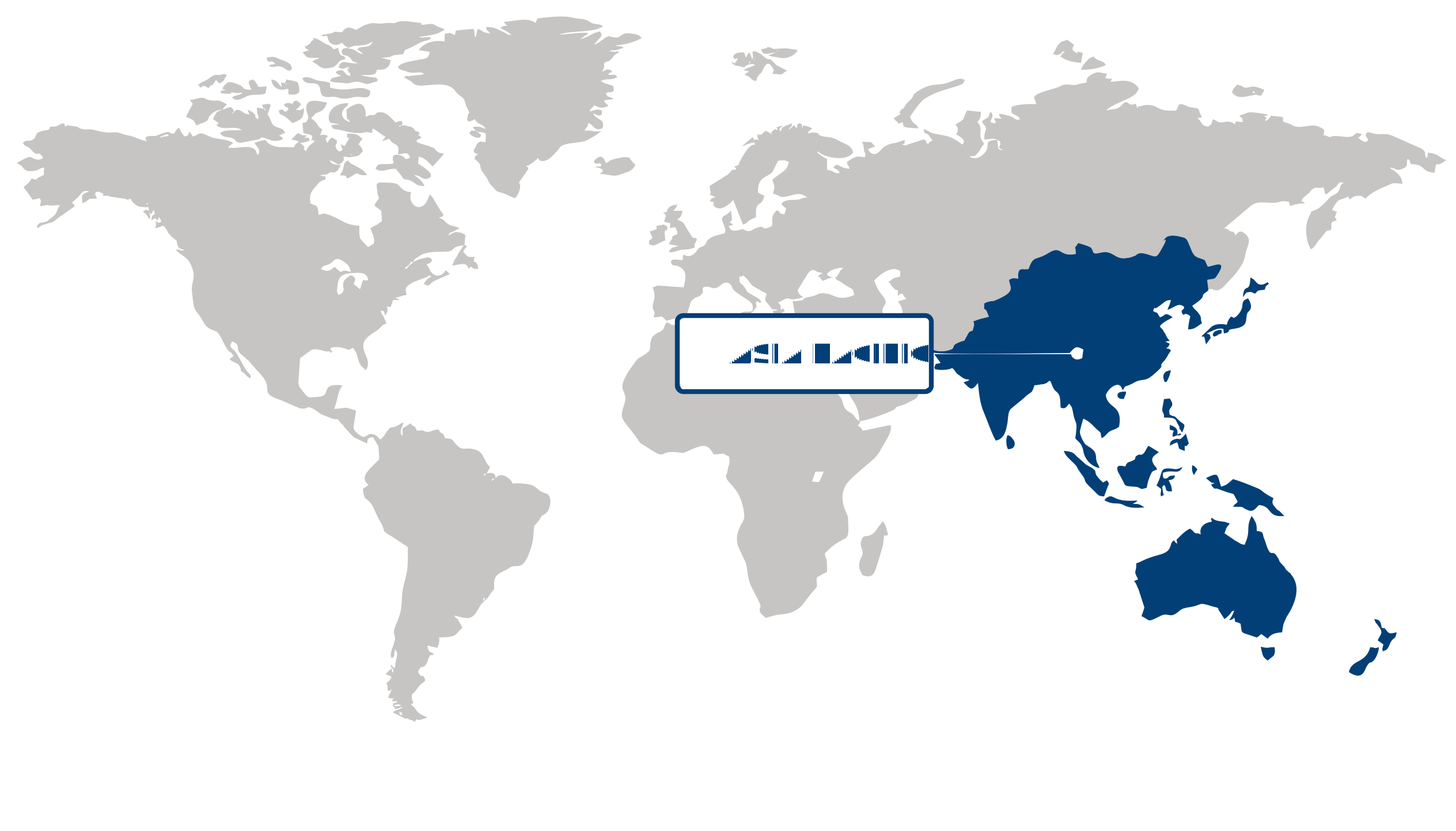
The Asia Pacific region captured over 39% of the global facial care market in 2025, establishing itself as the largest market worldwide. This leading position is underpinned by a dynamic beauty industry, where evolving consumer preferences for multi-step skincare routines drive sustained demand. Markets such as South Korea and Japan, recognized by the Korean Cosmetics Industry Association and Japan Cosmetic Industry Association respectively, exemplify sophisticated skincare practices that emphasize layering and specialized products. Additionally, rising disposable incomes and increasing digital engagement across the region facilitate rapid product awareness and adoption. Supply chain advancements, coupled with stringent regulatory standards from authorities like Japan’s Ministry of Health, Labour and Welfare, enhance consumer confidence. These factors foster a competitive landscape rich in innovation, allowing Asia Pacific to offer significant growth prospects in the facial care market amid shifting consumer behaviors and ongoing industry modernization.
Japan is positioned as a pivotal hub in the Asia Pacific facial care market, distinguished by its emphasis on high-quality, science-driven skincare products. Japanese consumers increasingly demand efficacy and safety, reflected in regulatory rigor from entities such as the Pharmaceuticals and Medical Devices Agency (PMDA), which guides product approvals and labeling. Japanese companies like Shiseido leverage advanced research and development to cater to this discerning market, integrating traditional and modern skincare elements. The prevalence of multi-step regimens, supported by Japanese media and beauty influencers, further stimulates the country's market vitality. This strong domestic foundation, combined with global brand presence, bolsters Japan’s strategic role within the region, amplifying Asia Pacific’s facial care opportunities through innovation and consumer trust.
China anchors the Asia Pacific facial care market with unprecedented scale and rapid growth driven by burgeoning middle-class consumers who prioritize elaborate skincare routines. The National Medical Products Administration (NMPA) enforces regulations that ensure product quality while fostering a competitive environment propelling domestic and international brands to expand. Chinese consumers increasingly embrace premium and niche brands, fueled by digital platforms such as Tmall and RED that introduce diverse multi-step skincare products. Major companies like L’Oréal and Procter & Gamble have expanded investments and digital marketing initiatives tailored to local preferences. This vibrant market dynamic, supported by evolving consumption patterns and advanced e-commerce logistics, strengthens China’s critical contribution to the robust growth and innovation landscape in the Asia Pacific facial care market.
North America Market Analysis:
North America emerged as the fastest-growing region in the facial care market, registering a robust CAGR of 9.24%. This growth is largely driven by the increasing adoption of personalized skincare solutions and tech-enabled beauty tools, reflecting a shift toward customization and digital integration in consumer beauty routines. Major market players such as Procter & Gamble and Estée Lauder have invested heavily in advanced diagnostic technologies and AI-driven applications to cater to this demand, as highlighted in their recent corporate press releases. Furthermore, heightened consumer awareness about skin health, coupled with rising disposable incomes and digital literacy, has accelerated the uptake of smart devices that deliver tailored skincare regimens. Regulatory support from the U.S. Food and Drug Administration (FDA) on beauty tech innovations also boosts investor confidence. Going forward, North America’s innovation-centric ecosystem offers significant opportunities for brands to leverage data-driven personalization and expand their market share in the evolving facial care landscape.
The U.S. holds a pivotal role within North America’s facial care market, with personalized skincare solutions deeply influencing consumer preferences and purchasing behaviors. American consumers increasingly seek bespoke formulations addressing specific skin concerns, propelled by the rise of direct-to-consumer brands like Curology, which utilize dermatologist consultations and AI to customize products. Regulatory oversight by the FDA ensures product safety and efficacy, encouraging brand transparency and consumer trust. Additionally, the U.S. market benefits from a well-established e-commerce framework, enabling rapid penetration of tech-enabled beauty tools across diverse demographics. The proactive innovation strategy of U.S.-based companies, supported by partnerships with technology firms, underlines the country’s leadership in shaping regional trends and sustaining North America’s growth momentum in the facial care market.
Europe Market Trends:
Europe held a commanding share in the facial care market, driven by a sophisticated consumer base prioritizing premium, sustainable skincare solutions. The region’s stringent regulatory environment, exemplified by the European Chemicals Agency’s (ECHA) rigorous standards, has elevated product safety and transparency, fostering consumer trust and loyalty. Additionally, rising digital engagement through platforms like L’Oréal’s augmented reality virtual try-on tools has reshaped buying behaviors, boosting online sales. Europe benefits from a well-established supply chain network that supports innovation while responding to increasing preferences for cruelty-free and natural ingredients, as documented in recent press releases by Beiersdorf AG. Given its economic resilience and ongoing emphasis on environmentally responsible manufacturing, Europe presents substantial growth opportunities in the facial care market.
Germany plays a pivotal role in Europe’s facial care market, fueled by a strong culture of wellness and high demand for scientifically backed formulations. German consumers gravitate toward brands that combine efficacy and sustainability, supported by regulations from the Federal Institute for Risk Assessment (BfR), which influence product development. The market witnessed heightened activity from companies like Dr. Hauschka, which integrates biodynamic ingredients into its portfolio, signaling robust innovation. Germany’s emphasis on clinical validation and green technology adoption underscores its strategic importance within Europe, reinforcing regional growth and positioning the country as a hub for premium, research-driven facial care products.
France serves as a key driver in Europe’s facial care market, leveraging its global reputation as a hub for luxury cosmetics and skincare innovation. French consumers’ affinity for cutting-edge formulations and heritage brands propels demand, underscored by L’Oréal Group’s continual launch of novel ingredients and formulations that align with evolving preferences for clean beauty. Regulatory oversight by the French Agency for the Safety of Health Products (ANSM) ensures high safety standards, further elevating market confidence. France’s combination of heritage-driven branding and robust innovation ecosystems highlights its strategic contribution to Europe’s facial care market, offering investors compelling prospects for scaling premium skincare solutions across the continent.
| Parameter | North America | Asia Pacific | Europe | Latin America | MEA |
|---|---|---|---|---|---|
| Innovation Hub i Scale Nascent Developing Advanced | |||||
| Cost-Sensitive Region i Scale Low Medium High | |||||
| Regulatory Environment i Scale Restrictive Neutral Supportive | |||||
| Demand Drivers i Scale Weak Moderate Strong | |||||
| Development Stage i Scale Emerging Developing Developed | |||||
| Adoption Rate i Scale Low Medium High | |||||
| New Entrants / Startups i Scale Sparse Moderate Dense | |||||
| Macro Indicators i Scale Weak Stable Strong |
Segment Leadership and Growth Trends
Facial Care Market Share (%), by End User, 2026
Go beyond the chart, access full insights & data tables
Request Free Sample ReportThe women segment represented largest share in the facial care market in 2025, driven primarily by increased female consumer focus on premium facial care products and routines. This leadership reflects shifting customer preferences toward advanced formulations and personalized skincare regimens emphasizing anti-aging and radiance-enhancing benefits. Insights from L’Oréal’s corporate disclosures highlight robust innovation pipelines geared to female consumers, incorporating sustainable sourcing and inclusive branding. This segment’s dominance enables established firms to deepen brand loyalty while offering emerging players entry points via niche, premium, or clean-label products. Given evolving regulatory emphasis on ingredient transparency from authorities like the U.S. FDA, the women segment is positioned for sustained relevance fueled by both demographic trends and rising digital engagement in beauty education.
Analysis by Product
The creams segment held largest share in the facial care market in 2025, supported by strong and consistent demand for moisturizing and anti-aging facial creams. Consumers’ increasing prioritization of skin hydration and wrinkle reduction has propelled innovation in multifunctional formulations, as recognized by Johnson & Johnson’s product launches featuring bioactive and clinically validated ingredients. Distribution enhancements and supply chain optimizations have facilitated accessibility across diverse global markets. This segment’s prominence presents strategic advantages for both market leaders expanding premium offerings and emerging brands capitalizing on natural and clean beauty trends. The creams segment is expected to maintain its leadership due to ongoing advancements in dermatologically tested ingredients and growing consumer education regarding skincare efficacy.
Analysis by Distribution Channel
The online segment dominated the facial care market in 2025, accelerated by rapid adoption of e-commerce platforms for beauty and skincare products. Changing consumer shopping behaviors, combined with digital transformation initiatives by retailers like Sephora and Amazon, have enhanced personalized shopping experiences through virtual consultations and AI-driven product recommendations. This shift supports increased product accessibility and dynamic marketing strategies targeted at tech-savvy demographics. Additionally, streamlined logistics and last-mile delivery improvements have reinforced growth in this segment. The online segment offers fertile ground for both established firms leveraging omni-channel strategies and agile startups embracing direct-to-consumer models. Its continued relevance is underscored by sustained investments in digital infrastructure and evolving consumer expectations for convenience and customization.
| Segment | Sub-Segment | Largest Segment | Fastest Growing |
|---|---|---|---|
| End User | Men, Women | ||
| Product | Creams, Serums, Sprays, Others | ||
| Distribution Channel | Online, Supermarkets, Hypermarkets, Others |
Unlock insights tailored to your business with our bespoke market research solutions.
Click to get your customized report now.
Competitive Landscape and Market Positioning
The competitive landscape is characterized by a continuous drive toward innovation and strategic consolidation. Leading firms engage in complex partnerships and acquisitions, enhancing their foothold in key geographic and product segments. There is marked emphasis on R&D investment, particularly around clean beauty, sustainable formulations, and personalized skincare technologies. This focus accelerates product launches that resonate with evolving consumer preferences while strengthening competitive differentiation. Collaborations with tech companies to integrate AI for skin analysis further redefine user engagement, solidifying incumbents’ market positions while expanding their innovative capabilities and consumer trust.
Strategic / Actionable Recommendations for Regional Players
North American players might benefit from deepening collaborations with technology startups to integrate AI-driven personalization within product lines, addressing rising demand for custom solutions. Exploiting digital platforms to enhance consumer education on efficacy and sustainability could solidify brand loyalty amid intense competition.
In Asia Pacific, leveraging indigenous botanical ingredients combined with advanced biotechnologies could articulate unique product stories that resonate locally and globally. Expanding presence in emerging urban centers through targeted sub-segment innovations—such as anti-pollution skincare—would reinforce regional leadership.
European companies are well positioned to capitalize on sustainability credentials and regulatory expertise by forging alliances that enhance eco-friendly packaging and ingredient sourcing. Embracing niche premiumization via clean, dermatologically tested solutions can maintain differentiation as consumer sophistication intensifies.
| Company | Market Share | Company Revenue | Revenue CAGR (%) | Product Portfolio | Geographic Presence | Innovation / R&D Focus | Strategic Developments |
|---|---|---|---|---|---|---|---|
| No companies available. | |||||||
Customize Your Report
Explore examples of how this report can be tailored to different research needs, including custom segments, additional topics or chapters, and related reports. Click a section of the wheel or its numbered marker to explore the available options.
Facial Care Market — Custom Segments
| Segment | Sub-Segment |
|---|---|
| No segment data available. | |
Facial Care Market — Custom TOC
| Custom Chapter | Chapter Details | ||
|---|---|---|---|
| No custom TOC data available. | |||
Need a different cut of the data?
Request Custom ResearchHow is the facial care industry size expected to evolve during the forecast period?
Which geographic area exhibits the highest level of facial care market penetration?
In which region is the facial care sector expanding most rapidly?
What share does women segment hold in the facial care sector as of 2025?
Where is the creams segment seeing the strongest adoption within the facial care industry?
When did online sub-segment emerge as the largest sub-segment in the distribution channel segment of facial care sector?
Which companies dominate the facial care landscape?
Our Clients
"The report provided us with a clear direction, and the level of detail was beyond what we expected. I would definitely recommend their services to others."
Haier Appliances
"The collaboration with Fundamental Business Insights has added significant value to our decision-making process, and we look forward to continuing this partnership for our future market research requirements."
Luxottica Group S.p.A.
"The team at FBI delivered an exceptional research report. The insights on industry innovations were particularly impressive and added a lot of value to the overall report."
Nike
Our Research Team & Methodology
Every Fundamental Business Insights report is built by a dedicated vertical research team, validated through a structured primary-and-secondary methodology, and reviewed for accuracy before it reaches you.
Research Team Overview
Prepared by the Consumer Goods & Services Research Team
Delivery
Published
Demand
Available
Support
Trust & Compliance
Research Intelligence
| Source | Reference |
|---|---|
| International Organization for Standardization (ISO) | www.iso.org |
| ASTM International | www.astm.org |
| U.S. Consumer Product Safety Commission (CPSC) | www.cpsc.gov |
| European Commission – Consumer Safety | ec.europa.eu/safety-gate |
| Consumer Technology Association (CTA) | www.cta.tech |
| National Retail Federation (NRF) | nrf.com |
| World Retail Congress | www.worldretailcongress.com |
| World Travel & Tourism Council (WTTC) | wttc.org |
| UN Tourism | www.unwto.org |
| Personal Care Products Council (PCPC) | www.personalcarecouncil.org |
| Cosmetics Europe | cosmeticseurope.eu |
| International Housewares Association (IHA) | www.housewares.org |
| American Apparel & Footwear Association (AAFA) | www.aafaglobal.org |
| World Federation of the Sporting Goods Industry (WFSGI) | wfsgi.org |
| Juvenile Products Manufacturers Association (JPMA) | www.jpma.org |
| Pet Industry Joint Advisory Council (PIJAC) | pijac.org |
| International Council of Toy Industries (ICTI) | www.toy-icti.org |
| International Association of Amusement Parks and Attractions (IAAPA) | iaapa.org |
| Organisation for Economic Co-operation and Development (OECD) | www.oecd.org |
| World Bank Data | data.worldbank.org |
Research Workflow & Quality Assurance
Data Collection
Verified information gathered through primary and secondary research.
Data Triangulation
Cross-validation using multiple independent data sources.
Forecast Modelling
Market estimates developed using historical trends and analytical models.
Analyst Validation
Findings reviewed by domain experts for accuracy and consistency.
Editorial & Quality Review
Final editorial, quality, and compliance checks before publication.
Final Publication
Released after successful completion of the internal review process.
Report Coverage
📊 Market Assessment
- Market Size & Forecast
- Market Segmentation
- Regional Analysis
- Growth Drivers & Challenges
- Market Dynamics
🏢 Competitive Intelligence
- Competitive Landscape
- Company Profiles
- Competitive Benchmarking
- Mergers & Acquisitions
- Market Share Analysis or Key Company Strategies
🔍 Strategic Analysis
- Value Chain Analysis
- Porter's Five Forces
- PESTLE Analysis
- Pricing Trends
- Supply-Demand Analysis
🚀 Future Outlook
- Technology Landscape
- Regulatory Landscape
- Investment & Funding Landscape
- Emerging Opportunities
- Future Market Outlook
Have a question about this report or need a custom scope?
Request Customization