Everything as a Service Market Size & Growth Forecast 2027–2036, By Segments (Offerings, Organization Size, Type, Vertical), Regional Demand Trends (North America, Asia Pacific, Europe), Key Country Insights (U.S., Japan, South Korea, Germany, France, Italy), and Competitive Landscape
Jump to Content
Market Size and Growth Outlook
Everything as a Service Market size was valued at USD 528.1 billion in 2026 and is anticipated to grow at a 21.09% CAGR from 2027 to 2036, crossing USD 3.58 trillion by 2036. The industry revenue for 2027 is estimated at USD 621.89 billion.
Get more details on this report
Request Free Sample ReportEverything as a Service Market Intelligence Snapshot
Regional Market Dynamics
- North America held a 35.62% market share in 2026, supported by a mature cloud ecosystem, widespread enterprise adoption of subscription-based IT, and strong technology provider presence.
- Asia Pacific is forecast to expand at a 24.86% CAGR as businesses accelerate digital transformation, adopt cloud-first strategies, and seek flexible, cost-efficient technology deployment models.
Segment Momentum
- Solutions accounted for a 68.31% share in 2026 because enterprises typically adopt integrated platforms and digital capabilities first, forming the foundation for cloud migration, application delivery, and business continuity.
- SMEs are the fastest-growing segment because subscription-based delivery reduces upfront infrastructure costs, enabling access to scalable enterprise-grade technologies while preserving operational flexibility and cash flow.
Market Expansion Drivers
- Accelerating enterprise cloud adoption increasing demand for scalable subscription-based digital service models.
- Rising remote and hybrid work environments strengthening enterprise reliance on cloud-delivered business services.
- Growing cybersecurity and disaster recovery requirements expanding demand for security-as-a-service solutions.
Leading Market Participants
- Prominent players in the everything as a service market include Amazon Web Services, Inc. (United States), Microsoft Corporation (United States), Google LLC (United States), Oracle Corporation (United States), International Business Machines Corporation (United States), Cisco Systems, Inc. (United States), VMware, Inc. (United States), Alibaba Group Holding Limited (China), Dell Technologies Inc. (United States), Rackspace Technology, Inc. (United States).
Global Market Forecast Snapshot
Market Outlook
- 2026 Market Size: USD 528.1 billion
- 2027 Estimated Market Size: USD 621.89 billion.
- Projected Market Size: USD 3.58 trillion by 2036
- Growth Forecast: 21.09% CAGR (2027-2036)
Regional and Segment Outlook
- Leading Regional Market: North America
- High-Growth Regional Hub: Asia Pacific
- Core Revenue Segment: Solutions (Offerings) | Large Enterprises (Organization Size) | SaaS (Type) | BFSI (Vertical)
- Emerging Opportunity Segment: Services (Offerings) | SMEs (Organization Size) | DRaaS (Type) | Healthcare (Vertical)
Market Growth Drivers and Industry Trends
Accelerating enterprise cloud adoption increasing demand for scalable subscription-based digital service models
Enterprises are increasingly shifting technology infrastructure and applications toward cloud-based environments to improve flexibility, simplify deployment, and align technology spending with operational requirements. The everything as a service market is being supported by this transition as organizations can obtain software, infrastructure, platforms, analytics, and other capabilities through subscription or usage-based models rather than maintaining extensive internal systems. Such arrangements allow businesses to scale services according to changing workloads, access updated functionality more readily, and reduce the operational complexity associated with managing multiple technology assets.
Rising remote and hybrid work environments strengthening enterprise reliance on cloud-delivered business services
The continued use of distributed working models requires employees to access applications, collaboration tools, data, and business processes from multiple locations and devices. This environment is strengthening the everything as a service market because cloud-delivered services can provide centralized access while supporting collaboration across geographically dispersed teams. Organizations are also using service-based models to simplify workforce onboarding, maintain consistent application availability, and enable secure access to enterprise resources without requiring every employee to depend on locally managed infrastructure.
Growing cybersecurity and disaster recovery requirements expanding demand for security-as-a-service solutions
Increasing exposure to cyber threats and operational disruptions is encouraging organizations to strengthen security, monitoring, backup, and recovery capabilities without necessarily building all required expertise internally. Security and resilience offerings delivered through service models are contributing to the everything as a service market by giving enterprises access to continuously managed protection, threat detection, data backup, and recovery capabilities. Subscription-based security services can also help organizations respond to changing risk environments and technology requirements while reducing the burden of maintaining specialized security infrastructure and personnel.
| Growth Driver | Impact on CAGR | Regulatory Influence | Geographic Relevance | Adoption Rate | Impact Timeline |
|---|---|---|---|---|---|
| Accelerating enterprise cloud adoption increasing demand for scalable subscription-based digital service models | 2.40% | Moderate | North America, Europe | High | Near Term |
| Rising remote and hybrid work environments strengthening enterprise reliance on cloud-delivered business services | 2.00% | Moderate | North America, Asia Pacific | High | Mid Term |
| Growing cybersecurity and disaster recovery requirements expanding demand for security-as-a-service solutions | 1.80% | High | Europe, North America | Emerging | Long Term |
Explore Growth Opportunities
Request Free Sample ReportRegional Demand Dynamics
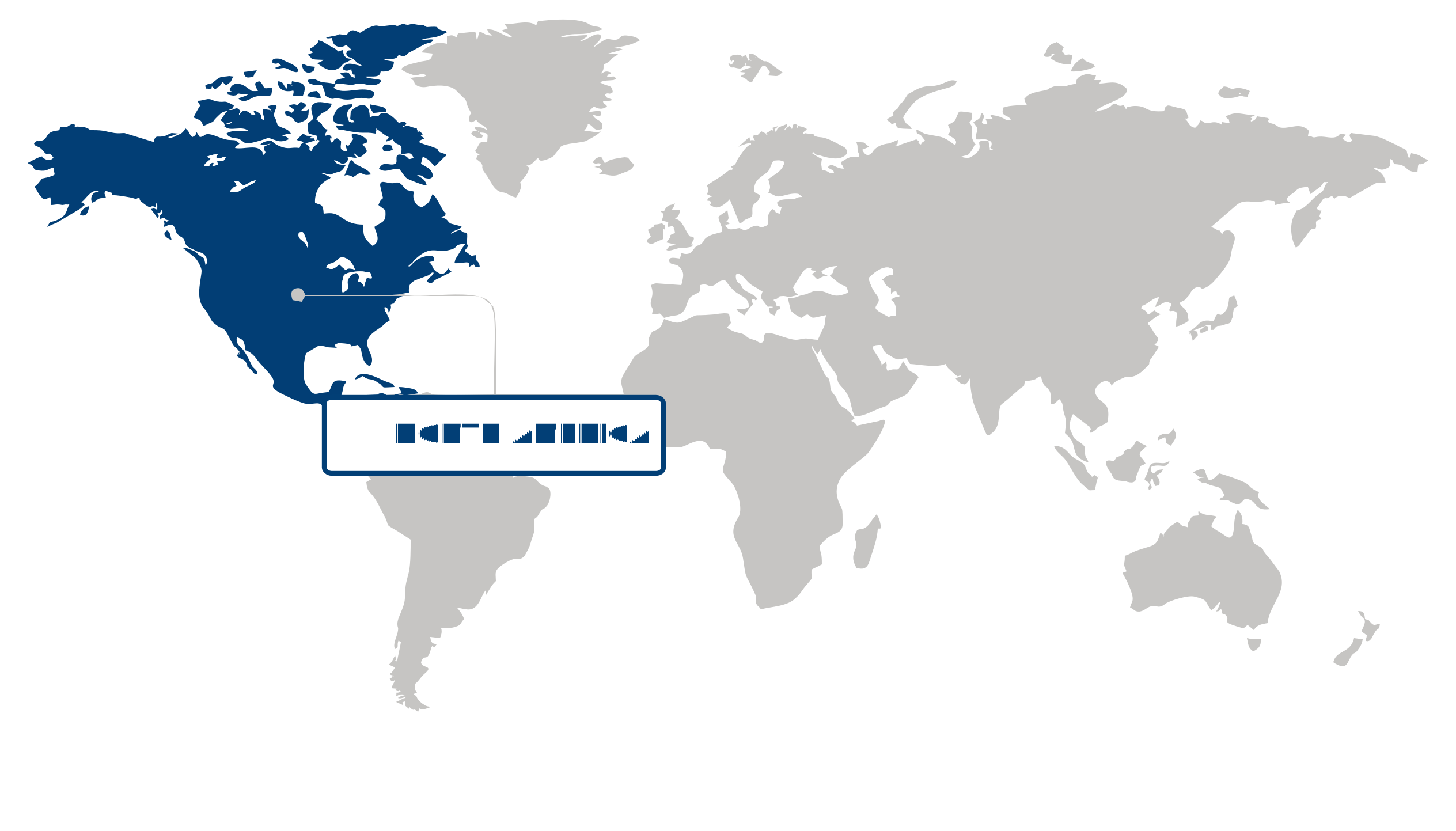
North America (Largest Region)
The everything as a service market in North America accounted for 35.62% of the market in 2026, reflecting the region’s mature cloud ecosystem, strong enterprise technology adoption, and widespread shift toward subscription-based IT consumption. Organizations across industries are increasingly seeking flexible access to infrastructure, software, platforms, security, and other technology capabilities without the complexity of extensive upfront investments. Advanced digital infrastructure, high enterprise readiness for cloud transformation, and demand for scalable technology environments are supporting adoption. The growing integration of AI, automation, analytics, and managed services is also expanding opportunities for unified as-a-service models.
Asia Pacific (Fastest-Growing Region)
Asia Pacific represents the fastest-growing region, propelled by rapid digital transformation, expanding cloud adoption, and modernization of enterprise technology environments. Businesses are increasingly moving from traditional ownership models toward flexible service-based consumption to improve scalability and operational agility. Growing investments in digital infrastructure, increasing adoption of cloud platforms, and the expansion of digitally enabled businesses are creating favorable conditions for everything-as-a-service offerings. Demand from emerging enterprises and organizations seeking cost-efficient access to advanced technologies is further broadening the regional customer base.
| Parameter | North America | Asia Pacific | Europe | Latin America | MEA |
|---|---|---|---|---|---|
| Innovation HubiScaleNascentDeveloping Advanced | |||||
| Cost-Sensitive RegioniScaleLowMedium High | |||||
| Regulatory EnvironmentiScaleRestrictiveNeutral Supportive | |||||
| Demand DriversiScaleWeakModerate Strong | |||||
| Development StageiScaleEmergingDeveloping Developed | |||||
| Adoption RateiScaleLowMedium High | |||||
| New Entrants / StartupsiScaleSparseModerate Dense | |||||
| Macro IndicatorsiScaleWeakStable Strong |
Key Country Insights
Germany 🇩🇪
Industrial Digital ServicesGermany emphasizes everything as a service models that modernize manufacturing, enterprise software, and industrial operations. Businesses adopt flexible digital service platforms that improve operational efficiency while supporting secure and compliant data management practices.
France 🇫🇷
Secure Service AdoptionFrance prioritizes everything as a service offerings that balance operational flexibility with data governance and cybersecurity requirements. Enterprises increasingly adopt managed digital services to streamline IT management while supporting regulatory compliance objectives.
Italy 🇮🇹
SME Digital ModernizationItaly expands everything as a service adoption among businesses seeking cost-efficient access to enterprise technologies without significant infrastructure investments. Service providers focus on cloud-based solutions that improve productivity, collaboration, and operational resilience for diverse industries.
Japan 🇯🇵
Hybrid IT TransformationJapan advances everything as a service through gradual modernization of enterprise technology environments and hybrid cloud strategies. Organizations seek service-based solutions that simplify infrastructure management while maintaining business continuity and system reliability.
South Korea 🇰🇷
Connected Business PlatformsSouth Korea accelerates adoption of everything as a service through advanced digital infrastructure and widespread enterprise cloud integration. Service providers deliver scalable platforms that support AI applications, collaboration tools, and data-driven business operations.
United States 🇺🇸
Enterprise Cloud ExpansionThe U.S. everything as a service market is driven by enterprises adopting subscription-based digital infrastructure to improve scalability and operational flexibility. Organizations prioritize integrated cloud platforms, cybersecurity, and managed services that support evolving business requirements.
Everything as a Service Market Share (%), by Offerings, 2026
Go beyond the chart, access full insights & data tables
Request Free Sample ReportOfferings Segment Analysis: Solutions (Largest Segment) vs Services (Fastest-Growing Segment)
Solutions represented the largest offering category in the everything as a service market, accounting for a 68.31% share in 2026. Their strong position reflects the growing preference for integrated technology offerings that combine infrastructure, software, and operational capabilities into scalable consumption-based models. Organizations can use such solutions to simplify technology deployment, improve resource utilization, and align IT spending with business requirements while reducing the complexity associated with managing multiple technology environments. Increasing adoption of cloud-enabled architectures and flexible digital operating models further supports demand for comprehensive solutions.
Services are expanding more rapidly as organizations increasingly seek specialized expertise to manage, optimize, and support technology environments delivered through service-based models. Businesses are placing greater emphasis on outsourcing operational responsibilities, improving system performance, and accessing specialized capabilities without maintaining extensive internal resources. The growing complexity of hybrid technology environments and the need for continuous support, customization, integration, and optimization are creating additional opportunities for service-oriented offerings.
Organization Size Segment Analysis: Large Enterprises (Largest Segment) vs SMEs (Fastest-Growing Segment)
Large enterprises held the largest position in the everything as a service market in 2026, reflecting their extensive technology requirements and greater reliance on scalable digital infrastructure. Large organizations typically manage complex IT environments spanning multiple functions, locations, and business processes, creating strong demand for flexible consumption models that can simplify technology management and support enterprise-wide transformation. Their focus on operational efficiency, infrastructure modernization, and predictable technology spending further strengthens adoption of everything as a service models.
Small and medium-sized enterprises are experiencing faster growth as service-based technology models lower barriers to accessing advanced digital capabilities. Rather than making substantial investments in dedicated infrastructure and specialized IT resources, SMEs can adopt scalable services aligned with their operational requirements. Increasing digitalization, demand for flexible technology expenditure, and the need to compete through improved productivity and customer experiences are encouraging more SMEs to adopt consumption-based technology solutions.
| Segment | Sub-Segment | Largest Segment | Fastest Growing |
|---|---|---|---|
| Offerings | Solutions, Services | Solutions | Services |
| Organization Size | SMEs, Large Enterprises | Large Enterprises | SMEs |
| Type | IaaS, PaaS, SaaS, CaaS, DaaS, SECaaS, DRaaS, Others | SaaS | DRaaS |
| Vertical | BFSI, IT and Telecom, Media and Entertainment, Government, Healthcare, Manufacturing, Oil and Gas, Energy and Utilities, Others | BFSI | Healthcare |
Unlock insights tailored to your business with our bespoke market research solutions.
Click to get your customized report now.
Competitive Landscape and Market Positioning
Leading companies in the everything as a service market:
1. Amazon Web Services Inc. (United States)
2. Microsoft Corporation (United States)
3. Google LLC (United States)
4. Oracle Corporation (United States)
5. International Business Machines Corporation (United States)
6. Cisco Systems Inc. (United States)
7. VMware Inc. (United States)
8. Alibaba Group Holding Limited (China)
9. Dell Technologies Inc. (United States)
10. Rackspace Technology Inc. (United States)
The everything as a service market is witnessing rapid transformation as providers focus on integrated digital ecosystems that combine scalability, flexibility, and cloud-based delivery models. Collaborative technology partnerships are becoming essential for enhancing cybersecurity, analytics, and automation capabilities across service platforms. Rising enterprise demand for subscription-based infrastructure and operational agility continues to accelerate innovation within the market.
| Company | Market Share | Company Revenue | Revenue CAGR (%) | Product Portfolio | Geographic Presence | Innovation / R&D Focus | Strategic Developments |
|---|---|---|---|---|---|---|---|
| Amazon Web Services Inc. (United States) | |||||||
| Microsoft Corporation (United States) | |||||||
| Google LLC (United States) | |||||||
| Oracle Corporation (United States) | |||||||
| International Business Machines Corporation (United States) | |||||||
| Cisco Systems Inc. (United States) | |||||||
| VMware Inc. (United States) | |||||||
| Alibaba Group Holding Limited (China) | |||||||
| Dell Technologies Inc. (United States) | |||||||
| Rackspace Technology Inc. (United States). |
Industry Development/News
| Company Name | Date | Key Development |
|---|---|---|
| VentureTECH Sdn Bhd | Feb-26 | VentureTECH invested MYR 28 million in Delta Spike Asia and IX Telecom to bolster cybersecurity and cross-border digital infrastructure. This strategic funding enhances digital resilience and expands the service delivery capacity, positioning the companies to better support enterprise demand for secure, scalable digital infrastructure within the broader as-a-service ecosystem. |
| Sinell All-IT | Feb-26 | Sinell All-IT expanded its managed service portfolio by integrating Lenovo TruScale Infrastructure-as-a-Service and Device-as-a-Service offerings. By adopting the Lenovo 360 framework, the firm enhances its recurring-revenue capabilities and service-oriented delivery model, providing customers with more scalable, consumption-based technology infrastructure options aligned with current enterprise demand for flexible IT procurement. |
| Huawei Cloud | Nov-25 | Huawei Cloud enhanced its AI-for-industries strategy by upgrading its cloud platform architecture and intelligent service capabilities. These advancements aim to accelerate enterprise adoption of cloud-based AI services, providing organizations with the underlying infrastructure necessary to support large-scale digital transformation initiatives and deeper integration of intelligent service models within their core business operations. |
| M3 | Oct-25 | M3 adopted the Lenovo TruScale Everything-as-a-Service model to support long-term customer engagement and infrastructure scalability. This strategic shift toward a consumption-based technology delivery model reinforces the company’s commitment to service-oriented operations, allowing for more flexible resource management and aligning its IT footprint with evolving customer requirements for scalable, as-a-service technology solutions. |
| Avaya | Sep-24 | Avaya launched its Experience Solution (AXP) Public Cloud in India, completing local availability for its unified customer experience platform. The offering enables enterprises to adopt flexible innovation paths, supporting hybrid and multi-cloud deployment models while maintaining core operational capabilities, thereby broadening Avaya’s reach in the regional Everything-as-a-Service infrastructure market. |
| Rackspace Technology | Sep-24 | Rackspace Technology introduced the Rapid Migration Offer (RRMO) to accelerate enterprise data center transitions to Amazon Web Services (AWS). By bundling essential migration resources, the company streamlines the adoption of cloud-based services, facilitating faster time-to-value for clients and strengthening Rackspace’s competitive positioning as a managed services provider for complex, hybrid cloud environments. |
Customize Your Report
Explore examples of how this report can be tailored to different research needs, including custom segments, additional topics or chapters, and related reports. Click a section of the wheel or its numbered marker to explore the available options.
Everything as a Service Market — Custom Segments
| Segment | Sub-Segment |
|---|---|
| Deployment Model | Public Cloud, Private Cloud, Hybrid Cloud, Multi-Cloud |
| Pricing Model | Subscription-Based, Usage-Based, Consumption-Based, Outcome-Based |
| Business Function | IT & Infrastructure, Communications & Collaboration, Data & Analytics, Security, Business Operations |
Everything as a Service Market — Custom TOC
| Custom Chapter | Chapter Details |
|---|---|
| XaaS Business Model Transformation |
|
| Enterprise XaaS Adoption and Transformation Priorities |
|
| XaaS Ecosystem and Industry Opportunity Mapping |
|
Need a different cut of the data?
Request Custom ResearchFrequently Asked Questions
How large is the everything as a service market?
How will the everything as a service industry grow in terms of size and CAGR by 2036?
How is enterprise cloud adoption transforming demand for everything as a service models?
Why are security and resilience priorities accelerating adoption of everything as a service solutions?
Why do Solutions dominate the everything as a service market?
Why are SMEs the fastest-growing organization segment in the everything as a service market?
Why is North America the largest everything as a service market?
Why is Asia Pacific the fastest-growing region for everything as a service?
Who holds a significant market share in the everything as a service landscape?
Our Clients
"The team demonstrated a great understanding of our business needs, and the reports were tailored to address our specific concerns and objectives."
Infosys
"The report was up-to-date with the latest industry trends and technological advancements. The detailed competitive landscape analysis was quite helpful."
Zebra Technologies
"The data presented in the report was accurate and well-researched. I also found the market dynamics section particularly useful."
Arlo Technologies
Our Research Team & Methodology
Every Fundamental Business Insights report is built by a dedicated vertical research team, validated through a structured primary-and-secondary methodology, and reviewed for accuracy before it reaches you.
This report was prepared by the Smart Technologies Research Team at Fundamental Business Insights, a dedicated research group specializing in emerging digital technologies and intelligent connected systems. Our analysts continuously monitor advancements in artificial intelligence, Internet of Things (IoT), cloud computing, edge computing, cybersecurity, automation, digital transformation strategies, and evolving enterprise adoption trends to deliver timely and reliable market intelligence. The research is developed using a structured methodology that combines primary discussions with technology providers, software vendors, system integrators, enterprise users, and industry experts, along with company annual reports, investor presentations, regulatory publications, technology standards, industry associations, technical white papers, and other authoritative secondary sources. Market estimates are validated through multiple research techniques, including top-down and bottom-up analysis, before undergoing an internal quality review to ensure accuracy, consistency, and methodological integrity prior to publication.
Delivery
Published
Available
Support
- Market Size & Forecast
- Market Segmentation
- Regional Analysis
- Growth Drivers & Challenges
- Market Dynamics
- Competitive Landscape
- Company Profiles
- Competitive Benchmarking
- Mergers & Acquisitions
- Market Share Analysis or Key Company Strategies
- Value Chain Analysis
- Porter's Five Forces
- PESTLE Analysis
- Pricing Trends
- Supply-Demand Analysis
- Technology Landscape
- Regulatory Landscape
- Investment & Funding Landscape
- Emerging Opportunities
- Future Market Outlook