Digital Dosing Pump Market Size & Forecasts 2026-2035, By Segments (Type, Pump Control, Flow Rate, Application), Growth Opportunities, Innovation Landscape, Regulatory Shifts, Strategic Regional Insights (U.S., Japan, China, South Korea, UK, Germany, France), and Competitive Dynamics (Grundfos, Xylem, LMI Milton Roy, ProMinent, Dover Corporation)
Market Size and Growth Outlook
Digital Dosing Pump Market size is expected to advance from USD 312.83 million in 2025 to USD 669.15 million by 2035, registering a CAGR of more than 7.9% across 2026-2035. By 2026, the industry is anticipated to generate USD 334.52 million in revenue.
Get more details on this report
Request Free Sample ReportDigital Dosing Pump Market Intelligence Snapshot
Regional Market Dynamics
Segment Momentum
Market Expansion Drivers
Leading Market Participants
Global Market Forecast Snapshot
Market Outlook
Regional and Segment Outlook
Market Growth Drivers and Industry Trends
The rising integration of digital dosing pumps within pharmaceutical and biotech manufacturing reflects a broader shift towards precision and automation in drug production. Regulatory bodies like the U.S. Food and Drug Administration (FDA) emphasize stringent process controls to ensure product consistency and patient safety, driving companies such as Pfizer and Roche to invest heavily in smart dosing technologies. By enabling exact chemical formulations and minimizing human error, digital dosing pumps have become indispensable, optimizing operational efficiency and compliance. This creates significant openings for established manufacturers to enhance their product portfolios and for new entrants to introduce niche solutions targeting high-growth biotech segments. With ongoing regulatory focus on advanced manufacturing, adoption is likely to deepen, further embedding digital dosing pumps as standard tools in life sciences production.
Rising Demand for Precise Drug Delivery Systems
The digital dosing pump market is responding to healthcare’s increasing demand for accuracy in drug delivery, driven by personalized medicine and complex biologics. The World Health Organization’s (WHO) reports on medication safety underscore the critical need for dosing precision to reduce adverse events. Companies like Baxter International have publicized innovations in dosing accuracy designed to meet such needs, helping ensure therapeutic efficacy and dosage consistency in patient care. This trend presents strategic prospects for suppliers to collaborate with pharmaceutical manufacturers and healthcare providers focused on customized therapies. The growing importance of dosage precision in treatment protocols signals sustained interest in digital dosing solutions tailored to novel drug formulations and patient-specific regimens.
Technological Advancements in Automated Dosing Systems
Advances in automation and IoT integration are transforming the digital dosing pump market by enabling real-time data monitoring, remote operation, and predictive maintenance. Manufacturers such as Grundfos and LMI have showcased smart dosing pumps embedded with sensor technologies and connectivity features, aligning with Industry 4.0 initiatives. These innovations enhance supply chain transparency and operational resilience while lowering downtime and maintenance costs. For market players, leveraging these technologies offers differentiation and the ability to create scalable solutions adaptable across various industrial sectors. As digital transformation accelerates across manufacturing ecosystems, the uptake of automated dosing systems embedded with advanced analytics is poised to become a definitive competitive advantage.
Industry Restraints:
Complex Regulatory Compliance and Certification Requirements
Navigating stringent regulatory frameworks significantly restricts the digital dosing pump market's development by imposing prolonged approval cycles and heightened costs. Regulatory bodies like the U.S. Environmental Protection Agency (EPA) and the European Chemicals Agency (ECHA) enforce rigorous standards for chemical dosing devices, especially regarding precision, safety, and environmental impact. Compliance with these standards demands extensive testing and documentation, which can delay time-to-market and deter smaller innovators lacking resources. For manufacturers such as Grundfos and Xylem, adapting products to diverse regional requirements poses operational complexities and escalates R&D expenses. This regulatory burden constrains market agility and narrows the field to established players equipped to navigate evolving standards. Moving forward, ongoing tightening of environmental and safety regulations will maintain high entry barriers, incentivizing incumbents to prioritize compliance-driven product innovation while potentially slowing overall market expansion.
Supply Chain Disruptions and Component Scarcity
Frequent disruptions in global supply chains and the limited availability of key electronic components impede the digital dosing pump market’s growth by increasing production lead times and costs. Recent difficulties in procuring microcontrollers and precision sensors, as reported by Danaher Corporation in their 2023 quarterly statement, highlight vulnerabilities within the manufacturing ecosystem. These constraints especially affect new entrants and smaller producers, who lack leverage to secure priority access to scarce parts from suppliers. Prolonged bottlenecks also hinder responsiveness to shifting demand in industrial and municipal sectors. Consequently, companies are compelled to invest in inventory buffers and diversify supplier bases, raising operational complexity and costs. In the near term, unless semiconductor supply stabilizes and logistic networks improve, these challenges will continue limiting scalability and market acceleration, reinforcing advantages for well-capitalized players with robust supplier relationships.
| Growth Driver | Impact on CAGR | Regulatory Influence | Geographic Relevance | Adoption Rate | Impact Timeline |
|---|---|---|---|---|---|
| Increasing adoption of digital dosing pumps in pharma and biotech | 3.00% | Short term (≤ 2 yrs) | North America, Europe; Spillover: Asia Pacific | Low | Moderate |
| Rising demand for precise drug delivery systems | 2.80% | Medium term (2–5 yrs) | Europe, Asia Pacific; Spillover: North America | Medium | Moderate |
| Technological advancements in automated dosing systems | 2.10% | Long term (5+ yrs) | North America; Spillover: Europe | Low | Slow |
Unlock insights tailored to your business with our bespoke market research solutions.
Click to get your customized report now.
Regional Demand Dynamics
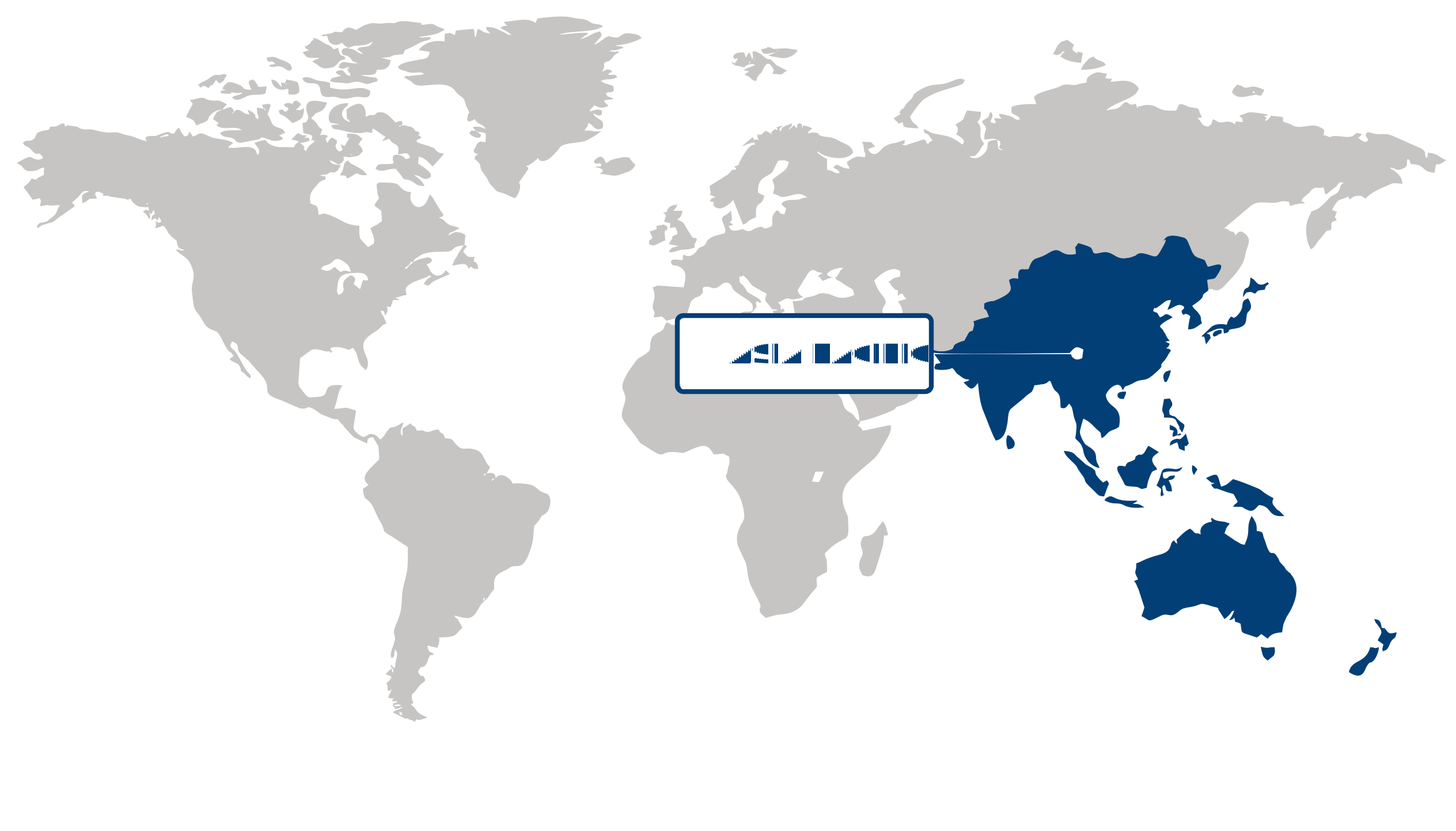
The Asia Pacific region dominated the digital dosing pump market in 2025, capturing over 37.8% of the global share and exhibiting the fastest growth with a CAGR of 9.9%. This leadership stems from the expansion of manufacturing hubs and robust government-backed wastewater treatment initiatives, which elevate the demand for precise chemical dosing. For instance, the Ministry of Ecology and Environment in China has intensified funding for advanced wastewater management, enhancing the adoption of digital dosing solutions. Additionally, the region's shift towards sustainable industrial processes and enhanced regulatory oversight fosters accelerated digital transformation in chemical dosing technologies. Companies like Grundfos and Milton Roy have reported increased deployment of digital dosing pumps in Asia Pacific manufacturing plants, reflecting a blend of technological innovation and policy support. Given ongoing industrialization and environmental commitments, Asia Pacific remains a critical growth arena offering substantial opportunities for investors and strategists in the digital dosing pump market.
Japan is positioned as a pivotal hub in the Asia Pacific digital dosing pump market, driven by high regulatory standards and a proactive approach to industrial automation. The Japan Waterworks Association has championed the integration of digital dosing pumps within municipal water and wastewater systems to optimize chemical use and meet stringent water quality norms. This regulatory environment, combined with Japan’s aging but skilled workforce, accelerates adoption of reliable, energy-efficient dosing solutions in manufacturing and utilities. Key players including Yamada Pump Co. report growing demand for intelligent dosing pumps tailored to Japan’s precision-driven industries. Japan’s emphasis on technological sophistication and regulatory compliance underscores its strategic importance in reinforcing Asia Pacific’s market dominance and innovation trajectory in digital dosing pumps.
China plays a transformative role in the Asia Pacific digital dosing pump market, fueled by rapid industrial expansion and comprehensive government wastewater programs. The Ministry of Housing and Urban-Rural Development’s large-scale initiatives to upgrade urban sewage treatment infrastructure have spurred immense demand for advanced dosing technologies. Multinational corporations like Sulzer and LMI Milton Roy have strengthened operations and product localization in China, supporting scalable deployment in chemical manufacturing and municipal sectors. Moreover, China's evolving environmental policies incentivize manufacturers to adopt smart dosing pumps for efficiency and compliance. This dynamic market, supported by favorable policy frameworks and a vast manufacturing base, amplifies the growth potential for digital dosing pumps, consolidating China’s role as a cornerstone within the Asia Pacific region’s market development.
North America Market Analysis:
North America maintained a substantial share in the digital dosing pump market, driven by its well-established industrial infrastructure and early adoption of advanced automation technologies. The region’s emphasis on enhancing operational efficiency across pharmaceuticals, water treatment, and chemical manufacturing sectors continues to fuel demand for precise and reliable dosing solutions. Regulatory frameworks enforced by agencies such as the U.S. Environmental Protection Agency have encouraged investments in sustainable and safe chemical handling practices, further endorsing digital dosing pumps. Additionally, North America’s robust supply chains and innovation ecosystems, including companies like Emerson Electric and Endress+Hauser, foster continuous product development and adaptation to digital transformation trends. These factors collectively position the region as a critical hub, offering sustained growth opportunities as industries increasingly prioritize precision, safety, and environmental compliance in dosing applications.
The U.S. plays a pivotal role within North America’s digital dosing pump market, driven by its advanced manufacturing landscape and strong inclination toward smart technologies. The U.S. market benefits from stringent regulatory standards set by the FDA and EPA, which incentivize the adoption of digital dosing pumps for accurate chemical and pharmaceutical formulation. Industry leaders such as Xylem Inc. have been actively integrating IoT-enabled dosing pumps to optimize fluid handling and reduce manual intervention, reflecting the country’s innovation-driven approach. Furthermore, shifts in consumer and industrial preferences toward sustainable practices are accelerating investments in digitally controlled dosing systems. This dynamic not only reinforces the U.S.’s leadership in the regional market but also highlights its strategic importance as a testing ground for cutting-edge dosing technologies, shaping broader North American market trends.
Europe Market Trends:
Europe maintained a notable presence in the digital dosing pump market, marked by moderate growth driven by stringent environmental regulations and increasing industrial automation across key sectors such as pharmaceuticals, water treatment, and chemicals. The region’s commitment to sustainability through the European Green Deal, coupled with evolving digital infrastructure, has accelerated demand for precise fluid management solutions that enhance operational efficiency and reduce waste. Competitive intensity remains elevated as regional manufacturers focus on integrating IoT-enabled pumps to meet diverse application needs, supported by robust supply chains and skilled technical labor pools. For instance, regulatory guidance from the European Chemicals Agency (ECHA) has spurred manufacturers to adopt cleaner technologies. Looking ahead, Europe offers significant opportunities as digitization trends align with regulatory frameworks emphasizing energy efficiency and resource conservation.
Germany plays a pivotal role in Europe’s digital dosing pump market, leveraging its advanced manufacturing base and strong adoption of Industry 4.0 technologies to drive innovation and efficiency. German companies such as Endress+Hauser have proactively integrated digital solutions that optimize dosing accuracy and predictive maintenance, responding to heightened regulatory standards from bodies like the Federal Environment Agency (UBA). This focus on automated and sustainable dosing aligns with Germany’s industrial culture that prioritizes precision engineering and environmental responsibility. Consequently, Germany’s leadership reinforces the region’s potential, making it an essential hub for technological advancements and market expansion.
France is a key contributor within Europe’s digital dosing pump market, where government incentives and evolving water resource management strategies sustain demand for advanced dosing technologies. Public sector initiatives led by Agence de l’Eau promote efficient chemical use and wastewater treatment, fostering adoption of digital dosing pumps with enhanced control features. French manufacturers and users demonstrate a growing preference for smart systems that reduce operational costs while ensuring compliance with EU-wide environmental directives. This dynamic highlights France’s strategic role in supporting Europe’s shift towards integrated smart solutions, underpinning broader regional growth prospects.
| Parameter | North America | Asia Pacific | Europe | Latin America | MEA |
|---|---|---|---|---|---|
| Innovation Hub i Scale Nascent Developing Advanced | |||||
| Cost-Sensitive Region i Scale Low Medium High | |||||
| Regulatory Environment i Scale Restrictive Neutral Supportive | |||||
| Demand Drivers i Scale Weak Moderate Strong | |||||
| Development Stage i Scale Emerging Developing Developed | |||||
| Adoption Rate i Scale Low Medium High | |||||
| New Entrants / Startups i Scale Sparse Moderate Dense | |||||
| Macro Indicators i Scale Weak Stable Strong |
Segment Leadership and Growth Trends
Digital Dosing Pump Market Share (%), by Type, 2026
Go beyond the chart, access full insights & data tables
Request Free Sample ReportDiaphragm pumps held the largest share in the digital dosing pump market in 2025, attributed to their superior accuracy, reliability, and broad industrial applicability. Their leadership aligns with increasing demand for precision dosing in chemical processing, pharmaceuticals, and water treatment sectors where compliance with stringent quality standards—informed by guidelines from the U.S. Environmental Protection Agency (EPA)—is critical. Customer preference for durable, low-maintenance equipment enhances diaphragm pumps’ appeal amidst rising sustainability priorities and tightening regulatory frameworks. Companies like Grundfos and ProMinent highlight these pumps in their product lines, underscoring competitive positioning and supply chain optimization. This segment offers strategic value for incumbents leveraging established technologies and for new entrants focusing on niche applications. Continued advancements in materials and sealing technologies suggest diaphragm pumps will maintain their market dominance due to ongoing industrial digitalization and regulation-driven precision requirements.
Analysis by Pump Control
Digital control represented the largest share in the digital dosing pump market in 2025, driven by the growing adoption of process automation and the need for precise, real-time dosing adjustments across industries. This segment’s prominence reflects broader digital transformation trends highlighted in Siemens press releases, emphasizing integration with Industrial Internet of Things (IIoT) platforms and remote monitoring capabilities. The shift supports operational efficiency and predictive maintenance, addressing workforce skill challenges and customer demand for reliable, easily configurable dosing solutions. Enhanced connectivity and compliance with automation standards foster competitive differentiation and create entry points for technology-focused startups as well as global manufacturers. Given ongoing investments in smart manufacturing and regulatory emphasis on process control accuracy—such as directives from the International Society of Automation—digital pump control is poised to remain central to market growth and innovation.
Analysis by Flow Rate
The up to 50 l/h flow rate segment occupied the largest share in the digital dosing pump market in 2025, propelled by extensive use in water treatment and chemical dosing applications requiring accurate low-flow delivery. This leadership aligns with environmental mandates from bodies like the World Health Organization (WHO) promoting clean water initiatives, which drive demand for precise chemical dosing in municipal and industrial facilities. The segment benefits from growing end-user preference for compact, energy-efficient units that simplify installation and maintenance within increasingly complex supply chains. Strategic opportunities exist for established companies such as Milton Roy and emerging innovators specializing in microdosing technologies. As regulatory focus intensifies on minimizing chemical waste and optimizing resource use, this segment is expected to maintain critical relevance in sustainable process management and smart infrastructure development.
| Segment | Sub-Segment | Largest Segment | Fastest Growing |
|---|---|---|---|
| Type | Diaphragm Pumps, Peristaltic Pumps, Piston Pumps | ||
| Pump Control | Manual, Digital, Network-Based | ||
| Flow Rate | Up to 50 l/h, 51–100 l/h, Above 100 l/h | ||
| Application | Water & Wastewater Treatment, Oil & Gas, Chemical Processes, Pharmaceuticals, Food & Beverages, Paper & Pulp |
Competitive Landscape and Market Positioning
The competitive landscape is marked by considerable emphasis on innovation, driven by the leading firms’ strategic maneuvers. Recent new product introductions emphasize enhanced automation and IoT connectivity, reflecting intensive R&D focus. Collaborations between technology providers and manufacturers deepen integration capabilities, allowing better adaptability to complex applications. Mergers and acquisitions further consolidate market positions, especially in North America and Europe, enabling scale advantages. These initiatives not only refine operational efficiencies but also expand product offerings tailored to industrial, water treatment, and pharmaceutical sectors, thereby fortifying competitive advantage and market penetration.
Strategic / Actionable Recommendations for Regional Players
North American players should cultivate alliances with technology startups specializing in AI and machine learning to accelerate intelligent dosing solutions. Fostering partnerships across water treatment and industrial automation sectors will capitalize on increasing demand for precision dosing and digital transformation, supporting stronger innovation pipelines.
In the Asia Pacific, investing in localized manufacturing and collaborating with regional end-users targeting agriculture and wastewater management can unlock growth avenues. Embracing digital platforms and smart monitoring systems will augment operational efficiencies and respond effectively to diverse regulatory and environmental requirements.
European firms could expand by enhancing sustainability-oriented product lines and integrating advanced sensor technology, addressing tightening environmental norms. Forming consortia with research institutes to pioneer cutting-edge dosing methodologies will reinforce leadership in high-value sub-segments such as pharmaceuticals and specialty chemicals.
| Company | Market Share | Company Revenue | Revenue CAGR (%) | Product Portfolio | Geographic Presence | Innovation / R&D Focus | Strategic Developments |
|---|---|---|---|---|---|---|---|
| No companies available. | |||||||
Industry Development/News
| Company Name | Date | Key Development |
|---|
Customize Your Report
Explore examples of how this report can be tailored to different research needs, including custom segments, additional topics or chapters, and related reports. Click a section of the wheel or its numbered marker to explore the available options.
Digital Dosing Pump Market — Custom Segments
| Segment | Sub-Segment |
|---|---|
| No segment data available. | |
Digital Dosing Pump Market — Custom TOC
| Custom Chapter | Custom Details | ||
|---|---|---|---|
| No custom TOC data available. | |||
Need a different cut of the data?
Request Custom ResearchWhat is the projected value of the digital dosing pump industry by 2035?
Which territory dominates the digital dosing pump market share rankings?
Which geography represents the strongest growth trajectory for the digital dosing pump sector?
Why does diaphragm pumps sub-segment dominate the type segment of digital dosing pump sector?
How does digital segment fare in the digital dosing pump industry?
What share does up to 50 l/h segment hold in the digital dosing pump sector as of 2025?
Where is the water & wastewater treatment segment seeing the strongest adoption within the digital dosing pump industry?
What are the prominent companies operating in the digital dosing pump landscape?
Our Clients
"The team at Fundamental Business Insights & Consulting demonstrated a commitment to excellence, not only in the quality of the report but also in their client-centric approach."
FANUC
"The level of detail in the market segmentation provided were particularly noteworthy. The detailed country-level insights were also very helpful."
B&R Industrial Automation GmbH
"The consultant took the time to understand our specific business objectives, ensuring that the reports were tailored to address our unique challenges and opportunities."
KUKA SE & Co. KGaA
Our Research Team & Methodology
Every Fundamental Business Insights report is built by a dedicated vertical research team, validated through a structured primary-and-secondary methodology, and reviewed for accuracy before it reaches you.
Research Team Overview
Prepared by the Industrial Automation & Equipment Research Team
Delivery
Published
Demand
Available
Support
Trust & Compliance
Research Domains
10 coverage areasResearch Intelligence
| Source | Reference |
|---|---|
| International Society of Automation (ISA) | www.isa.org |
| International Organization for Standardization (ISO) | www.iso.org |
| National Institute of Standards and Technology (NIST) | www.nist.gov |
| IEEE | www.ieee.org |
| VDMA (German Mechanical Engineering Industry Association) | www.vdma.org |
| Association for Advancing Automation (A3) | www.automate.org |
| International Federation of Robotics (IFR) | ifr.org |
| ASME (American Society of Mechanical Engineers) | www.asme.org |
| ASHRAE | www.ashrae.org |
| American Society of Heating, Refrigerating and Air-Conditioning Engineers (ASHRAE) | www.ashrae.org |
| Material Handling Industry (MHI) | www.mhi.org |
| OSHA (Occupational Safety and Health Administration) | www.osha.gov |
| National Fire Protection Association (NFPA) | www.nfpa.org |
| ASTM International | www.astm.org |
| International Electrotechnical Commission (IEC) | www.iec.ch |
| Open Process Automation Forum (The Open Group) | www.opengroup.org/open-process-automation-forum |
| AGMA (American Gear Manufacturers Association) | www.agma.org |
| Association of Equipment Manufacturers (AEM) | www.aem.org |
| Food and Agriculture Organization (FAO) | www.fao.org |
| International Labour Organization (ILO) | www.ilo.org |
Research Workflow & Quality Assurance
Data Collection
Verified information gathered through primary and secondary research.
Data Triangulation
Cross-validation using multiple independent data sources.
Forecast Modelling
Market estimates developed using historical trends and analytical models.
Analyst Validation
Findings reviewed by domain experts for accuracy and consistency.
Editorial & Quality Review
Final editorial, quality, and compliance checks before publication.
Final Publication
Released after successful completion of the internal review process.
Report Coverage
📊 Market Assessment
- Market Size & Forecast
- Market Segmentation
- Regional Analysis
- Growth Drivers & Challenges
- Market Dynamics
🏢 Competitive Intelligence
- Competitive Landscape
- Company Profiles
- Competitive Benchmarking
- Mergers & Acquisitions
- Market Share Analysis or Key Company Strategies
🔍 Strategic Analysis
- Value Chain Analysis
- Porter's Five Forces
- PESTLE Analysis
- Pricing Trends
- Supply-Demand Analysis
🚀 Future Outlook
- Technology Landscape
- Regulatory Landscape
- Investment & Funding Landscape
- Emerging Opportunities
- Future Market Outlook
Have a question about this report or need a custom scope?
Request Customization