Decorative Laminates Market Size & Forecasts 2026-2035, By Segments (Type, End-user, Application, Raw Material), Growth Opportunities, Innovation Landscape, Regulatory Shifts, Strategic Regional Insights (U.S., Japan, China, South Korea, UK, Germany, France), and Competitive Dynamics (Formica, Abet Laminati, Wilsonart, Greenlam, FunderMax)
Market Size and Growth Outlook
Decorative Laminates Market size is forecasted to reach USD 20.05 billion by 2035, rising from USD 9.73 billion in 2025, at a CAGR of more than 7.5% between 2026 and 2035. In 2026, revenue is projected at USD 10.37 billion.
Get more details on this report
Request Free Sample ReportDecorative Laminates Market Intelligence Snapshot
Regional Market Dynamics
Segment Momentum
Market Expansion Drivers
Leading Market Participants
Global Market Forecast Snapshot
Market Outlook
Regional and Segment Outlook
Market Growth Drivers and Industry Trends
The ongoing growth in interior and furniture construction is a critical catalyst for the decorative laminates market, propelled by increasing urbanization and evolving consumer preferences for durable yet aesthetically appealing surfaces. According to the U.S. Census Bureau’s latest housing report, new residential construction activity demonstrates a shift toward enhanced interior finishes, favoring materials that combine functionality with design versatility. This trend compels manufacturers like Formica Group to innovate with texture variation and customization options, creating distinct market differentiation. For established players, this expansion offers avenues to deepen client relationships through tailored product portfolios, while new entrants can capitalize by targeting niche sub-segments in modular and eco-friendly furniture. The focus on integrated living and workspace designs signals sustained demand for decorative laminates aligned with modern construction practices.
Rising Demand for Decorative Laminates in Commercial Projects
The increasing adoption of decorative laminates across commercial projects reflects their role in delivering cost-effective, durable, and visually sophisticated surfaces suitable for high-traffic environments. JLL’s recent commercial real estate report highlights a boom in office refurbishments and retail outlets, driving demand for laminates that meet evolving standards of safety and aesthetic appeal. Companies like Wilsonart have responded with enhanced flame-retardant and antimicrobial laminate ranges, addressing regulatory and health-conscious trends. This landscape encourages incumbent companies to invest in specialized products for regulated spaces, while emerging players can exploit growing segments such as co-working spaces and healthcare facilities. As business infrastructure becomes more user-centric, decorative laminates’ adaptability supports sustainable growth opportunities in commercial construction.
Technological Advancements in High-Pressure Laminates
Technological innovation in high-pressure laminates (HPL) is advancing the decorative laminates market by improving product durability, sustainability, and design complexity. Research from the Laminate Manufacturers Association of India (LMAI) points to breakthroughs such as digital printing integration and bio-based resin formulations enhancing performance and eco-credentials. Leading producers like Egger Group have unveiled hybrid HPL solutions combining lightweight structure with high wear resistance, responding to evolving customer demands in residential and commercial sectors. For market incumbents, these innovations offer pathways to premium product segmentation and differentiation; for new entrants, they enable access to advanced manufacturing techniques without legacy constraints. The continuous evolution in HPL technology, supported by increasing collaborative R&D, will drive the market’s transition towards smarter, sustainable decorative surfaces.
Industry Restraints:
Environmental Regulations and Compliance Costs
Increasingly stringent environmental regulations, particularly regarding formaldehyde emissions and waste disposal, impose significant operational constraints on decorative laminate manufacturers. The European Chemicals Agency (ECHA) and the U.S. Environmental Protection Agency (EPA) have tightened limits on hazardous substances used in laminate production, compelling companies to invest heavily in reformulation and cleaner technologies. For instance, Greenlam Industries highlighted challenges in maintaining product performance while meeting low-emission standards, increasing production complexity and costs. This dynamic restricts smaller players lacking R&D capacity, while established firms face margin pressures and extended product development cycles. Consequently, adherence to evolving regulatory landscapes demands strategic prioritization of sustainability and innovation to mitigate compliance burdens. Over the next several years, regulatory scrutiny will deepen, compelling market participants to accelerate eco-friendly material adoption and process upgrades, fundamentally reshaping competitive positioning and product portfolios.
Raw Material Price Volatility and Supply Chain Disruptions
The decorative laminates market is significantly restrained by raw material cost fluctuations, notably resins, wood fibers, and decorative papers, coupled with persistent supply chain disruptions. The International Wood Products Association reports ongoing scarcity in high-quality timber and surging resin prices due to global demand-supply imbalances and geopolitical tensions. COVID-19-related logistics bottlenecks further exacerbate procurement unpredictability, inflating input costs and extending lead times. These factors impede consistent production planning and elevate working capital requirements, disproportionately burdening smaller and new entrants with less bargaining power and inventory buffering capability. For established producers, securing diversified suppliers and investing in vertical integration become strategic necessities. Moving forward, these supply chain vulnerabilities will continue to challenge cost stability and operational resilience, pressing market players to enhance supply chain agility and invest in alternative raw material innovations to sustain market competitiveness.
| Growth Driver | Impact on CAGR | Regulatory Influence | Geographic Relevance | Adoption Rate | Impact Timeline |
|---|---|---|---|---|---|
| Expansion in interior and furniture construction | 1.30% | Short term (≤ 2 yrs) | Europe, North America | Low | Fast |
| Rising demand for decorative laminates in commercial projects | 1.00% | Medium term (2–5 yrs) | Asia Pacific, Europe | Low | Moderate |
| Technological advancements in high-pressure laminates | 0.80% | Long term (5+ yrs) | North America, Asia Pacific | Low | Slow |
Unlock insights tailored to your business with our bespoke market research solutions.
Click to get your customized report now.
Regional Demand Dynamics
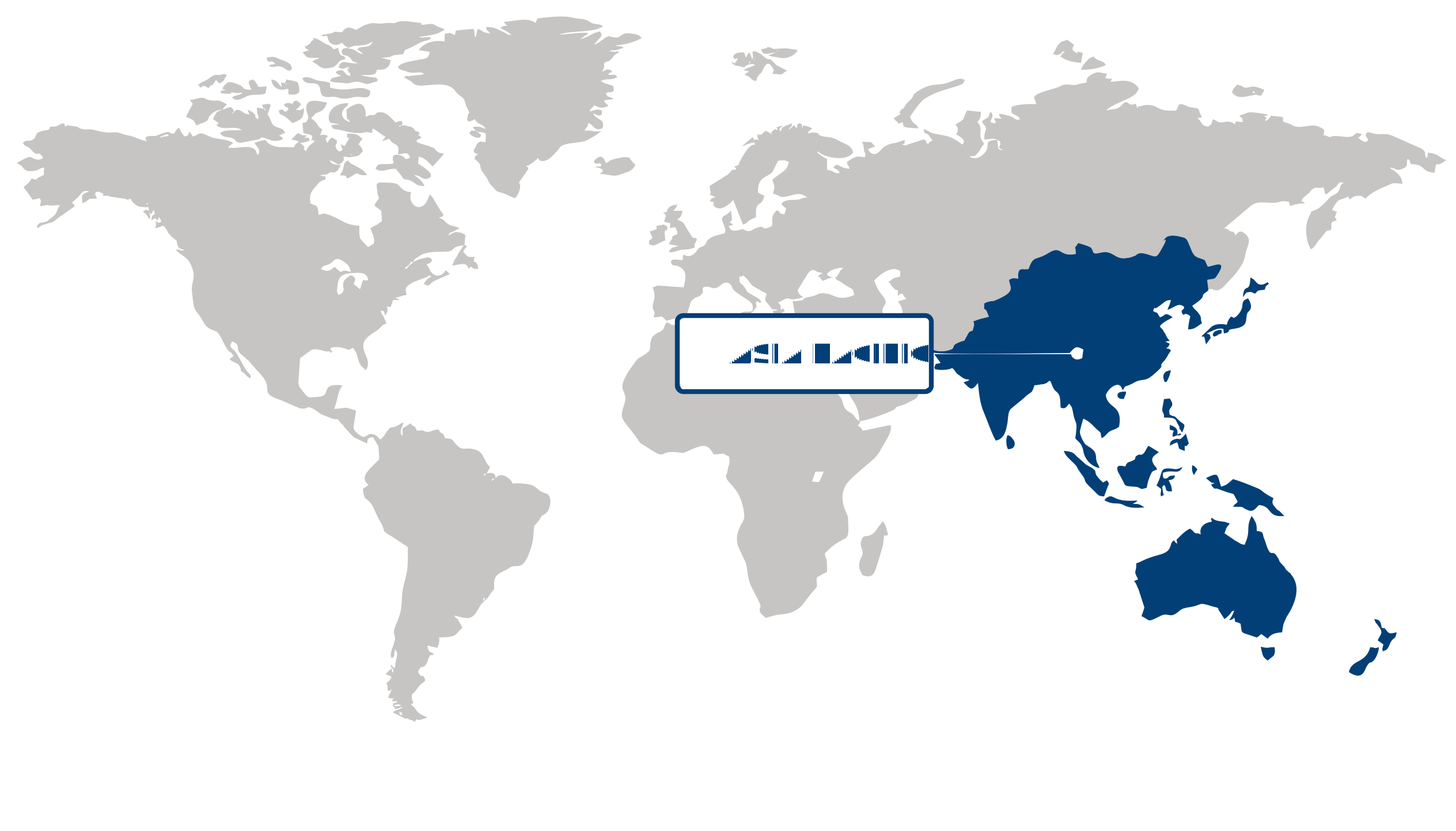
Asia Pacific dominated the decorative laminates market in 2025, capturing more than 38.67% of the global share and registering the fastest growth with a 9% CAGR. This regional leadership is closely tied to rapid urbanization and an accelerating boom in modular furniture across key urban centers, driving demand for stylish, cost-effective surface solutions. Government housing initiatives in countries like India and China, coupled with rising middle-class consumer spending, have catalyzed demand for multifunctional interiors, as noted by the Asia-Pacific Economic Cooperation (APEC). Industry players such as Greenlam Industries and Merino Laminates have expanded production capacity and innovated eco-friendly product lines attuned to sustainability commitments, further enhancing competitive positioning. The region’s robust manufacturing infrastructure, supported by streamlined supply chains and digital transformation in retail, underpins its dominant and fast-expanding role in the decorative laminates market, promising continued growth opportunities.
China anchors the Asia Pacific decorative laminates market, driven by massive urban construction projects and the rising popularity of modular furniture among urban millennials. The Chinese government’s aggressive urban renewal programs, along with tighter sustainability regulations implemented by the Ministry of Ecology and Environment, have encouraged manufacturers like Newmax Group to adopt greener laminates and advanced production techniques. Meanwhile, strong domestic consumer preference for customizable interiors fuels innovation in laminates that blend aesthetics with durability. This dynamic positions China at the forefront of regional growth, leveraging scale and policy support to boost decorative laminates adoption across residential and commercial segments.
Japan plays a pivotal role in the Asia Pacific decorative laminates market through its emphasis on quality and innovation. With a mature urban infrastructure and a discerning consumer base driven by ergonomic and space-saving interior solutions, Japan’s embrace of modular furniture complements demand for high-performance decorative laminates. Companies such as Toppan Printing and Daiken Corporation are investing in advanced laminates with enhanced wear resistance and eco-certifications to meet stringent domestic standards and export expectations. Japan’s technological prowess and commitment to sustainable manufacturing reinforce the region’s leadership, offering a model for integrating innovation with environmental stewardship in decorative laminates. Together with China, Japan strengthens Asia Pacific’s market dominance and accelerates adoption trends across the region.
North America Market Analysis:
North America held a substantial share in the decorative laminates market, driven by the region’s increasing investment in residential and commercial infrastructure. The rising consumer inclination towards aesthetically appealing, durable, and eco-friendly interior solutions has bolstered demand for decorative laminates. Advances in sustainable manufacturing processes, highlighted by companies such as Wilsonart and Formica Group, have also enhanced product appeal amid tightening environmental regulations enforced by the U.S. Environmental Protection Agency (EPA). Additionally, digital design integration and customizable laminate finishes are meeting evolving consumer preferences for personalized interiors, supporting steady adoption. The region’s resilient construction market, coupled with expanding renovation activities, underscores continued potential for decorative laminates, especially as manufacturers incorporate low-VOC and formaldehyde-free products to align with health-conscious trends and regulatory compliance.
The U.S. serves as a cornerstone of North America’s decorative laminates market, with consumer demand favoring innovative, sustainable, and high-performance products. Market leaders like Arborite and Nevamar have introduced advanced laminate collections that respond to growing preferences for durability and design flexibility in both residential and commercial applications. Regulatory shifts toward safer chemical profiles, backed by U.S. Green Building Council initiatives, have accelerated the adoption of eco-certified laminates. This regulatory environment encourages manufacturers to enhance product transparency and lifecycle impact disclosures. The country’s widespread home improvement activities and robust commercial real estate growth further reinforce demand, positioning the U.S. as a vital growth driver within North America, encouraging suppliers to continuously innovate and expand their product portfolios to sustain competitive advantage.
Europe Market Trends:
Europe maintained a notable presence in the decorative laminates market, driven by increasing urbanization and rising consumer preference for aesthetically appealing yet sustainable interior solutions. The region’s emphasis on eco-friendly materials and stringent environmental regulations, such as those advocated by the European Chemicals Agency (ECHA), has encouraged manufacturers to adopt low-emission and recyclable laminates. Additionally, advancements in digital printing technologies have allowed customization at scale, meeting evolving design trends and diverse consumer tastes, as highlighted by recent innovations from companies like Egger Group. Strong logistical networks across Europe also facilitate efficient distribution, bolstering market access. These factors, combined with steady investments in modern infrastructure projects, position Europe as a fertile ground for sustained moderate growth in decorative laminates, promising strategic opportunities for manufacturers focusing on innovation and sustainability.
Germany plays a pivotal role within Europe’s decorative laminates market, supported by robust demand from the construction and furniture sectors that prioritize quality and durability. The country benefits from a well-established manufacturing base exemplified by Pfleiderer Group, which recently expanded its product portfolio to include high-performance, eco-certified laminates aligning with Germany’s stringent environmental guidelines issued by the Federal Environment Agency (UBA). German consumers’ commitment to environmentally responsible purchasing and premium craftsmanship further fuels market expansion. This integration of quality standards and sustainability creates a competitive advantage, making Germany a key innovation hub in the region and a critical contributor to Europe’s broader market trajectory in decorative laminates.
France represents a dynamic segment within the European decorative laminates market, driven by culturally ingrained design sophistication and growing renovation activities across residential and commercial properties. French government incentives for green building practices and adherence to RE2020 environmental standards have heightened demand for sustainable building materials, fostering uptake of decorative laminates with reduced carbon footprints. Prominent players such as Tarkett France have highlighted efforts to enhance product recyclability and employ digital technologies for bespoke finishes that resonate with French interior design preferences. The country’s emphasis on lifestyle and aesthetics, coupled with regulatory support, reinforces its role as a strategic market for differentiated and eco-conscious laminate solutions, complementing Europe’s growth prospects in this sector.
| Parameter | North America | Asia Pacific | Europe | Latin America | MEA |
|---|---|---|---|---|---|
| Innovation Hub i Scale Nascent Developing Advanced | |||||
| Cost-Sensitive Region i Scale Low Medium High | |||||
| Regulatory Environment i Scale Restrictive Neutral Supportive | |||||
| Demand Drivers i Scale Weak Moderate Strong | |||||
| Development Stage i Scale Emerging Developing Developed | |||||
| Adoption Rate i Scale Low Medium High | |||||
| New Entrants / Startups i Scale Sparse Moderate Dense | |||||
| Macro Indicators i Scale Weak Stable Strong |
Segment Leadership and Growth Trends
Decorative Laminates Market Share (%), by Type, 2026
Go beyond the chart, access full insights & data tables
Request Free Sample ReportHigh-pressure laminates held the largest share in the decorative laminates market in 2025, driven by their widespread adoption in construction and interior design owing to unmatched durability and aesthetic versatility amid rapid urbanization and infrastructure growth. This segment’s leadership underscores customer preferences for long-lasting materials that simultaneously offer design flexibility, aligning with stringent building codes and sustainability standards promoted by regulatory bodies such as the International Code Council. Additionally, enhanced supply chain efficiencies and technological advancements by key players like Formica Corporation have expanded product availability and customization options. The segment presents strategic opportunities for both incumbents and new entrants to innovate in sustainable high-performance laminates. Given ongoing urban development and rising demand for resilient, visually appealing surfaces, high-pressure laminates are poised to maintain their relevance in the foreseeable future.
Analysis by End-user
The residential segment represented the largest share in the decorative laminates market in 2025, buoyed by escalating home renovation and interior decoration activities fueled by shifting consumer lifestyle trends and increased disposable income. This leadership reflects growing consumer inclination towards personalized and aesthetically pleasing living spaces, which is further reinforced by awareness campaigns from the National Association of Home Builders emphasizing sustainable and stylish home materials. Additionally, progress in digital visualization tools from companies like Mohawk Industries empowers homeowners in the decision-making process, intensifying demand for decorative laminates. Residential segment dynamics create valuable entry points for firms specializing in customizable, eco-friendly laminates. Continued growth in home improvement and remodeling initiatives ensures this segment’s sustained prominence in the market landscape.
Analysis by Application
Furniture & cabinets dominated the decorative laminates market in 2025, propelled by surging demand for modular and ready-to-assemble furniture that offers aesthetic appeal and functional efficiency. This segment benefits from shifting consumer behaviors favoring flexible living solutions and rapid urbanization patterns promoting space optimization. Industry leaders such as IKEA have notably expanded their use of decorative laminates to enhance product durability and customization, reflecting a strategic alignment with evolving market expectations. Furthermore, technological improvements in production processes have enabled more cost-effective and design-diverse offerings. The furniture & cabinets segment provides a competitive advantage for companies advancing high-quality laminates tailored for modern interiors. Its close association with global trends in furniture innovation and consumer lifestyle transformations supports its enduring significance within the decorative laminates market.
| Segment | Sub-Segment | Largest Segment | Fastest Growing |
|---|---|---|---|
| Type | High-Pressure Laminates, Low-Pressure Laminates | ||
| End-user | Residential, Commercial | ||
| Application | Furniture & Cabinets, Flooring, Wall Panels | ||
| Raw Material | Plastic Resin, Overlays, Adhesives, Kraft Paper, Decor Paper |
Competitive Landscape and Market Positioning
The competitive dynamics within the decorative laminates sector reveal a focus on product differentiation and technological advancement. Key players have broadened their market relevance by integrating eco-friendly materials and enhancing durability, responding to increasingly stringent regulatory environments and consumer demand for sustainable solutions. Strategic cooperations and selective acquisitions have enabled several companies to expand their global footprint, particularly in Asia and Latin America. Continuous investment in surface technology and digital printing capabilities further bolsters their capacity to offer customized and trend-responsive designs. Such efforts enable leading firms to gain competitive advantages while fostering innovation that resonates with design professionals and end-users alike.
Strategic / Actionable Recommendations for Regional Players
In North America, decorative laminates companies could reinforce their market presence through alliances with innovative material science firms to accelerate the adoption of sustainable and multifunctional surfaces. Embracing digital platforms for customized design services may help tap niche segments like premium residential and commercial interiors, responding proactively to evolving architectural aesthetics and consumer expectations.
Players in Asia Pacific may benefit from expanding collaborative ventures across neighboring countries to streamline supply chains and incorporate advanced manufacturing processes. Leveraging emerging smart technologies to develop laminates with enhanced physical properties or integrated functionalities could capture growing demand from urban infrastructure development and hospitality sectors.
For firms operating in Europe, a focus on co-developing eco-conscious product lines with local architects and designers can consolidate leadership in green building initiatives. Targeting specialized segments such as renovation and refurbishment with innovative surface solutions will enable differentiation while responding to competitive pressures from emerging market entrants.
| Company | Market Share | Company Revenue | Revenue CAGR (%) | Product Portfolio | Geographic Presence | Innovation / R&D Focus | Strategic Developments |
|---|---|---|---|---|---|---|---|
| No companies available. | |||||||
Industry Development/News
| Company Name | Date | Key Development |
|---|
Customize Your Report
Explore examples of how this report can be tailored to different research needs, including custom segments, additional topics or chapters, and related reports. Click a section of the wheel or its numbered marker to explore the available options.
Decorative Laminates Market — Custom Segments
| Segment | Sub-Segment |
|---|---|
| No segment data available. | |
Decorative Laminates Market — Custom TOC
| Custom Chapter | Custom Details | ||
|---|---|---|---|
| No custom TOC data available. | |||
Need a different cut of the data?
Request Custom ResearchWhat is the current revenue of the decorative laminates market?
How is the decorative laminates industry size expected to evolve during the forecast period?
Which part of the world shows the greatest dominance in the decorative laminates market?
Who is driving the fastest regional growth in the decorative laminates sector?
What factors give high-pressure laminates segment a competitive edge in the decorative laminates sector?
Which is the largest sub-segment within the end-user segment for decorative laminates industry?
Why does furniture & cabinets sub-segment dominate the application segment of decorative laminates sector?
How does kraft paper segment fare in the decorative laminates industry?
Which companies are driving growth in the decorative laminates landscape?
Our Clients
"Your insights on workforce structures were spot-on. The analysis on mid-to-senior level roles validated some of our hiring decisions and highlighted gaps."
Ateliers De France
"The report gave us insights on competitors in the market. It helped our team refine our bidding strategy for upcoming contracts."
Clark Construction
"The reports provided a deep dive into market trends, and competitive landscape. The strategic insights and recommendations have been very helpful."
Rudolph and Sletten
Our Research Team & Methodology
Every Fundamental Business Insights report is built by a dedicated vertical research team, validated through a structured primary-and-secondary methodology, and reviewed for accuracy before it reaches you.
Research Team Overview
Prepared by the Construction & Manufacturing Research Team
Delivery
Published
Demand
Available
Support
Trust & Compliance
Research Domains
10 coverage areasResearch Intelligence
| Source | Reference |
|---|---|
| International Organization for Standardization (ISO) | www.iso.org |
| ASTM International | www.astm.org |
| National Institute of Standards and Technology (NIST) | www.nist.gov |
| International Code Council (ICC) | www.iccsafe.org |
| American Concrete Institute (ACI) | www.concrete.org |
| American Institute of Steel Construction (AISC) | www.aisc.org |
| Construction Industry Institute (CII) | www.construction-institute.org |
| Associated General Contractors of America (AGC) | www.agc.org |
| Association of Equipment Manufacturers (AEM) | www.aem.org |
| Building Owners and Managers Association (BOMA) | www.boma.org |
| American Society of Civil Engineers (ASCE) | www.asce.org |
| National Ready Mixed Concrete Association (NRMCA) | www.nrmca.org |
| International Facility Management Association (IFMA) | www.ifma.org |
| World Green Building Council (WorldGBC) | worldgbc.org |
| International Federation of Consulting Engineers (FIDIC) | fidic.org |
| International Labour Organization (ILO) | www.ilo.org |
| American Society of Mechanical Engineers (ASME) | www.asme.org |
| Society of Manufacturing Engineers (SME) | www.sme.org |
| National Association of Home Builders (NAHB) | www.nahb.org |
| European Construction Industry Federation (FIEC) | www.fiec.eu |
Research Workflow & Quality Assurance
Data Collection
Verified information gathered through primary and secondary research.
Data Triangulation
Cross-validation using multiple independent data sources.
Forecast Modelling
Market estimates developed using historical trends and analytical models.
Analyst Validation
Findings reviewed by domain experts for accuracy and consistency.
Editorial & Quality Review
Final editorial, quality, and compliance checks before publication.
Final Publication
Released after successful completion of the internal review process.
Report Coverage
📊 Market Assessment
- Market Size & Forecast
- Market Segmentation
- Regional Analysis
- Growth Drivers & Challenges
- Market Dynamics
🏢 Competitive Intelligence
- Competitive Landscape
- Company Profiles
- Competitive Benchmarking
- Mergers & Acquisitions
- Market Share Analysis or Key Company Strategies
🔍 Strategic Analysis
- Value Chain Analysis
- Porter's Five Forces
- PESTLE Analysis
- Pricing Trends
- Supply-Demand Analysis
🚀 Future Outlook
- Technology Landscape
- Regulatory Landscape
- Investment & Funding Landscape
- Emerging Opportunities
- Future Market Outlook
Have a question about this report or need a custom scope?
Request Customization