Container Glass Market Size & Forecasts 2026-2035, By Segments (End-Use, Forming Process, Container Type, Glass Type), Growth Opportunities, Innovation Landscape, Regulatory Shifts, Strategic Regional Insights (U.S., Japan, China, South Korea, UK, Germany, France), and Competitive Dynamics (Owens-Illinois, Ardagh Group, Vetropack, Verallia, Asia Glass Holdings)
Market Size and Growth Outlook
Container Glass Market size is anticipated to rise from USD 73.79 billion in 2025 to USD 111.35 billion by 2035, reflecting a CAGR surpassing 4.2% over the forecast horizon of 2026-2035. The estimated revenue for 2026 is USD 76.44 billion.
Get more details on this report
Request Free Sample ReportContainer Glass Market Intelligence Snapshot
Regional Market Dynamics
Segment Momentum
Market Expansion Drivers
Leading Market Participants
Global Market Forecast Snapshot
Market Outlook
Regional and Segment Outlook
Market Growth Drivers and Industry Trends
The growing global demand for packaged beverages and food directly fuels expansion in the container glass market. Increasing urbanization and changing lifestyles intensify consumer preference for ready-to-consume products encased in glass for safety and premium appeal, as reported by the International Beverage Association. Major beverage producers like Anheuser-Busch InBev have emphasized their reliance on glass for high-end product lines, underscoring its role in brand differentiation. This trend opens strategic avenues for both market incumbents to innovate in product design and newcomers to target niche premium segments. With global consumption patterns continuing to favor convenience and quality packaging, the container glass market is poised to solidify its role as a preferred packaging solution in food and beverages.
Technological Advancements in Glass Container Manufacturing
Innovations such as lightweighting, automation, and enhanced durability are revolutionizing the container glass market, reducing production costs and environmental impact. Owens-Illinois, a leading glass manufacturer, has adopted cutting-edge furnace technologies and real-time quality control systems, improving efficiency and product consistency. These improvements enable companies to respond swiftly to shifting consumer preferences while addressing supply chain constraints. For established players, these advances offer a competitive edge through operational excellence, while new entrants can leverage modular, flexible manufacturing setups to enter the market with lower capital expenditures. As these technologies become mainstream, the container glass market will increasingly benefit from scalable, cost-effective production that aligns with evolving industry standards.
Sustainability Initiatives Promoting Glass Recycling
Sustainability efforts driven by regulatory bodies and environmental organizations, such as the Ellen MacArthur Foundation, emphasize increased recycling rates and circular economy principles, significantly influencing the container glass market. Glass’s inherent recyclability and infinite reuse capacity align closely with global policy frameworks like the European Green Deal, encouraging manufacturers to integrate recycled content. Companies like Verallia have publicly committed to using substantial recycled glass percentages, capitalizing on consumer demand for eco-friendly packaging. This creates a strategic impetus for both incumbent producers to enhance recycling infrastructure and newcomers to develop innovative recycled-glass products. Such alignment with sustainability imperatives ensures the container glass market remains integral to long-term environmental goals and regulatory compliance.
Industry Restraints:
Environmental Regulations and Carbon Emission Limits
Strict environmental regulations aimed at reducing carbon emissions significantly constrain container glass manufacturers, given the high energy intensity of glass production. The International Energy Agency (IEA) highlights that glass manufacturing is a major industrial carbon emitter, leading to stringent policies in regions like the EU under the Emissions Trading System (ETS). Compliance requires costly investments in energy-efficient technologies or alternative fuels, pressuring margins, particularly for smaller producers lacking capital reserves. For new entrants, navigating these regulatory demands adds complexity and heightens entry barriers. Market participants must therefore prioritize sustainability innovations while balancing cost competitiveness. As global climate initiatives intensify, regulatory compliance will increasingly dictate operational and strategic choices, maintaining pressure on the market to decarbonize without compromising supply stability or product quality.
Raw Material Price Volatility and Supply Chain Disruptions
Fluctuating costs and intermittent shortages of key raw materials such as silica sand, soda ash, and recycled cullet obstruct steady container glass production. Industry data from the Glass Packaging Institute reveals how recent geopolitical tensions and logistics disruptions have driven commodity price spikes and supply delays. This volatility exacerbates operational inefficiencies, forcing manufacturers to absorb costs or face production slowdowns, which complicates procurement planning and margin predictability. Established firms must invest in supply chain diversification and vertical integration strategies to mitigate risks, while smaller players encounter heightened vulnerability. Given ongoing global trade uncertainties and material scarcity concerns, supply instability is set to remain a critical challenge, compelling participants to enhance resilience through strategic sourcing and innovative recycling initiatives.
| Growth Driver | Impact on CAGR | Regulatory Influence | Geographic Relevance | Adoption Rate | Impact Timeline |
|---|---|---|---|---|---|
| Rising consumption of packaged beverages and food | 1.50% | Short term (≤ 2 yrs) | Europe, North America | Medium | Fast |
| Technological advancements in glass container manufacturing | 1.20% | Medium term (2–5 yrs) | Asia Pacific, Europe | Medium | Moderate |
| Sustainability initiatives promoting glass recycling | 1.50% | Long term (5+ yrs) | Europe, North America | High | Moderate |
Explore Growth Opportunities
Request Free Sample ReportRegional Demand Dynamics
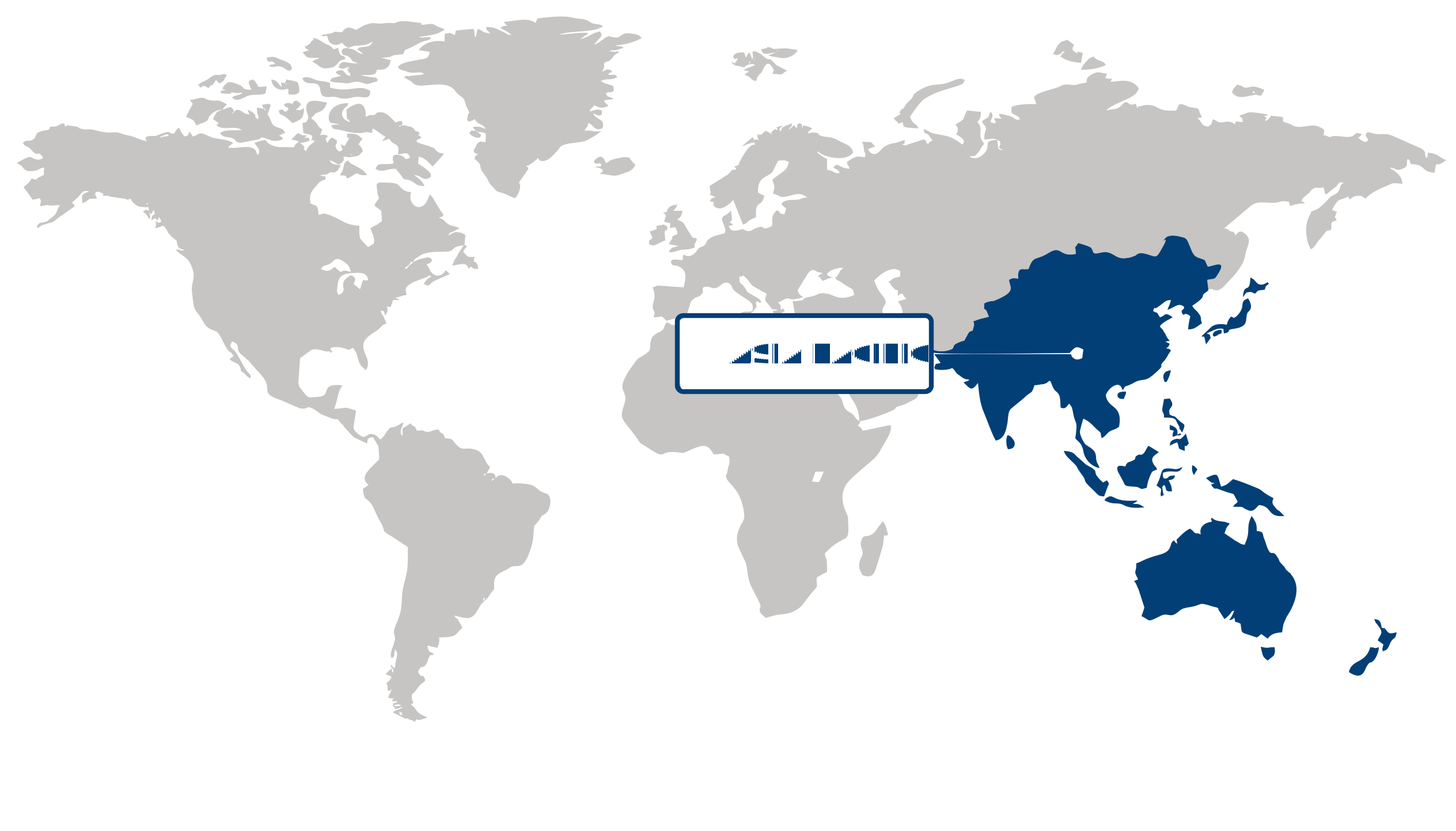
Asia Pacific dominated the container glass market by capturing over 40% of the global share in 2025, emerging as the largest and fastest-growing region with a CAGR of 5.88%. This robust growth is closely tied to the rising consumption of packaged food and beverages fueled by an expanding middle class across the region. Countries such as India, China, and Southeast Asian economies have witnessed shifts in consumer preferences towards premium and sustainable packaging solutions, supported by evolving regulatory frameworks encouraging environmentally friendly materials. For instance, the Ministry of Commerce of China has promoted eco-friendly packaging initiatives, while glass manufacturers like HNG Float Glass in India have advanced production technologies to meet demand efficiently. These dynamics, coupled with improving supply chain infrastructure and heightened corporate commitments to sustainability, position Asia Pacific as a prime market for container glass investment, driven by long-term economic resilience and shifting consumption patterns.
Japan serves as a pivotal hub in the Asia Pacific container glass market, leveraging its sophisticated consumer base and stringent environmental regulations which drive demand for high-quality, recyclable packaging. The nation’s regulatory emphasis on reducing plastic waste, illustrated by policies from the Ministry of the Environment Japan mandating higher recycling rates, has stimulated growth in glass container adoption, especially in food and beverage sectors. Leading players such as Toyo Glass Co., Ltd. have announced expansions focused on innovative, lightweight glass containers that cater to consumer preferences for sustainability and convenience. This makes Japan not only a significant market by value but also a model for integrating environmental responsibility into packaging, reinforcing Asia Pacific’s leadership in container glass.
China anchors the Asia Pacific container glass market as the largest manufacturing and consumption hub, propelled by rapid urbanization and an increasing demand for packaged foods and beverages among its burgeoning middle-income population. Government initiatives like the National Development and Reform Commission’s push for greener industrial practices have catalyzed investments in advanced glass production facilities by companies such as Xinyi Glass Holdings. Additionally, China’s extensive distribution networks and growing e-commerce sector boost demand for durable and recyclable packaging, aligning profitability with sustainability. This strategic role underscores China’s critical contribution to maintaining Asia Pacific’s dominance and expanding the container glass market’s footprint across the region.
Europe Market Analysis:
Europe maintained a substantial share in the container glass market, driven by a mature industrial base and stringent environmental regulations fostering sustainable packaging solutions. The region benefits from significant consumer preference for recyclable and reusable containers, aligning with EU directives such as the European Green Deal, which promotes circular economy principles. European manufacturers are leveraging digital innovations and advanced manufacturing techniques to enhance product quality and operational efficiency. Companies like Ardagh Group and Verallia have actively expanded their premium glass packaging portfolios, addressing evolving demands in food and beverage sectors. Economic resilience and a well-integrated supply chain further fortify Europe’s position. Looking ahead, ongoing policy advancements and increased sustainability focus will continue to unlock growth avenues in the container glass market across Europe.
Germany stands as a pivotal market within Europe’s container glass landscape, recognized for its robust industrial infrastructure and high consumer demand for eco-friendly packaging. German companies are notable for integrating cutting-edge technologies for lightweight and durable glass production, responding to both environmental mandates and premiumization trends highlighted by industry leaders like Vetropack. The country’s regulatory environment, including strict waste management policies enforced by the German Environment Agency (UBA), presses manufacturers toward sustainable innovation. Additionally, German consumers’ growing preference for organic and craft beverages further stimulates demand for specialized container glass formats. This solid foundation positions Germany as a key contributor to Europe’s container glass market growth and innovation trajectory.
France plays an influential role in Europe’s container glass market, distinguished by dynamic consumer trends and supportive government policies emphasizing sustainability. French producers benefit from a thriving food and beverage industry demanding high-quality, aesthetically appealing glass containers, with companies like Saverglass spearheading artisanal and luxury packaging solutions. The French Agency for Ecological Transition (ADEME) actively promotes circular packaging systems, encouraging increased glass recycling rates that enhance supply chain sustainability. Consumer inclination toward premium wines and spirits bolsters demand for sophisticated glass containers. France’s strategic focus on environmental stewardship and innovative packaging practices reinforces its importance in Europe’s container glass market, contributing to the region’s broader growth and sustainability goals.
North America Market Trends:
North America maintained a notable presence in the container glass market, driven by evolving consumer preferences and heightened sustainability priorities across the region. The increasing consumer shift toward eco-friendly packaging, coupled with stringent regulations on plastic usage spearheaded by agencies such as the U.S. Environmental Protection Agency (EPA), has fueled demand for glass containers. Additionally, advancements in manufacturing technologies by key players like Owens-Illinois have enhanced operational efficiency and product quality, supporting moderate growth. Supply chain resilience, demonstrated during recent disruptions, further stabilized the market, enabling timely delivery across diverse industries including food and beverage and pharmaceuticals. Looking ahead, North America’s focus on circular economy initiatives and innovation in lightweight glass container solutions positions the region for continued expansion and strategic advantage in the container glass market.
The U.S. plays a pivotal role in North America’s container glass market, largely influenced by robust consumer demand for recyclable packaging amid growing environmental consciousness. The market benefits from firm regulatory frameworks, including the EPA’s initiatives promoting sustainable packaging practices, which encourage manufacturers to adopt recyclable container glass options. Owens-Illinois’ recent collaboration with major beverage brands to develop eco-friendly glass packaging illustrates the country’s commitment to technological innovation. Moreover, shifting consumer spending towards premium and artisanal products has heightened demand for customized glass containers, underscoring opportunities for differentiation. These dynamics affirm the U.S. as a cornerstone in shaping North America’s container glass market trajectory, underpinning the region’s expanding market potential.
| Parameter | North America | Asia Pacific | Europe | Latin America | MEA |
|---|---|---|---|---|---|
| Innovation Hub i Scale Nascent Developing Advanced | |||||
| Cost-Sensitive Region i Scale Low Medium High | |||||
| Regulatory Environment i Scale Restrictive Neutral Supportive | |||||
| Demand Drivers i Scale Weak Moderate Strong | |||||
| Development Stage i Scale Emerging Developing Developed | |||||
| Adoption Rate i Scale Low Medium High | |||||
| New Entrants / Startups i Scale Sparse Moderate Dense | |||||
| Macro Indicators i Scale Weak Stable Strong |
Segment Leadership and Growth Trends
Container Glass Market Share (%), by End-Use, 2026
Go beyond the chart, access full insights & data tables
Request Free Sample ReportThe packaging segment held the largest share in the container glass market in 2025, driven primarily by the rising demand for sustainable and recyclable packaging solutions. This leadership reflects a broader shift in consumer preferences toward eco-friendly products and stringent regulatory frameworks encouraging circular economy practices, as highlighted in initiatives by the Ellen MacArthur Foundation promoting reusable packaging. Suppliers are optimizing supply chains to integrate post-consumer recycled content, enhancing both environmental credentials and operational resilience. Established companies benefit from brand differentiation through sustainability, while new entrants tap into growing niches for biodegradable packaging innovations. Given ongoing regulatory momentum and consumer emphasis on product transparency, the packaging segment is positioned to sustain its prominence by continually advancing sustainable glass packaging technologies.
Analysis by Forming Process
Type-1 forming processes dominated the container glass market in 2025, supported by their superior manufacturing efficiency and consistency that reduce production costs and improve product quality. This advantage aligns with industry trends toward automation and digitalization in manufacturing lines, as reported by the Glass Packaging Institute, which underscores the importance of standardized processes for meeting stringent safety and quality standards. The reliability of Type-1 methods facilitates large-scale output for high-demand sectors while allowing flexibility to incorporate advanced features like lightweighting and enhanced barrier properties. Both legacy manufacturers and innovative firms capitalize on these efficiencies to enhance competitiveness and reduce environmental impact. The focus on operational optimization combined with growing demand for high-quality glass containers ensures this segment’s sustained relevance.
Analysis by Container Type
Packaging containers represented the largest share of the container glass market in 2025, spurred by the expanding use of glass bottles and jars across food and beverage industries. This segment's growth mirrors increased consumer demand for premium, safe, and reusable packaging formats, validated by product launches from companies like Owens-Illinois that emphasize glass’s inert qualities and recyclability. Cultural shifts toward artisanal and health-conscious consumption patterns further elevate glass packaging’s appeal, supported by supply chain advancements ensuring product integrity from production to retail. The segment offers strategic opportunities through innovation in glass design and functional customization. With ongoing emphasis on premiumization and sustainability in consumer markets, packaging containers will continue as a key focus area for both established players and entrants.
| Segment | Sub-Segment | Largest Segment | Fastest Growing |
|---|---|---|---|
| End-Use | Non-packaging, Packaging | ||
| Forming Process | Type-1, Type-2 | ||
| Container Type | Tableware, Packaging, Decorative Containers | ||
| Glass Type | Type-1, Type-2, Type-3, Type-4 |
Unlock insights tailored to your business with our bespoke market research solutions.
Click to get your customized report now.
Competitive Landscape and Market Positioning
The competitive landscape in the container glass market is characterized by dynamic shifts propelled by strategic maneuvers among the leading companies. Collaboration efforts and integration of new technologies enable enhanced product portfolios and operational efficiencies, intensifying competitive advantages. Several players have expanded scope through acquisitions or alliances, improving access to novel markets and fortifying supply chains. Investments in R&D notably contribute to the refinement of sustainable and lightweight container designs, aligning with shifting consumer and regulatory demands. These ongoing innovations and network consolidations foster both resilience and agility, ensuring that frontrunners sustain relevance while stimulating advancements that ripple across the market.
Strategic / Actionable Recommendations for Regional Players
In North America, strengthening ties with raw material suppliers and modernizing production lines with digital manufacturing solutions will be crucial to maintaining leadership. Emphasizing sustainability-oriented product variants could unlock further partnerships with environmentally conscious brands seeking premium packaging solutions.
For players in the Asia Pacific, forging collaborations with regional beverage and pharmaceutical companies offers pathways for customized container development. Harnessing advances in automation and smart glass technologies can differentiate offerings amid intensifying local competition, particularly by targeting fast-growing urban centers and niche premium segments.
European companies should focus on leveraging their established innovation ecosystems by integrating circular economy principles more holistically across operations. Engaging with cross-sector technology alliances and prioritizing lightweight, energy-efficient containers will enhance positioning amidst a stringent regulatory environment and evolving consumer preferences.
| Company | Market Share | Company Revenue | Revenue CAGR (%) | Product Portfolio | Geographic Presence | Innovation / R&D Focus | Strategic Developments |
|---|---|---|---|---|---|---|---|
| No companies available. | |||||||
Industry Development/News
| Company Name | Date | Key Development |
|---|
Customize Your Report
Explore examples of how this report can be tailored to different research needs, including custom segments, additional topics or chapters, and related reports. Click a section of the wheel or its numbered marker to explore the available options.
Container Glass Market — Custom Segments
| Segment | Sub-Segment |
|---|---|
| No segment data available. | |
Container Glass Market — Custom TOC
| Custom Chapter | Custom Details | ||
|---|---|---|---|
| No custom TOC data available. | |||
Need a different cut of the data?
Request Custom ResearchHow much is the container glass market worth?
What is the anticipated CAGR of the container glass industry?
Which part of the world shows the greatest dominance in the container glass market?
Which geography represents the strongest growth trajectory for the container glass sector?
What factors give type-1 segment a competitive edge in the container glass sector?
Which is the largest sub-segment within the glass type segment for container glass industry?
What are the key competitors in the container glass landscape?
Our Clients
"The report helped us understand emerging consumer trends in our product category. It clarified where to focus innovation for the next product launch."
LyondellBasell
"The regional forecast section was incredibly useful. We were able to identify two new potential partners in Europe thanks to the vendor mapping you included."
SABIC
"We appreciated how actionable the recommendations were. It guided us to improve supply chain resilience."
Olin Corporation
Our Research Team & Methodology
Every Fundamental Business Insights report is built by a dedicated vertical research team, validated through a structured primary-and-secondary methodology, and reviewed for accuracy before it reaches you.
Research Team Overview
Prepared by the Chemicals & Materials Research Team
Delivery
Published
Demand
Available
Support
Trust & Compliance
Research Intelligence
Research Workflow & Quality Assurance
Data Collection
Verified information gathered through primary and secondary research.
Data Triangulation
Cross-validation using multiple independent data sources.
Forecast Modelling
Market estimates developed using historical trends and analytical models.
Analyst Validation
Findings reviewed by domain experts for accuracy and consistency.
Editorial & Quality Review
Final editorial, quality, and compliance checks before publication.
Final Publication
Released after successful completion of the internal review process.
Report Coverage
📊 Market Assessment
- Market Size & Forecast
- Market Segmentation
- Regional Analysis
- Growth Drivers & Challenges
- Market Dynamics
🏢 Competitive Intelligence
- Competitive Landscape
- Company Profiles
- Competitive Benchmarking
- Mergers & Acquisitions
- Market Share Analysis or Key Company Strategies
🔍 Strategic Analysis
- Value Chain Analysis
- Porter's Five Forces
- PESTLE Analysis
- Pricing Trends
- Supply-Demand Analysis
🚀 Future Outlook
- Technology Landscape
- Regulatory Landscape
- Investment & Funding Landscape
- Emerging Opportunities
- Future Market Outlook
Have a question about this report or need a custom scope?
Request Customization