Chlorinated Polyvinyl Chloride (CPVC) Market Size & Forecasts 2026-2035, By Segments (Grade, Form, Sales Channel, Production Process, End-use Industry, Application), Growth Opportunities, Innovation Landscape, Regulatory Shifts, Strategic Regional Insights (U.S., Japan, China, South Korea, UK, Germany, France), and Competitive Dynamics (Lubrizol, Shintech, Formosa Plastics, Daikin, INEOS)
Market Size and Growth Outlook
Chlorinated Polyvinyl Chloride Market size is projected to grow steadily from USD 6.48 billion in 2025 to USD 13.23 billion by 2035, demonstrating a CAGR exceeding 7.4% through the forecast period (2026-2035). The 2026 revenue is estimated at USD 6.9 billion.
Get more details on this report
Request Free Sample ReportChlorinated Polyvinyl Chloride (CPVC) Market Intelligence Snapshot
Regional Market Dynamics
Segment Momentum
Market Expansion Drivers
Leading Market Participants
Global Market Forecast Snapshot
Market Outlook
Regional and Segment Outlook
Market Growth Drivers and Industry Trends
The chlorinated polyvinyl chloride (cpvc) market is significantly driven by rising demand in plumbing and industrial piping applications, where durability and resistance to corrosion are critical. The U.S. Environmental Protection Agency (EPA) and other regulatory bodies emphasize the importance of materials that maintain water quality and resist chemical degradation, reinforcing cpvc’s relevance. This trend correlates with urbanization and infrastructure upgrades, particularly in emerging markets where expanding water supply and sanitation projects are underway. Established manufacturers can leverage this by enhancing supply chain resilience, while new entrants may capitalize on niche applications such as sustainable building materials. As infrastructure investments continue, the cpvc market will benefit from material preferences emphasizing long-term reliability and regulatory compliance, reinforcing its essential role in modern piping solutions.
Growth in Chemical Processing and Construction Sectors
Expansion in chemical processing and construction sectors underpins significant growth in the chlorinated polyvinyl chloride (cpvc) market due to cpvc’s superior chemical resistance and structural integrity under demanding conditions. The American Chemistry Council highlights cpvc’s utility in transporting aggressive chemicals safely, driving its adoption in industrial plants. Concurrently, as global construction activity increases—with support from government stimulus plans such as China’s infrastructure investments—cpvc’s fire resistance and thermal stability make it highly suitable for building systems. This dual-sector surge opens strategic avenues for manufacturers focusing on performance certification and system integration. Market players aligned with these industries can deepen partnerships, while entrants may innovate tailored formulations to meet evolving safety standards and construction codes.
Innovations in CPVC Formulations for Higher Performance
Advancements in cpvc formulations, aimed at enhancing thermal stability, mechanical strength, and ease of installation, are reshaping the chlorinated polyvinyl chloride (cpvc) market by expanding its application scope. Owens Corning’s recent collaboration announcement on next-generation cpvc compounds exemplifies industry commitment to innovation, addressing growing demands for energy-efficient and low-maintenance materials. These innovations align with sustainability trends favoring longer lifecycle products, reducing maintenance costs and resource consumption. Both incumbents and newcomers benefit from investing in R&D, with potential to differentiate through proprietary formulations or environmentally friendly additives. Observed commitments by leading companies to product development suggest sustained innovation will be pivotal in capturing new market segments and reinforcing cpvc’s competitive edge.
Industry Restraints:
Environmental Regulatory Stringency
Tightening environmental regulations significantly constrain the chlorinated polyvinyl chloride (CPVC) market by increasing compliance costs and complicating production processes. Agencies such as the U.S. Environmental Protection Agency (EPA) have enforced stricter emissions standards and chemical handling protocols that require manufacturers to invest heavily in pollution control technologies and safer chemical substitutes. The complexity and expense of meeting these standards disproportionately burden smaller manufacturers, limiting their ability to expand or innovate. For incumbents, regulatory compliance diverts capital from R&D, slowing new product development. Given the ongoing global shift toward sustainability, regulatory pressure is expected to intensify, compelling manufacturers to adopt greener production methods or face operational restrictions, thereby influencing market consolidation and competitive dynamics in the near to medium term.
Raw Material Supply Volatility
Fluctuations in key raw materials such as chlorine and vinyl chloride monomer (VCM) impose significant constraints by disrupting CPVC production continuity and elevating costs. Notable supply disruptions, such as those reported by Westlake Chemical due to feedstock shortages and transportation delays, have underscored vulnerabilities in the CPVC value chain. These supply constraints challenge manufacturers’ ability to meet demand consistently, resulting in delayed project timelines and reduced customer confidence. For new entrants, capitalizing on market opportunities becomes riskier amid unpredictable input costs, while incumbents must optimize inventory strategies and strengthen supplier relationships. In the medium term, companies that can secure stable supply agreements or develop alternative input sourcing are better positioned to navigate raw material volatility and maintain market share.
| Growth Driver | Impact on CAGR | Regulatory Influence | Geographic Relevance | Adoption Rate | Impact Timeline |
|---|---|---|---|---|---|
| Increasing demand in plumbing and industrial piping | 1.20% | Short term (≤ 2 yrs) | North America, Europe | Medium | Fast |
| Growth in chemical processing and construction sectors | 1.00% | Medium term (2–5 yrs) | Asia Pacific, North America | Low | Moderate |
| Innovations in CPVC formulations for higher performance | 0.80% | Long term (5+ yrs) | Europe, Asia Pacific | Low | Slow |
Explore Growth Opportunities
Request Free Sample ReportRegional Demand Dynamics
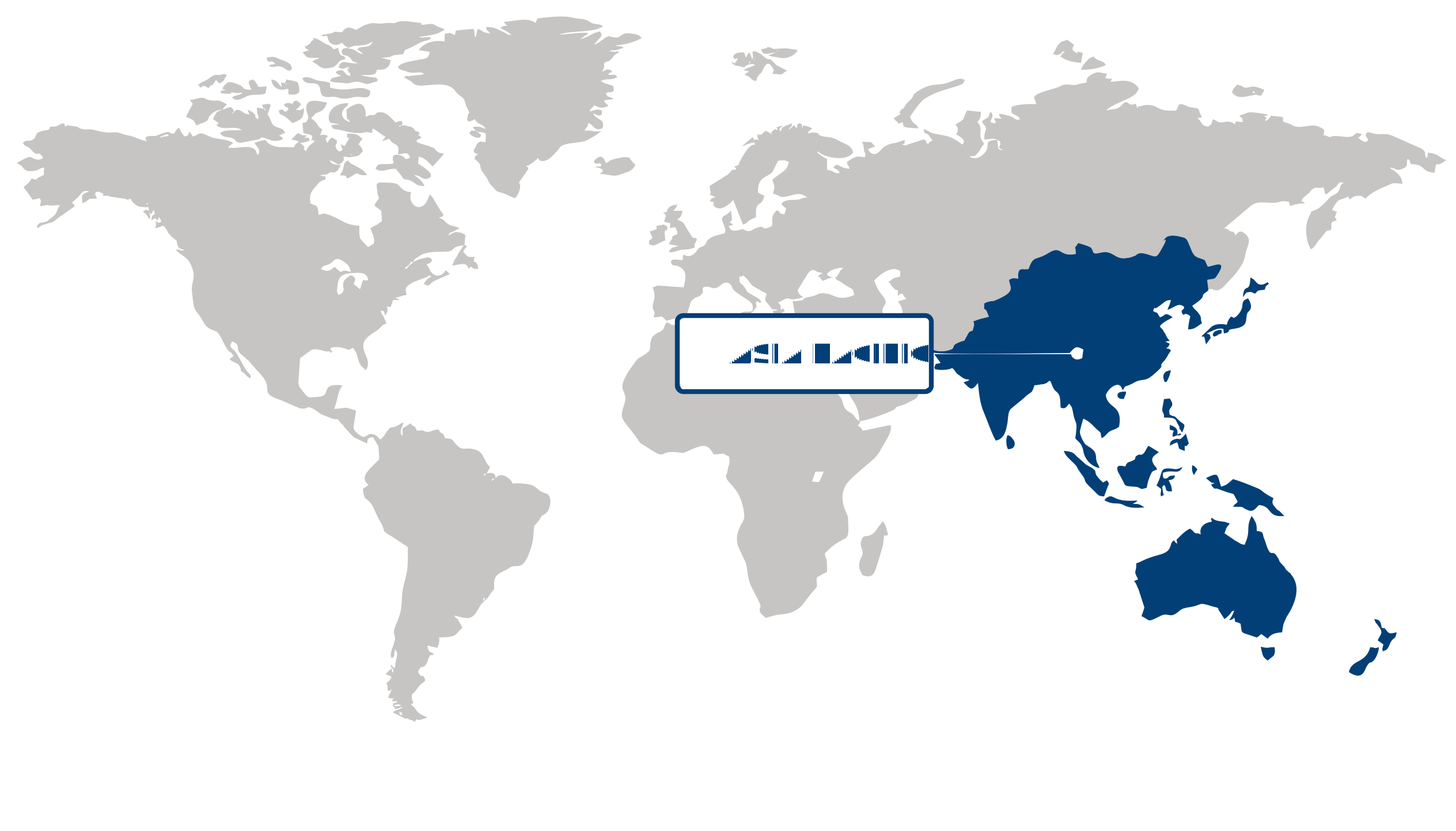
Asia Pacific dominated the chlorinated polyvinyl chloride (cpvc) market with a substantial 40.2% share in 2025, also reflecting the fastest growth at a 10.36% CAGR. This leadership is primarily underpinned by rapid expansion in the building industry and extensive municipal water infrastructure projects across emerging economies such as India, Vietnam, and Indonesia. Heightened urbanization and industrialization have accelerated demand for durable, corrosion-resistant piping solutions, supporting CPVC adoption. For instance, China’s National Development and Reform Commission’s infrastructure plans highlight increased investment in water supply systems, promoting CPVC usage. Additionally, manufacturers like Lubrizol and Sekisui Chemical have scaled local production, optimizing supply chains and reducing lead times. Looking ahead, Asia Pacific’s ongoing infrastructural modernization and rising sustainability focus in construction signal sustained, significant opportunities for the chlorinated polyvinyl chloride (cpvc) market.
Japan plays a pivotal role in the Asia Pacific chlorinated polyvinyl chloride (cpvc) market as a technology-intensive and quality-driven hub. The nation’s advanced regulatory framework emphasizes material safety and environmental compliance, shaping manufacturer innovations and promoting CPVC pipes in specialized industrial and commercial applications. Companies such as Sekisui Chemical leverage cutting-edge polymer technologies and collaborate with Japan’s Ministry of Economy, Trade and Industry to enhance product performance. Meanwhile, Japan’s focus on retrofitting aging water infrastructure aligns with regional trends but stands apart due to a preference for high-standard solutions, reinforcing its strategic influence. This technical leadership complements the broader Asia Pacific market growth driven by emerging economies, positioning Japan as a center for innovation and quality assurance within the chlorinated polyvinyl chloride (cpvc) sector.
China anchors the Asia Pacific chlorinated polyvinyl chloride (cpvc) market through its massive construction and municipal water infrastructure investments, driving unparalleled demand volumes. The government’s Five-Year Plans prioritize urban water management and pollution control, amplifying CPVC pipe adoption for safe and sustainable water distribution. Industry players like China National Building Materials Group Corporation (CNBM) have expanded CPVC production capacity to meet escalating domestic needs, supported by favorable policy incentives from the Ministry of Housing and Urban-Rural Development. Furthermore, rising middle-class housing demand and governmental emphasis on green building certifications further stimulate market growth. China’s scale and policy-driven momentum underpin Asia Pacific’s dominance, offering efficient supply and robust demand links essential to capitalizing on regional chlorinated polyvinyl chloride (cpvc) market opportunities.
North America Market Analysis:
North America holds a substantial share in the chlorinated polyvinyl chloride (cpvc) market, driven by the region’s robust infrastructure development and stringent building codes that prioritize fire resistance and durability. The demand shift toward sustainable construction materials coupled with the rise in refurbishment projects across commercial and residential sectors is intensifying the adoption of CPVC. Regulatory frameworks from agencies such as the U.S. Environmental Protection Agency (EPA) bolster the use of low-toxicity materials, enhancing market confidence. Additionally, advanced supply chain logistics and established manufacturing capabilities underpin North America’s market strength, supported by innovation in polymer technology from leaders like Lubrizol and Westlake Chemical. Given these factors and the region's economic resilience amid global uncertainties, North America presents a compelling landscape for sustained CPVC market growth through enhanced performance materials aligned with evolving construction and environmental standards.
The U.S. acts as a pivotal market within North America for chlorinated polyvinyl chloride (cpvc), propelled by extensive residential plumbing infrastructure modernization and increasing consumer demand for long-lasting, corrosion-resistant piping solutions. The nation’s responsive regulatory landscape, influenced by the American Chemistry Council’s advocacy for sustainable materials, has fostered widespread acceptance of CPVC products. Manufacturing advancements led by companies like Georg Fischer contribute to high production efficiency and product innovation, addressing the diverse needs of construction and industrial sectors. Furthermore, demographic trends such as urbanization and rising household renovations drive steady consumption, reinforcing the U.S. as a cornerstone market. These factors collectively amplify North America’s position, signaling strategic opportunities for investors and manufacturers to capitalize on evolving market dynamics centered on durability and sustainability in CPVC applications.
Europe Market Trends:
Europe maintained notable presence in the chlorinated polyvinyl chloride (cpvc) market, driven by increasing infrastructure modernization and enhanced sustainability measures across the region. The continent’s emphasis on energy efficiency in construction and stringent regulations on material safety have boosted demand for durable and non-toxic piping solutions like CPVC. The European Chemicals Agency’s (ECHA) ongoing regulatory framework updates favor high-performance polymers with lower environmental impact, encouraging manufacturers to innovate in product formulations and supply chains. Additionally, Europe’s mature industrial base and skilled workforce support advanced manufacturing techniques, enabling competitive productivity despite global supply chain fluctuations. Leading companies such as Vinnolit and Tessenderlo Group have expanded production capacity to meet this rising demand. Looking ahead, Europe offers significant opportunities through continued investment in green building initiatives and growing public-private collaboration on smart infrastructure projects that prioritize CPVC’s corrosion resistance and thermal stability.
Germany plays a pivotal role in Europe’s chlorinated polyvinyl chloride (cpvc) market, reflecting its status as the region’s largest construction and manufacturing hub. The market here benefits from Germany’s strong regulatory environment that promotes sustainable materials, as emphasized by the German Federal Ministry for the Environment’s support for circular economy practices. German companies such as Oetiker Group have leveraged advanced polymer processing technologies to cater to automotive and industrial sectors needing durable piping systems. Furthermore, the country’s robust logistics infrastructure ensures efficient distribution across Europe, reinforcing its competitive edge. Strategically, Germany’s innovation ecosystem and policy-driven demand make it central to Europe’s CPVC market growth, particularly as regional manufacturers seek to align with decarbonization and digital manufacturing trends.
France also significantly influences the chlorinated polyvinyl chloride (cpvc) market in Europe, driven by expanding residential and commercial construction activities focused on eco-friendly materials. The French government’s Plan Bâtiment Durable initiative emphasizes reducing carbon footprints and improving material life cycles, increasing CPVC adoption for plumbing and heating applications that benefit from corrosion and chemical resistance. Leading French chemical groups such as Arkema demonstrate innovation in high-performance polymers, enhancing CPVC’s competitive positioning. Additionally, growing consumer awareness and preference for sustainable building solutions support moderate growth in the market. France’s balanced regulatory approach and growing emphasis on energy-efficient infrastructure underscore its strategic contribution to Europe’s broader CPVC market expansion.
| Parameter | North America | Asia Pacific | Europe | Latin America | MEA |
|---|---|---|---|---|---|
| Innovation Hub i Scale Nascent Developing Advanced | |||||
| Cost-Sensitive Region i Scale Low Medium High | |||||
| Regulatory Environment i Scale Restrictive Neutral Supportive | |||||
| Demand Drivers i Scale Weak Moderate Strong | |||||
| Development Stage i Scale Emerging Developing Developed | |||||
| Adoption Rate i Scale Low Medium High | |||||
| New Entrants / Startups i Scale Sparse Moderate Dense | |||||
| Macro Indicators i Scale Weak Stable Strong |
Segment Leadership and Growth Trends
Chlorinated Polyvinyl Chloride (CPVC) Market Share (%), by Grade, 2026
Go beyond the chart, access full insights & data tables
Request Free Sample ReportInjection grade held largest share in the chlorinated polyvinyl chloride (CPVC) market in 2025, primarily due to its widespread use in manufacturing complex fittings, valves, and plumbing components at scale. This segment benefits from the rising demand for durable, high-precision products in construction and industrial applications, where stringent performance and safety standards prevail. Companies like Lubrizol have emphasized their injection-grade CPVC formulations designed to meet rigorous certification criteria, reflecting regulatory and quality assurance initiatives shaping buyer preferences. The segment’s prominence offers strategic advantages to established firms through scale economies and innovation, while new entrants can capitalize on niche requirements for customized components. Given ongoing infrastructure developments and regulatory pushes toward safer piping materials, injection-grade CPVC is expected to maintain its relevance with continuous material improvements and expanding application scopes.
Analysis by Form
Pellet form represented largest share in the chlorinated polyvinyl chloride (CPVC) market in 2025, driven by its superior convenience in logistics and enhanced efficiency in downstream processing for pipes and fittings. The pellet form supports consistent melting and molding quality, aligning with manufacturers’ priorities for reliable, cost-effective production lines. This format also facilitates reduced waste and inventory management improvements, reflecting supply chain optimization trends noted by companies like Westlake Chemical, which promotes pelletized CPVC products for better operational control. The segment’s leading position creates opportunities for both incumbents and emerging players to innovate around sustainable packaging and processing technologies. As emphasis on circular economy practices and lean manufacturing intensifies, pellet form CPVC will continue to thrive due to its compatibility with modern automated industrial setups.
Analysis by Sales Channel
Direct sales held largest market share in the chlorinated polyvinyl chloride (CPVC) market in 2025, fueled by manufacturers’ preference for direct engagement with industrial and construction buyers requiring tailored CPVC solutions. This channel enables suppliers such as Teknor Apex to deliver customized products with technical support, fostering stronger client relationships and faster response times amid evolving project specifications. The direct sales model aligns with customer demand for transparency, quality assurance, and compliance with local regulatory frameworks governing building materials. Furthermore, it supports digital transformation by integrating e-commerce platforms and CRM systems for enhanced client management. For both incumbents and startups, this segment presents competitive differentiation through value-added services. In light of ongoing infrastructure growth and industrial expansion, direct sales will remain essential for delivering customized CPVC offerings efficiently and reliably.
| Segment | Sub-Segment | Largest Segment | Fastest Growing |
|---|---|---|---|
| Grade | Injection Grade, Extrusion Grade | ||
| Form | Pellet Form, Powder Form | ||
| Sales Channel | Direct Sales, Indirect Sales | ||
| Production Process | Aqueous Suspension Method, Solvent Method, Solid Phase Method | ||
| End-use Industry | Residential, Commercial, Industrial | ||
| Application | Plumbing Systems, Fire Protection Systems, Chemical & Industrial Equipment, Power Cable Casing, Adhesives & Coatings, Others |
Unlock insights tailored to your business with our bespoke market research solutions.
Click to get your customized report now.
Competitive Landscape and Market Positioning
The competitive environment in the CPVC market is characterized by dynamic collaboration, robust capital investments, and continuous enhancement of production technologies. Leading firms have pursued synergistic ventures that increase access to raw materials and optimize manufacturing footprints, fostering resilience against supply fluctuations. Many are accelerating the development of novel CPVC grades that improve thermo-mechanical properties and fire resistance, thereby expanding application scopes in construction, industrial, and infrastructure sectors. This wave of innovation is further supported by ongoing research initiatives aimed at minimizing environmental footprints and achieving regulatory compliance globally. The interplay of these activities solidifies the market positions of dominant players and enables them to differentiate offerings amid intensifying rivalry and evolving customer specifications.
Strategic / Actionable Recommendations for Regional Players
In North America, companies should focus on deepening alliances with construction and mechanical engineering firms to integrate CPVC into green building solutions. Exploiting advances in bio-based additives and performance-enhancing formulations can meet stringent environmental criteria while addressing end-use sustainability priorities. Collaboratively developing infrastructure-grade CPVC variants may unlock opportunities in aging urban water and HVAC systems.
Asian entities would benefit from partnering with technology providers to accelerate scale-up of high-performance CPVC compounds tailored for rapidly expanding industrial and residential sectors. Leveraging digital manufacturing and automation can enhance product consistency and reduce lead times, supporting quick response to fluctuating demand. Targeting high-growth economies by emphasizing compliance and durability can solidify market footholds.
European participants are encouraged to harness circular economy frameworks by embracing recycling initiatives and developing CPVC materials compatible with reused feedstocks. Engaging with regulatory bodies to align product innovation with evolving environmental policies will sustain competitive advantage. Focusing on premium construction and specialty chemical sub-segments may allow differentiation amid market consolidation and heightened quality expectations.
| Company | Market Share | Company Revenue | Revenue CAGR (%) | Product Portfolio | Geographic Presence | Innovation / R&D Focus | Strategic Developments |
|---|---|---|---|---|---|---|---|
| No companies available. | |||||||
Industry Development/News
| Company Name | Date | Key Development |
|---|
Customize Your Report
Explore examples of how this report can be tailored to different research needs, including custom segments, additional topics or chapters, and related reports. Click a section of the wheel or its numbered marker to explore the available options.
Chlorinated Polyvinyl Chloride (CPVC) Market — Custom Segments
| Segment | Sub-Segment |
|---|---|
| No segment data available. | |
Chlorinated Polyvinyl Chloride (CPVC) Market — Custom TOC
| Custom Chapter | Custom Details | ||
|---|---|---|---|
| No custom TOC data available. | |||
Need a different cut of the data?
Request Custom ResearchHow large is the chlorinated polyvinyl chloride market?
How is the chlorinated polyvinyl chloride (CPVC) industry expected to grow over the next 10 years?
Which geographical region leads the chlorinated polyvinyl chloride (CPVC) market market?
Who is driving the fastest regional growth in the chlorinated polyvinyl chloride sector?
Where is the injection grade segment seeing the strongest adoption within the chlorinated polyvinyl chloride (CPVC) industry?
When did pellet form sub-segment emerge as the largest sub-segment in the form segment of chlorinated polyvinyl chloride (CPVC) sector?
Why is the direct sales segment leading in the chlorinated polyvinyl chloride (CPVC) industry?
Why does aqueous suspension method sub-segment dominate the production process segment of chlorinated polyvinyl chloride (CPVC) sector?
How much is the residential segment expected to grow in the chlorinated polyvinyl chloride (CPVC) industry beyond 2025?
What factors give plumbing systems segment a competitive edge in the chlorinated polyvinyl chloride (CPVC) sector?
Who holds a significant market share in the chlorinated polyvinyl chloride (CPVC) landscape?
Our Clients
"The report helped us understand emerging consumer trends in our product category. It clarified where to focus innovation for the next product launch."
LyondellBasell
"The regional forecast section was incredibly useful. We were able to identify two new potential partners in Europe thanks to the vendor mapping you included."
SABIC
"We appreciated how actionable the recommendations were. It guided us to improve supply chain resilience."
Olin Corporation
Our Research Team & Methodology
Every Fundamental Business Insights report is built by a dedicated vertical research team, validated through a structured primary-and-secondary methodology, and reviewed for accuracy before it reaches you.
Research Team Overview
Prepared by the Chemicals & Materials Research Team
Delivery
Published
Demand
Available
Support
Trust & Compliance
Research Intelligence
Research Workflow & Quality Assurance
Data Collection
Verified information gathered through primary and secondary research.
Data Triangulation
Cross-validation using multiple independent data sources.
Forecast Modelling
Market estimates developed using historical trends and analytical models.
Analyst Validation
Findings reviewed by domain experts for accuracy and consistency.
Editorial & Quality Review
Final editorial, quality, and compliance checks before publication.
Final Publication
Released after successful completion of the internal review process.
Report Coverage
📊 Market Assessment
- Market Size & Forecast
- Market Segmentation
- Regional Analysis
- Growth Drivers & Challenges
- Market Dynamics
🏢 Competitive Intelligence
- Competitive Landscape
- Company Profiles
- Competitive Benchmarking
- Mergers & Acquisitions
- Market Share Analysis or Key Company Strategies
🔍 Strategic Analysis
- Value Chain Analysis
- Porter's Five Forces
- PESTLE Analysis
- Pricing Trends
- Supply-Demand Analysis
🚀 Future Outlook
- Technology Landscape
- Regulatory Landscape
- Investment & Funding Landscape
- Emerging Opportunities
- Future Market Outlook
Have a question about this report or need a custom scope?
Request Customization