Chemical Fertilizers Market Size & Forecasts 2026-2035, By Segments (Form, Application Method, End-user, Type, Crop Type), Growth Opportunities, Innovation Landscape, Regulatory Shifts, Strategic Regional Insights (U.S., Japan, China, South Korea, UK, Germany, France), and Competitive Dynamics (Yara International, Nutrien, CF Industries, K+S AG, The Mosaic Company)
Market Size and Growth Outlook
Chemical Fertilizers Market size is estimated to increase from USD 23.14 billion in 2025 to USD 57.87 billion by 2035, supported by a CAGR exceeding 9.6% during 2026-2035. In 2026, revenues are forecast to reach USD 25.08 billion.
Get more details on this report
Request Free Sample ReportChemical Fertilizers Market Intelligence Snapshot
Regional Market Dynamics
Segment Momentum
Market Expansion Drivers
Leading Market Participants
Global Market Forecast Snapshot
Market Outlook
Regional and Segment Outlook
Market Growth Drivers and Industry Trends
The increasing global demand for food driven by population growth and changing dietary patterns is propelling intensification in agricultural activities, directly influencing the chemical fertilizers market. According to the Food and Agriculture Organization (FAO), efforts to maximize yield per hectare through intensive cropping systems necessitate higher and more precise fertilizer application. This trend encourages the development and adoption of tailored chemical fertilizers that support nutrient management aligned with specific crop needs. Established fertilizer manufacturers can leverage this shift by introducing advanced formulations and precision agriculture technologies, while new entrants may explore niche markets in specialty nutrients. The sustained emphasis on enhancing crop productivity in key agricultural regions underscores the ongoing relevance of this driver in shaping supply chains and innovation pipelines.
Expansion in Fertilizer Blending and Distribution
Growth in customized fertilizer blending and expanded distribution networks is significantly reshaping the chemical fertilizers market’s accessibility and responsiveness. Companies such as Yara International have highlighted their investment in regional blending plants and digital platforms to meet localized nutrient requirements efficiently. This approach addresses diverse soil fertility conditions and farmer preferences, facilitating more targeted nutrient delivery and reduced waste. For established players, scaling blending and distribution capabilities offers differentiation and customer loyalty, while startups can capitalize on digital tools and supply chain partnerships to penetrate underserved rural markets. As agricultural extension services incorporate data-driven insights, the blending and distribution expansion is set to become a critical competitive frontier within the chemical fertilizers sector.
Adoption of Enhanced-Efficiency Fertilizers
The chemical fertilizers market is increasingly shaped by the adoption of enhanced-efficiency fertilizers (EEFs), designed to improve nutrient uptake and minimize environmental impact. Regulatory frameworks in regions like the European Union, reinforced by directives from the European Chemicals Agency (ECHA), incentivize lower nitrogen volatilization and leaching, accelerating the shift towards EEFs such as controlled-release and stabilized fertilizers. Industry leaders like Nutrien are publicizing investments in these technologies to meet stricter sustainability standards and farmer demand for cost-effective solutions. This trend opens strategic avenues for incumbents to upgrade portfolios and for innovators to pioneer novel formulations aligned with environmental compliance. As global emphasis on sustainable intensification intensifies, enhanced-efficiency fertilizers will remain pivotal in balancing productivity with ecological stewardship.
Industry Restraints:
Environmental Regulations and Sustainability Pressures
Increasingly stringent environmental regulations significantly constrain the chemical fertilizers market by imposing limits on nitrogen oxide (NOx) and ammonia emissions, runoff, and soil degradation. Agencies like the U.S. Environmental Protection Agency (EPA) and the European Commission enforce strict guidelines aimed at reducing the ecological footprint of fertilizer use, which often necessitates costly reformulations and operational adjustments by manufacturers. This regulatory complexity raises production costs and extends time-to-market for new products, affecting profitability. For instance, Yara International has publicly acknowledged increased R&D spending to meet evolving regulatory standards. Both industry incumbents and newcomers face heightened barriers due to capital intensity and compliance risk, limiting rapid innovation or aggressive expansion. Moving forward, regulatory frameworks will continue to prioritize ecological sustainability, compelling the sector to adopt more efficient, lower-impact technologies or risk losing market access.
Feedstock Price Volatility and Supply Vulnerabilities
The chemical fertilizers market’s reliance on natural gas as a primary feedstock exposes it to substantial cost fluctuations driven by geopolitical tensions and energy market instability. According to the International Energy Agency (IEA), spikes in natural gas prices have repeatedly forced major producers like CF Industries and Nutrien to scale back production or pass costs onto consumers, discouraging large-scale adoption. This feedstock volatility constrains operational consistency and complicates long-term pricing strategies, limiting market participants’ ability to invest confidently in capacity or innovation. For new entrants, securing steady, cost-effective raw materials represents a formidable challenge. As global energy markets remain unpredictable, feedstock price instability is poised to continue as a critical restraint, pressuring companies to diversify supply sources or seek alternative raw materials to sustain competitiveness.
| Growth Driver | Impact on CAGR | Regulatory Influence | Geographic Relevance | Adoption Rate | Impact Timeline |
|---|---|---|---|---|---|
| Rising agricultural production and crop intensification | 3.50% | Short term (≤ 2 yrs) | Asia Pacific, North America; Spillover: Europe | Medium | Fast |
| Expansion in fertilizer blending and distribution | 3.00% | Medium term (2–5 yrs) | Europe, North America | Low | Moderate |
| Adoption of enhanced-efficiency fertilizers | 3.00% | Long term (5+ yrs) | Asia Pacific, Europe | Medium | Slow |
Explore Growth Opportunities
Request Free Sample ReportRegional Demand Dynamics
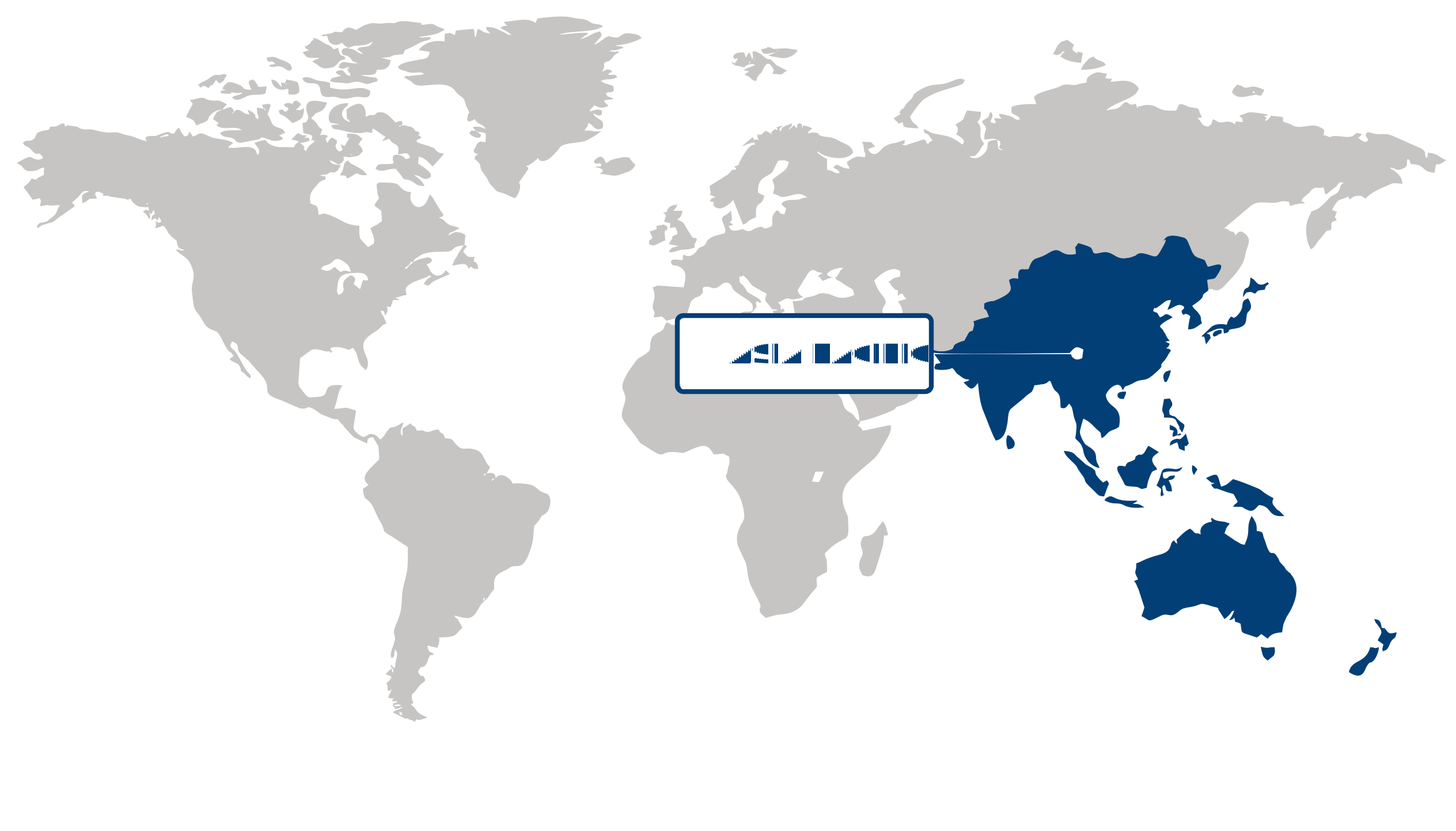
Asia Pacific dominated the chemical fertilizers market in 2025, capturing more than 52.5% of the global share. This region leads primarily due to the pressing need to boost agricultural productivity to sustain the food demands of its massive population. Governments and industry stakeholders across Asia Pacific are increasingly investing in advanced fertilizer formulations and precision agriculture techniques to optimize yields, as reflected in announcements from organizations like the International Fertilizer Association (IFA) and India’s Fertilizer Ministry. Policy initiatives supporting sustainable farming, alongside improvements in supply chain infrastructure and digital farming platforms, have enhanced accessibility and operational efficiency. These dynamics, coupled with growing awareness of resource conservation, position Asia Pacific as a critical arena for innovation and expansion in the chemical fertilizers market over the coming years.
China anchors the Asia Pacific chemical fertilizers market as the largest national player, driven by intense demand from its vast agricultural sector and strong government initiatives promoting food security and sustainable farming practices. Regulatory frameworks encouraging the adoption of environmentally friendly fertilizers and subsidies from bodies like the Ministry of Agriculture and Rural Affairs have accelerated industry modernization. Major domestic producers such as China National Chemical Corporation (ChemChina) are advancing crop-specific fertilizer blends and digital agronomy tools to support precision nutrient management. China’s strategic emphasis on balancing productivity gains with ecological sustainability underscores its pivotal role in reinforcing Asia Pacific’s regional dominance in chemical fertilizers.
Japan is positioned as a crucial hub in the Asia Pacific chemical fertilizers market, leveraging cutting-edge research and technology integration to enhance fertilizer efficacy and reduce environmental impact. The country’s focus on innovation-driven agricultural productivity, supported by entities like the Japan Fertilizer Industry Association and academic partnerships, has led to the development of high-performance, slow-release fertilizers tailored to limited arable land scenarios. Japan’s regulatory environment prioritizes reducing chemical runoff and fostering smart farming technologies, which influences regional best practices. This leadership in sustainable fertilizer solutions complements Asia Pacific’s broader market growth, solidifying Japan’s role as a key contributor to the region’s ongoing expansion and technological advancement.
North America Market Analysis:
North America emerged as the fastest-growing region in the chemical fertilizers market, registering a robust CAGR of 11.52%. This impressive growth is primarily driven by the rapid adoption of precision agriculture technologies combined with the increasing demand for high-efficiency fertilizer blends. Farmers and agricultural enterprises are leveraging advanced data analytics, GPS-guided equipment, and soil sensors to optimize fertilizer application, enhancing crop yields while minimizing environmental impact. The U.S. Department of Agriculture (USDA) has actively supported such innovations through grants and pilot programs aimed at sustainable farming practices, underscoring the region’s commitment to integrating technology with agrochemical inputs. Additionally, shifting consumer preferences toward sustainable and responsible agriculture have accelerated the uptake of eco-friendly fertilizer solutions. With ongoing technological advancements and robust policy support for smart farming, North America promises substantial opportunities for stakeholders in the chemical fertilizers market to drive efficiency and sustainability.
The U.S. plays a critical role in shaping North America’s leadership in the chemical fertilizers market. The country's agricultural sector is rapidly integrating precision agriculture tools, supported by industry leaders like Nutrien and Mosaic Company, which have introduced advanced, high-efficiency nitrogen and phosphate blends tailored for variable-rate application. U.S. farmers’ increasing willingness to invest in digital farming platforms is enhancing nutrient management precision, as highlighted in recent USDA reports emphasizing sustainability and productivity. Regulatory shifts under the Environmental Protection Agency (EPA) also push for reduced nutrient runoff, fueling demand for environmentally optimized fertilizers. These developments position the U.S. as a key innovator and early adopter, reinforcing North America’s growth potential in the chemical fertilizers market through enhanced operational efficiency and environmental stewardship.
Europe Market Trends:
Europe maintained a notable presence in the chemical fertilizers market, driven by evolving agricultural practices and regulatory frameworks that emphasize environmental stewardship alongside productivity. The region’s moderate growth reflects shifting farmer preferences toward balanced nutrient formulations that enhance soil health while complying with stringent EU nutrient management policies, such as the Nitrates Directive. Additionally, advancements in precision agriculture technologies, supported by initiatives from the European Commission, have optimized fertilizer application efficiency across farmlands. Supply chain resilience, partly bolstered by investments in localized production facilities from leading players like Yara International, has further solidified Europe's standing despite fluctuating raw material costs. This combination of regulatory rigor, technological integration, and sustainable farming practices positions Europe as a strategic arena for chemical fertilizer innovation, suggesting ongoing opportunities for companies aligning products with regional environmental and operational priorities.
Germany plays a pivotal role in Europe's chemical fertilizers market, reflecting its status as both a major agricultural producer and a key innovation hub. The country’s fertilizer consumption is influenced by nationwide commitments to reduce nitrogen emissions, evidenced by the German Federal Environment Agency’s (UBA) stricter guidelines encouraging the adoption of enhanced efficiency fertilizers. Industry leaders such as BASF have ramped up R&D investments, focusing on environmentally friendly formulations and digital farming tools that optimize nutrient delivery. Germany’s robust infrastructure and emphasis on circular economy principles also facilitate efficient supply chains, ensuring timely availability of fertilizers. These factors underscore Germany’s critical contribution to Europe's moderate market growth, highlighting the country as a testing ground for sustainable solutions that can scale regionally.
France is an influential market within the European chemical fertilizers landscape, buoyed by its diverse agricultural sector and supportive government policies aiming to balance yield targets with sustainability goals. The French Ministry of Agriculture’s programs promoting integrated nutrient management have fostered increased demand for tailored fertilizer solutions, particularly those enhancing organic matter preservation while meeting crop-specific nutritional needs. Companies like Yara France have leveraged such initiatives by introducing blended fertilizers that align with environmental directives, contributing to steady market expansion. Additionally, France’s strong agricultural cooperatives facilitate knowledge transfer and adoption of innovative practices, reinforcing its competitive edge. This dynamic underscores France’s importance in shaping Europe’s chemical fertilizer market trajectory, offering pathways to innovate within a framework of environmental accountability.
| Parameter | North America | Asia Pacific | Europe | Latin America | MEA |
|---|---|---|---|---|---|
| Innovation Hub i Scale Nascent Developing Advanced | |||||
| Cost-Sensitive Region i Scale Low Medium High | |||||
| Regulatory Environment i Scale Restrictive Neutral Supportive | |||||
| Demand Drivers i Scale Weak Moderate Strong | |||||
| Development Stage i Scale Emerging Developing Developed | |||||
| Adoption Rate i Scale Low Medium High | |||||
| New Entrants / Startups i Scale Sparse Moderate Dense | |||||
| Macro Indicators i Scale Weak Stable Strong |
Segment Leadership and Growth Trends
Chemical Fertilizers Market Share (%), by Form, 2026
Go beyond the chart, access full insights & data tables
Request Free Sample ReportGranular held the largest share in the chemical fertilizers market in 2025, driven predominantly by its ease of application and capability for controlled nutrient release in large-scale farming operations. This segment’s leadership reflects growers' preference for efficient nutrient management that optimizes crop performance while minimizing wastage. The granular form’s compatibility with mechanized spreading equipment and longer shelf life also enhance supply chain efficiency. The International Fertilizer Association (IFA) highlights granular fertilizers as a key innovation supporting sustainable intensification in agriculture. This segment offers lucrative opportunities for both established manufacturers and new entrants focusing on precision agriculture solutions. Given ongoing advancements in controlled-release granules and increasing mechanization trends, granular fertilizers are poised to maintain their dominance in global markets through the medium term.
Analysis by Application Method
Soil fertilization represented the largest share of the chemical fertilizers market in 2025, anchored by its widespread adoption and alignment with traditional farming practices. The persistence of soil-based fertilization stems from its versatility across crop types and farming scales, serving as the backbone of nutrient delivery worldwide. Regulatory frameworks, including policies from the U.S. Department of Agriculture (USDA), continue to incentivize soil health management, reinforcing this method’s relevance. Furthermore, farmers’ familiarity with soil application and well-established distribution networks bolster this segment’s leading position. Both incumbent producers and emerging players benefit strategically by innovating soil-based formulations that enhance nutrient use efficiency. Soil application remains integral as digital soil mapping and variable-rate technology gain traction, ensuring this segment’s continued prominence in near-term agricultural landscapes.
Analysis by End-user
Agriculture accounted for the largest share of the chemical fertilizers market in 2025, driven by accelerating global food demand and the imperative to increase crop yields sustainably. The segment’s dominance reflects intensive cultivation practices essential to feeding growing populations, with staple crops requiring substantial nutrient inputs. Support from organizations such as the Food and Agriculture Organization (FAO) underscores the critical role of fertilizers in global food security frameworks. This end-user segment influences product development trends, prioritizing balanced nutrient profiles tailored to major cereal and commodity crops. Established agribusinesses capitalize on extensive farmer networks, while new entrants can gain advantage by targeting niche crop segments within agriculture. Given ongoing demographic shifts and agricultural modernization initiatives worldwide, the agriculture segment will continue to underpin chemical fertilizer consumption in the foreseeable future.
| Segment | Sub-Segment | Largest Segment | Fastest Growing |
|---|---|---|---|
| Form | Granular, Powder, Liquid | ||
| Application Method | Soil, Foliar, Fertigation | ||
| End-user | Agriculture, Horticulture, Gardening | ||
| Type | Nitrogenous, Phosphatic, Potassic, Others | ||
| Crop Type | Cereals & Grains, Fruits & Vegetables, Oilseeds & Pulses, Others |
Unlock insights tailored to your business with our bespoke market research solutions.
Click to get your customized report now.
Competitive Landscape and Market Positioning
The competitive landscape reflects an ongoing emphasis on strengthening technological capabilities and expansive market coverage through strategic initiatives. Leading market participants continually recalibrate their positions by incorporating advanced nutrient formulations and precision agriculture technologies, enhancing the effectiveness and environmental compatibility of their products. Collaborative efforts and business integrations have been observed, fostering synergies that drive operational efficiency and broaden product accessibility. Investments in research and development enable these companies to respond proactively to evolving agricultural practices and regulatory landscapes. These activities also explain the progressive consolidation in certain regional segments, supporting scalability while preserving innovation pathways. As a result, the market is characterized by dynamic positioning that balances tradition with cutting-edge advancements.
Strategic / Actionable Recommendations for Regional Players
In North America, leveraging established agri-tech ecosystems through alliances with digital agriculture firms could amplify value creation while responding swiftly to evolving sustainability frameworks. Deepening integration across supply chains and focusing on precision nutrient management may help capitalize on farmer demand for tailored solutions.
Within the Asia Pacific, tapping into local knowledge via joint ventures or partnerships can unlock access to fragmented markets and fast-adapting cropping patterns. Pioneering region-specific formulations and embracing mobile-based advisory tools would further enhance relevance amid diverse agricultural practices.
For Europe, adopting circular economy principles by enhancing nutrient recycling and eco-friendly product lines offers an opportunity to align with stringent environmental regulations. Collaborative engagement with policy institutions and innovation hubs may accelerate the development of next-generation fertilizers and bolster market acceptance.
| Company | Market Share | Company Revenue | Revenue CAGR (%) | Product Portfolio | Geographic Presence | Innovation / R&D Focus | Strategic Developments |
|---|---|---|---|---|---|---|---|
| No companies available. | |||||||
Customize Your Report
Explore examples of how this report can be tailored to different research needs, including custom segments, additional topics or chapters, and related reports. Click a section of the wheel or its numbered marker to explore the available options.
Chemical Fertilizers Market — Custom Segments
| Segment | Sub-Segment |
|---|---|
| No segment data available. | |
Chemical Fertilizers Market — Custom TOC
| Custom Chapter | Chapter Details | ||
|---|---|---|---|
| No custom TOC data available. | |||
Need a different cut of the data?
Request Custom ResearchHow big is the chemical fertilizers market?
What is the expected industry size of chemical fertilizers by 2035?
Which region holds the largest share of the chemical fertilizers market?
Which region has emerged as the fastest-growing for the chemical fertilizers sector?
How does granular segment fare in the chemical fertilizers industry?
What share does soil segment hold in the chemical fertilizers sector as of 2025?
Where is the agriculture segment seeing the strongest adoption within the chemical fertilizers industry?
When did nitrogenous sub-segment emerge as the largest sub-segment in the type segment of chemical fertilizers sector?
Why is the cereals & grains segment leading in the chemical fertilizers industry?
Who are the major participants shaping the chemical fertilizers landscape?
Our Clients
"The report helped us understand emerging consumer trends in our product category. It clarified where to focus innovation for the next product launch."
LyondellBasell
"The regional forecast section was incredibly useful. We were able to identify two new potential partners in Europe thanks to the vendor mapping you included."
SABIC
"We appreciated how actionable the recommendations were. It guided us to improve supply chain resilience."
Olin Corporation
Our Research Team & Methodology
Every Fundamental Business Insights report is built by a dedicated vertical research team, validated through a structured primary-and-secondary methodology, and reviewed for accuracy before it reaches you.
Research Team Overview
Prepared by the Chemicals & Materials Research Team
Delivery
Published
Demand
Available
Support
Trust & Compliance
Research Intelligence
| Source | Reference |
|---|---|
| American Chemistry Council (ACC) | www.americanchemistry.com |
| European Chemical Industry Council (Cefic) | cefic.org |
| International Council of Chemical Associations (ICCA) | icca-chem.org |
| European Chemicals Agency (ECHA) | echa.europa.eu |
| U.S. Environmental Protection Agency (EPA) | www.epa.gov |
| ASTM International | www.astm.org |
| International Organization for Standardization (ISO) | www.iso.org |
| National Institute of Standards and Technology (NIST) | www.nist.gov |
| Plastics Industry Association (PLASTICS) | www.plasticsindustry.org |
| European Biplastics | www.european-bioplastics.org |
| The Adhesive and Sealant Council (ASC) | www.ascouncil.org |
| National Association of Corrosion Engineers (AMPP) | www.ampp.org |
| Society of Plastics Engineers (SPE) | www.4spe.org |
| International Fertilizer Association (IFA) | www.fertilizer.org |
| CropLife International | croplife.org |
| Packaging Europe | packagingeurope.com |
| Flexible Packaging Association (FPA) | www.flexpack.org |
| Battery Council International (BCI) | batterycouncil.org |
| International Copper Association (ICA) | internationalcopper.org |
| World Steel Association | worldsteel.org |
Research Workflow & Quality Assurance
Data Collection
Verified information gathered through primary and secondary research.
Data Triangulation
Cross-validation using multiple independent data sources.
Forecast Modelling
Market estimates developed using historical trends and analytical models.
Analyst Validation
Findings reviewed by domain experts for accuracy and consistency.
Editorial & Quality Review
Final editorial, quality, and compliance checks before publication.
Final Publication
Released after successful completion of the internal review process.
Report Coverage
📊 Market Assessment
- Market Size & Forecast
- Market Segmentation
- Regional Analysis
- Growth Drivers & Challenges
- Market Dynamics
🏢 Competitive Intelligence
- Competitive Landscape
- Company Profiles
- Competitive Benchmarking
- Mergers & Acquisitions
- Market Share Analysis or Key Company Strategies
🔍 Strategic Analysis
- Value Chain Analysis
- Porter's Five Forces
- PESTLE Analysis
- Pricing Trends
- Supply-Demand Analysis
🚀 Future Outlook
- Technology Landscape
- Regulatory Landscape
- Investment & Funding Landscape
- Emerging Opportunities
- Future Market Outlook
Have a question about this report or need a custom scope?
Request Customization