Bamboos Market Size & Forecasts 2026-2035, By Segments (End-User), Growth Opportunities, Innovation Landscape, Regulatory Shifts, Strategic Regional Insights (U.S., Japan, China, South Korea, UK, Germany, France), and Competitive Dynamics (Fiberwood, BambooTech, GreenStraw, EcoBam, TimberRoot)
Market Size and Growth Outlook
Bamboos Market size is likely to expand from USD 72.53 billion in 2025 to USD 114.81 billion by 2035, posting a CAGR above 4.7% across 2026-2035. The industry’s revenue potential for 2026 is USD 75.47 billion.
Get more details on this report
Request Free Sample ReportBamboos Market Intelligence Snapshot
Regional Market Dynamics
Segment Momentum
Market Expansion Drivers
Leading Market Participants
Global Market Forecast Snapshot
Market Outlook
Regional and Segment Outlook
Market Growth Drivers and Industry Trends
The growing incorporation of bamboos in construction and furniture significantly shapes the bamboos market, driven by rising demand for eco-friendly, durable alternatives to traditional materials. Consumer preferences are shifting toward sustainable building solutions, supported by certification programs like the Forest Stewardship Council (FSC), which recognize bamboo’s rapid renewability and structural strength. Companies such as Greenply Industries have launched bamboo-based plywood and furnishings, emphasizing quality and sustainability. This trend creates strategic opportunities for manufacturers to innovate in bamboo composite materials and for new entrants to cater to niche eco-conscious architecture and interior design segments. As urbanization accelerates, the bamboos market is poised to benefit from these evolving construction practices with increasing technical validation and broader regulatory acceptance of bamboo as a mainstream building resource.
Accelerated Adoption in Textiles and Household Products
The rising use of bamboos in textiles and household products is a critical driver reshaping the bamboos market by meeting growing consumer demand for natural, hypoallergenic, and biodegradable alternatives. Brands such as Cariloha and Boody are expanding their bamboo-based apparel and home textile portfolios, capitalizing on bamboo fibers’ softness and antimicrobial properties. Regulatory encouragement for reducing microplastic pollution further bolsters bamboo fabric appeal relative to synthetic fibers. This shift encourages textile producers and consumer goods companies to invest in bamboo processing technologies and supply chain integration, providing strategic leverage to first movers and innovators. As sustainability standards become more stringent globally, leveraging bamboo’s environmentally friendly attributes positions the bamboos market for steady growth in both eco-conscious mainstream and premium product categories.
Sustainable Long-Term Cultivation for Industrial Applications
Long-term cultivation of bamboo underpins the bamboos market’s growth by ensuring a sustainable and scalable supply chain aligned with industrial demand. Government initiatives, such as China’s Bamboo Planting Program by the Ministry of Agriculture, promote expanded bamboo cultivation, improving yield consistency and reducing reliance on deforestation-sensitive timber. This institutional support fosters opportunities for established agricultural firms to enter commercial bamboo farming and for technology providers to develop mechanized harvesting and processing solutions. Ensuring stable raw material availability enhances confidence among downstream industries, including paper, bioenergy, and composites manufacturers. With sustained efforts in sustainable cultivation practices, the bamboos market stands to solidify its role as a renewable raw material source in diverse industrial ecosystems, supported by policy frameworks favoring long-term resource stewardship.
Industry Restraints:
Regulatory Hurdles in Sustainable Certification
The bamboos market faces significant regulatory challenges related to sustainable harvesting and certification protocols, which complicate supply chain scaling. Compliance with frameworks such as the Forest Stewardship Council (FSC) and Programme for the Endorsement of Forest Certification (PEFC) requires rigorous documentation and adherence to environmental standards. For instance, companies like Bamboo Flooring Inc. have reported elevated costs and elongated lead times stemming from audit complexities and variable regional enforcement by authorities like the U.S. Forest Service. These compliance burdens constrain smaller suppliers and new entrants lacking resources to navigate multi-jurisdictional approvals, limiting market penetration. Consequently, established firms with dedicated compliance teams maintain a competitive edge, while others struggle with operational inefficiencies. Looking ahead, as regulatory scrutiny intensifies under global sustainability mandates, market participants must prioritize certification investments to maintain legitimacy and access downstream markets, shaping the sector’s evolution toward transparency and traceability.
Limited Consumer Awareness and Adoption
Consumer hesitation remains a critical barrier to the widespread adoption of bamboo-based products, impeding demand growth despite environmental advantages. Surveys conducted by the International Bamboo and Rattan Organisation (INBAR) highlight persistent gaps in consumer understanding of bamboo’s durability and versatility compared to traditional materials like wood and plastic. This knowledge deficit, compounded by entrenched preferences and skepticism about performance, results in slower market shifts, especially in developed economies. Leading manufacturers such as Smith & Fong Company emphasize ongoing educational campaigns to overcome perception challenges, but scaling such initiatives is resource-intensive. For incumbents, shallow consumer adoption restricts revenue growth, while entrants face amplified risks without established brand trust. This restraint is likely to endure as consumer education evolves incrementally, necessitating continued market investment in awareness to unlock bamboo’s broader commercial potential.
| Growth Driver | Impact on CAGR | Regulatory Influence | Geographic Relevance | Adoption Rate | Impact Timeline |
|---|---|---|---|---|---|
| Increasing use in construction & furniture applications | 1.30% | Short term (≤ 2 yrs) | Asia Pacific, Europe | Medium | Fast |
| Adoption in textiles & household products | 1.40% | Medium term (2–5 yrs) | North America, Europe | Medium | Moderate |
| Long-term cultivation for sustainable & industrial applications | 1.00% | Long term (5+ yrs) | Europe; Spillover: Asia Pacific | High | Slow |
Unlock insights tailored to your business with our bespoke market research solutions.
Click to get your customized report now.
Regional Demand Dynamics
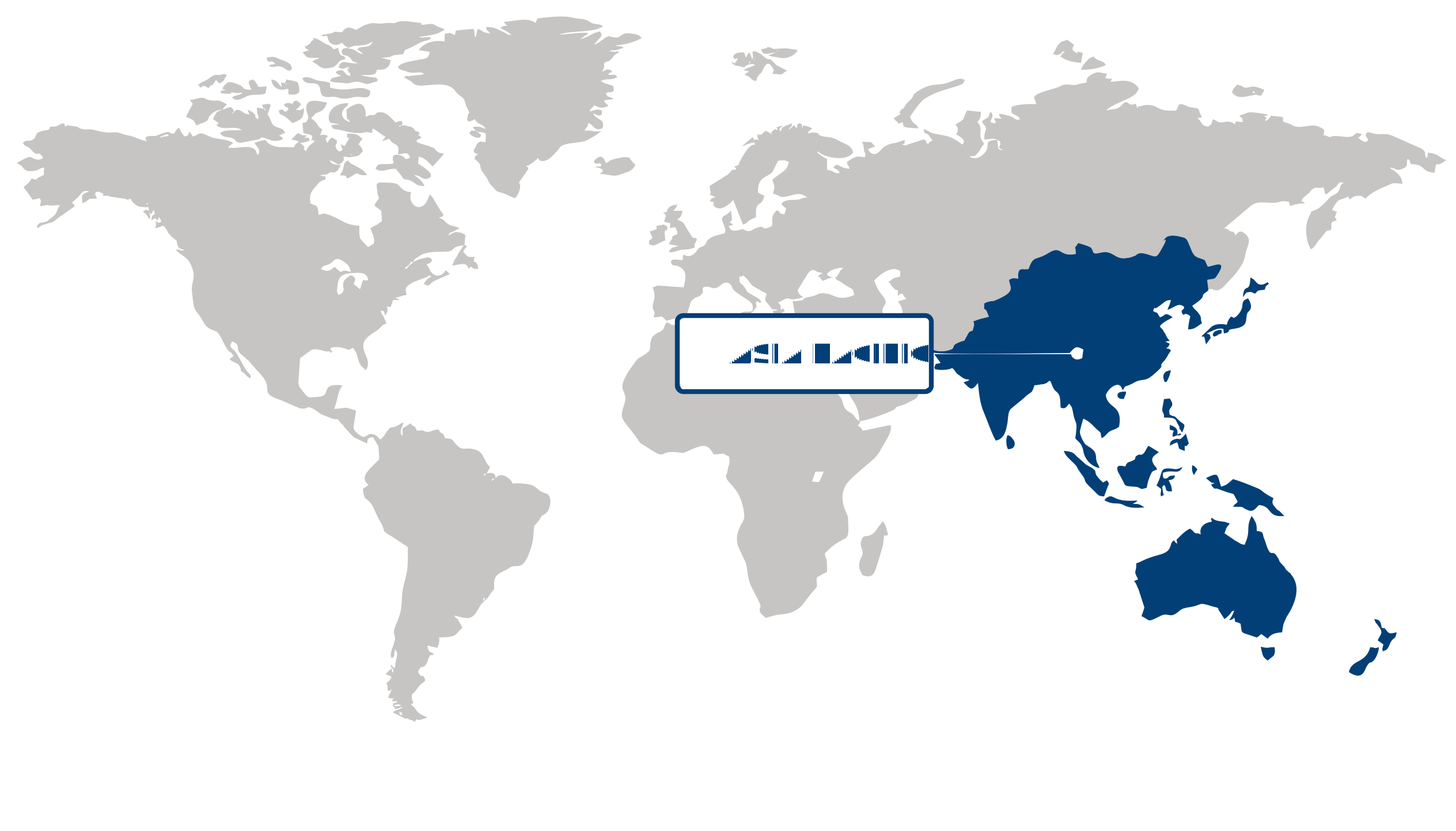
Asia Pacific dominated the bamboos market in 2025, representing more than 69% of the global share and exhibiting the fastest growth with a 5.2% CAGR. The region’s leadership stems from favorable climatic conditions and a long-standing tradition of bamboo cultivation, fostering both extensive production and diverse applications. Growing consumer demand for sustainable materials is driving higher consumption, especially as governments such as the Bamboo and Rattan Green Development Center in China promote eco-friendly industry practices. Additionally, advancements in processing technologies and efficient supply chain integration by companies like Guangxi Yuchai Machinery have enhanced product quality and availability. These dynamics, coupled with increasing environmental awareness and supportive trade policies, make Asia Pacific a pivotal market offering substantial growth opportunities for investors and strategic players in the bamboos market.
China anchors the Asia Pacific bamboos market as a global production powerhouse, benefiting from vast bamboo forests and government initiatives encouraging bamboo-based industries. The Ministry of Agriculture and Rural Affairs of China has implemented programs fostering sustainable cultivation and value-added product development, boosting local manufacturing capabilities. Consumer preferences are shifting toward bamboo textiles and construction materials, fueled by rising urbanization and green building certifications such as China’s Green Building Label. This strategic emphasis not only consolidates China’s regional dominance but also propels supply chain efficiencies, reinforcing Asia Pacific’s leadership. Japan complements this landscape by positioning itself as an innovation hub, leveraging advanced processing technologies to create high-value bamboo products aligned with its cultural appreciation for natural aesthetics. Initiatives led by the Japan Bamboo Industry Federation have expanded applications in furniture and home decor, reflecting growing consumer demand for eco-conscious goods. Together, China’s production scale and Japan’s innovation capacity underline Asia Pacific’s robust growth trajectory in the bamboos market.
North America Market Analysis:
North America emerged as the fastest-growing region in the bamboos market, registering a robust CAGR of 9.2%. This impressive growth is primarily driven by the increasing consumer demand for sustainable and eco-friendly building materials and lifestyle products. Heightened awareness around environmental issues and stringent regulations promoting green construction practices have propelled bamboo usage in sectors spanning from home décor to furniture. For instance, the U.S. Green Building Council’s LEED certification increasingly favors bamboo as a renewable resource, boosting market momentum. Additionally, North America’s advanced supply chain infrastructure and the rise of digital platforms facilitating direct-to-consumer sales have expanded market reach and accessibility. These factors, combined with evolving consumer preferences shifting towards natural and biodegradable alternatives, position North America as a strategic focal point for bamboo innovations and investments in the coming years.
The U.S. plays a pivotal role within North America’s bamboos market, reflecting strong consumer adoption and regulatory support for sustainable materials. U.S. consumers’ increasing preference for eco-conscious products aligns with national sustainability goals, reinforced by policy frameworks such as the EPA’s Sustainable Materials Management program. American manufacturers are integrating bamboo into diverse product categories, from flooring to textiles, bolstered by sourcing partnerships in Latin America and Asia that enhance cost efficiency and supply chain reliability. Public announcements from leading companies like Cali Bamboo highlight aggressive expansion plans nationwide, underscoring rising consumer awareness and willingness to invest in green alternatives. This dynamic landscape ensures the U.S. remains central to capitalizing on North America’s bamboo market growth, creating lucrative opportunities for innovation and market penetration.
Europe Market Trends:
Europe maintained a notable presence in the bamboos market, driven by increasing consumer preference for sustainable and eco-friendly products across the region. The heightened emphasis on reducing carbon footprints and adopting circular economy principles has bolstered demand for bamboo materials in construction, furniture, and textiles. European Union directives promoting renewable resources and stricter environmental regulations have encouraged investments in bamboo cultivation and processing technologies, as highlighted by Bamboo Europe’s recent collaboration with the European Commission on sustainable sourcing initiatives. Additionally, advanced supply chain networks connecting Asia’s bamboo producers with European manufacturers enhance product availability and diversity. With growing urbanization and consumer sophistication favoring natural materials, Europe is well-positioned to exploit expanding niches in green building and lifestyle sectors, offering substantial growth avenues for market participants.
Germany plays a pivotal role within the European bamboos market, driven by strong consumer awareness around sustainability and government incentives supporting eco-conscious manufacturing. German companies like Green Bamboo GmbH have pioneered integration of bamboo composites into automotive interiors, reflecting innovation in product applications and a shift in industrial design preferences that emphasize lightweight, renewable materials. The country’s robust logistics infrastructure and adherence to EU environmental standards facilitate efficient distribution and quality assurance, strengthening its competitive edge. This dynamic positions Germany as a strategic hub for both domestic use and export of bamboo-based products, capturing the region’s growing eco-friendly consumption trends.
France demonstrates steady growth in the bamboos market, underpinned by rising interest in organic construction materials and artisanal craftsmanship. French regulations promoting energy-efficient building frameworks, alongside subsidies from Agence de l’Environnement et de la Maîtrise de l’Énergie (ADEME), have spurred adoption of bamboo in architectural projects and eco-friendly furnishings. Artisanal firms such as Bambou Chic have garnered attention for merging traditional techniques with modern design, catering to culturally attuned, environment-conscious consumers. France’s burgeoning bamboo value chain, supported by specialized training programs and sustainable forestry certification, enhances product quality and market credibility, reinforcing its role as a key contributor to Europe’s expanding demand for sustainable bamboo solutions.
| Parameter | North America | Asia Pacific | Europe | Latin America | MEA |
|---|---|---|---|---|---|
| Innovation Hub i Scale Nascent Developing Advanced | |||||
| Cost-Sensitive Region i Scale Low Medium High | |||||
| Regulatory Environment i Scale Restrictive Neutral Supportive | |||||
| Demand Drivers i Scale Weak Moderate Strong | |||||
| Development Stage i Scale Emerging Developing Developed | |||||
| Adoption Rate i Scale Low Medium High | |||||
| New Entrants / Startups i Scale Sparse Moderate Dense | |||||
| Macro Indicators i Scale Weak Stable Strong |
Segment Leadership and Growth Trends
Bamboos Market Share (%), by End-User, 2026
Go beyond the chart, access full insights & data tables
Request Free Sample ReportThe construction segment held the largest share in the bamboos market in 2025, driven primarily by the increasing adoption of sustainable and cost-effective building materials. This demand surge aligns with global construction trends emphasizing eco-friendly alternatives and reduced carbon footprints, supported by standards like LEED and initiatives from organizations such as the U.S. Green Building Council. Growing urbanization and government incentives for green building in regions like Southeast Asia further bolster this segment’s prominence. Leading construction firms and emerging startups benefit strategically from integrating bamboo due to its renewability, natural strength, and aesthetic appeal, enabling competitive differentiation and cost savings. Given ongoing regulatory support for sustainability and technological advancements in bamboo treatment and processing, the construction segment is poised to maintain its leadership position, underpinned by its alignment with evolving environmental and economic priorities worldwide.
| Segment | Sub-Segment | Largest Segment | Fastest Growing |
|---|---|---|---|
| End-User | Construction, Wood and Furniture, Paper and Pulp, Textile, Agriculture, Others |
Competitive Landscape and Market Positioning
The competitive dynamics within the bamboos market reflect a landscape shaped by focused efforts to introduce innovative product ranges and expand technological capabilities. Several top-tier players have deepened their engagement in research and development, enhancing product durability and processing efficiency to differentiate themselves. Cross-border cooperation and selective consolidation have emerged, enabling access to novel raw materials and broader distribution networks. Emphasis on integrating sustainability standards and circular economy principles has heightened market competitiveness, with companies like TimberRoot and GreenHarvest advancing in bio-based composites and eco-design. This ongoing evolution fosters a robust environment where differentiation stems from enhanced functional attributes and responsiveness to evolving environmental mandates.
Strategic / Actionable Recommendations for Regional Players
In North America, capitalizing on collaborative ventures with technology innovators could accelerate advancements in bamboo processing methods. Emphasizing premium end-use applications aligned with sustainability trends, such as construction materials and interior design, can sharpen competitive positioning. Cultivating partnerships with green building councils and certification bodies may also increase market credibility and adoption.
For the Asia Pacific, reinforcing integration across the value chain—from plantation to finished goods—remains pivotal. Exploiting digital tools to optimize supply logistics and enhance traceability can address rising demands for transparency. Targeting rapidly urbanizing markets by tailoring products for everyday consumer goods and infrastructure components could unlock significant opportunities.
European players might focus on addressing stringent environmental regulations by embedding eco-innovation into product development. Collaborating with research institutes to pioneer biodegradable composites or carbon sequestration practices can bolster differentiation. Additionally, aligning with circular economy initiatives offers avenues to appeal to environmentally aware clientele across mature markets.
| Company | Market Share | Company Revenue | Revenue CAGR (%) | Product Portfolio | Geographic Presence | Innovation / R&D Focus | Strategic Developments |
|---|---|---|---|---|---|---|---|
| No companies available. | |||||||
Industry Development/News
| Company Name | Date | Key Development |
|---|
Customize Your Report
Explore examples of how this report can be tailored to different research needs, including custom segments, additional topics or chapters, and related reports. Click a section of the wheel or its numbered marker to explore the available options.
Bamboos Market — Custom Segments
| Segment | Sub-Segment |
|---|---|
| No segment data available. | |
Bamboos Market — Custom TOC
| Custom Chapter | Custom Details | ||
|---|---|---|---|
| No custom TOC data available. | |||
Need a different cut of the data?
Request Custom ResearchHow much is the bamboos market worth?
How will the bamboos industry grow in terms of size and CAGR by 2035?
Which region shows the largest market footprint in the bamboos market?
In which region is the bamboos sector expanding most rapidly?
Why does construction sub-segment dominate the end-user segment of bamboos sector?
What are the key competitors in the bamboos landscape?
Our Clients
"Your insights on workforce structures were spot-on. The analysis on mid-to-senior level roles validated some of our hiring decisions and highlighted gaps."
Ateliers De France
"The report gave us insights on competitors in the market. It helped our team refine our bidding strategy for upcoming contracts."
Clark Construction
"The reports provided a deep dive into market trends, and competitive landscape. The strategic insights and recommendations have been very helpful."
Rudolph and Sletten
Our Research Team & Methodology
Every Fundamental Business Insights report is built by a dedicated vertical research team, validated through a structured primary-and-secondary methodology, and reviewed for accuracy before it reaches you.
Research Team Overview
Prepared by the Construction & Manufacturing Research Team
Delivery
Published
Demand
Available
Support
Trust & Compliance
Research Domains
10 coverage areasResearch Intelligence
| Source | Reference |
|---|---|
| International Organization for Standardization (ISO) | www.iso.org |
| ASTM International | www.astm.org |
| National Institute of Standards and Technology (NIST) | www.nist.gov |
| International Code Council (ICC) | www.iccsafe.org |
| American Concrete Institute (ACI) | www.concrete.org |
| American Institute of Steel Construction (AISC) | www.aisc.org |
| Construction Industry Institute (CII) | www.construction-institute.org |
| Associated General Contractors of America (AGC) | www.agc.org |
| Association of Equipment Manufacturers (AEM) | www.aem.org |
| Building Owners and Managers Association (BOMA) | www.boma.org |
| American Society of Civil Engineers (ASCE) | www.asce.org |
| National Ready Mixed Concrete Association (NRMCA) | www.nrmca.org |
| International Facility Management Association (IFMA) | www.ifma.org |
| World Green Building Council (WorldGBC) | worldgbc.org |
| International Federation of Consulting Engineers (FIDIC) | fidic.org |
| International Labour Organization (ILO) | www.ilo.org |
| American Society of Mechanical Engineers (ASME) | www.asme.org |
| Society of Manufacturing Engineers (SME) | www.sme.org |
| National Association of Home Builders (NAHB) | www.nahb.org |
| European Construction Industry Federation (FIEC) | www.fiec.eu |
Research Workflow & Quality Assurance
Data Collection
Verified information gathered through primary and secondary research.
Data Triangulation
Cross-validation using multiple independent data sources.
Forecast Modelling
Market estimates developed using historical trends and analytical models.
Analyst Validation
Findings reviewed by domain experts for accuracy and consistency.
Editorial & Quality Review
Final editorial, quality, and compliance checks before publication.
Final Publication
Released after successful completion of the internal review process.
Report Coverage
📊 Market Assessment
- Market Size & Forecast
- Market Segmentation
- Regional Analysis
- Growth Drivers & Challenges
- Market Dynamics
🏢 Competitive Intelligence
- Competitive Landscape
- Company Profiles
- Competitive Benchmarking
- Mergers & Acquisitions
- Market Share Analysis or Key Company Strategies
🔍 Strategic Analysis
- Value Chain Analysis
- Porter's Five Forces
- PESTLE Analysis
- Pricing Trends
- Supply-Demand Analysis
🚀 Future Outlook
- Technology Landscape
- Regulatory Landscape
- Investment & Funding Landscape
- Emerging Opportunities
- Future Market Outlook
Have a question about this report or need a custom scope?
Request Customization