Balsa Wood Market Size & Forecasts 2026-2035, By Segments (Product Type, Application), Growth Opportunities, Innovation Landscape, Regulatory Shifts, Strategic Regional Insights (U.S., Japan, China, South Korea, UK, Germany, France), and Competitive Dynamics (C.A. Rodrigues, Arauco, Baltek Corporation, Balsa Wood Company, Guayasamín)
Market Size and Growth Outlook
Balsa Wood Market size is projected to grow steadily from USD 176.8 million in 2025 to USD 325.7 million by 2035, demonstrating a CAGR exceeding 6.3% through the forecast period (2026-2035). The 2026 revenue is estimated at USD 186.5 million.
Get more details on this report
Request Free Sample ReportBalsa Wood Market Intelligence Snapshot
Regional Market Dynamics
Segment Momentum
Market Expansion Drivers
Leading Market Participants
Global Market Forecast Snapshot
Market Outlook
Regional and Segment Outlook
Market Growth Drivers and Industry Trends
The balsa wood market is experiencing elevated demand driven by the resurgence of model making and crafts, fueled by growing consumer interest in DIY hobbies and educational activities. Institutions such as the American Modeling Teachers Association have highlighted increased participation in model aircraft and architectural model competitions, signaling sustained grassroots enthusiasm. This trend creates strategic openings for manufacturers to develop niche, value-added products tailored to hobbyists and educators, including pre-cut kits and eco-friendly grading options. For new entrants, aligning with craft retailers and educational programs can accelerate market penetration. Given the steady rise in creative leisure pursuits, market players positioned to support customization and accessibility stand to benefit from ongoing consumer engagement.
Growth in Construction and Lightweight Structures
The adoption of balsa wood in construction and lightweight structural applications is expanding, responding to the imperatives for sustainable, energy-efficient building materials. For example, the U.S. Green Building Council has promoted wood-based composites for improved thermal insulation and structural resilience. Balsa’s favorable strength-to-weight ratio aligns with industry shifts toward net-zero emissions and innovative architectural design. This trend offers strategic prospects for established producers to collaborate with construction material developers to engineer hybrid products integrated into modern frameworks. New entrants can capitalize by focusing on engineered balsa panels and partnerships with green construction firms, tapping into the broad transition toward sustainable infrastructure. The balsa wood market will increasingly be shaped by construction-driven demand for multifunctional, lightweight material solutions.
Development of High-Strength and Treated Balsa Wood
Advances in the treatment and enhancement of balsa wood are transforming its use cases, enabling penetration into sectors requiring superior durability. Companies like BALTEK Corporation have introduced high-strength, pressure-treated balsa variants resistant to moisture and decay, expanding applicability beyond traditional uses. This innovation aligns with increasing regulatory standards for performance and sustainability, such as those outlined by the International Code Council. The evolution toward engineered balsa products opens strategic avenues for incumbents to diversify portfolios and serve aerospace, automotive, and marine sectors with higher-value offerings. New players with capabilities in wood treatment technologies or composite integration can differentiate through premium products. Market dynamics suggest innovation in treating and strengthening balsa wood will be a critical factor in competitive positioning.
Industry Restraints:
Sustainability and Deforestation Regulations
Increasing global focus on sustainable forestry practices and the prevention of deforestation significantly restrains balsa wood market growth. Regulatory bodies such as the Forest Stewardship Council (FSC) and initiatives like the European Union Timber Regulation (EUTR) impose strict guidelines on sourcing and certification, limiting access to non-compliant balsa wood suppliers. This restricts supply due to the slow growth cycle of balsa trees and pressures producers to invest in sustainable plantations, raising operational costs. For example, Ecuadorian exporters, a primary balsa supplier, report compliance challenges due to these regulations, as noted in the Ecuadorian Ministry of Environment releases. Market incumbents face higher entry barriers, while new players must navigate complex certification processes, impacting competitiveness. These sustainability mandates are expected to persist, driving industry shifts toward transparency and eco-friendly cultivation methods over the medium term.
Volatility in Supply Chain and Raw Material Availability
The balsa wood market encounters constraints from fluctuating supply chain stability and raw material scarcity, exacerbated by geographical concentration in Ecuador and limited cultivation zones. This dependency creates vulnerabilities to climatic events, political instability, and logistical disruptions, as highlighted by reports from the Food and Agriculture Organization (FAO). Such volatility leads to inconsistent supply volumes and elevated costs, curtailing manufacturers’ ability to meet demand reliably, especially in aerospace and construction sectors which require steady material inputs. Both entrenched producers and new market entrants must devise adaptive supply management and diversify sourcing strategies, increasing operational complexity. Continued geopolitical and environmental uncertainties suggest that supply chain fragility will remain a critical limitation affecting market dynamics for the foreseeable future.
| Growth Driver | Impact on CAGR | Regulatory Influence | Geographic Relevance | Adoption Rate | Impact Timeline |
|---|---|---|---|---|---|
| Rising demand in model making and crafts | 1.80% | Short term (≤ 2 yrs) | Europe, North America; Spillover: Asia Pacific | Low | Fast |
| Growth in construction and lightweight structures | 1.50% | Medium term (2–5 yrs) | Asia Pacific, Europe | Low | Moderate |
| Development of high-strength and treated balsa wood | 1.00% | Long term (5+ yrs) | North America, Europe | Low | Slow |
Unlock insights tailored to your business with our bespoke market research solutions.
Click to get your customized report now.
Regional Demand Dynamics
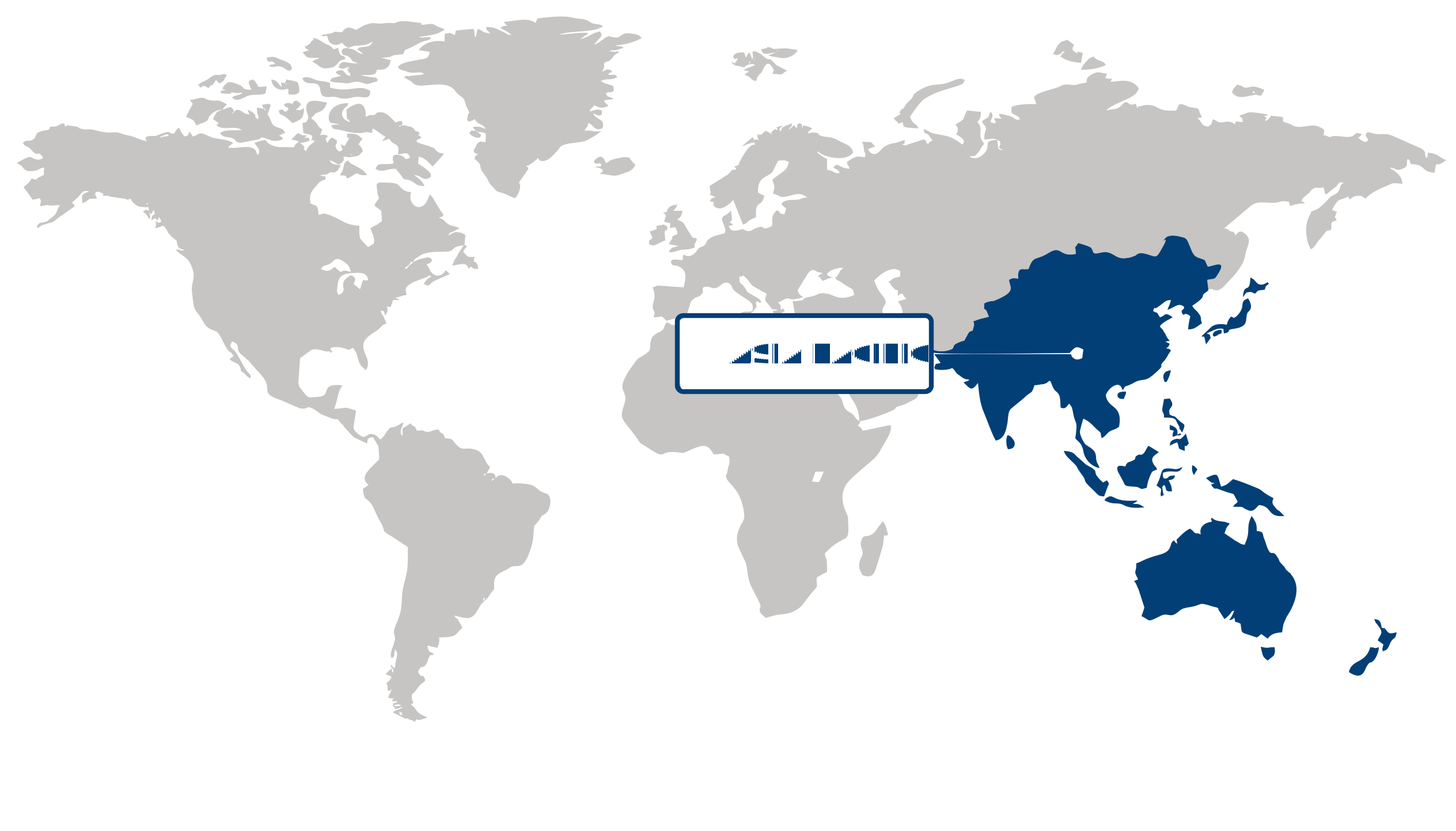
Asia Pacific dominated the balsa wood market in 2025, capturing more than 40% of the global share while also being the fastest-growing region at a 7.5% CAGR. This leadership is primarily driven by massive demand for lightweight core materials in wind turbine blade manufacturing and extensive infrastructure projects across the region. Governments such as the Asian Development Bank are investing heavily in renewable energy, notably wind power, creating robust demand for structurally efficient materials like balsa wood. Additionally, rising urbanization and industrial modernization in Asia Pacific have accelerated construction activities that utilize balsa wood composites for their strength-to-weight benefits. These factors, combined with increasing regional manufacturing capabilities and improved logistics networks, position Asia Pacific as a strategic hub offering significant opportunities for expansion in the balsa wood market.
Japan anchors the Asia Pacific balsa wood market with its advanced technological expertise and strong clean energy policies. With the Ministry of Economy, Trade and Industry (METI) promoting renewable energy adoption, Japan’s demand for lightweight core materials in wind turbine blades has surged, enhancing the country’s role as a pivotal manufacturing and innovation center. Companies like Mitsubishi Heavy Industries leverage balsa wood for efficient turbine blade production, aligning with Japan’s sustainability goals and stringent product standards. This strategic focus on clean energy and high-performance materials reinforces Japan’s influence on regional supply chains and innovation, underscoring its importance in Asia Pacific’s balsa wood market growth.
China plays a critical role in Asia Pacific’s balsa wood market through its vast infrastructure expansion and dominant position in wind energy capacity installation, supported by the National Energy Administration’s aggressive renewable targets. Leading manufacturers such as Goldwind utilize lightweight balsa wood cores extensively in turbine blade fabrication to optimize efficiency and cost-effectiveness on large-scale projects. Moreover, China’s rapidly evolving consumer markets and government incentives for sustainable infrastructure amplify demand for balsa wood in construction composites. This integration of renewable energy ambitions with massive infrastructure development solidifies China’s contribution to the regional market’s dynamism, reinforcing Asia Pacific’s leading position in the global balsa wood industry.
North America Market Analysis:
North America emerged as the fastest-growing region in the balsa wood market, registering a robust CAGR of 7.2%. This rapid growth is primarily driven by increased demand for sustainable and lightweight materials across industries such as aerospace, automotive, and construction. The region’s focus on environmental sustainability, backed by initiatives from the U.S. Environmental Protection Agency promoting eco-friendly building materials, bolsters the shift towards renewable wood products like balsa. Additionally, advancements in manufacturing technologies and the presence of efficient supply chains, supported by trade partnerships under the United States-Mexico-Canada Agreement (USMCA), enhance market responsiveness to evolving consumer preferences. North America’s stringent regulations on carbon emissions and energy efficiency further stimulate the adoption of balsa wood, highlighting its potential as a key renewable resource. With strong innovation capabilities and increasing consumer awareness, the region presents significant opportunities for investors aiming to capitalize on environmentally conscious material demand in the near future.
The U.S. plays a pivotal role in North America’s balsa wood market growth, driven by rising demand from high-value sectors requiring lightweight, durable materials, particularly aerospace and specialty construction. Regulatory frameworks such as the Federal Aviation Administration’s (FAA) emphasis on fuel-efficient aircraft elevate the use of balsa wood in aircraft manufacturing and prototyping. Consumer trends toward green building practices, exemplified by widespread adoption of Leadership in Energy and Environmental Design (LEED) certification, further enhance balsa’s market presence. Companies like Weyerhaeuser and Louisiana-Pacific Corporation have publicly announced expansions in sustainable wood product lines, signaling increasing industry commitment. The U.S.’s technological advances in wood processing and quality control underpin improved performance standards, reinforcing market growth. Strategically, the U.S. serves as a critical hub for innovation and regulatory leadership, extending North America’s competitive edge in the balsa wood market.
Europe Market Trends:
Europe maintained notable presence in the balsa wood market, driven by its established manufacturing base and evolving sustainability priorities that increasingly favor lightweight, eco-friendly materials. Countries across the region demonstrate steady demand shifts towards high-performance composites and renewable resource sourcing, propelled by automotive, aerospace, and construction sectors emphasizing carbon footprint reduction. The European Union’s regulatory frameworks supporting sustainable forestry and greener supply chains have bolstered certified balsa wood usage, as highlighted in the European Forest Institute’s recent assessment. Additionally, advancements in digital supply chain tracking and regional logistics enhancements have improved market responsiveness. With a strong focus on circular economy principles and consumer preference for bio-based materials, Europe offers significant opportunities for scaled innovation and integration of balsa wood within emerging industrial applications.
Germany acts as a pivotal player in the Europe balsa wood market, capitalizing on its advanced automotive and aerospace industries that demand efficient, lightweight materials for improved fuel economy and reduced emissions. The German Aerospace Center’s (DLR) recent partnership announcements on sustainable material research underscore the country’s leadership in adopting innovative, eco-friendly balsa wood composites. Furthermore, Germany’s stringent environmental regulations compel manufacturers to integrate certified sustainable balsa, enhancing market credibility and consumer trust. The confluence of high technological adoption and regulatory alignment positions Germany as a critical node within the regional supply network, contributing to Europe’s broader market growth and reinforcing opportunities for expansion into premium applications in transportation and infrastructure.
France holds a growing role in the Europe balsa wood market, driven by increasing construction sector investments and rising demand for environmentally responsible building materials. The French Environment and Energy Management Agency (ADEME) highlights national initiatives incentivizing bio-based product usage, directly influencing the incorporation of balsa wood in insulation and structural components. Additionally, France’s cultural emphasis on sustainable living and government-backed innovation grants for green technologies promote consumer adoption and R&D expenditure in balsa wood solutions. This dynamic fosters a more competitive market landscape and enhances France’s contribution to regional growth trajectories, particularly in supporting Europe’s shift towards sustainable urban development and energy-efficient construction practices.
| Parameter | North America | Asia Pacific | Europe | Latin America | MEA |
|---|---|---|---|---|---|
| Innovation Hub i Scale Nascent Developing Advanced | |||||
| Cost-Sensitive Region i Scale Low Medium High | |||||
| Regulatory Environment i Scale Restrictive Neutral Supportive | |||||
| Demand Drivers i Scale Weak Moderate Strong | |||||
| Development Stage i Scale Emerging Developing Developed | |||||
| Adoption Rate i Scale Low Medium High | |||||
| New Entrants / Startups i Scale Sparse Moderate Dense | |||||
| Macro Indicators i Scale Weak Stable Strong |
Segment Leadership and Growth Trends
Balsa Wood Market Share (%), by Product Type, 2026
Go beyond the chart, access full insights & data tables
Request Free Sample ReportGrain B represented the largest share in the balsa wood market in 2025, primarily driven by its balanced strength-to-weight properties ideal for structural applications. This segment’s leadership stems from its optimal density and durability, making it preferred in industries requiring lightweight yet robust materials, such as aerospace and construction. Major manufacturers like Weyerhaeuser and Allied Balsa have highlighted Grain B’s superior performance in press releases, emphasizing enhanced structural integrity combined with ease of handling. Customer demand for sustainable, high-performance materials further strengthens this segment’s position as environmentally conscious sourcing and consistent quality gain traction. The segment offers strategic advantages by enabling manufacturers to meet stringent regulatory standards while innovating lightweight composite solutions. Given ongoing advancements in processing technologies and the emphasis on reducing structural weight to improve energy efficiency, Grain B is set to maintain its prominence in the balsa wood market over the near to medium term.
Analysis by Application
The renewable energy segment held the largest share in the balsa wood market in 2025, propelled by the increasing installation of wind turbine blades utilizing lightweight core materials. Balsa wood’s exceptional strength-to-weight ratio enhances turbine efficiency by reducing blade mass and extending operational lifespan. Industry players such as Vestas have publicly endorsed balsa wood cores for blade manufacturing, aligning with global sustainability targets set by the International Renewable Energy Agency (IRENA). Growing demand for clean energy solutions and tighter environmental regulations reinforce this segment’s dominance by driving manufacturers to adopt sustainable and recyclable materials. This segment fosters opportunities for both established firms and new entrants to innovate within eco-friendly composites. With continuous expansion in wind energy infrastructure worldwide and evolving turbine designs emphasizing performance optimization, the renewable energy segment is poised to remain a critical pillar of the balsa wood market.
| Segment | Sub-Segment | Largest Segment | Fastest Growing |
|---|---|---|---|
| Product Type | Grain A, Grain B, Grain C | ||
| Application | Defense & Aerospace, Industrial Construction, Renewable Energy, Rail-Road-Marine, Others |
Competitive Landscape and Market Positioning
The competitive landscape is notably shaped by ongoing alliances and innovative advancements among these top entities. For example, enhanced collaborations between raw material suppliers and processing specialists have streamlined product quality improvements and expanded application possibilities. Investments in research have driven the introduction of engineered balsa variants tailored for aerospace, automotive, and construction sectors, reinforcing firms’ differentiation. Meanwhile, strategic consolidations and partnerships have enabled broader market penetration and resource optimization, intensifying rivalry while encouraging innovation. Such maneuvers collectively bolster their positioning through heightened responsiveness to market trends and evolving performance standards.
Strategic / Actionable Recommendations for Regional Players
In North America, capitalizing on emerging lightweight material technologies presents an opportunity to enhance product performance and unlock new industrial applications. Establishing synergies with technology developers and end-users in aerospace and sustainable packaging can accelerate innovation and strengthen market foothold. Emphasizing agile logistics and customer-centric customization will also support differentiation in a competitive environment.
Within Asia Pacific, tapping into expanding infrastructure and furniture manufacturing segments can spur growth. Collaborations with regional forestry initiatives may secure sustainable raw material access, while integrating digital monitoring in supply chains can improve traceability and operational efficiency. Heightened focus on eco-friendly product development will align with increasing regulatory and consumer expectations.
European players should deepen their investments in sustainable sourcing and circular economy practices, responding to stringent environmental mandates. Strengthening alliances with research institutions can drive advances in material engineering and lifecycle optimization. Targeting niche applications such as high-performance composites and premium construction materials will enable differentiation amid intensifying competition.
| Company | Market Share | Company Revenue | Revenue CAGR (%) | Product Portfolio | Geographic Presence | Innovation / R&D Focus | Strategic Developments |
|---|---|---|---|---|---|---|---|
| No companies available. | |||||||
Industry Development/News
| Company Name | Date | Key Development |
|---|
Customize Your Report
Explore examples of how this report can be tailored to different research needs, including custom segments, additional topics or chapters, and related reports. Click a section of the wheel or its numbered marker to explore the available options.
Balsa Wood Market — Custom Segments
| Segment | Sub-Segment |
|---|---|
| No segment data available. | |
Balsa Wood Market — Custom TOC
| Custom Chapter | Custom Details | ||
|---|---|---|---|
| No custom TOC data available. | |||
Need a different cut of the data?
Request Custom ResearchHow big is the balsa wood market?
How is the balsa wood industry expected to grow over the next 10 years?
Which geographical region leads the balsa wood market market?
Which geography represents the strongest growth trajectory for the balsa wood sector?
Which is the largest sub-segment within the product type segment for balsa wood industry?
Why does renewable energy sub-segment dominate the application segment of balsa wood sector?
Who are the major participants shaping the balsa wood landscape?
Our Clients
"The report helped us understand emerging consumer trends in our product category. It clarified where to focus innovation for the next product launch."
LyondellBasell
"The regional forecast section was incredibly useful. We were able to identify two new potential partners in Europe thanks to the vendor mapping you included."
SABIC
"We appreciated how actionable the recommendations were. It guided us to improve supply chain resilience."
Olin Corporation
Our Research Team & Methodology
Every Fundamental Business Insights report is built by a dedicated vertical research team, validated through a structured primary-and-secondary methodology, and reviewed for accuracy before it reaches you.
Research Team Overview
Prepared by the Chemicals & Materials Research Team
Delivery
Published
Demand
Available
Support
Trust & Compliance
Research Intelligence
Research Workflow & Quality Assurance
Data Collection
Verified information gathered through primary and secondary research.
Data Triangulation
Cross-validation using multiple independent data sources.
Forecast Modelling
Market estimates developed using historical trends and analytical models.
Analyst Validation
Findings reviewed by domain experts for accuracy and consistency.
Editorial & Quality Review
Final editorial, quality, and compliance checks before publication.
Final Publication
Released after successful completion of the internal review process.
Report Coverage
📊 Market Assessment
- Market Size & Forecast
- Market Segmentation
- Regional Analysis
- Growth Drivers & Challenges
- Market Dynamics
🏢 Competitive Intelligence
- Competitive Landscape
- Company Profiles
- Competitive Benchmarking
- Mergers & Acquisitions
- Market Share Analysis or Key Company Strategies
🔍 Strategic Analysis
- Value Chain Analysis
- Porter's Five Forces
- PESTLE Analysis
- Pricing Trends
- Supply-Demand Analysis
🚀 Future Outlook
- Technology Landscape
- Regulatory Landscape
- Investment & Funding Landscape
- Emerging Opportunities
- Future Market Outlook
Have a question about this report or need a custom scope?
Request Customization