Adhesive Tapes Market Size & Forecasts 2026-2035, By Segments (Technology, Resin Type, Material Type, End-user Industry), Growth Opportunities, Innovation Landscape, Regulatory Shifts, Strategic Regional Insights (U.S., Japan, China, South Korea, UK, Germany, France), and Competitive Dynamics (3M, Avery Dennison, Tesa, Nitto Denko, Scapa)
Market Size and Growth Outlook
Adhesive Tapes Market size is forecasted to reach USD 102.38 billion by 2035, rising from USD 58.26 billion in 2025, at a CAGR of more than 5.8% between 2026 and 2035. In 2026, revenue is projected at USD 61.19 billion.
Get more details on this report
Request Free Sample ReportAdhesive Tapes Market Intelligence Snapshot
Regional Market Dynamics
Segment Momentum
Market Expansion Drivers
Leading Market Participants
Global Market Forecast Snapshot
Market Outlook
Regional and Segment Outlook
Market Growth Drivers and Industry Trends
The adhesive tapes market is increasingly propelled by expanded applications in industrial and household packaging, driven by a surge in consumer preference for secure, efficient packaging solutions. The surge in e-commerce, highlighted in reports by the U.S. Census Bureau, exemplifies this trend as businesses seek reliable tapes to ensure product integrity during transit. Additionally, household consumers favor versatile tapes for everyday repairs and packaging, as seen in retail data from Ace Hardware. This dynamic fosters innovation in tape strength, adhesion, and usability, offering strategic openings for incumbents to enhance product portfolios and for new entrants to innovate in niche packaging solutions. This trajectory suggests sustained demand tied to evolving packaging needs that emphasize convenience and durability, reinforcing adhesives as a critical component in supply chain reliability.
Expansion of E-commerce and Logistics Integration
Growth in e-commerce and logistics is a pivotal driver shaping the adhesive tapes market, with the logistics sector’s complexity necessitating advanced tape solutions for varied package types. Amazon’s increased investment in optimized packaging and labeling, as revealed in their corporate sustainability update, underscores the critical role of adhesive tapes in shipping efficiency and damage prevention. This shift stimulates opportunities for players who can tailor products to specific logistic challenges, such as tamper-evident or temperature-resistant tapes. New market entrants can leverage digital tracking integrations and customization to differentiate offerings. This expansion marks a lasting structural transformation emphasizing adaptable adhesive technologies aligned with the fast-paced, high-volume demands of modern commerce and distribution networks.
Advancement in Eco-friendly Adhesive Technologies
The adhesive tapes market is also influenced by the burgeoning emphasis on sustainability, with manufacturers responding to regulatory pressures and consumer demand for environmentally responsible products. Companies like 3M and Avery Dennison have introduced bio-based and recyclable tapes, aligning with guidelines from the Environmental Protection Agency and the European Chemicals Agency that encourage reduced carbon footprints and safer materials. This shift opens strategic avenues for firms focusing on green innovation to capture market share by addressing both regulatory compliance and ethical consumerism. Increasing environmental standards globally will likely institutionalize sustainability as a baseline requirement, positioning eco-friendly adhesive solutions as a core component of future product development across the industry.
Industry Restraints:
Regulatory Compliance Complexities
Increasingly stringent regulations surrounding chemical compositions and environmental impact pose significant challenges to adhesive tape manufacturers. For example, the European Chemicals Agency (ECHA) enforces REACH regulations limiting hazardous substances in tape adhesives, compelling firms like 3M and Avery Dennison to reformulate products. These compliance demands slow product development cycles and elevate operational costs, restraining market expansion. Smaller companies and new entrants face higher barriers, lacking resources to navigate multifaceted regulatory landscapes effectively. Strategic investments in compliance capabilities and sustainable material innovation thus become prerequisites for competitive positioning. Over the near term, tightening global regulatory frameworks, especially in North America and Europe, will continue to pressure industry players to balance performance, cost, and environmental standards, shaping innovation trajectories and market entry dynamics.
Raw Material Price Volatility
The adhesive tapes market is heavily impacted by fluctuations in raw material prices, particularly petrochemical-derived components such as acrylics and rubber-based adhesives. Recent disruptions reported by the U.S. Energy Information Administration, including supply-demand imbalances and geopolitical tensions, have driven significant cost variability. This volatility hampers manufacturers’ ability to maintain stable pricing structures, affecting profitability and prompting cautious capacity expansion. Both incumbents and startups must manage risk via diversified sourcing and long-term supplier contracts. As raw materials remain tied to volatile global commodity markets, price instability will persist as a critical constraint, compelling market participants to adopt agile procurement strategies and innovate with alternative, sustainable materials to mitigate exposure and sustain growth.
| Growth Driver | Impact on CAGR | Regulatory Influence | Geographic Relevance | Adoption Rate | Impact Timeline |
|---|---|---|---|---|---|
| Increasing use in industrial and household packaging | 1.50% | Short term (≤ 2 yrs) | Asia Pacific, North America; Spillover: Europe | Medium | Fast |
|
Explore Growth Opportunities Request Free Sample Report |
|||||
| Expansion in e-commerce and logistics sectors | 1.20% | Medium term (2–5 yrs) | Europe, North America | Low | Moderate |
|
Explore Growth Opportunities Request Free Sample Report |
|||||
| Development of eco-friendly adhesive technologies | 1.00% | Long term (5+ yrs) | Asia Pacific, Europe | Medium | Slow |
|
Explore Growth Opportunities Request Free Sample Report |
Regional Demand Dynamics
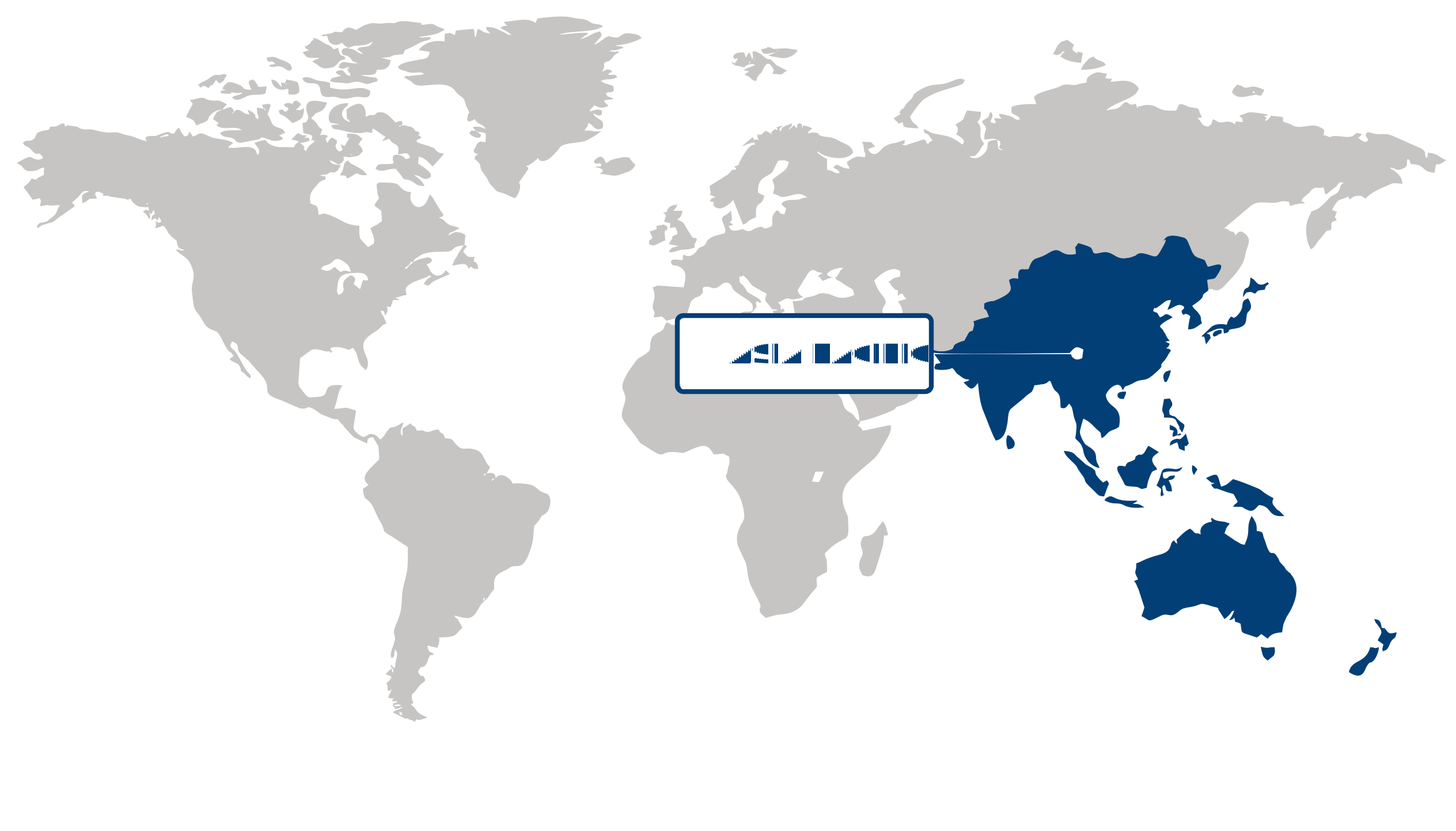
Asia Pacific dominated the adhesive tapes market in 2025, capturing over 35.06% of the global share while also registering the fastest growth with a CAGR of 7.34%. This robust expansion is primarily fueled by the region’s rapidly expanding manufacturing, electronics, and packaging sectors, which increasingly rely on advanced adhesive technologies for efficiency and product innovation. For instance, the Asia-Pacific Economic Cooperation (APEC) highlights the region’s accelerated industrial automation, driving higher demand for specialized tapes in electronics assembly. Supply chain enhancements and a growing consumer base with heightened spending on electronics and packaged goods further reinforce the region’s leadership. Additionally, increasing regulatory emphasis on product safety and environmental standards in countries like South Korea and Taiwan encourages the adoption of sustainable adhesive tape solutions, solidifying long-term growth prospects. The Asia Pacific adhesive tapes market thus offers significant opportunities through a confluence of macroeconomic resilience, sectoral diversification, and evolving production technologies.
Japan positioned as a pivotal hub in Asia Pacific’s adhesive tapes market, leveraging its advanced electronics manufacturing and automotive industries to drive specialized product demand. The government’s focus on Industry 4.0, underscored in policies by the Ministry of Economy, Trade and Industry (METI), encourages innovation in adhesive materials to meet the precision needs of robotics and high-end packaging. Leading companies like Nitto Denko have announced expansions in tape technology R&D to cater to domestic and regional high-tech manufacturing, enhancing Japan’s competitive edge. Concurrently, Japan’s stringent quality and environmental standards stimulate development of eco-friendly adhesives, aligning with broader regional sustainability trends. Japan’s leadership in high-value applications underscores its critical role in reinforcing Asia Pacific’s adhesive tapes market, attracting technology-driven investments and fostering collaborative innovation.
China anchors the Asia Pacific adhesive tapes market through its vast manufacturing base and burgeoning packaging sector, which is supported by the expanding e-commerce ecosystem. The Ministry of Industry and Information Technology (MIIT) has promoted modernization in packaging and logistics, boosting demand for diverse adhesive tapes used in sealing, labeling, and protective applications. Key domestic producers like 3M China and Tesa have amplified production capacities and tailored offerings for this growing market, reflecting the dynamic interplay of local consumer demand and international supply chains. Additionally, rising awareness and regulatory moves toward sustainability in packaging materials by the China National Resources Recycling Association encourage innovation in biodegradable and recyclable adhesive tapes. China’s scale and rapid industrialization thus enhance Asia Pacific’s market dominance, presenting strategic avenues for global and domestic players through integrated supply chain and product development initiatives.
North America Market Analysis:
North America held a substantial share in the adhesive tapes market, driven by the region’s diverse industrial base and evolving consumer preferences toward durable and sustainable packaging solutions. The U.S. regulatory landscape, emphasizing environmental and safety standards, has accelerated adoption of eco-friendly adhesive tapes, aligning with growing corporate commitments to sustainability. Additionally, North America’s robust infrastructure and sophisticated supply chains facilitate timely distribution and innovation in adhesive formulations, supported by industry leaders such as 3M and Avery Dennison. According to the U.S. Environmental Protection Agency’s push for greener manufacturing, companies are increasingly investing in recyclable and low-emission adhesives, reinforcing North America’s prominence. This region’s technological advancement and demand for specialized adhesive tapes in automotive, healthcare, and electronics sectors position it as a pivotal market with ongoing opportunities for product differentiation and expansion.
The U.S. plays a crucial role within North America’s adhesive tapes market, characterized by heightened consumer demand for high-performance tapes in construction and transportation sectors. U.S. manufacturers adhere to stringent regulations set by the Environmental Protection Agency and Occupational Safety and Health Administration, influencing the shift toward bio-based and solvent-free adhesives. For instance, 3M’s recent press release highlighted its development of recyclable tape solutions targeting packaging industries, indicative of the innovation fueled by market and regulatory drivers. Moreover, American companies leverage advanced digital technologies to enhance product traceability and customization, directly supporting supply chain efficiency and customer satisfaction. These factors underscore the U.S.’s strategic contribution to North America’s adhesive tapes market, reinforcing the region’s competitive edge and capacity for sustainable growth.
Europe Market Trends:
Europe maintained a notable presence in the adhesive tapes market, commanding a significant share driven by its diverse industrial base and strong emphasis on sustainability. The region’s advanced manufacturing sector, coupled with stringent environmental regulations from the European Chemicals Agency (ECHA), has accelerated the adoption of eco-friendly adhesive solutions. Consumer preferences are increasingly aligned with products offering recyclability and reduced chemical content, prompting manufacturers like Tesa SE to innovate responsibly. Additionally, Europe's robust logistics infrastructure and skilled workforce support efficient supply chains for adhesive tapes across automotive, electronics, and construction industries. These dynamics are reinforced by the European Union’s Green Deal initiatives, aiming to transform production processes toward circular economy principles. Consequently, Europe presents sustained opportunities for growth as companies respond to regulatory pressures and evolving market demands with advanced, sustainable adhesive technologies.
Germany plays a pivotal role within the European adhesive tapes market, bolstered by its industrial strength and innovation leadership. The country’s status as a manufacturing powerhouse, especially in automotive and electrical sectors, elevates demand for specialized adhesive tapes that enhance product durability and assembly efficiency. German firms such as tesa SE have been at the forefront of integrating high-performance and eco-conscious adhesives, responding to both regulatory standards set by the Federal Environment Agency (UBA) and shifting consumer demands. This aligns with Germany’s broader industrial digitization efforts, which optimize production and supply chain transparency. The strategic implication is clear: Germany’s dynamic manufacturing ecosystem makes it a linchpin for advancing adhesive tape innovations that drive regional growth in Europe.
France contributes significantly to Europe’s adhesive tapes market by leveraging its expanding packaging and construction sectors, where demand for sustainable and versatile adhesive solutions is rising. French regulations promoting waste reduction and energy efficiency, enforced by the French Agency for Ecological Transition (ADEME), encourage manufacturers to develop low-impact adhesives suitable for recyclable materials. Companies like Scapa Group have announced targeted investments in greener tape technologies to meet increased consumer and regulatory expectations. Culturally, the French market exhibits strong preference for high-quality, environmentally responsible products, which aligns well with evolving adhesive tape applications in e-commerce and industrial insulation. France’s proactive policy environment and emphasis on sustainability underscore its strategic role in anchoring Europe’s adhesive tapes market growth in the medium term.
| Parameter | North America | Asia Pacific | Europe | Latin America | MEA |
|---|---|---|---|---|---|
| Innovation Hub i Scale Nascent Developing Advanced | |||||
| Cost-Sensitive Region i Scale Low Medium High | |||||
| Regulatory Environment i Scale Restrictive Neutral Supportive | |||||
| Demand Drivers i Scale Weak Moderate Strong | |||||
| Development Stage i Scale Emerging Developing Developed | |||||
| Adoption Rate i Scale Low Medium High | |||||
| New Entrants / Startups i Scale Sparse Moderate Dense | |||||
| Macro Indicators i Scale Weak Stable Strong |
Segment Leadership and Growth Trends
Adhesive Tapes Market Share (%), by Technology, 2026
Go beyond the chart, access full insights & data tables
Request Free Sample ReportThe water-based segment held the largest share in the adhesive tapes market in 2025, driven primarily by rising demand for eco-friendly and low-VOC adhesive technologies. This segment's leadership stems from increasing regulatory emphasis on sustainable manufacturing practices, aligning with consumer preferences for greener products across industries. For instance, the U.S. Environmental Protection Agency’s (EPA) promotion of low-emission materials has propelled adoption of water-based adhesives. Advancements in formulation have also enhanced performance, enabling broader industrial application. These factors create strategic opportunities for both established manufacturers to differentiate through compliance and innovation, and for emerging players to capture niche eco-conscious markets. Given ongoing environmental regulations and heightened sustainability mandates globally, water-based technology is set to remain a cornerstone segment in the adhesive tapes market’s near to medium-term landscape.
Analysis by Resin Type
The acrylic segment represented the largest share in the adhesive tapes market in 2025, bolstered by its superior durability and weather resistance. Acrylic resin adhesives are favored in applications requiring long-term performance under varying environmental conditions, such as construction and automotive sectors. Customer demand for reliable, high-performance adhesive solutions has encouraged widespread adoption, supported by product certifications from organizations like the European Chemicals Agency (ECHA) ensuring material safety and compliance. This segment’s resilience against UV exposure and temperature fluctuations also facilitates supply chain efficiencies by reducing returns and failures. Companies benefit strategically from acrylic adhesives’ versatility, enabling penetration into both industrial and consumer markets. Continued innovation in acrylic formulations and stable regulatory frameworks suggest that this segment will maintain its dominant position for the foreseeable future.
Analysis by Material Type
The polypropylene segment dominated the adhesive tapes market in 2025, driven by its lightweight characteristics and cost-effectiveness particularly in packaging applications. The surge in e-commerce and global logistics has elevated demand for economically efficient and reliable packaging materials, with polypropylene tapes offering optimal balance between performance and expense. Industry leaders like 3M and Avery Dennison have emphasized polypropylene’s adaptability, enhancing its appeal through digital printing compatibility and supply chain simplification. The material’s recyclability aligns with growing corporate sustainability targets, appealing to environmentally conscious manufacturers and retailers. Both large-scale producers and innovative startups can leverage polypropylene’s scalability and sustainability profile to capitalize on expanding packaging needs. As global trade and packaging standards evolve, polypropylene is expected to sustain its critical role within the adhesive tapes market.
| Segment | Sub-Segment | Largest Segment | Fastest Growing |
|---|---|---|---|
| Technology | Solvent-based, Water-based, Hot Melt | ||
| Resin Type | Acrylic, Rubber, Silicone, Others | ||
| Material Type | Polypropylene, Paper, Polyvinyl Chloride, Others | ||
| End-user Industry | Packaging, Healthcare, Automotive, Electrical & Electronics, Construction, Others |
Unlock insights tailored to your business with our bespoke market research solutions.
Click to get your customized report now.
Competitive Landscape and Market Positioning
The competitive landscape is shaped by continuous advancement and strategic alignments among these top organizations. Several have intensified efforts in broadening their adhesive tape ranges and enhancing customization capabilities. Collaborations with technology innovators and acquisitions have enabled companies such as Berry Global and Intertape Polymer Group to expand their end-market penetration and improve supply chain efficiencies. Investment in sustainable materials and digital innovation, notably by Tesa and Henkel, is pushing boundaries in performance and environmental compliance. This dynamic interplay of product development, operational synergies, and market responsiveness is crucial in strengthening competitive positions and addressing evolving customer demands across industries like automotive, electronics, and packaging.
Strategic / Actionable Recommendations for Regional Players
North American companies could benefit from deepening partnerships with technology startups and research institutions to accelerate innovation in smart and functional tapes. Enhancing integration of eco-friendly materials and targeting sectors embracing digitalization, such as electronics assembly and healthcare, can foster differentiation. Additionally, exploring supply chain partnerships to improve speed and customization responsiveness would be valuable given regional demand dynamics.
Within the Asia Pacific, expanding collaboration with local manufacturers and raw material suppliers will be instrumental in reducing costs and enabling rapid product iterations. Harnessing advancements in nanotechnology and bio-based adhesives can open high-growth segments including flexible electronics and renewable energy sectors. Firms should also prioritize developing region-specific product variants to capture diverse industrial requirements and consumer preferences.
European players might capitalize on widening alliances across the sustainability ecosystem, combining material innovation with circular economy initiatives. Leveraging advanced automation and Industry 4.0 practices can enhance production efficiency and quality consistency. Addressing stringent regulatory environments through transparent product certifications and innovation in low-impact formulations will also help maintain robust competitive positioning in this mature yet evolving market.
| Company | Market Share | Company Revenue | Revenue CAGR (%) | Product Portfolio | Geographic Presence | Innovation / R&D Focus | Strategic Developments |
|---|---|---|---|---|---|---|---|
| No companies available. | |||||||
Industry Development/News
| Company Name | Date | Key Development |
|---|
Customize Your Report
Explore examples of how this report can be tailored to different research needs, including custom segments, additional topics or chapters, and related reports. Click a section of the wheel or its numbered marker to explore the available options.
Adhesive Tapes Market — Custom Segments
| Segment | Sub-Segment |
|---|---|
| No segment data available. | |
Adhesive Tapes Market — Custom TOC
| Custom Chapter | Custom Details | ||
|---|---|---|---|
| No custom TOC data available. | |||
Need a different cut of the data?
Request Custom ResearchWhat is the market valuation of adhesive tapes?
How is the adhesive tapes industry size expected to evolve during the forecast period?
Which part of the world represents the largest segment of the adhesive tapes market?
Which region has emerged as the fastest-growing for the adhesive tapes sector?
What factors give water-based segment a competitive edge in the adhesive tapes sector?
Which is the largest sub-segment within the resin type segment for adhesive tapes industry?
Why does polypropylene sub-segment dominate the material type segment of adhesive tapes sector?
How does packaging segment fare in the adhesive tapes industry?
Which companies dominate the adhesive tapes landscape?
Our Clients
"The report helped us understand emerging consumer trends in our product category. It clarified where to focus innovation for the next product launch."
LyondellBasell
"The regional forecast section was incredibly useful. We were able to identify two new potential partners in Europe thanks to the vendor mapping you included."
SABIC
"We appreciated how actionable the recommendations were. It guided us to improve supply chain resilience."
Olin Corporation
Our Research Team & Methodology
Every Fundamental Business Insights report is built by a dedicated vertical research team, validated through a structured primary-and-secondary methodology, and reviewed for accuracy before it reaches you.
Research Team Overview
Prepared by the Chemicals & Materials Research Team
Delivery
Published
Demand
Available
Support
Trust & Compliance
Research Intelligence
Research Workflow & Quality Assurance
Data Collection
Verified information gathered through primary and secondary research.
Data Triangulation
Cross-validation using multiple independent data sources.
Forecast Modelling
Market estimates developed using historical trends and analytical models.
Analyst Validation
Findings reviewed by domain experts for accuracy and consistency.
Editorial & Quality Review
Final editorial, quality, and compliance checks before publication.
Final Publication
Released after successful completion of the internal review process.
Report Coverage
📊 Market Assessment
- Market Size & Forecast
- Market Segmentation
- Regional Analysis
- Growth Drivers & Challenges
- Market Dynamics
🏢 Competitive Intelligence
- Competitive Landscape
- Company Profiles
- Competitive Benchmarking
- Mergers & Acquisitions
- Market Share Analysis or Key Company Strategies
🔍 Strategic Analysis
- Value Chain Analysis
- Porter's Five Forces
- PESTLE Analysis
- Pricing Trends
- Supply-Demand Analysis
🚀 Future Outlook
- Technology Landscape
- Regulatory Landscape
- Investment & Funding Landscape
- Emerging Opportunities
- Future Market Outlook
Have a question about this report or need a custom scope?
Request Customization